
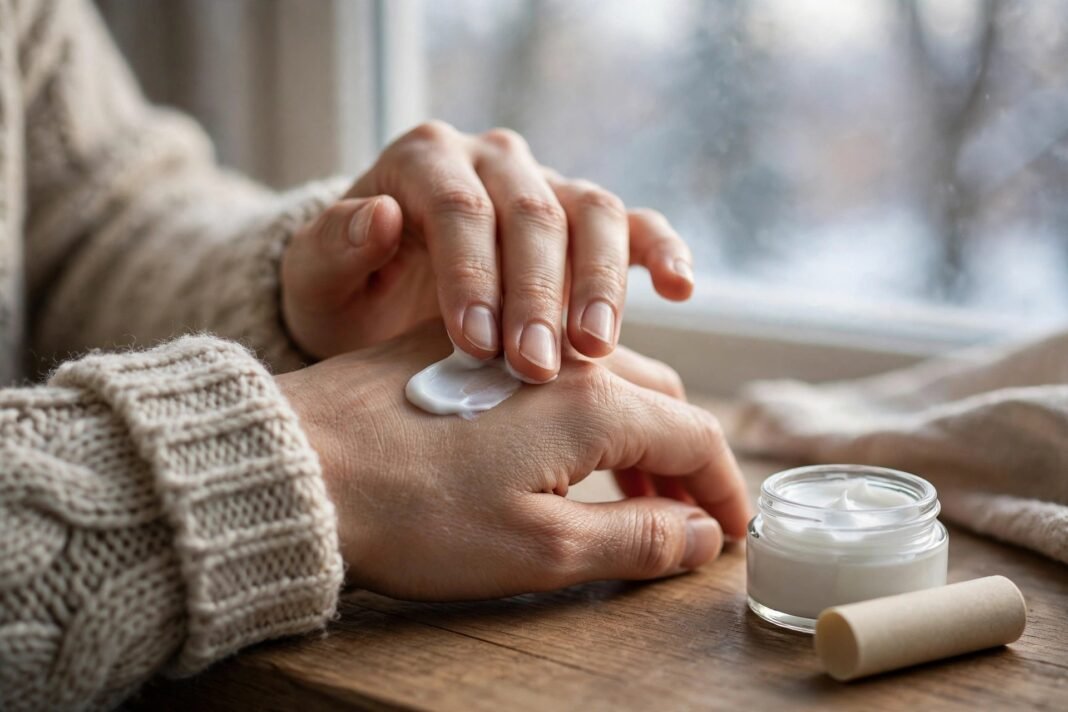
Winter is hard on skin. Cold wind, dry heat and hot showers bring winter dry skin: a tight face, rough hands, and cracked lips.
The good news is that most winter dryness responds to a few simple habits. You do not need a shelf full of products. A gentle routine, done daily, can keep your skin soft through the cold months.
This guide covers the full winter routine: bathing, moisturising, and the small daily habits that protect your face, hands, lips and heels.
Why Winter Dry Skin Happens Every Year
Cold air holds very little moisture. So when winter arrives, the air around you dries out. Indoor heating makes it worse, because warm air without added moisture pulls water from your skin.
Hot showers add to the problem. They strip away the natural oils that protect your skin. As a result, water escapes faster, and skin feels tight, rough or itchy. That is why dryness often starts in autumn and peaks in the coldest weeks.
Some people feel it more than others. Older skin holds less oil, so it dries faster. People who wash their hands often, or work outdoors, also notice it sooner. But anyone can get dry skin in winter, and the fix is the same for everyone.
Shorter, Cooler Showers Protect Your Skin
A long hot shower feels wonderful on a cold morning. Yet it is one of the fastest ways to dry out your skin. Dermatologists suggest keeping showers and baths to 5 to 10 minutes, in warm water rather than hot.
Use a gentle, fragrance-free cleanser, and only where you need it. Afterward, pat your skin dry with a soft towel instead of rubbing. Closing the bathroom door while you shower also helps, because it keeps the air humid.
Skip harsh soaps and foaming washes while your skin is dry. A gentle cleansing cream or a mild shower gel is kinder. Use it only where you need it, for example under your arms and on your feet. The rest of your skin often needs water alone.
Moisturise While Your Skin Is Still Damp
Timing matters more than the price of the bottle. Moisturisers work by trapping the moisture already in your skin. So apply yours within a few minutes of washing, while your skin is still slightly damp.
Smooth it on gently, and reapply whenever your skin feels tight or dry. Keep a small tube by the sink and one at your desk. In this way, moisturising becomes a habit rather than a chore.
Hands need the same timing. Apply hand cream within a few minutes of washing them. Keep a tube by every sink, so the habit is easy. If you wash your hands often, this one step can prevent most winter cracking.
Creams and Ointments Beat Lotions in Winter
Not all moisturisers are equal. Lotions are thin and light, so they suit mild days. In winter, though, creams and ointments add more moisture and protect your skin for longer.
Look for a cream or ointment with ingredients such as glycerin, hyaluronic acid, shea butter, jojoba oil or petrolatum. These help your skin hold water. For very dry spots, a thick ointment at night can work well.
Choose products marked fragrance-free, not just unscented. Fragrance can irritate dry skin, even in small amounts. Products with alcohol can dry your skin too, so skip them while your skin heals. While your skin is very dry, keep your routine simple and gentle.
Your Face Needs a Gentler Touch in Winter
Your face takes the worst of winter. It faces cold wind outside and dry air inside, with no clothes to protect it. So wash it with lukewarm water and a gentle cleanser, using your fingertips rather than a rough cloth.
Apply a rich cream while your face is still damp. And do not skip sunscreen. Winter sun still carries UV rays. So a broad-spectrum sunscreen with SPF 30 or higher belongs in your routine all year.
Skin that is usually oily can still feel tight and dry in winter. If that sounds familiar, our oily skin care routine explains how to care for oily skin without stripping it.
Wind makes things worse. A scarf across your face on a windy day protects your cheeks and lips. It is a simple step, and it costs nothing. Your skin will feel the difference by the end of the day.
Hands: The First Place Winter Dry Skin Shows
Hands are often the first place winter dryness shows. They face cold air, hot water and soap many times a day. So they dry out faster than any other part of your body.
Wear gloves outdoors, and wear them for washing dishes and cleaning too. Carry a hand cream, and use it after every wash. If your hands sting or crack, switch to a thicker cream and use it at night as well.
Washing dishes is hard on hands. Hot water and detergent strip the skin’s oils fast. Wear rubber gloves for dishes and cleaning, and dry your hands well after. Then apply hand cream while they are still slightly damp.
Lips, Heels and the Spots We Forget
Lips have no oil glands of their own, so they dry out fast in winter. A simple lip balm helps, and you should use it often through the day. If your lips sting or tingle after you apply it, switch to one that does not cause that reaction.
Heels, elbows and knuckles need care too. These spots have thicker skin, so they crack more easily when dry. A thick ointment at night, with socks on your feet, can soften them while you sleep.
Do not lick your lips when they feel dry. It feels like it helps, but saliva dries fast and leaves lips drier than before. Lip balm is the better fix, and you can use it as often as you like.
Add Moisture to the Air at Home
Skin care is only half the story. The air in your home matters too. Heated rooms can be very dry, and dry air pulls moisture from your skin all night long.
A humidifier adds moisture back to the air. A comfortable range for indoor humidity is 30 to 50 percent. If you use one, clean it often, and do not let the air get too damp. A bowl of water near a radiator can also help a little.
Your bedroom matters most, since you spend hours there each night. A humidifier in the bedroom can ease dry skin, lips and throat by morning. If you do not have one, a damp towel on a radiator can add a little moisture to the air.
Small Habits That Help Winter Dry Skin
Small choices add up through winter. Choose soft fabrics next to your skin, since wool can irritate dry skin. Use a gentle, fragrance-free laundry detergent. And step back from strong scrubs and acids while your skin is dry.
What you eat matters too. Foods rich in healthy fats and water can support your skin from the inside. Our guide to the best foods for healthy skin has simple ideas to try.
Finally, do not sit too close to a fire or heater. Direct heat feels cosy, but it dries your skin fast. Warm the room, not your skin.
Turn the water down a little each week if hot showers are a habit. Your skin will adjust fast, and you will still feel warm. Lukewarm water cleans just as well, and it leaves your skin’s oils in place.
When Winter Dry Skin Needs a Dermatologist
Most winter dryness improves within a week or two of better habits. Yet some dry skin needs more than a new routine. If your skin stays very dry, itchy, red or painful, see a doctor or dermatologist. The same goes if cracks bleed and do not heal.
Dry skin can sometimes be a sign of something more, such as eczema or another skin condition. Our guide explains when dry skin may be something more, and what to look for.
Do not wait too long to get help. Dry skin that does not improve can crack and let in germs. A dermatologist can check what is going on and suggest the right care. Early help is always better than waiting.
Start today with one small change. Shorten your shower, or moisturise while your skin is still damp. Which habit will you try first?
This article is for general information only. It is not medical advice, and it does not replace the advice of a healthcare professional. If you have a skin condition or take medication, please talk to your doctor first.