
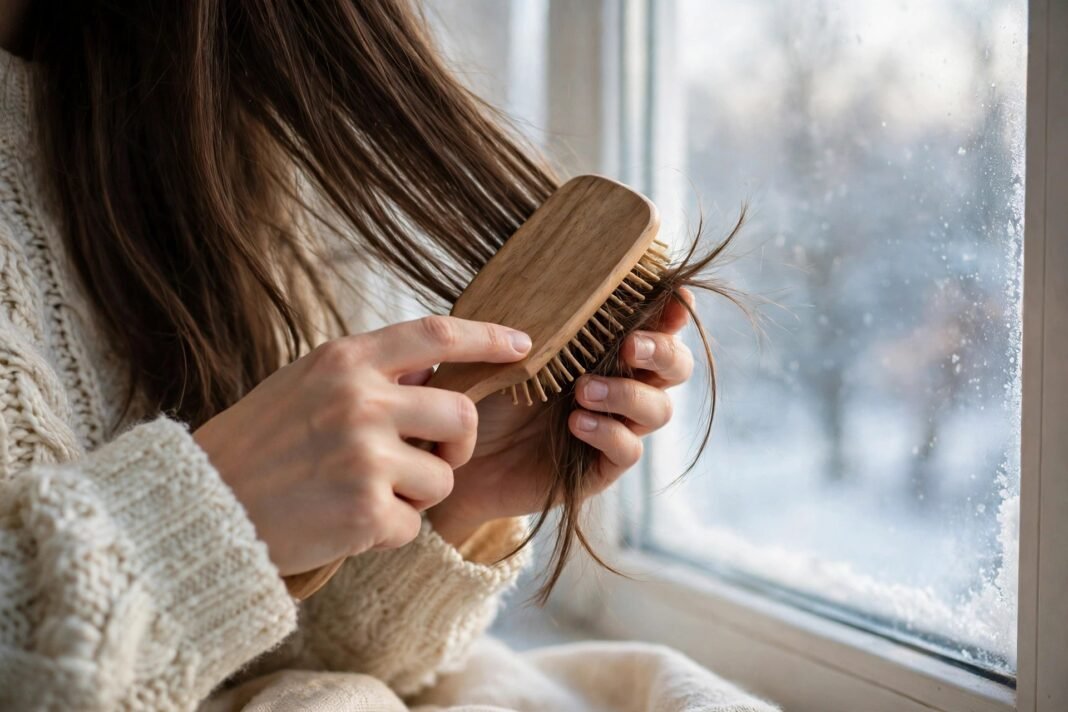
You brush your hair on a cold morning, and the brush comes away full. Then you notice more hair in the shower drain, and a few strands on your dark winter coat. Hair fall in winter feels alarming, but it is one of the most common seasonal hair complaints.
The good news is that winter hair fall is often about dryness and breakage, not about losing hair for good. Cold air, heated rooms, hot showers and hats all pull moisture out of your hair. And once you know what winter does to your hair, you can protect it with a few gentle changes.
Why Hair Fall in Winter Feels Worse Than Other Seasons
Some shedding is normal all year round. The American Academy of Dermatology says it is normal to shed between 50 and 100 hairs a day, because each hair grows, rests and then falls out as part of its cycle. So a few hairs in your brush are not a reason to worry.
In winter, though, the shedding looks worse for two reasons. First, dry hair breaks more easily, so broken pieces join the shed hairs in your brush. Second, dark winter clothes make every pale strand stand out. As a result, the same amount of shedding can look like much more.
It is also worth being honest here. Cold weather on its own is not a direct cause of medical hair loss. But winter conditions dry out your hair and scalp, and that dryness makes hair weaker, more brittle and more likely to break.
Cold Air Outside, Dry Heat Inside
Winter air holds very little moisture. That dry air pulls water out of your hair and scalp, so both feel rough and tight. Your hair loses its natural shine, and the ends turn dry and split more easily.
Then you step indoors, and the heating makes things worse. Central heating and space heaters lower the humidity in a room even further. So your hair dries out on the walk to work, and it keeps drying out at your desk.
Your scalp suffers in the same way. Cleveland Clinic lists low humidity and cold climates among the common causes of a dry scalp, which can itch and flake. And because the scalp is skin, it dries for the same reasons the skin on your hands dries in winter. That double drying, outside and inside, is a key driver of hair fall in winter.
Shedding or Breakage? How to Tell the Difference
Before you worry, check what is actually coming out. A shed hair is full length, with a tiny pale bulb at the root. A broken hair is shorter than the rest, with no bulb at all. If most of what you see is short pieces, the problem is breakage, not shedding.
That difference matters, because the fix is different too. Shedding comes from the root and the hair cycle. Breakage comes from dry, fragile strands snapping in the middle. In winter, breakage is often the bigger half of the problem.
Seasons affect hair in other ways too. Research has found that the share of resting hairs peaks in summer, so heavier shedding often follows in autumn. Our guide to autumn hair fall in women explains that seasonal pattern in detail. By deep winter, much of what you notice is more likely dryness and breakage than seasonal shedding. Hair behaves differently in every season, and the monsoon brings its own problems too.
Hot Showers Feel Good but Strip Your Hair
A long, hot shower is one of winter’s small pleasures. But very hot water strips the natural oils from your scalp and hair. Those oils keep moisture in, so losing them leaves your hair drier and adds to hair fall in winter.
Lukewarm water is a kinder choice. It still cleans your hair, but it takes far less oil with it. Shorter showers help too, because the longer your hair sits in hot water, the more moisture it loses.
If you love a hot shower, you do not have to give it up completely. Instead, turn the heat down just for the hair-washing part. Your hair will feel the difference within a few washes.
Hats, Scarves and Static
Static is a winter classic. Dry air and friction build up a charge on your hair, so strands push apart and fly away. Hats, scarves, brushes and blow-drying all add friction, and low humidity makes the charge worse.
Conditioner helps here, because it smooths the hair surface and lowers friction. A wide-tooth comb is gentler than a brush on dry winter hair. And if your hat rubs the same spot all day, try a softer lining or a looser fit.
There is one more thing to know about hats. The American Academy of Dermatology says the constant rubbing of a hat or head covering over the hair can lead to traction alopecia, a form of hair loss from pulling. So a hat that fits well and does not rub is the safest choice.
Less Sunlight and Vitamin D: One Honest Factor
Winter also brings shorter days and weaker sunlight. Your body makes vitamin D from sunlight, so levels often drop in the colder months. And vitamin D matters for hair, because its receptors are found in hair follicles.
Some research has linked low vitamin D levels with heavier shedding and with patchy hair loss. But the link is not simple, and the evidence that supplements regrow hair is limited and mixed. So low vitamin D is one honest factor among others, not the whole story.
If you wonder about your levels, a doctor can check them with a blood test. Food also plays a part in hair health, and other nutrients matter too. For example, low zinc has been linked with hair fall, as our guide to hair fall and zinc deficiency explains.
Hair Fall in Winter: Wash Gently and Less Often
Washing is where much of winter’s damage happens. Harsh shampoos strip the scalp’s natural oils, and over-washing dries the hair out further. In winter, a gentle, non-medicated shampoo is the better choice for most people.
How you wash matters as well. Massage shampoo into your scalp only, and let the rinse flow through the length of your hair. There is no need to rub shampoo into the ends, because the rinse cleans them on its way down.
Conditioner is not optional in winter. The American Academy of Dermatology advises using conditioner after every shampoo, because it coats the strands and reduces breakage and split ends. And washing a little less often gives your scalp time to rebuild its natural oils.
Turn the Heat Down on Styling
Heat is another driver of hair fall in winter. Blow dryers, straighteners and curling irons drive water out of hair that is already dry. So winter is the season to go easy on them.
Let your hair air dry when you can. If you do use a dryer, keep it on the lowest heat setting. The American Academy of Dermatology suggests using hot tools once a week or less, and saving curling irons and flat irons for special occasions.
Small habits help too. Wrap your hair in a towel to absorb water instead of rubbing it dry. Space out colouring and perming, because the Academy suggests leaving eight to ten weeks or longer between such treatments in winter. And brush only to style, gently, because brushing a hundred strokes a day is a myth.
When Hair Fall in Winter Needs a Doctor
Most winter hair fall settles with gentler care. But some signs should not wait. Sudden heavy shedding, bald patches, a widening part, or a scalp that is red, swollen or painful all deserve a doctor’s look.
Shedding that stays heavy for months is another reason to get checked. It can point to a cause that has nothing to do with the weather, such as low iron, a thyroid problem, or a medicine you take. Only a doctor can work out which one it is.
A dermatologist can tell whether you are dealing with shedding, breakage or true hair loss. So if you are worried, or if gentle care has not helped after a few weeks, book an appointment. Early advice is always better than waiting.
Small Changes Can Ease Hair Fall in Winter
Winter is hard on hair, but it does not have to win. Lukewarm showers, gentle washing, conditioner after every wash, less heat and a soft hat all add up. Together, they keep moisture in your hair and take the strain off your scalp.
Start with one change this week. It might be turning the shower down, or letting your hair air dry on the days you can. Which one will you try first?
This article is for general information only. It is not medical advice, and it does not replace the advice of a healthcare professional. If you have sudden or heavy hair loss, or a scalp problem that does not improve, please talk to your doctor first.