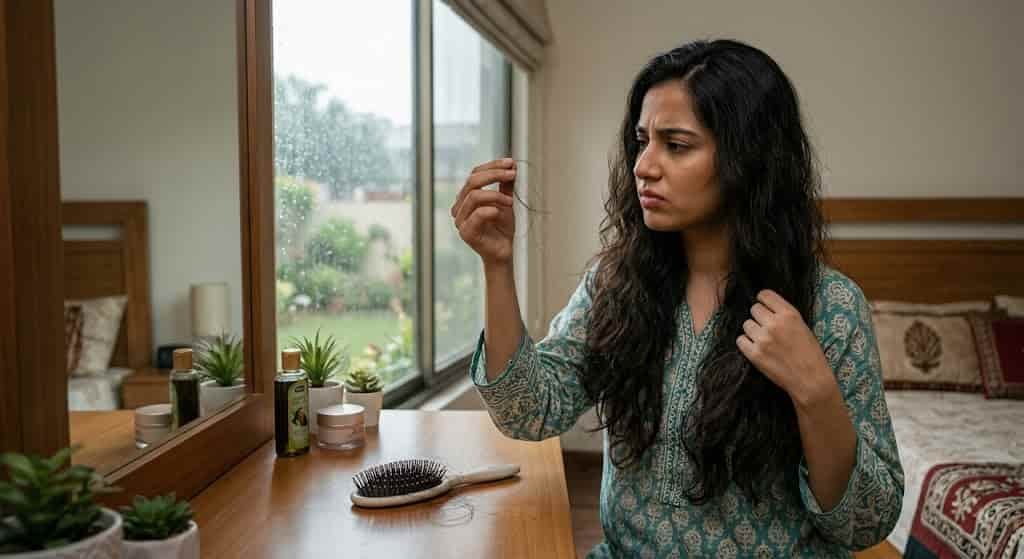
Hair Fall in Monsoon: 10 Causes and Solutions That Actually Help
Have you suddenly started noticing more hair on your pillow, comb, or bathroom floor during the rainy season? You are not alone. Hair fall in monsoon becomes a common concern when humidity rises and our usual hair-care routine stops working as well.
Pakistan’s monsoon season brings high humidity, sweating, rain, and frequent changes between hot outdoor temperatures and air-conditioned rooms. These conditions can make hair difficult to manage and may worsen existing scalp problems.
However, monsoon weather itself does not necessarily cause permanent hair loss. Increased breakage, scalp irritation, dandruff, styling habits, nutritional problems, stress, and underlying health conditions can all contribute to what appears to be seasonal hair fall.
Understanding the actual reason matters. Instead of applying random oils and homemade masks, you can build a healthier routine that protects both your scalp and hair.
Here are 10 possible causes of hair fall in monsoon and practical solutions that can help.
1. High Humidity Can Make Hair More Difficult to Manage
Humidity is one of the biggest hair-care challenges during monsoon.
Hair can absorb moisture from humid air, which may change the way individual strands behave. Depending on your hair type, it can become frizzy, rough, tangled, or difficult to style.
When tangled hair is brushed aggressively, strands can break.
This breakage may look like excessive hair fall even though the hair is not necessarily falling from the root.
What Can You Do?
Treat wet and tangled hair gently.
Use a wide-tooth comb and begin detangling from the ends before slowly moving upward. Avoid pulling a comb forcefully through knots.
A conditioner suitable for your hair type can also make detangling easier.
If your hair becomes extremely frizzy during monsoon, reducing unnecessary heat styling may help prevent additional damage.
2. Keeping Your Scalp Wet for Too Long
Getting caught in the rain can be fun, but leaving your hair and scalp wet for several hours is not a good hair-care habit.
The problem becomes more noticeable if you immediately tie, cover, or sleep with wet hair.
A damp scalp may feel uncomfortable and can aggravate existing scalp problems in some people. Wet hair is also more vulnerable to mechanical damage.
Therefore, repeatedly pulling and brushing soaking-wet hair can contribute to breakage.
What Can You Do?
After getting wet in heavy rain, rinse or wash your hair when practical, especially if the rainwater may contain dust or environmental pollutants.
Gently squeeze excess water from your hair.
Use a soft, clean towel rather than aggressively rubbing your hair. Allow the scalp to dry properly before tying the hair tightly or going to sleep.
If you regularly cover your hair, make sure the scalp has had enough time to dry first.
3. Dandruff and Scalp Irritation
Monsoon humidity and sweating can make existing dandruff or scalp irritation more troublesome for some people.
You may notice itching, flakes, oiliness, redness, or an uncomfortable scalp.
The biggest danger to your hair may actually come from what happens next: scratching.
Repeated scratching can irritate the scalp and potentially damage hair through friction and pulling.
If you are experiencing itching along with seasonal hair problems, don’t ignore your scalp health.
For simple scalp-care ideas, read our guide on itchy scalp in monsoon and 5 natural remedies. It explains gentle ways to manage mild seasonal itching while also highlighting when professional treatment may be necessary.
What Can You Do?
Keep your scalp clean and wash according to how oily and sweaty it becomes.
Avoid scratching with your nails.
If you have persistent dandruff, heavy scaling, significant redness, sores, or severe itching, consider seeing a dermatologist instead of relying exclusively on home remedies.
A scalp condition that requires treatment will not necessarily disappear because you apply more oil.
4. Washing Your Hair Too Much—or Too Little
Hair washing becomes confusing during monsoon.
Sweat and oil can make you want to shampoo every day. On the other hand, fear of hair fall can make some people avoid washing their hair for several days.
Neither extreme suits everyone.
Your ideal washing frequency depends on your scalp type, hair texture, activity level, sweating, and products you use.
An oily scalp may require more frequent cleansing than a dry scalp.
However, harsh shampoos combined with aggressive washing can leave some scalps feeling dry and irritated.
What Can You Do?
Choose a gentle shampoo that suits your scalp.
Concentrate shampoo mainly on the scalp rather than repeatedly scrubbing the entire length of your hair.
Use your fingertips instead of your nails.
Then rinse thoroughly so shampoo and product residue do not remain behind.
Conditioner can primarily go on the mid-lengths and ends, particularly if your roots become oily quickly.
5. Rough Handling of Wet Hair
Wet hair needs gentle treatment.
Many people step out of the shower and immediately rub their hair vigorously with a towel. Others aggressively brush wet, tangled hair.
These habits can increase breakage.
If your hair is already chemically treated, bleached, frequently straightened, or damaged by heat, it may be even more vulnerable.
What Can You Do?
Pat and squeeze your hair gently with a towel.
Avoid twisting it aggressively.
If you need to detangle your hair, use a wide-tooth comb and work slowly.
Start at the bottom rather than pulling from the roots downward.
A few extra minutes of gentle handling can prevent unnecessary breakage.
6. Tight Hairstyles Can Increase Hair Stress
A tight ponytail may feel practical on a hot and humid day, but constantly pulling hair tightly can put unnecessary tension on the roots.
Tight buns, ponytails, braids, and similar styles repeatedly pull on the same areas.
Over time, chronic tension can contribute to a type of hair loss known as traction alopecia.
This problem is not exclusive to monsoon. However, people often tie their hair more frequently during humid weather because loose hair feels uncomfortable.
What Can You Do?
Choose looser hairstyles whenever possible.
Avoid pulling your hair tightly every single day.
Change the position of ponytails and buns so the same areas do not constantly experience tension.
If a hairstyle hurts your scalp, feels extremely tight, or pulls strongly around your hairline, loosen it.
Hair styling should not be painful.
7. Excessive Heat Styling Can Increase Breakage
Monsoon frizz often pushes people toward straighteners, curling tools, and blow dryers.
You style your hair in the morning, humidity ruins the look, and you style it again.
Repeated exposure to high temperatures can damage the hair shaft and increase dryness and breakage.
This may create the impression that your seasonal hair loss has suddenly become severe.
What Can You Do?
Reduce unnecessary heat styling during humid months.
When you do use heat, keep the temperature reasonable and consider an appropriate heat-protection product.
Give your hair regular breaks from straightening and curling.
Instead of fighting your natural texture every day, consider hairstyles that work with it during humid weather.
8. Poor Diet Can Affect Hair Health
Hair health does not begin with shampoo.
It also depends on nutrition.
Hair follicles require adequate energy, protein, vitamins, and minerals. Restrictive dieting or nutritional deficiencies can contribute to excessive shedding in some people.
Iron deficiency is particularly important to consider, especially when unexplained hair shedding occurs.
Protein, zinc, vitamin D, vitamin B12, and other nutrients also play important roles in overall health, although supplements should not automatically be taken without identifying an actual deficiency.
What Can You Do?
Build meals around a balanced diet rather than depending on hair supplements.
Include adequate protein from foods such as eggs, dairy products, fish, chicken, lentils, chickpeas, beans, or other suitable sources.
Eat vegetables and fruits regularly.
Nuts and seeds can also contribute useful nutrients to a balanced diet.
If you experience significant or unexplained hair loss, a healthcare professional may recommend appropriate tests based on your symptoms and medical history.
Avoid taking high doses of supplements simply because an influencer claims they stop hair fall.
More is not always better.
9. Stress and Lack of Sleep May Contribute to Shedding
Your hair can sometimes reflect changes happening elsewhere in your body.
Significant physical or emotional stress can trigger a temporary form of increased hair shedding called telogen effluvium.
The tricky part is timing.
Hair shedding related to a stressful event may appear weeks or even a few months after the trigger rather than immediately.
Illness, major stress, rapid weight loss, restrictive dieting, surgery, or other significant changes can sometimes contribute.
Poor sleep can also affect your overall well-being and may accompany periods of high stress.
What Can You Do?
Look beyond the weather.
Ask yourself whether something significant changed during the previous few months.
Have you experienced an illness?
Have you been following a crash diet?
Have you lost weight rapidly?
Has your stress level increased dramatically?
Understanding the timeline can help a healthcare professional determine what may be happening.
Meanwhile, focus on consistent sleep, balanced meals, physical activity, and practical stress management.
10. An Underlying Condition May Be Responsible
This is perhaps the most important point.
Not every case of hair fall in monsoon is actually caused by monsoon.
The timing can sometimes be a coincidence.
Iron deficiency, thyroid disorders, hormonal changes, certain medications, scalp disorders, autoimmune conditions, genetic hair loss, recent illness, and several other factors can contribute to excessive shedding or thinning.
Therefore, don’t blame the weather automatically if the problem becomes severe.
What Can You Do?
Pay attention to the pattern.
A little extra hair in your brush is very different from developing visible bald patches or rapidly widening areas of thinning.
If hair loss continues, worsens, or concerns you, consult a dermatologist or healthcare professional.
Proper diagnosis is much more useful than repeatedly changing shampoos.
Should You Oil Your Hair During Monsoon?
Hair oiling remains deeply connected with hair-care routines across Pakistan and South Asia.
You do not necessarily need to stop oiling during monsoon.
However, more oil does not automatically mean stronger hair.
If your scalp feels healthy and slightly dry, you can use a modest amount of oil as a pre-wash treatment.
Coconut oil, for example, can help lubricate the hair and reduce protein loss from the hair shaft in certain circumstances.
Apply a small amount rather than soaking your scalp.
Leave it for a reasonable period before shampooing properly.
If your scalp already feels extremely oily, itchy, flaky, or irritated, heavy oiling may not be helpful.
People with scalp conditions should seek appropriate advice rather than assuming oil will solve the underlying problem.
Does Cutting Your Hair Stop Monsoon Hair Fall?
This is a common hair myth.
Cutting the ends of your hair does not change what happens inside the hair follicles beneath your scalp.
A haircut can remove split and damaged ends, make hair easier to manage, and reduce tangling.
That can make your hair look healthier.
However, cutting hair does not treat medical causes of hair loss.
If your hair is falling from the root, you need to understand why rather than simply cutting it shorter.
What About Onion Juice for Hair Fall?
Onion juice has become extremely popular on social media.
Some limited research has explored its use in specific hair-loss conditions, but that does not mean onion juice is a proven universal treatment for seasonal hair shedding.
It can also irritate sensitive skin.
Applying concentrated DIY mixtures to an already itchy monsoon scalp may create more discomfort.
If you want to experiment with any homemade treatment, patch testing and caution matter.
Do not use strong DIY ingredients on broken or inflamed skin.
Are Hair Fall Shampoos Enough?
A shampoo can clean your scalp and improve the appearance and manageability of your hair.
However, shampoo cannot correct every cause of hair loss.
If nutritional deficiency, hormonal changes, genetic hair loss, thyroid disease, stress-related shedding, or another medical condition drives your hair loss, changing shampoo alone will not address the root cause.
Be particularly cautious with products promising miraculous regrowth within days.
Hair growth happens slowly.
Real improvement usually requires identifying the cause and giving an appropriate treatment or lifestyle change enough time to work.
A Simple Monsoon Hair-Care Routine
You don’t need an overflowing bathroom shelf to protect your hair during monsoon.
Start with a gentle shampoo suitable for your scalp type.
Wash as often as necessary based on oiliness, sweating, activity, and scalp condition rather than following a rigid rule from social media.
Use conditioner on your hair lengths if they become dry or tangled.
Handle wet hair gently and avoid aggressive towel drying.
Allow your scalp to dry before tying or covering your hair for long periods.
Reduce repeated straightening, curling, bleaching, and other potentially damaging treatments.
Keep your combs and brushes clean.
Change pillowcases regularly, particularly if you sweat heavily at night.
Most importantly, maintain a nutritious diet and adequate protein intake.
Hair care works best when you take care of your scalp, hair shaft, and overall health together.
How Can You Tell Hair Breakage From Hair Loss?
This distinction can help you understand what you’re seeing.
Hair breakage occurs somewhere along the hair shaft.
You may notice shorter broken pieces, frizz, split ends, and hair of different lengths.
True shedding usually involves an entire strand coming away from the follicle.
If you repeatedly use heat, bleach, chemical treatments, or aggressive brushing, breakage may contribute significantly to what you call “hair fall.”
On the other hand, if you notice thinning at the roots, a widening part, receding areas, bald patches, or large amounts of full-length hair shedding, you may need a professional assessment.
When Should You Worry About Hair Fall?
Hair naturally moves through growth, transition, resting, and shedding phases.
Therefore, seeing some strands fall every day is normal.
What matters is a noticeable change from your usual pattern.
You should consider consulting a dermatologist if your hair loss becomes sudden or severe.
Seek professional advice if you notice bald patches, scalp pain, significant redness, pus, sores, thick scaling, or intense itching.
A visibly widening part or rapidly receding hairline also deserves attention.
Likewise, hair loss accompanied by other unexplained symptoms should not simply be blamed on rainy weather.
Early assessment can identify the underlying cause and help you choose an appropriate treatment.
Frequently Asked Questions About Hair Fall in Monsoon
Is hair fall normal during monsoon?
Some people notice increased shedding or breakage during humid weather. However, significant hair loss should not automatically be considered normal. Persistent or severe shedding may have another cause.
How can I reduce hair fall in monsoon naturally?
Handle wet hair gently, keep your scalp clean, avoid prolonged dampness, reduce tight hairstyles and excessive heat, eat enough protein, and maintain a balanced diet. The right approach depends on the cause of your hair loss.
Should I wash my hair after getting wet in rain?
If your hair becomes thoroughly soaked, especially in dirty or polluted rainwater, rinsing or washing it when practical can help remove residue. Dry your scalp properly afterward.
Which oil is best for hair during monsoon?
Coconut oil can work as a pre-wash treatment for some hair types. However, people with very oily, itchy, or flaky scalps may find heavy oiling uncomfortable.
Can dandruff cause hair fall?
Dandruff itself does not necessarily cause permanent hair loss. However, severe itching and repeated scratching can increase irritation and hair breakage. Persistent dandruff may require appropriate treatment.
Does monsoon humidity permanently damage hair?
Humidity mainly affects the hair shaft’s appearance and manageability. It can increase frizz and tangling, which may contribute to breakage. Permanent or progressive hair loss usually deserves investigation for other causes.
Can stress increase hair shedding?
Yes. Significant physical or emotional stress can sometimes trigger temporary increased shedding. The hair loss may appear several weeks or months after the stressful event.
How long does seasonal hair fall last?
There is no single timeline that applies to everyone because increased shedding can have many causes. If it continues for months or becomes noticeably worse, seek professional advice.
Hair fall in monsoon can feel alarming, especially when you suddenly start seeing more strands in your shower drain or hairbrush.
However, the solution is not to panic and start trying every viral hair remedy.
First, look at your routine.
Humidity, wet hair, scalp irritation, rough brushing, tight hairstyles, excessive heat, poor nutrition, and stress can all contribute to increased shedding or breakage.
Then look at your scalp.
If monsoon humidity has also brought itching, flakes, or irritation, our guide to natural remedies for an itchy scalp in monsoon can help you build a gentler rainy-season scalp-care routine.
Most importantly, recognize when seasonal hair care is not enough.
Persistent thinning, bald patches, severe dandruff, scalp inflammation, or unexplained heavy shedding deserves professional evaluation.
Keep your monsoon hair routine simple: clean your scalp appropriately, dry it properly, handle wet hair gently, minimize damage, eat well, and address the actual cause of excessive hair fall.
Healthy hair does not come from one miracle oil or shampoo. It comes from consistent care of your hair, scalp, and overall health.