FCC Inheritance Ruling: Records Cannot Deny Rightful Share
The FCC inheritance ruling says inheritance records cannot deprive anyone of their rightful share under Islamic law. In a judgment on Tuesday, the Federal Constitutional Court also made clear that a cousin can inherit the remaining property in certain cases.
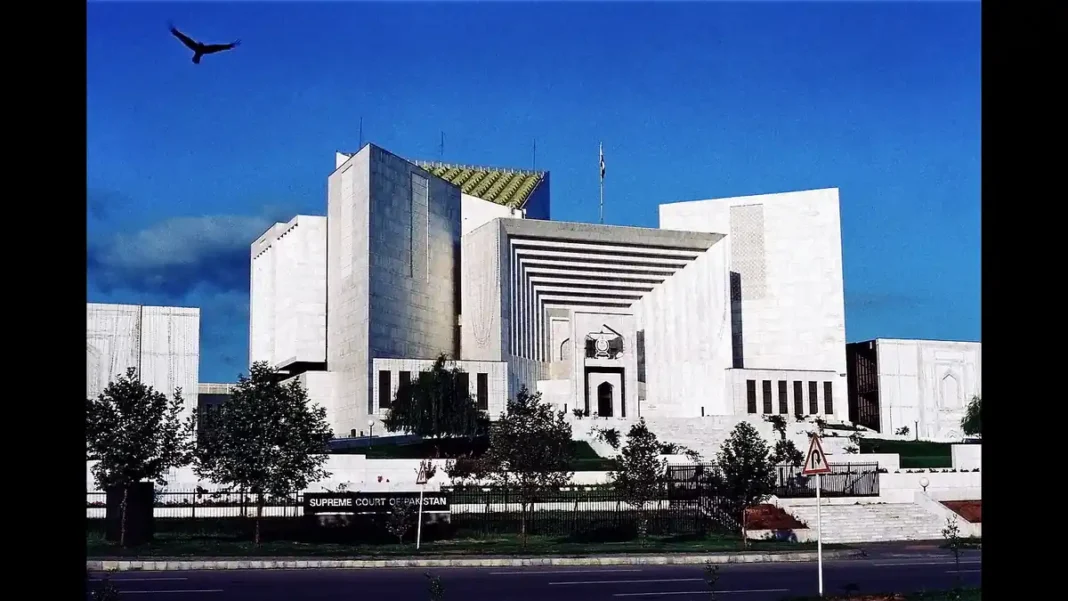
The FCC inheritance ruling came in an 11-page judgment written by Chief Justice Aminuddin Khan. A two-member bench, which also included Justice Ali Baqar Najafi, upheld a Lahore High Court decision and dismissed the appeals filed against it.
The court held that inheritance rights cannot be decided only by looking at family ties or blood relations. Property must be divided under Islamic inheritance law and its settled legal categories, the bench said.
FCC inheritance ruling: the shares in the case
The case concerned the estate of Muhammad Asghar. The court upheld the inheritance claim of his paternal cousin, ruling that he was entitled to the remaining share of the property.
Under the division set out in the judgment, Asghar’s widow is entitled to one-fourth of his estate, while his two full sisters are together entitled to two-thirds. The remaining one-twelfth share goes to an eligible residuary heir.
The court also dealt with two doctrines that often confuse families. After the fixed shares go to the widow and sisters, the rest belongs to eligible residuary heirs, known as Asabah. The court said the principle of Radd, which allows the leftover property to be shared out again among the fixed heirs, cannot be used when a legally entitled residuary heir exists.
In plain terms, the judgment stops a family from using Radd to cut out a cousin who has a lawful claim to what is left. The cousin’s share stands, and the fixed heirs cannot take it by redistribution.
Revenue records cannot change a right
The judgment also stressed that revenue records and procedural formalities cannot change a person’s inheritance rights. A wrong entry in the land record, or a faulty procedure, cannot make an unlawful division lawful.
That point matters for families across Pakistan, where land and property disputes often turn on what the revenue record says. The court said the record must follow the law, not the other way round.
The bench upheld the Lahore High Court’s decision of November 6, 2024, and dismissed the appeals filed by Kaneez Haider. It found that the appellant had failed to show any legal error that would justify interference with the High Court’s decision.
The court also noted that inheritance laws differ between the Sunni and Shia schools of thought. Property must be divided under the Muslim personal law that applies to the deceased, the bench said.
The ruling follows the Supreme Court on inheritance rights
The decision fits a recent run of judgments that protect inheritance claims. Feature Pakistan reported that the Supreme Court held inheritance rights have no expiry, which means a lawful heir cannot lose a claim only because time has passed.
The Federal Constitutional Court itself marked its first anniversary this month, after taking over constitutional cases from the Supreme Court. Tuesday’s ruling is one of its clearest statements yet on family property rights.
For readers unsure of their own position, Feature Pakistan’s guide to the laws every woman in Pakistan should know sets out the basic rights around property, marriage and inheritance, and our explainer on the types of law in Pakistan covers how the courts apply them.
What happens next
The judgment is now the reference point for similar disputes. Lower courts and revenue officers must apply the Asabah rule where a residuary heir exists, and they cannot use Radd to defeat that claim. Families with pending inheritance cases can cite the ruling, though each case will still turn on its own facts and on which school of law applies.
Frequently asked questions
What did the Federal Constitutional Court rule on inheritance?
The court ruled that inheritance records cannot deprive anyone of their rightful share under Islamic law, and that a cousin may be entitled to the remaining property in certain cases.
Who wrote the judgment?
Chief Justice Aminuddin Khan authored the 11-page judgment. The two-member bench also included Justice Ali Baqar Najafi.
What shares did the court set out in the Muhammad Asghar case?
The widow is entitled to one-fourth of the estate, the two full sisters together to two-thirds, and the remaining one-twelfth to an eligible residuary heir, in this case the paternal cousin.
What is Asabah in Islamic inheritance law?
Asabah are the residuary heirs who take what is left after the fixed shares are given to the widow, children, parents or sisters. The court held the residue belongs to them where one exists.
What is Radd, and when does it not apply?
Radd is the redistribution of leftover property among the fixed heirs. The court held it cannot be applied when a legally entitled residuary heir exists.