SC Rules Inheritance Rights Do Not Expire With Time
The Supreme Court has ruled that inheritance rights do not expire with time: an heir’s right arises at once when the property owner dies, and it does not lapse merely because years have passed.
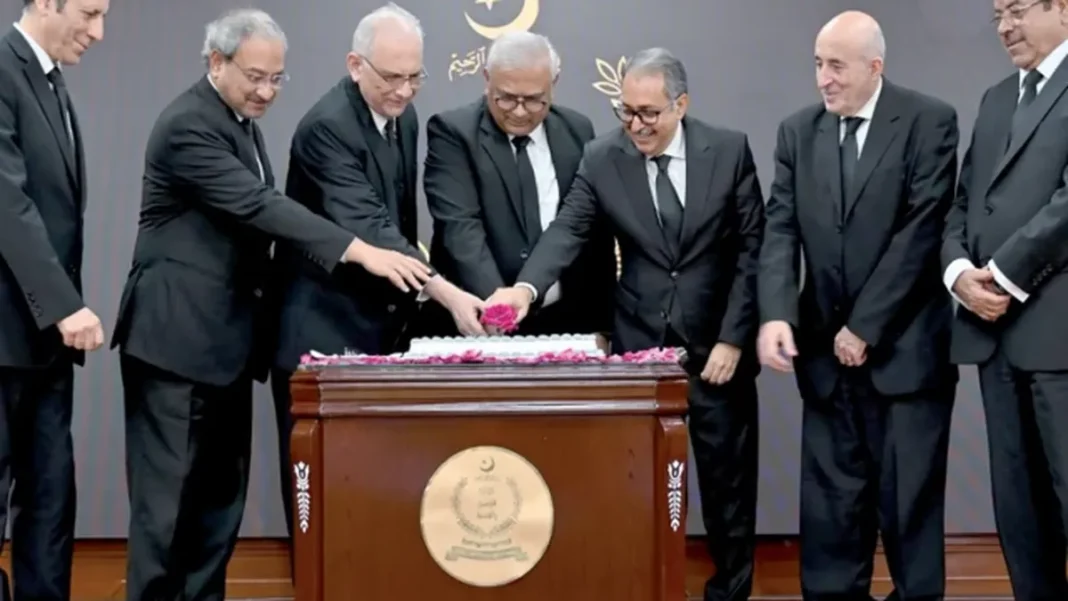
A five-member larger bench gave the ruling on Friday in a detailed judgement authored by Justice Shahid Waheed, holding that the limitation period for an inheritance claim starts only when an heir learns that their ownership rights have been clearly denied.
“Time does not run against the heir, it runs against the heir’s knowledge of a wrong. The right of an heir, vested at the moment of death, never lapses with time,” Justice Waheed wrote.
The judgement was also signed by Justices Naeem Akhtar Afghan, Aqeel Abbasi, Shakeel Ahmed and Mian Gul Hassan Aurangzeb.
Inheritance rights do not expire, but claims have a limit
The court drew a careful line between the right itself and the legal remedy: the right to a share is fixed at the moment of death, but the remedy remains subject to the Limitation Act, 1908, which civil courts cannot set aside.
Under Article 120 of the Act, the clock starts only when a clear and unequivocal act denying an heir’s ownership is brought to that heir’s knowledge. Both conditions must hold: an actual denial, and the heir’s knowledge of it. Neither alone will do.
“The clock of limitation is wound by denial and set going by knowledge; neither alone will do,” the judgement said.
An heir who learns of a denial and then stays silent for six years can lose the right to sue. But a court cannot presume the clock started when the heir was never told their share was being withheld, and simply finding a name missing from an inheritance mutation record does not by itself start the clock.
The court also held that an heir’s legal successors inherit the right to pursue a claim the heir never used. The ruling does not reopen orders already declared final, but its principles apply to pending cases and to cases filed in future.
Why delay in sharing an estate causes harm
The court observed that all four Sunni schools of jurisprudence agree that a deceased person’s estate passes to the legal heirs at once upon death, after funeral expenses, debts and bequests are settled.
No calendar period has been fixed for distribution, yet the court stressed that division should take place promptly: delay turns a straightforward inheritance into a running dispute, as the heir in possession can start treating the estate as personal property.
The most vulnerable heirs suffer the most, the court observed: widows, daughters, minors and orphans have the least power to force a distribution. It gave the example of a widow entitled to an eighth share who died before receiving it, so her share passed to her own heirs.
Fraud is one of the oldest threats to these rights, the court said, taking forms such as forged thumb impressions on gift mutations, fabricated claims of oral gifts, affidavits that omit sisters’ names, and relinquishment documents signed by women who could not read them.
New directions for revenue and registration offices
Invoking its powers under Article 187 of the Constitution, the court directed revenue authorities not to attest an inheritance mutation unless a NADRA-issued Family Registration Certificate, or equivalent reliable evidence, establishes the identity and presence of all legal heirs. Every heir must receive written notice, including female heirs at their own addresses, and the revenue officer must personally record each heir’s appearance and statement before attesting a mutation involving a gift, sale, relinquishment or settlement, with a female heir’s statement recorded before a female revenue officer where available.
Registration and development authorities, cantonment boards and cooperative housing societies must not transfer inherited property unless a succession certificate, letters of administration or a court decree has been presented.
The court also recommended reforms: exclusion of an heir only through a registered document after the heir is fully informed; a separate article in the Limitation Act, 1908, for inheritance claims; and an amendment to Section 498-A of the Pakistan Penal Code, 1860, to criminalise depriving any heir of their inheritance through fraud.
For families, the message is plain: a share fixed by law does not vanish with time, but heirs must still act once they know they have been denied. Nadra has also built a chatbot to guide families through the papers needed for succession certificates. The Supreme Court recently acquitted siblings who had spent 20 years in prison in a separate case. In another ruling, the court upheld a death sentence in a marriage-proposal murder case. Women in Pakistan still face steep barriers when they try to claim rights the law already gives them.
Frequently asked questions
Do inheritance rights expire if an heir waits for years?
No. The Supreme Court has ruled that an heir’s right arises at once on the owner’s death and never lapses merely with the passage of time.
When does the six-year limit for an inheritance claim start?
It starts only when the heir learns of a clear act denying their ownership rights.
What must revenue officers check before attesting an inheritance mutation?
They must see a NADRA Family Registration Certificate or equivalent proof of all heirs, give written notice to every heir, and record each heir’s statement.
Does the ruling reopen old cases that courts have already decided?
No. Judicial orders already declared final will not be reopened, but the principles apply to pending cases and to cases filed in future.