Pakistan, Turkmenistan to Hold TAPI Steering Committee
The TAPI steering committee will meet after Pakistan and Turkmenistan agreed to convene it for the Turkmenistan-Afghanistan-Pakistan-India (TAPI) gas pipeline. The decision came at the sixth session of the Pakistan-Turkmenistan Joint Intergovernmental Commission (JIC), held in Islamabad on Tuesday.
Deputy Prime Minister and Foreign Minister Ishaq Dar discussed the pipeline with a delegation led by Turkmenistan’s Foreign Minister Rashid Meredov. The two sides recognised the importance of political engagement among the participating countries on the technical and commercial aspects of the project, Dar said at a joint press stakeout after the talks.
Meredov had arrived in Pakistan ahead of the 30th meeting of the Economic Cooperation Organisation (ECO) Council of Ministers, held from November 15 to 16. The JIC session built on that gathering, with energy and trade at the top of the agenda.
TAPI steering committee to push the long-delayed pipeline
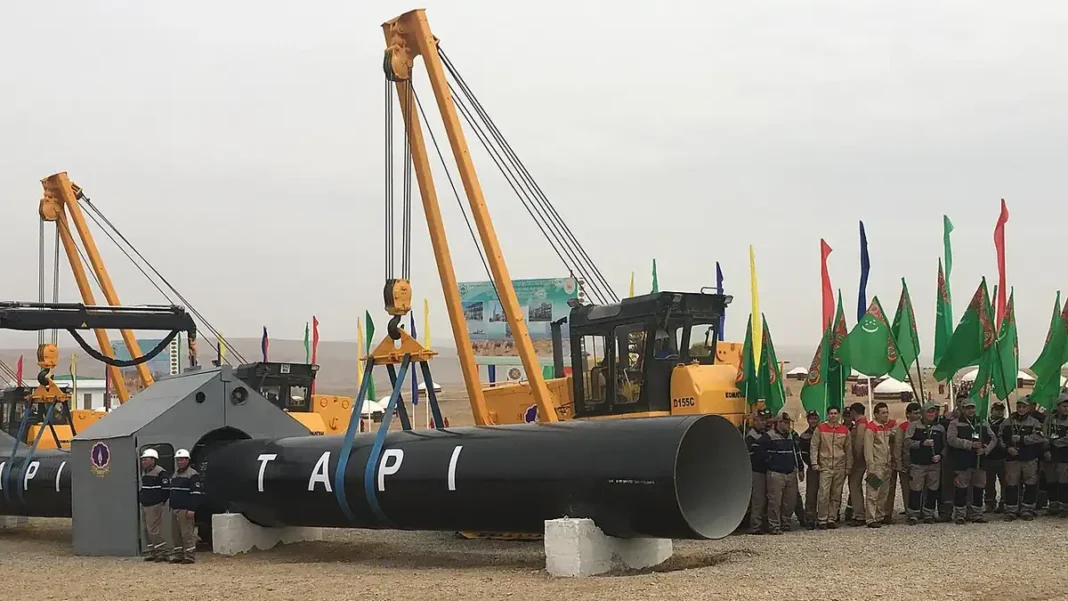
The 1,800-kilometre pipeline is expected to carry 33 billion cubic metres of natural gas every year from Turkmenistan’s Galkynysh field, the world’s second-largest gas field, to the Indian city of Fazilka. It will pass through Herat and Kandahar in Afghanistan, and Quetta and Multan in Pakistan.
The project has two phases. The free flow phase carries an estimated cost of $5-6 billion, while installing compressor stations will cost at least $1.9 billion. Progress has been delayed again and again, largely because of security problems in Afghanistan.
Pakistan and Turkmenistan signed a joint implementation plan for the pipeline in June 2023. In September 2024, Afghanistan said it would begin work on its section. The steering committee meeting agreed on Tuesday is meant to give the project fresh momentum at the political level, so the technical and commercial work can move ahead.
Feature Pakistan reported that Pakistan and Turkmenistan agreed direct flights at the same JIC session, and that Turkmenistan invited Pakistan to join the CASA-1000 power project. The TAPI decision is the third energy outcome from the session, which shows how central power and gas have become to the bilateral agenda.
Trade, transit and tourism also on the table
Dar said the talks on trade, investment and regional connectivity were held in a very cordial and constructive atmosphere. The two sides signed the protocol of the sixth JIC session, a Programme of Cooperation for the two foreign ministries for 2026 to 2030, and a memorandum of understanding on tourism cooperation.
“These instruments reflect the shared commitment of Pakistan and Turkmenistan to strengthening institutional cooperation, sustaining regular diplomatic engagement and promoting tourism and people-to-people ties,” the Foreign Office said.
The ministers discussed ways to advance work on a bilateral transit trade framework and to explore commercially viable transport links. They also welcomed closer engagement between the business communities and chambers of commerce of both countries.
The proposed Turkmenistan-Afghanistan-Pakistan electricity transmission project and its fibre optic link also came up, with both sides noting the need for further study of technical and commercial viability. The ministers further discussed interaction between the seaports of Chabahar and Gwadar, and rail connections through Afghanistan, with attention to route viability, tariffs and border procedures.
Dar said the talks also covered agriculture, industry, tourism, culture, higher education, information technology, health and financial services. Meredov said Turkmenistan was planning a state visit to Islamabad next year.
Feature Pakistan reported that Dar used the ECO ministerial meeting to press for cooperation against terrorism from Afghanistan, and covered the ECO Council of Ministers meeting in Islamabad itself. The JIC session carries that regional agenda into a bilateral setting.
What happens next
The steering committee meeting has no date yet, and its first task will be to settle the technical and commercial questions that have held the pipeline back. Gas through Quetta and Multan would give Pakistan a new supply source, but only if the committee can turn political agreement into construction on the ground.
Frequently asked questions
What is the TAPI gas pipeline?
TAPI is a 1,800-kilometre pipeline meant to carry 33 billion cubic metres of natural gas a year from Turkmenistan’s Galkynysh field to Fazilka in India, passing through Herat and Kandahar in Afghanistan and Quetta and Multan in Pakistan.
What did Pakistan and Turkmenistan agree on November 17?
The two countries agreed to convene a meeting of the steering committee for the TAPI project, at the sixth session of the Pakistan-Turkmenistan Joint Intergovernmental Commission in Islamabad.
How much will the TAPI pipeline cost?
The free flow phase is estimated at $5-6 billion, and installing compressor stations will cost at least $1.9 billion.
Why has the TAPI pipeline been delayed?
Progress has been delayed repeatedly, largely because of security problems in Afghanistan, through which the pipeline must pass.
What else was agreed at the Joint Commission session?
The two sides signed the protocol of the sixth JIC session, a Programme of Cooperation for the foreign ministries for 2026-2030, and a memorandum of understanding on tourism cooperation.