FCC Tells LDA to Stop Rashid Minhas Family Cases
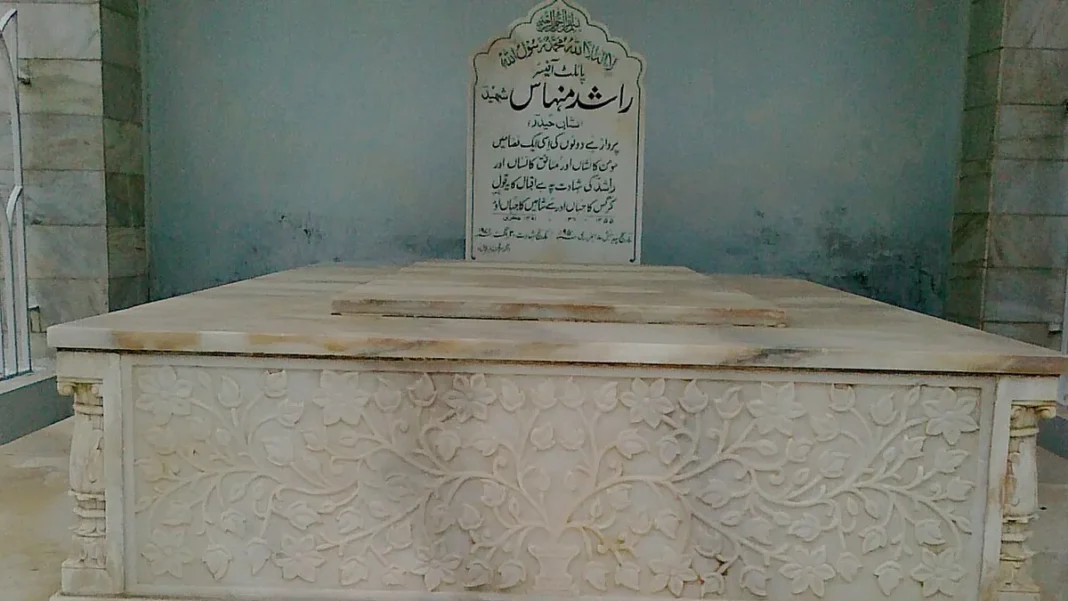
The Federal Constitutional Court has told the Lahore Development Authority to stop its frivolous litigation against the family of Rashid Minhas, the Pakistan Air Force pilot who received the Nishan-i-Haider, the country’s highest military gallantry award.
A three-member bench headed by Justice Ali Baqar Najafi dismissed the LDA’s appeal as devoid of merit in a judgment released on Tuesday, and refused leave to appeal.
The judge said the authority had dragged the family of the martyred officer into prolonged litigation over a property dispute, and dismissed the LDA’s objections as meritless.
“The family is facing the agony perpetuated by the LDA by dragging them in the courts in frivolous litigation,” Justice Najafi observed.
The Rashid Minhas case: a dispute over a 14-marla plot
The case concerned a 14-marla plot in Gulberg-III, Lahore. It began with a consent decree passed in favour of Farooq Minhas, the martyred pilot’s real brother, on 7 May 2005.
During execution proceedings, the LDA objected. It argued that the plot was evacuee property acquired by the authority for the development of the Gulberg-III scheme. It said its predecessor, the Lahore Improvement Trust, had paid the award amount and taken possession of the land on 24 December 1955.
It said the property fell within a notification of 6 August 1953, and that the award announced on 30 October 1962 had been finalised. It argued that no exemption or adjustment had been granted to the respondent’s predecessors-in-interest, Nawab Mirza and Maqsooda Begum.
The LDA also questioned Maqsooda Begum’s acquisition through a sale deed dated 7 March 1976 from Nawab Mirza, who had claimed ownership under Property Transfer Document No. 213, issued on 8 June 1966, four years after the award. The authority said the transaction was against policy.
Every court below had rejected the LDA
The FCC noted that the LDA’s objections had consistently been rejected by the executing court, the revisional court and the Lahore High Court. Justice Najafi observed that the appeal challenged concurrent findings of the three courts on the 7 May 2005 decree.
The court noted that the earlier decisions and the decree had attained finality, particularly as the consent decree had been passed on the basis of the LDA’s own “no objection”.
A declaration had also been granted in favour of Maqsooda Begum’s legal heirs, while the objections under Order XXI of the Code of Civil Procedure were frivolous and beyond the scope of an executing court.
The courts below had also rejected the LDA’s claim that the Central Government had transferred the evacuee portion of the land to the Lahore Improvement Trust through a notification issued on 16 May 1951, under Section 12 of the Pakistan (Administration of Evacuee Property) Ordinance, 1949. They observed that there was no evidence of such a transfer or of any payment having been made to the Trust or the custodian.
An old decision the LDA had already accepted
The FCC also referred to a 17 August 1980 decision of the Vigilance Commission, which stated that duly verified transfer orders would be honoured by the LDA and that only development charges would be recovered from the transferees. The authority had accepted and acted upon the decision, with its director general issuing the necessary directions.
The Lahore High Court had consequently directed the LDA to stop claiming ownership of the disputed land, the FCC observed.
The high court’s judgment was then challenged by the LDA before the Supreme Court, which dismissed the petition. The apex court held that the authority had no ownership rights over the land, as it had already been transferred by the Settlement Department to the occupants. It also found no reason to interfere with the high court’s findings.
The LDA faces other disputes too: its building control unification plan has hit deadlock in Lahore. The FCC recently declared a plea against the KP chief minister’s appointment infructuous after governors’ rule.
“Do not deplete public money”
Rather than imposing costs, the court chose a direct instruction to the authority’s chief.
“We, therefore, deem it appropriate that, instead of imposing costs, we direct the Director General, LDA, to ensure that the authority does not deplete its resources or public money on frivolous, vexatious and obnoxious litigation against individuals,” Justice Najafi observed.
The message reaches beyond this one plot: a public body that spends years in court against a martyr’s family, after losing at every level, wastes public money.
For the Minhas family, the ruling ends a case that has run for two decades since the consent decree. Feature Pakistan’s tribute to Havildar Muhammad Adnan Khan Shaheed and its tribute to Major Omer Minhas Nasir Shaheed record the same duty: the country remembers its fallen, and the state should not add to their families’ grief.
Frequently asked questions
What did the Federal Constitutional Court decide?
It dismissed the LDA’s appeal as devoid of merit, refused leave to appeal, and directed the LDA director general to ensure the authority does not spend public money on frivolous litigation against individuals.
Who is Rashid Minhas?
He was a Pakistan Air Force Pilot Officer who received the Nishan-i-Haider, the country’s highest military gallantry award, after dying in the 1971 war.
What was the property dispute about?
The LDA claimed a 14-marla plot in Gulberg-III, Lahore, was evacuee property acquired for the scheme, while the Minhas family relied on a consent decree of 7 May 2005 in favour of Farooq Minhas.
Which judges heard the case?
Justice Ali Baqar Najafi headed the three-member bench, with Justice Rozi Khan Barrech and Justice Syed Arshad Hussain Shah.
Had other courts already ruled on the matter?
Yes. The executing court, the revisional court, the Lahore High Court and the Supreme Court had all rejected the LDA’s objections before the FCC dismissed its appeal.