
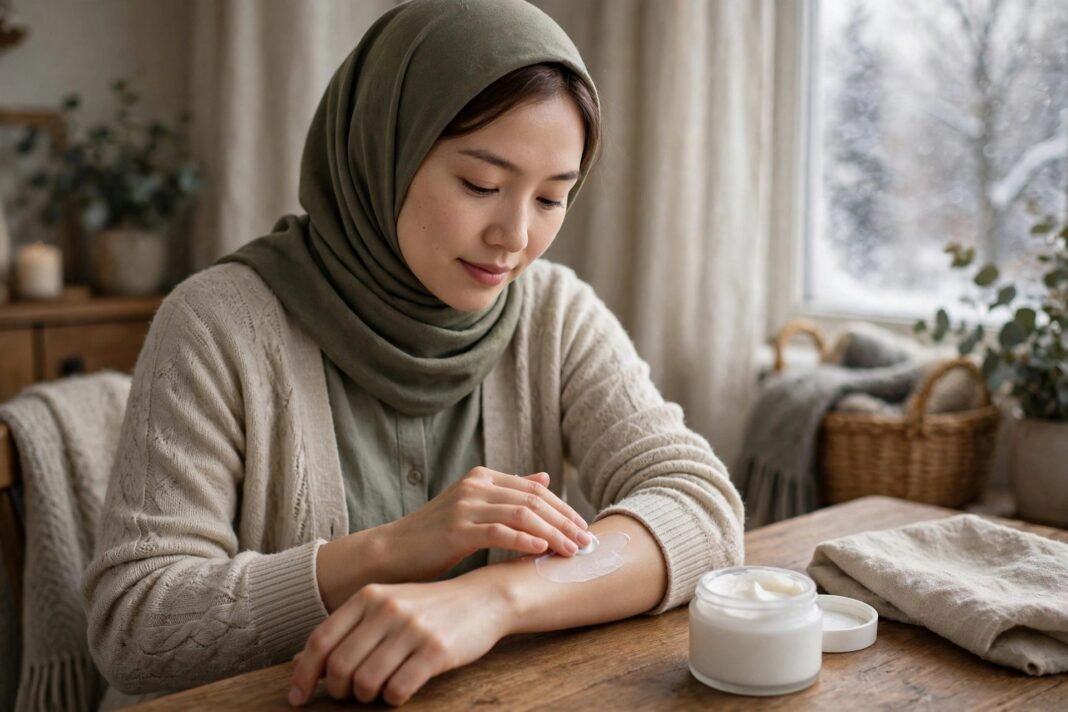
Winter arrives, and your skin knows it first. The itch returns, the dry patches spread, and the redness flares up again. For many women, winter eczema flare-ups are the hardest part of the cold season.
Cold air holds little moisture. Indoor heating dries the air even more. Together, they pull water from your skin and weaken its protective barrier. As a result, eczema that was quiet in summer can flare all winter long.
The good news is that small daily habits can calm your skin. This guide explains why winter is so hard on eczema, and it shares a gentle routine that can help. If itchy skin troubles you in other seasons too, our guide to autumn skin itching and eczema may help as well.
Winter Eczema Flare-Ups: Why the Cold Season Is Hard on Skin
Eczema is a common skin condition that causes dry, itchy, inflamed skin. In winter, many people find their symptoms get worse. The cold season brings more dry skin, more itching, and more flare-ups.
The reason is simple: winter air is dry. Cold outdoor air holds very little moisture, and heated indoor air is dry too. Both pull water from your skin, day after day.
Eczema already weakens the skin barrier. That barrier is the thin outer layer that holds water in and keeps irritants out. In winter, it loses water faster than it can hold, so it cracks, tightens, and itches.
Flare-ups can also affect your mood and sleep. Itching at night can keep you awake, and poor sleep makes everything harder. So winter eczema is not just a skin problem. It can shape your whole day.
What Happens to Your Skin Barrier in Winter
Think of your skin barrier as a brick wall. The skin cells are the bricks, and natural oils are the mortar. In healthy skin, the wall holds firm.
In eczema, the wall has gaps. Moisture escapes through the gaps, and irritants slip in. Winter makes the gaps worse, because dry air pulls out even more moisture.
Once the barrier weakens, the itch-scratch cycle begins. Itching damages the skin further, which makes it itch even more. That is why protecting the barrier is the heart of winter eczema care.
Scratching feels good for a moment, but it makes things worse. It breaks the skin open, and broken skin lets in germs. That is why keeping your nails short can help. It also helps to pat or press itchy skin instead of scratching it.
Cold Air, Dry Air and Indoor Heating
Step outside in winter, and the cold air hits your face and hands. It feels sharp, and it dries your skin fast. Wind makes it worse, because moving air pulls moisture away even faster.
Step back inside, and the air is no kinder. Central heating warms the room but dries the air. So your skin gets no break, indoors or out. Our guide to winter dry skin care has more tips for protecting your face, hands and lips in the cold.
Covering exposed skin outside can help. Gloves protect your hands, and a soft scarf can shield your face. At home, a humidifier can add moisture back to dry indoor air.
Hot Showers: A Comfort That Backfires
A long hot shower feels wonderful on a cold day. Yet hot water strips the natural oils from your skin. As a result, it can dry your skin out and worsen eczema.
Lukewarm water is kinder. Keep showers short, around five to ten minutes, and use a gentle cleanser. Avoid harsh soaps, because they strip moisture too.
Pat your skin dry with a soft towel. Do not rub, because rubbing can irritate skin that is already sore. Then moisturise straight away, while your skin is still slightly damp.
If your hands are the worst area, wear cotton gloves under warm gloves outside. At home, wear gloves for washing up and cleaning. Water and detergents are hard on eczema-prone hands.
Winter Eczema Flare-Ups and the Clothes You Wear
Winter clothes can help or hurt your skin. Rough fabrics like wool can scratch and irritate. Heavy layers can make you overheat, and overheating brings on itching.
Soft, breathable cotton is the kindest layer next to your skin. Wear it under wool jumpers and heavy coats. Loose fits are better than tight ones, because they let air move.
Wash new clothes before you wear them, and choose a gentle, fragrance-free laundry detergent. Harsh detergents can leave residue that irritates eczema-prone skin.
Indoor Allergens: The Hidden Winter Trigger
In winter, we spend more time indoors. That means more contact with indoor allergens such as dust mites, pet dander, and mould. For some people with eczema, these can trigger a flare.
Simple steps can cut down allergens at home. Wash bedding often, vacuum regularly, and keep pets out of the bedroom if they trigger your skin.
Fresh air helps too. Open a window for a short time each day, even in winter. A brief airing can lower indoor dampness and freshen the air.
Stress can also trigger a flare, and the holiday season can be stressful. So try to keep some calm time in your day. For example, a quiet walk, a good book, or a few deep breaths can all help. Your skin often calms down when you do.
Your Gentle Winter Bathing Routine
A good bathing routine can calm winter eczema. Use lukewarm water, keep it short, and choose a gentle, soap-free cleanser. Harsh soaps and bubble baths can make things worse.
After bathing, pat your skin gently and moisturise within a few minutes. This locks in the water that is already on your skin. It is the most important step in the whole routine.
Some people find an evening bath helps them sleep. Warm water relaxes the body, and a thick layer of moisturiser after the bath protects the skin overnight. Keep the bathroom warm before you step in, so the change in temperature is less of a shock to your skin.
Winter Eczema Flare-Ups: How to Moisturise the Right Way
Moisturiser is your skin’s best friend in winter. Creams and ointments work better than thin lotions, because they hold more moisture in the skin. Choose a fragrance-free product, because fragrance can irritate eczema.
Apply moisturiser often, several times a day if your skin is very dry. Carry a small tube with you, and use it after every hand wash. Your hands face soap, water, and cold air all day.
For very dry patches, a thick ointment or petroleum jelly can help. It forms a protective layer that locks moisture in. Apply it at night for the best effect. The National Eczema Association winter guide has more advice on choosing the right moisturiser for cold weather.
If a product stings or burns, stop using it. Tell a dermatologist about anything that irritates your skin, even a moisturiser.
Small Home Changes That Help Your Skin
Your home can work for your skin or against it. A humidifier adds moisture to dry indoor air, which helps your skin stay hydrated. Keep the heat at a comfortable level, because overheating dries the air and the skin.
Keeping your home around 18 degrees can help. Lower heat means less dry air. A slightly cooler bedroom can also help you sleep better, and good sleep helps your skin heal.
Keep moisturiser where you can see it. One by the sink, one by your bed, and one in your bag. When it is close at hand, you will use it more often. Dermatologists also advise simple daily steps for dry skin, such as short warm showers and gentle, fragrance-free products.
When to Talk to a Doctor About Eczema
Most winter eczema can be managed with gentle daily care. However, some flares need medical help. See a doctor if your skin does not improve, or if it gets worse despite good care.
Also seek help if your skin becomes very sore or weepy, or if you notice yellow crusts or oozing. A doctor can check your skin and adjust your treatment if needed.
There is no cure for eczema, but it can be managed well. With the right routine and the right support, winter does not have to mean months of itching.
What helps your skin most in winter? Share your best tip in the comments, because your routine may help another woman through the cold season.
This article is for general information only. It is not medical advice. If you are worried about your skin, please talk to a healthcare professional.