UN Winterisation Strategy for Pakistan
The United Nations has unveiled an inter-agency winterisation strategy for Pakistan that aims to help more than 826,000 people through the cold months, but less than a fifth of the money needed is in hand.
Prepared jointly by the UN Office for the Coordination of Humanitarian Affairs (UN-OCHA) and the International Organisation for Migration (IOM), it covers the October to March winter window and targets disaster-affected, displaced and highly vulnerable households.
The document puts the total requirement at more than $3.54 million. Humanitarian partners have only $540,100 available, plus $90,000 in pooled funds. That leaves a shortfall of more than $2.9 million before the coldest weeks arrive.
The gap would fall to $1.92 million if the Sindh caseload is withdrawn, since no major disaster struck Sindh this year and winter support there is more of a contingency than an active need.
What the winterisation strategy will deliver
The main response is winter-appropriate non-food items, including blankets, quilts, warm clothing and essential bedding. These will reach families through in-kind distributions, or through cash-based assistance where markets are functional and accessible.
Where needed, the kits will be backed by weatherproofing, insulation, shelter improvements and heating solutions, focused on immediate needs rather than longer-term services.
In all, 53 priority districts have been identified across six provinces and regions, in consultation with the provincial disaster management authorities and sector partners.
The estimated affected population is 4.13 million people. Of these, the shelter sector aims to support 826,106 individuals, or 118,015 families, with one winterisation kit per family.
Particular care will go to women-headed households, children, older persons, persons with disabilities and households with specific protection needs.
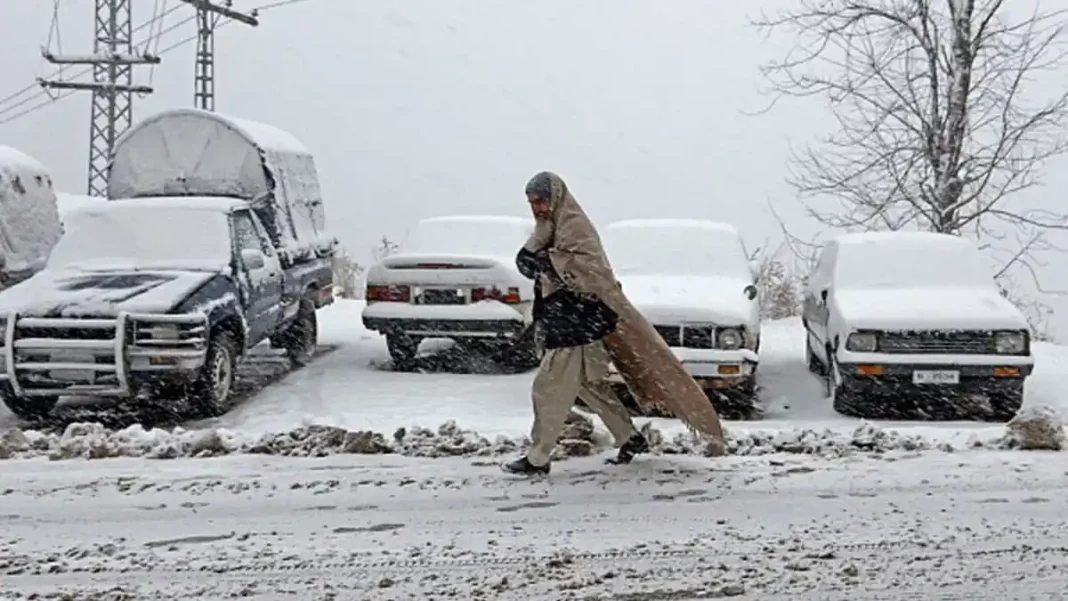
The north faces the harshest winter
High-altitude areas face sub-zero temperatures, heavy snowfall, road closures and limited shelter and heating. Priorities draw on the National Disaster Management Authority’s Disaster Early Warning-4 for October to December 2026.
In Gilgit-Baltistan, nine districts are priorities: Astore, Diamer, Ghizer, Ghanche, Kharmang, Skardu, Shigar, Nagar and Hunza. In Azad Jammu and Kashmir, the four highest-priority districts are Muzaffarabad, Neelum, Poonch and Haveli, where heavy snowfall, landslides and seasonal road closures can cut off remote communities.
In Khyber Pakhtunkhwa, 16 districts are priorities, with about 1.44 million people expected to need support. Seven are very high risk: Swat, Upper Dir, Shangla, Mansehra, Lower Chitral, Upper Chitral and Upper Kohistan. Battagram and Khyber are medium risk, and Orakzai, North Waziristan, South Waziristan and Kurram are also included.
Winter has already started to bite in the north. Snow and landslides shut roads in Kalam and Kaghan earlier this month, and snowfall stranded passengers at Khunjerab Pass in Gilgit-Baltistan.
Punjab and Sindh face a different risk
In lower-altitude and flood-affected districts in Sindh and Punjab, winter may deepen the hardship of households still in temporary shelters after previous floods. Cold nights, fog and smog add to the strain.
Punjab is a moderate priority. In upper Punjab, the Chenab and Ravi catchment districts of Mandi Bahauddin, Gujranwala, Gujrat, Hafizabad, Nankana Sahib, Narowal and Sialkot face seasonal cold, fog and air-quality concerns.
Heating will matter as much as shelter. Pakistan has lined up winter gas and LNG cargoes for the season, but fuel costs remain high for poor households. Short-term inflation is running at 10.41 per cent year on year, with LPG recording the sharpest annual rise of any item at 87.99 per cent.
Unicef support and what happens next
Unicef will provide 14,000 children’s winter clothing kits, 24,600 blankets and 1,920 quilts across six provinces and regions during November and December 2026.
The immediate question is funding. With only $630,100 in hand against a need of more than $3.54 million, the plan can only reach its target of 826,106 people if donors close the gap in the coming weeks.
Frequently asked questions
What is the UN winterisation strategy for Pakistan?
An inter-agency plan by UN-OCHA and IOM for winter 2026-27, covering October to March, giving immediate winter help to disaster-affected, displaced and vulnerable households.
How much money is needed, and how much is available?
The total requirement is more than $3.54 million. Only $540,100 is available with humanitarian partners, plus $90,000 in pooled funds, leaving a shortfall of more than $2.9 million.
How many people will the strategy help?
826,106 individuals, or 118,015 families, with one kit per family, out of an estimated affected population of 4.13 million.
Which districts are the highest priority?
Fifty-three districts are priorities. The harshest exposure is in Gilgit-Baltistan, mountainous Azad Jammu and Kashmir, northern and high-altitude Khyber Pakhtunkhwa, and selected highland districts of Balochistan.
What will families receive?
Blankets, quilts, warm clothing and bedding, in kind or as cash where markets work, plus weatherproofing, insulation and heating help where needed.