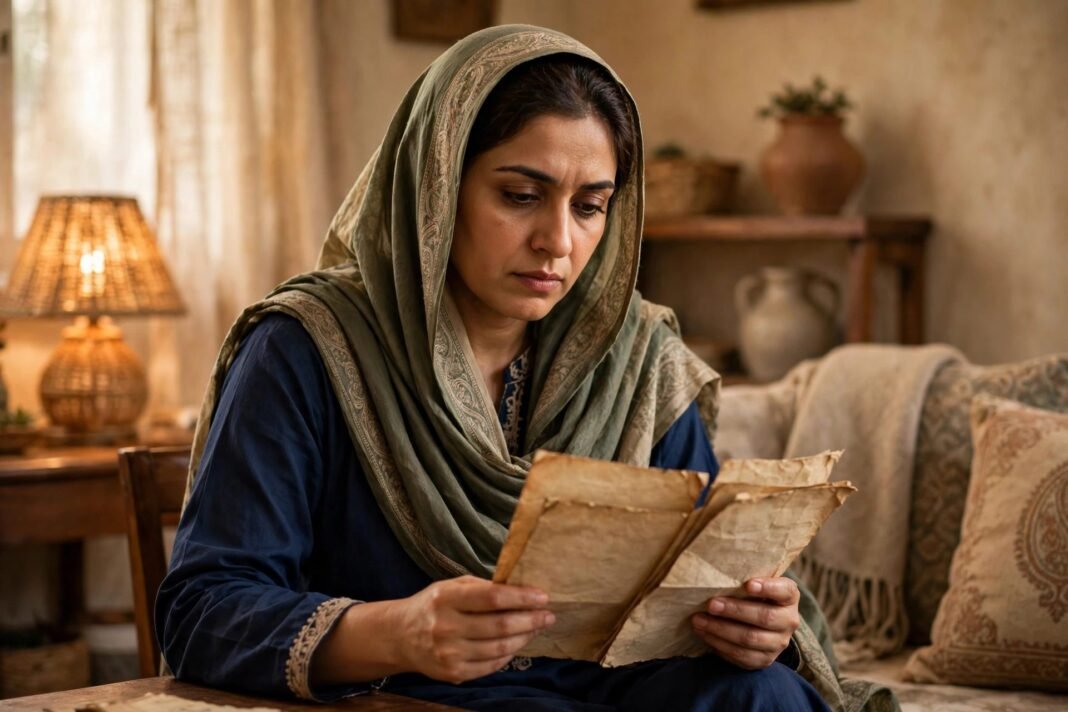
When her father died, Sara did not ask for anything. The house and the small piece of land were her parents’ whole life, and she did not want a fight. Her brothers handled the papers, and life moved on. Months passed, and then years. Her name never appeared on any document, and no one in the family spoke about her share again. Sara is not one woman. Her story is a story many Pakistani women know by heart. Women inherited property rights exist in the law, yet many women never receive what is theirs. So why does this keep happening, and what can change it?
What the Law Says About Women Inherited Property Rights
The law is clear, and it is on the woman’s side. Under Islamic law in Pakistan, daughters, wives, mothers and sisters all have fixed shares in a deceased relative’s estate. A daughter inherits alongside her brothers, and her share is half the share of a son. If there is no son, one daughter takes half the estate, and two or more daughters share two-thirds between them. A widow takes one-eighth where there are children, and one-fourth where there are none. A mother takes one-sixth where there are children, and one-third in other cases. In addition, the Muslim Family Laws Ordinance of 1961 says the children of a child who died before a parent take the share their parent would have taken. In short, a woman’s share is hers by right, and no family custom can cancel it.
Why So Many Women Never Get Their Share
If the law is clear, why do so many women still go without? The answer is rarely one single act. Instead, it is a slow process, and it often starts with silence. First, the family records the inheritance mutation only in the sons’ names, and the sisters are told it is a formality that will be fixed later. But later never comes. In other cases, a paper appears that says the father gifted the property to a son during his lifetime. Or a relinquishment paper appears, and it claims the sisters signed it. Sometimes the family pays her a small sum and calls it her share, even though it is far less than the real value.
And very often, the family simply waits. Her family tells her that asking for her share will break the family, and so she stays quiet to keep the peace. In each case, women inherited property rights stay on paper while others hold the land.
Behind all of this sits fear. A woman may fear losing her brothers, her home, or her place in the family. She may not know the law, or she may not know which office to visit. She may have no papers of her own, because others hold the documents. As a result, the share that is hers on paper quietly becomes someone else’s in practice. The law has not failed her. What has failed is the road between the law and her life.
What It Costs Her
When women inherited property rights are ignored, the loss runs deeper than money. For a woman with no other safety net, her share may be the one thing that stands between her and hardship. Without it, she may fall into financial dependence, and rely on others for every rupee. She may stay in a bad marriage because she has nowhere else to go. She may feel small in her own family, as if her needs matter less than everyone else’s. Over time, that feeling eats away at her confidence. She may stop asking for anything at all, even things she truly needs. And the grief of losing a parent grows heavier when it is mixed with the quiet knowledge that her family left her out. This is why the issue matters so much. It is not about greed. It is about dignity, safety and a fair share.
When Women Inherited Property Rights Are Denied, the Law Can Help
The good news is that the law now offers more than one way forward. The Enforcement of Women’s Property Rights Act of 2020 gives a woman a direct and faster route. Under this law, a woman whose family denies her property can complain to the Ombudsperson. The Ombudsperson can look into the matter and order the family to hand her property back, without the long wait of an ordinary court case. The complaint is free, and she does not need a lawyer to make it. Punjab passed its own version of this law in 2021.
In addition, depriving a woman of her inheritance by deceit is a crime under Section 498-A of the Pakistan Penal Code, and it can carry imprisonment of up to ten years and a fine. For cases that need a full hearing, a woman can also file a civil suit for declaration and partition, and ask the court to stop any sale of the property in the meantime. In many homes, this kind of pressure goes hand in hand with financial abuse, which often stays hidden for years. Meanwhile, the national identity system now requires biometric verification of every heir before officials issue a succession certificate, and that makes it harder to leave a sister off the record without her knowing.
Practical Steps to Protect Your Share
Knowing your rights is the first step. Taking small, practical steps is the second. Here is what can help, whether the loss of a parent is recent or long past:
- Keep your own papers. Ask for a copy of the death certificate, the family registration certificate, and the property record. These papers show who the heirs are and what was recorded.
- Check the record early. Find out whether the inheritance mutation lists your name. If it does not, ask why, and do not accept “later” as an answer.
- Talk early, while everyone is still together. A calm talk with the family soon after a parent’s death is easier than a fight years later.
- Never sign a paper you do not understand. Do not sign a relinquishment or a gift paper under pressure. If someone asks you to sign, take the paper away and get advice first.
- Keep copies of everything. Save every paper, message and receipt in a safe place of your own.
- Get advice before you act. A short talk with a lawyer or a legal aid service can tell you which route fits your case, and many of these services are free.
None of this is easy, and no one should have to fight her own family for what is hers. But each small step makes the next one easier, and a paper trail is hard to argue with.
Where to Get Help
You do not have to face this alone. The AGHS Legal Aid Cell in Lahore began work in 1986, and it was Pakistan’s first free legal aid centre. It gives free legal help to women, and it still works with women across Punjab today. The Federal Ombudsperson Secretariat for Protection against Harassment of Women at the Workplace, known as FOSPAH, also takes complaints from women denied their property under the 2020 Act. In addition, the Aurat Foundation and the provincial commissions on the status of women can point you to legal aid and support in your area. If children are part of the picture, it also helps to know a mother’s custody rights, so you can protect them too. If money is a worry, start with one of these free services. A single conversation can show you the road ahead, and you can decide your next step from there.
Women inherited property rights are not a favour. They are a right. The law already says so. The work now is to make the law real in every family, one woman at a time. If this story sounds like yours, or like someone you love, what is the one small step you could take this week?