Imagine you need new shoes. You cannot simply buy them. First, you must ask your husband for the money, explain why you need them, and hope he agrees. For millions of women, this is daily life. This is financial dependence in marriage.
Financial dependence in marriage means a woman has no income of her own. As a result, she relies on her husband for every expense, from groceries to medicine. She may run the whole household, yet she holds no money in her own name. This article explains how dependence builds, what it costs, and how a woman can build a way out.
What Financial Dependence in Marriage Really Looks Like
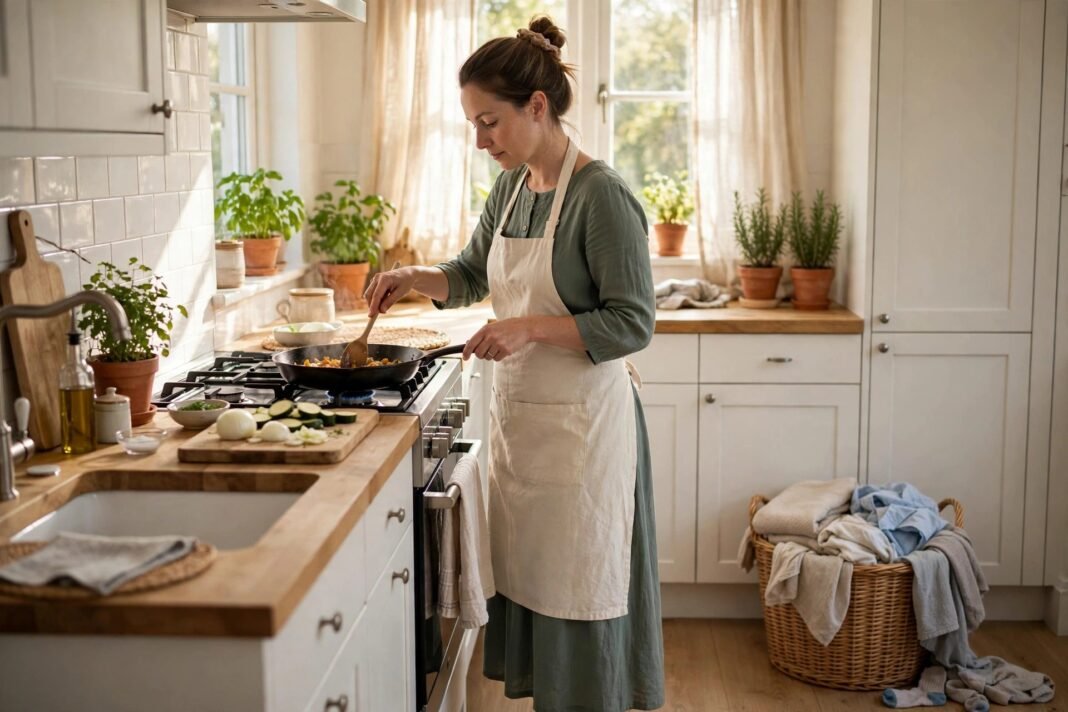
In fact, dependence rarely looks dramatic from the outside. The family may seem comfortable, with a home, food, and children in school. But inside the home, only one person holds the money. The wife asks for every coin she spends.
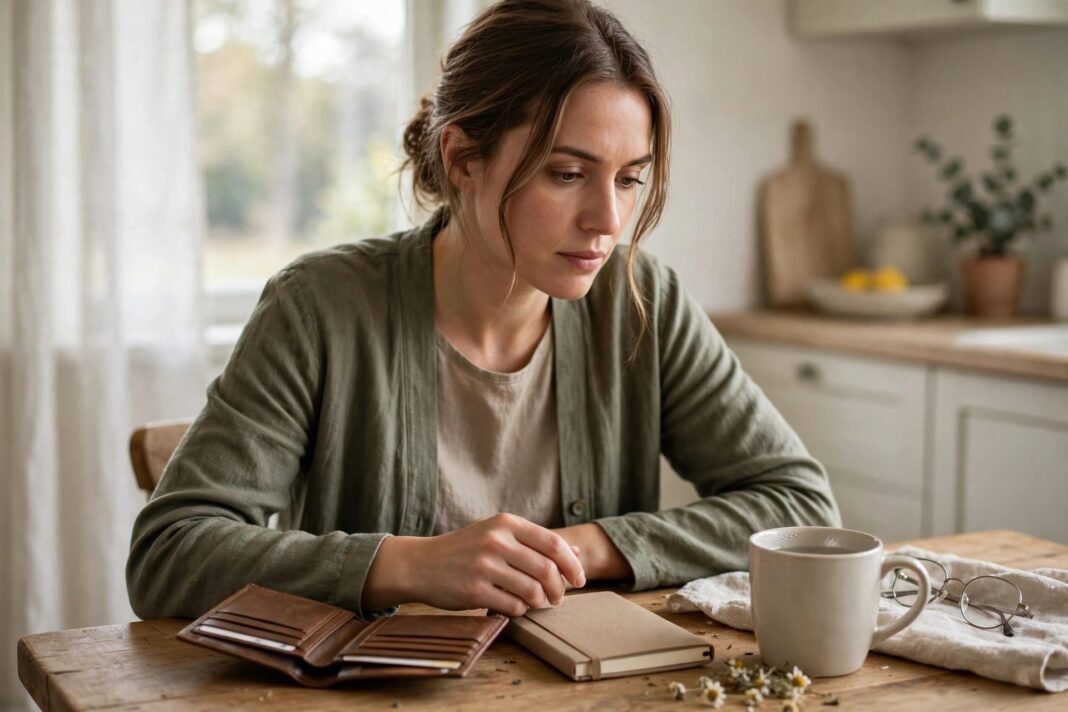
For example, she may need permission to buy clothes for herself. She may feel guilty about a haircut or a visit to a friend. Small choices, like a gift for her mother, become requests she must justify. Over time, asking for money starts to feel like asking for a favour.
This is not about being rich or poor. A woman can live in a wealthy home and still have nothing of her own. What matters is control. If she cannot spend a single coin without asking, she is financially dependent.
How Financial Dependence in Marriage Builds Slowly
Few women choose dependence in one moment. Instead, it builds step by step. Often, it starts with a good reason. She leaves her job to care for a baby, or she moves for her husband’s work.
At first, the plan is short. She will return to work when the baby is older. But then a second child arrives, or the school run needs her, or her parents need care. Years pass, and the gap in her work history grows.
Meanwhile, the household runs on one income. Her husband’s account pays the bills. Her name is not on the account, or she has no account at all. She manages the home, but she does not manage any money. Slowly, without anyone planning it, financial dependence in marriage becomes her daily reality.
The Numbers Behind the Problem
The scale of this problem is large. Around the world, women earn about 20 per cent less than men. In other words, a woman earns roughly 80 cents for every dollar a man earns. As a result, that gap makes it harder for women to build savings of their own.
Women are also far less likely to be in paid work. In 2022, about 61 per cent of women aged 25 to 54 were in the labour force, compared with about 91 per cent of men. For mothers with a child under six, the gap is even wider. Only about 53 per cent of those mothers were working, against about 96 per cent of fathers.
Unpaid care work is a major reason. Women perform more than three quarters of all unpaid care and domestic work around the world. In fact, 45 per cent of working-age women stay out of the labour market because of care duties. For men, the figure is only 5 per cent.
Bank accounts tell the same story. A World Bank survey in 2024 found that 77 per cent of women worldwide had a financial account, against 81 per cent of men. In lower-income countries, only 73 per cent of women had one. An account in her own name is often the first step toward independence.
What It Costs: Choices, Dignity, and Peace of Mind
Dependence costs more than money. First, it costs choices. A woman with no income cannot decide how the household money is spent. She cannot save for her own goals, and she cannot make a plan that is hers alone.
It also costs dignity. Asking for money for basic needs can feel humiliating. A woman may skip things she needs, like medicine or new shoes, rather than ask again. Over time, she may stop asking at all.
Then there is the cost to safety. A woman with no money of her own cannot easily leave a bad situation. She may stay in an unhappy marriage because she has nowhere to go and no way to support herself. Money, in this way, is not only about spending. It is about having a choice.
Dependence can also damage health. Constant worry about money raises stress. A woman may lie awake, wondering what would happen if her husband lost his job or fell ill. Peace of mind is hard to find when your security depends on one person.
Dependence Is Not the Same as Abuse
It is important to draw a clear line here. Financial dependence is not the same as financial abuse. Dependence means a woman has no income of her own. Abuse means a partner deliberately uses money to control her.
A partner who withholds money on purpose, forbids her from working, or takes her earnings away is not just part of a dependent arrangement. That behaviour is financial abuse. If that sounds familiar, our guide to financial abuse in marriages explains the signs and where to get help.
Many dependent marriages are loving ones. The husband may be kind, and the wife may have chosen to stay home. Dependence can still trap her, even in a good marriage. Illness, job loss, or divorce can change everything overnight. That is why every woman needs some money of her own, whatever her marriage looks like today.
Step One: Your Own Bank Account
The first step is simple, and it changes everything. Open a bank account in your own name. An account gives a woman a place to keep money that is hers alone. It also builds a financial record in her name, which matters for loans and support later.
If you already share an account, ask for a personal one too. Many banks offer accounts with no minimum balance. A mobile money account can work just as well in places where banks are hard to reach.
So start small. Even a tiny amount saved each week adds up. The point is not the size of the sum. It is the habit, and the quiet knowledge that some money is yours.
Digital payments can help too. A World Bank survey in 2024 found that half of women account holders opened their first account to receive a wage or a government payment. So if you earn anything at all, ask for it to be paid into your own account.
Step Two: A Skill You Can Earn With
Money follows skill. A woman who can earn has choices, even if she does not work full time. So the second step is to build or refresh a skill that people will pay for.
Think about what you already know. Cooking, sewing, tutoring, childcare, and beauty skills can all earn money. Digital skills, like typing, design, or managing social media pages, can open doors too. Many free courses online teach these skills step by step.
If you left work years ago, do not let that stop you. A short course can refresh old skills. Volunteering can rebuild confidence. Our guide to returning to work after maternity leave has practical steps for women restarting their careers.
Learning takes time, and that is fine. One hour a day, kept up for months, can change what a woman can earn. The goal is not a perfect career. It is the ability to earn, whenever she needs to.
Step Three: A Small Income of Your Own
A skill becomes freedom when it earns money. The third step is to turn that skill into a small income. It does not need to be large. Even a modest income of her own changes how a woman feels about herself and her choices.
For example, home-based work suits many mothers. Baking, tailoring, tutoring children, or selling handmade goods can all start from home. Online work, like freelance writing or virtual help, can fit around school hours too.
Keep this income in your own account. Use some of it for the family, by all means, but save a part for yourself. A small emergency fund, even a few weeks of expenses, gives a woman room to breathe.
Above all, treat your earnings as real. They are not pocket money. They are proof that you can support yourself. That proof matters, most of all, to you.
Know Your Rights and Talk About Money
Money is easier to handle when it is talked about openly. Many couples never discuss finances honestly. That silence helps dependence grow, because no one names the problem.
Start the conversation calmly. Ask how the household budget works. Ask to see the bills and the savings. A wife who runs the home has every right to know how the money flows. Shared knowledge is the first step to shared control.
Learn your legal rights too. In many countries, a wife has rights to marital property and support, even if she never earned a wage. A local legal aid service or women’s organisation can explain what applies where you live. Knowing your rights costs nothing, and it protects everything.
Agree on a fair system together. Some couples share one pot and each take a personal allowance. Others split bills by income. Whatever the system, a wife should have money she can spend without asking.
Breaking Free From Financial Dependence in Marriage
Freedom does not arrive in one day. It grows with each small step: an account, a skill, an income, a conversation. Each one loosens the trap a little more.
Help is available too. Women’s World Banking works around the world to give women access to accounts, savings, and credit. You can read more about women’s economic empowerment on the UN Women site, including the facts behind this article. The World Bank’s Global Findex also tracks how women’s access to accounts is changing around the world.
If you are financially dependent today, you are not alone, and you are not to blame. The system that kept women out of paid work was built long before you. But the steps out of it are yours to take, one at a time.
Every woman deserves money of her own. Not because marriage is a battle, but because a woman with choices is a woman with dignity. Start small, start today, and keep going.
Have you ever had to ask for money for something you needed? What helped you, or what would help you now? Share your story in the comments, because your words might help another woman take her first step.
This article is for general information only. If you need advice about money or your legal rights, speak to a trusted local service in your area.