


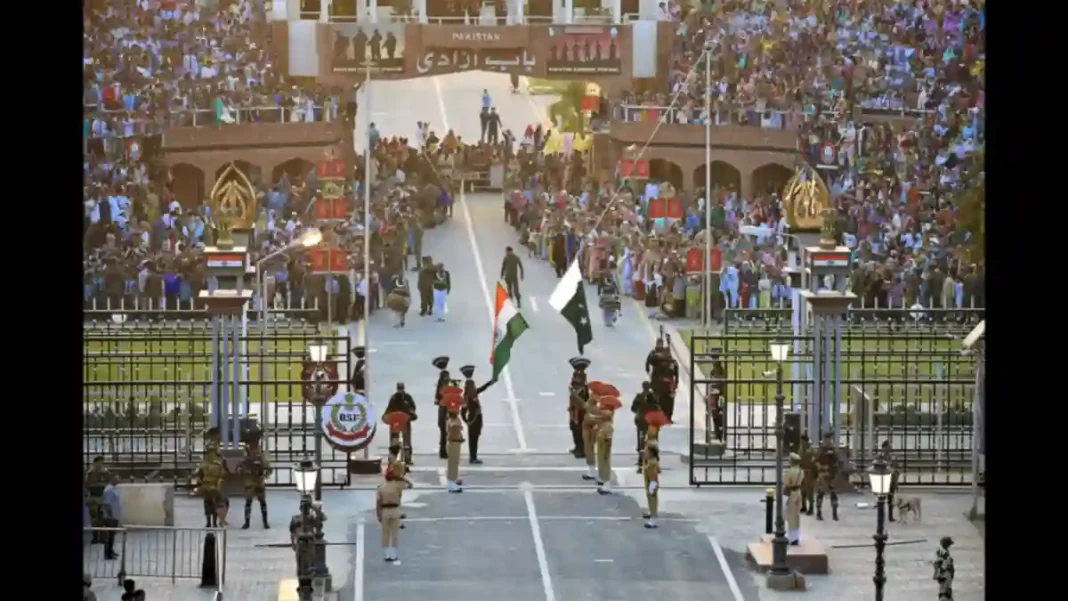
پاکستان زندہ باد — “Long Live Pakistan.” Three words that have carried the nation’s hopes since before it existed. This guide explains what Pakistan Zindabad means in Urdu, where the slogan came from, and how to write about it in essays and speeches.
Quick answer: “Long live Pakistan in Urdu” is پاکستان زندہ باد (Pakistan Zindabad). The slogan rose after Choudhry Rahmat Ali’s 1933 Pakistan Declaration, was adopted by the All-India Muslim League and as a national slogan in December 1940, and became Pakistan’s great patriotic cry at independence on 14 August 1947.
What “Long Live Pakistan” Means in Urdu
پاکستان زندہ باد
Pakistan Zindabad (پاکستان زندہ باد) literally means “Long Live Pakistan” — or, in freer translation, “Victory to Pakistan”. Zindabad is a Persian-origin suffix placed after a person, cause or country to cheer it on: Inquilab Zindabad (long live the revolution) works the same way. It is at once a greeting, a prayer and a pledge.
History of the Slogan
The phrase caught fire after 1933, when Choudhry Rahmat Ali’s “Pakistan Declaration” gave the Pakistan idea its name and the Muslims of British India began organising around it. The All-India Muslim League adopted it as the movement’s rallying cry through the 1940s — supporters even embroidered it on handkerchiefs. On 23 December 1940, the Bihar Muslim Student Federation formally adopted Pakistan Zindabad as its national slogan for every meeting and gathering. When Pakistan was born on 14 August 1947, the cry echoed across the new country — raised by locals welcoming refugees, and by refugees crossing into their new homeland.
It remains the country’s signature expression of nationalism: chanted on Independence Day, at the Wagah border ceremony, in cricket stadiums, and by soldiers and citizens alike. Our current affairs in Urdu pillar places it in the wider story of Pakistan’s public life.
Pakistan Zindabad Today
Today the slogan lives everywhere: military parades, political rallies, sports victories, national holidays — and in the call-and-response of crowds at the Wagah-Attari border ceremony each evening. It is also a staple of patriotic songs and Independence Day broadcasts. Like all great slogans, its power is in its simplicity: three words even a child understands.
Essay & Speech Notes
Writing on Pakistan Zindabad for school or CSS? Anchor your essay on three pillars: origin (1933 Declaration → Muslim League → 1940 adoption → 1947), meaning (linguistic roots in Persian zindabad, layers of greeting/prayer/pledge), and living relevance (Independence Day, Wagah, cricket, national unity across ethnicities). Open with the Urdu — پاکستان زندہ باد — and close on what it demands: that the Pakistan it cheers is worth the cheering.
Frequently Asked Questions
How do you write “long live Pakistan” in Urdu?
پاکستان زندہ باد — transliterated as “Pakistan Zindabad” and translated as “Long Live Pakistan” (also rendered “Victory to Pakistan”).
Who started the Pakistan Zindabad slogan?
No single person coined it, but it was popularised by the Pakistan Movement after Choudhry Rahmat Ali’s 1933 Pakistan Declaration, adopted by the All-India Muslim League in the 1940s, and formally adopted as a national slogan by the Bihar Muslim Student Federation on 23 December 1940.
What does Zindabad mean?
Zindabad is a Persian-origin suffix meaning “long live” — a cheer placed after a name to express victory, patriotism or prayer. Its opposite is murdabad (“down with”).
When is Pakistan Zindabad chanted?
On Independence Day (14 August), at military parades, cricket matches, political rallies, the daily Wagah border ceremony, and in moments of national celebration or crisis.

 — meaning, history from 1933 to 1947, and essay notes. Complete guide.)