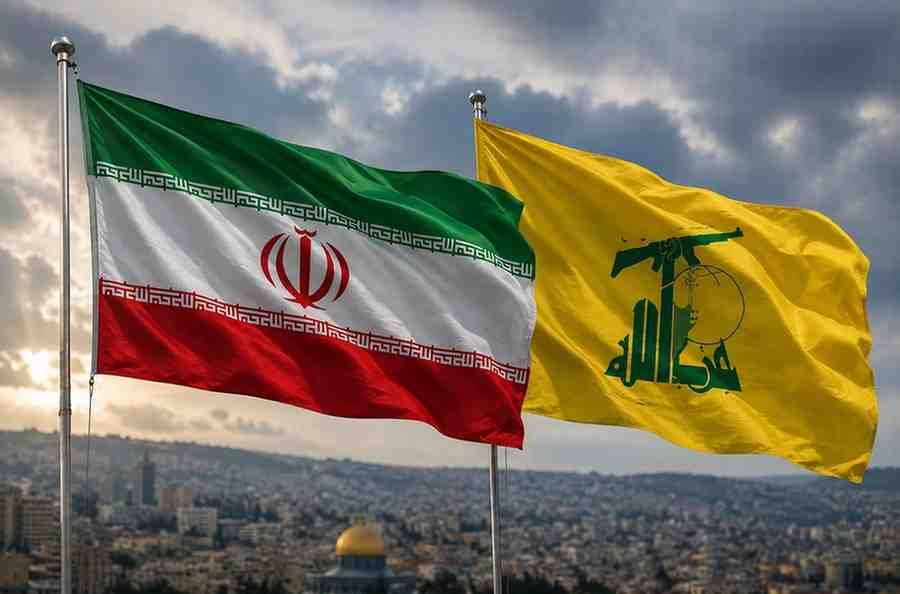
Iran Hezbollah Policy has moved into the spotlight after Iran’s Supreme Leader Mojtaba Khamenei reaffirmed Tehran’s support for Hezbollah and called for an immediate end to Israeli military operations in Lebanon. His latest remarks came during a period of heightened regional tensions and renewed diplomatic debate.
Khamenei released his statement on Sunday in response to a message of loyalty sent by Hezbollah’s Secretary-General and members of the organization. The exchange took place through posts shared on the social media platform X. The public response quickly attracted attention across the Middle East.
According to Khamenei, Iran continues to stand firmly with Lebanon and Hezbollah. He urged Israel to stop all military operations against Lebanon without delay. He also described such a move as necessary for regional stability.
The latest Iran Hezbollah Policy statement also referred to discussions involving the United States. Khamenei said any Memorandum of Understanding must begin with respect for Lebanon’s territorial integrity. He argued that ending Israeli military action remains the first requirement for any meaningful agreement.
He further stated that negotiations cannot succeed without addressing what he described as Israeli aggression. In his view, diplomatic progress depends on resolving the security situation in Lebanon first. Therefore, he linked future agreements to developments on the ground.
Khamenei also praised Hezbollah’s role in the conflict. He described the group as an “unconquerable rock” and a leading force among organizations fighting Israel. He said its determination has inspired many people beyond Lebanon.
The Iran Hezbollah Policy message went even further by describing support for Lebanese fighters as part of Iran’s long-term national strategy. Khamenei explained that Tehran now considers this position an essential element of its strategic planning. His remarks signaled continuity rather than a policy change.
Meanwhile, Iranian Foreign Ministry spokesperson Esmaeil Baghaei commented on another issue connected to recent diplomatic efforts. He said Iran fulfilled its obligations under a 30-day commitment. However, he claimed the United States did not release Iran’s frozen assets as expected.
Baghaei argued that financial commitments should accompany diplomatic agreements. He stressed that trust depends on both sides honoring their responsibilities. His remarks added another layer to the ongoing regional discussions.
The Iran Hezbollah Policy announcement also included broader criticism of the United States and Israel. Khamenei claimed many nations have become frustrated with their policies in the region. He argued that these actions have increased instability and prolonged conflict.
He also declared that resistance remains the only available path under current circumstances. His comments reflected Tehran’s long-standing position on regional security issues. As a result, the statement drew attention from political observers across the region.
Official figures from Lebanon continue to highlight the humanitarian impact of the conflict. Authorities reported that thousands of people have lost their lives since March 2. Many more have suffered injuries during the continuing violence.
The growing human cost has increased international concern. Humanitarian organizations continue to call for greater protection of civilians. At the same time, diplomatic efforts seek to prevent further escalation.
On June 26, Lebanon and Israel signed a framework agreement with mediation from the United States. The agreement outlined a plan for Israel to withdraw gradually from occupied Lebanese territory. Leaders hoped the arrangement would reduce tensions along the border.
However, the agreement did not include a fixed timetable for the withdrawal process. Instead, it linked future progress to specific security conditions inside Lebanon. Both sides still face several difficult issues before implementation can move forward.
Under the agreement, the Lebanese Army must assume full responsibility for security in the evacuated areas. Officials also expect the government to address the presence of non-state armed groups, including Hezbollah. These conditions remain central to future negotiations.
Despite the agreement, Israeli forces continue to control parts of southern Lebanon. Some of those areas have remained under Israeli control for decades. Other locations came under Israeli control during the conflict between October 2023 and November 2024.
The latest Iran-Hezbollah policy declaration has renewed debate over the future of the region. Analysts believe Tehran intends to reinforce its political and strategic support for Hezbollah while continuing to influence regional diplomacy. They also expect international attention to remain focused on developments in Lebanon as negotiations and security discussions continue.