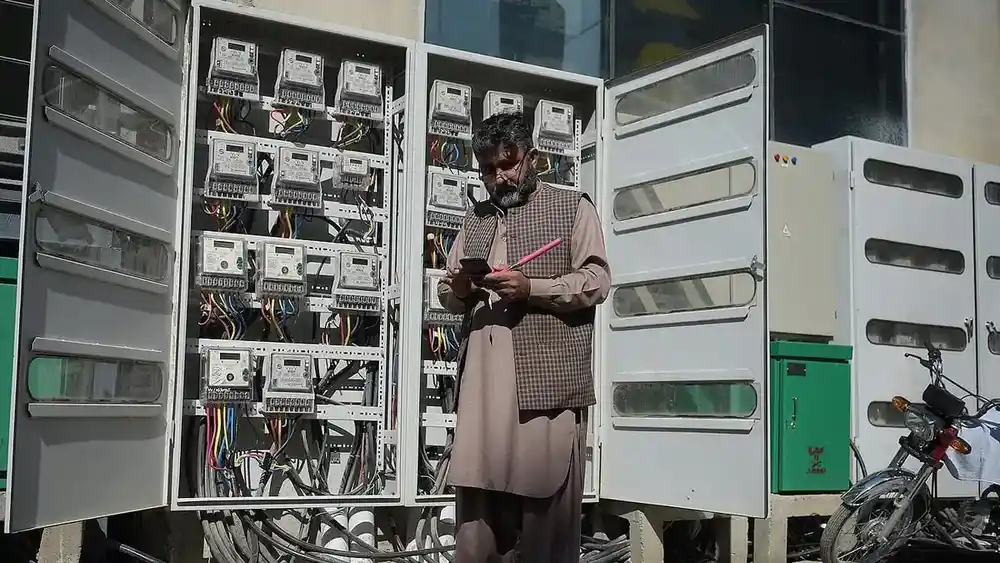
DISCO Smart Meters to Curb Theft, Overbilling
The government is arranging funds to install DISCO smart meters on transformers across all power distribution companies, in a move aimed at curbing electricity theft, improving billing accuracy and protecting consumers from overbilling.
The plan was reviewed at a meeting chaired by Federal Minister for Economic Affairs and Establishment Division Ahad Cheema in Islamabad on Tuesday. The meeting looked at development programmes for the DISCOs and the Economic Affairs Division’s efforts to arrange financing for the smart metering system. Participants were told that progress had been made in securing the funds.
DISCO smart meters: funding and privatisation
The meeting also discussed how the project will continue after the privatisation of the distribution companies. Cheema said the government would ensure that private investors took the project forward after taking control of a DISCO. Negotiations with multilateral development partners for financing and development programmes will continue until the privatisation process is complete.
If a DISCO is privatised while financing talks or programme preparations are still under way, the relevant financing and development programmes will pass to the private investor as part of the handover, subject to agreed terms. DISCO assets worth Rs624 billion are already headed for privatisation, so the transfer terms matter for buyers as well as consumers.
Cheema added that any new project taken up by a private investor inside a DISCO would have to go through competitive bidding and obtain approval from the National Electric Power Regulatory Authority (Nepra), where applicable. He stressed that privatisation should not result in extra costs or undue financial pressure on consumers. The government, he said, would facilitate the process while protecting consumer interests and ensuring investors met their financial and contractual obligations.
Federal Minister for Power Division Sardar Awais Ahmad Khan Leghari, the prime minister’s adviser on privatisation and senior officials from the relevant ministries also attended the meeting.
How transformer meters catch theft
A meter on a transformer lets a DISCO compare the electricity supplied to that transformer with the total recorded by the consumers connected to it. A gap between the two figures points to theft or line losses in a small, defined area, instead of across a whole feeder that may serve thousands of homes.
That idea is already taking shape. The government unveiled a hi-tech system to manage loadshedding in October, built around the Asset Performance Management System (APMS). The pilot is being launched in Lahore and Kasur, and the system is designed to sync with smart meters so it can monitor power consumption in real time.
Under that plan, conventional electricity meters will be replaced by AMI smart meters. The APMS will then compare supply and consumption at transformer level, where a transformer usually serves 150 to 200 consumers, rather than at feeder level, where a feeder can cover 2,000 to 3,000 consumers. The system will report theft and losses to officials at once, so they can act before the losses pile up. Feeders reporting losses of 30 per cent or more will continue to face loadshedding, with no leniency for electricity thieves or chronic defaulters.
What it means for consumers
For households, the promise is a bill that matches what they actually used. Overbilling has been a running complaint against the DISCOs, and the regulator has already moved against one of its main sources. Leghari warned the Discos against arbitrary detection bills in October, saying no unjustified charges would be levied. Manual and discretionary detection bills are now banned, and such bills must go through a centralised online portal.
Accurate metering would also give honest consumers a fairer deal on shared feeders. At present, heavy losses on a feeder can mean loadshedding for every household on it, including those who pay on time. Transformer-level metering narrows the problem to the streets where the loss actually occurs.
The push sits inside a power sector still wrestling with unpaid bills. The power sector owes SNGPL Rs169 billion in dues, which shows how much cash is stuck in the chain between gas suppliers, generators and distributors. Cutting theft and billing errors will not settle those dues on its own, but it would stop fresh losses from adding to the pile. Consumers using up to 250 units have already received electricity relief, and accurate meters would make sure that relief reaches the households it is meant for.
Frequently asked questions
What are DISCO smart meters?
They are smart meters installed on transformers across all power distribution companies. They monitor the electricity supplied to a transformer against the consumption recorded by consumers, which helps identify theft and line losses.
Who is funding the project?
The Economic Affairs Division is arranging the financing, and the meeting was told that progress had been made. Talks with multilateral development partners will continue until the privatisation of the DISCOs is complete.
Will the project survive DISCO privatisation?
Yes. The government says private investors will be required to take the smart metering project forward after taking control of a DISCO. Financing and development programmes under way at the time will transfer to the investor as part of the handover.
How will smart meters help consumers?
They will improve billing accuracy and protect consumers from overbilling. Theft will be traced to a transformer serving 150 to 200 consumers, rather than blamed on a whole feeder of thousands of households.
What is the APMS pilot?
The Asset Performance Management System is a hi-tech system to manage loadshedding and power theft. Its pilot is being launched in Lahore and Kasur, and it will sync with smart meters to monitor consumption in real time.