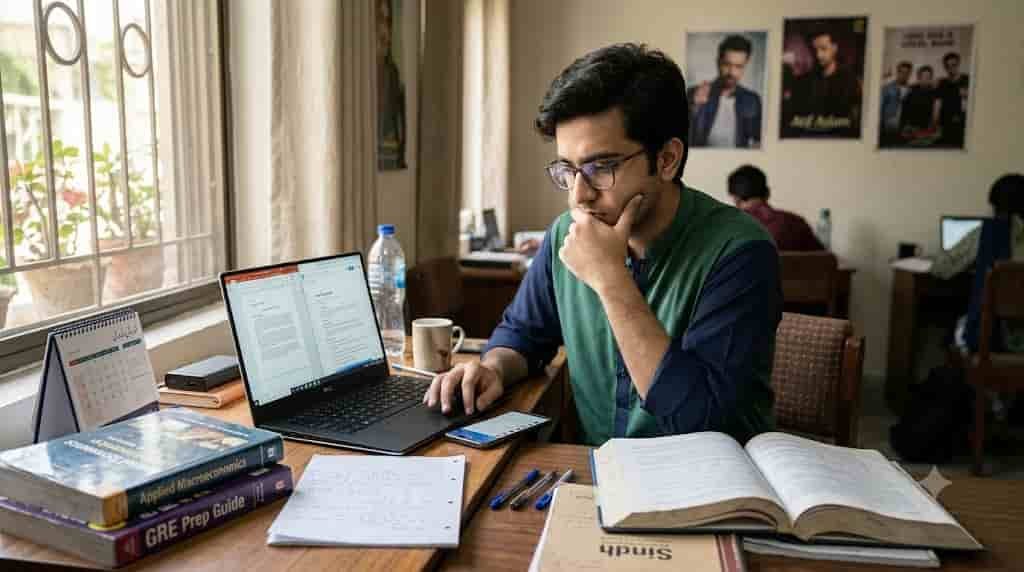
Pakistan’s Generation Z is growing up in a world that offers more opportunities than ever before. Young people can learn skills online, work remotely, build businesses, connect globally, and explore careers that barely existed a decade ago.
Yet behind this digital freedom, another reality is becoming increasingly visible. Many young Pakistanis feel overwhelmed by studies, career uncertainty, financial pressure, social comparison, family expectations, and concerns about their future.
Gen Z stress in Pakistan is therefore becoming an important issue for families, educational institutions, employers, and young people themselves.
Stress is not automatically harmful. Everyone experiences it at different stages of life. However, persistent pressure can affect sleep, concentration, motivation, relationships, productivity, and overall wellbeing.
For Pakistan’s Gen Z, the problem is rarely connected to only one factor. Economic uncertainty, unemployment, education costs, social media, changing career expectations, and family pressures can overlap.
These pressures are part of a much bigger challenge facing the country’s younger generation. Read our in-depth guide, Pakistan Gen Z Under Pressure: What Is Really Worrying the Country Youth?, to understand the wider financial, educational, career, social, and lifestyle challenges shaping the lives of young Pakistanis today.
Understanding these pressures is the first step towards creating a healthier environment for Pakistan’s younger generation.
Who Is Pakistan’s Gen Z?
Generation Z generally refers to people born from the late 1990s through the early 2010s, although definitions vary slightly.
This generation grew up alongside smartphones, social media, YouTube, online education, streaming platforms, and rapidly changing technology.
That experience makes Gen Z very different from previous generations.
Young Pakistanis today can see how people live, study, travel, work, and earn money around the world without leaving their bedrooms.
That exposure creates opportunities.
However, it can also create expectations that become difficult to manage.
A university student in Faisalabad, Lahore, Karachi, Islamabad, or another Pakistani city may constantly see people of the same age apparently earning thousands of dollars, travelling internationally, launching startups, buying expensive products, or building successful online careers.
The comparison can make normal personal progress feel inadequate.
Why Is Gen Z Stress in Pakistan Increasing?
There is no single explanation.
Young Pakistanis face several pressures simultaneously, and many of them reinforce one another.
Education brings expectations about careers. Careers bring concerns about employment. Employment connects directly with financial security.
Social media then provides a constant stream of other people’s achievements against which young people may compare their own lives.
Meanwhile, family expectations can add another layer of pressure.
The result can feel like a race in which there is never a clear finish line.
1. Unemployment and Career Uncertainty
One of the biggest concerns facing young Pakistanis is employment.
A university degree once carried a relatively straightforward promise: study hard, graduate, find a respectable job, and gradually build a career.
For many young people, that path now feels less predictable.
Graduates may send applications to multiple companies without receiving responses. Others find entry-level salaries that do not match their expectations or the cost of living.
This can create frustration.
A young graduate may spend 16 or more years in education only to discover that employers also expect experience, technical skills, communication abilities, digital knowledge, and professional networks.
That gap between education and employment can contribute to Gen Z stress in Pakistan.
Career uncertainty also affects students who have not graduated yet.
They watch older graduates struggle and naturally begin wondering whether their own degrees will lead to meaningful employment.
This creates anxiety before their careers have even started. For a deeper look at this challenge, read our detailed analysis, Pakistan Gen Z Unemployment Crisis: Why Young People Are Struggling to Find Jobs in 2026, which explores the employment barriers, skills gap, economic pressures, and career uncertainty facing young Pakistanis.
2. Inflation and Financial Pressure
Money is another major source of pressure.
Young Pakistanis are entering adulthood at a time when household expenses, transportation, education, housing, utilities, and everyday purchases can place significant pressure on family budgets.
Even employed young adults may find it difficult to achieve financial independence quickly.
Saving for a car, marriage, a house, higher education, or starting a business can feel extremely difficult.
Financial pressure can also change relationships within families.
Young adults may want to contribute financially but struggle to find sufficient income.
Others may feel uncomfortable depending on their parents after completing their education.
This creates an emotional burden that goes beyond money itself.
Financial independence represents adulthood and personal progress for many young people. When it seems distant, stress can increase.
3. Academic Pressure Starts Early
Stress does not suddenly begin after graduation.
For many Pakistani students, pressure starts much earlier.
Students compete for grades, university admissions, scholarships, professional qualifications, and family approval.
Parents naturally want their children to succeed, but constant comparison can sometimes make students feel that their value depends entirely on academic performance.
A student may hear questions such as:
Why did someone else get higher marks?
Which university did your cousin enter?
What will you do after graduation?
Why haven’t you started earning yet?
Each question may appear harmless individually.
Together, however, they can create a feeling that young people are constantly being evaluated.
Education should prepare young people for life rather than make them fear failure.
4. Social Media Comparison
Social media has changed how young people judge success.
Previous generations primarily compared themselves with relatives, classmates, neighbours, and colleagues.
Gen Z can compare itself with millions of people.
Instagram, TikTok, YouTube, LinkedIn, and other platforms constantly display achievements.
Someone announces a new job.
Another person launches a business.
Someone gets married.
Another person travels abroad.
A 21-year-old claims to be earning an extraordinary income online.
The problem is that social media usually shows outcomes rather than the complete journey.
People post celebrations more often than disappointments.
As a result, users may compare their everyday reality with someone else’s carefully selected highlights.
This can create the impression that everyone is progressing faster.
Reducing unhealthy comparison does not necessarily require abandoning social media. It requires remembering that an online profile is not a complete representation of someone’s life.
5. The Pressure to Become Successful Quickly
Gen Z has also grown up around the culture of rapid success.
Social media is filled with stories about young entrepreneurs, influencers, freelancers, traders, creators, and startup founders.
These stories can inspire people.
But they can also create unrealistic timelines.
A 23-year-old may begin believing that not owning a business, earning a large income, travelling internationally, or becoming financially independent means falling behind.
Real careers rarely work that way.
Professional growth often requires years of learning, mistakes, experimentation, networking, and gradual improvement.
There is nothing unusual about still figuring out a career in your twenties.
Yet online success culture can make normal development feel like failure.
6. Family Expectations
Family remains extremely important in Pakistani society.
This support system can provide emotional security that many young people elsewhere may not have.
However, expectations can sometimes become stressful.
Parents may have strong preferences regarding education, careers, marriage, income, or lifestyle.
A young person may want to pursue design while the family prefers medicine.
Another may want to freelance while parents consider a government position safer.
Someone else may want to delay marriage until becoming financially stable.
These differences do not necessarily mean either side is wrong.
Parents often think about security while young people think about independence and personal fulfilment.
The difficulty arises when young adults feel unable to discuss these differences openly.
7. Sleep Problems and Digital Overload
Stress and sleep can become closely connected.
A person feels stressed and struggles to sleep. Poor sleep then makes concentration, mood, and productivity more difficult the following day.
Phones can make this cycle worse.
Many young people scroll through social media, watch videos, play games, study, or communicate with friends late into the night.
Notifications also make it difficult to mentally disconnect.
Our related guide, “Why Sleep Problems Are Increasing Among Pakistan’s Gen Z“, explores this issue in greater detail.
Improving sleep habits will not solve every source of stress, but regular sleep can support concentration, energy, and emotional wellbeing.
8. Fear of Missing Out
FOMO, or the fear of missing out, is another distinctly digital pressure.
Someone opens Instagram and sees friends at a restaurant.
Another friend has started a new job.
Someone is studying abroad.
Another person announces an engagement.
Suddenly, an ordinary evening at home can feel disappointing.
Nothing actually changed in that person’s life during those few minutes.
What changed was the comparison.
Constant exposure to other people’s activities can create the feeling that something exciting is always happening somewhere else.
Learning to enjoy ordinary life can therefore become surprisingly important in a hyperconnected world.
9. The Pressure to Leave Pakistan
Another issue affecting some young Pakistanis is the belief that success requires leaving the country.
Stories about students, professionals, and families moving abroad receive enormous attention online.
International education and employment can certainly provide valuable opportunities.
However, constant migration discussions may also make people who remain in Pakistan feel uncertain about their future.
Some begin asking themselves whether they are making a mistake by staying.
Others desperately pursue foreign opportunities because they believe there is no alternative.
Moving abroad is a major life decision rather than an automatic solution to every career problem.
To understand this trend in more detail, read Why Are Young Pakistanis Leaving Their Homeland?https, where we explore the economic pressures, career concerns, education opportunities, and lifestyle factors pushing more young Pakistanis to consider moving abroad.
Young people need realistic information about both local and international opportunities.
10. Loneliness in a Hyperconnected Generation
Being digitally connected does not always mean feeling socially connected.
A person can have hundreds of online contacts and still feel lonely.
Digital communication cannot completely replace meaningful human relationships.
University students may experience loneliness after moving away from home.
Remote workers and freelancers may spend long periods working alone.
Others may withdraw socially when they feel they are not progressing as quickly as their peers.
Healthy friendships, family relationships, communities, sports, hobbies, and face-to-face interaction remain important even in a digital society.
11. Freelancing Creates Opportunity — and Pressure
Freelancing has opened extraordinary opportunities for Pakistan’s young population.
People can work with international clients from their homes and earn through writing, graphic design, programming, digital marketing, video editing, AI-related services, and many other skills.
However, freelancing also brings uncertainty.
Income can fluctuate.
Clients can disappear.
Competition can increase.
Platforms can change their policies.
Beginners may also see successful freelancers sharing impressive earnings and assume those results happened immediately.
Our related article on the rise of freelancing among Pakistan’s Gen Z explores why more young people are choosing digital careers.
Freelancing can provide freedom, but sustainable success usually requires patience, continuous learning, and realistic expectations.
12. AI Is Changing Career Expectations
Artificial intelligence has added another layer of uncertainty.
Young people repeatedly hear that AI will transform jobs.
For some, this creates excitement.
For others, it creates fear.
Students may wonder whether the skills they are learning today will remain valuable five years from now.
Instead of treating AI only as a threat, young Pakistanis can focus on learning how to work alongside emerging technology.
Communication, critical thinking, creativity, adaptability, leadership, problem-solving, and digital literacy are likely to remain valuable across many professions.
The goal should not be predicting every future job.
It should be becoming adaptable enough to keep learning.
How Stress Can Affect Daily Life
Stress can appear differently from one person to another.
Some people become irritable.
Others struggle to concentrate.
Some procrastinate because tasks feel overwhelming.
Others experience disrupted sleep or lose motivation.
These experiences do not automatically mean someone has a mental health disorder.
However, persistent distress that interferes with everyday life deserves attention.
Young people should feel comfortable discussing difficulties with trusted family members, teachers, mentors, counsellors, or qualified healthcare professionals when appropriate.
Seeking support should be treated as a practical response to a problem rather than something embarrassing.
What Parents Can Do
Parents can play an enormous role in reducing unnecessary pressure.
One of the simplest changes is reducing comparison.
Constantly comparing a child with cousins, siblings, classmates, or neighbours rarely creates healthy motivation.
Instead, parents can focus on individual progress.
Listening is equally important.
Sometimes young adults need guidance.
At other times, they simply need someone to understand what they are experiencing before offering solutions.
Families can also discuss careers more openly.
Traditional professions remain valuable, but Pakistan’s economy now includes freelancing, e-commerce, software development, digital marketing, content creation, remote employment, entrepreneurship, AI services, and many other emerging paths.
What Universities Can Do
Educational institutions should prepare students for employment as well as examinations.
Career counselling can help students understand realistic opportunities.
Internships can provide practical experience.
Communication and digital-skills training can improve employability.
Universities can also provide appropriate student wellbeing and counselling resources.
Students often face academic, financial, social, and career pressures simultaneously.
A supportive educational environment can make those transitions easier.
What Young Pakistanis Can Do
Gen Z cannot control inflation, the job market, or every social expectation.
However, young people can control some parts of their response.
Limiting unnecessary social comparison can help.
Developing one useful skill at a time can make career uncertainty feel more manageable.
Building an emergency saving habit, even with small amounts when possible, can improve financial confidence.
Regular exercise, better sleep routines, hobbies, friendships, and time away from screens can also support general wellbeing.
Most importantly, young people should avoid judging their entire future based on one difficult period.
Careers can change dramatically within a few years.
Stop Measuring Life by Someone Else’s Timeline
Perhaps one of the most important lessons for Pakistan’s Gen Z is that life does not operate on a universal schedule.
Someone may find a great job at 22.
Another may discover the right career at 29.
Someone may start a successful business early.
Another person may spend years developing expertise before succeeding.
One person’s progress does not reduce another person’s possibilities.
Social media makes everyone else’s timeline visible.
It does not make that timeline appropriate for you.
Pakistan Needs Its Gen Z to Succeed
The discussion around Gen Z stress in Pakistan is bigger than individual wellbeing.
Young people will shape Pakistan’s future workforce, businesses, technology sector, education system, creative industries, and institutions.
A generation overwhelmed by uncertainty cannot reach its full potential.
Pakistan therefore needs more than young people who simply earn degrees.
It needs confident, adaptable, skilled, emotionally resilient, and creative young citizens.
Families, universities, employers, policymakers, and young people themselves all have roles to play.
Frequently Asked Questions
Why is Gen Z stressed in Pakistan?
Gen Z stress in Pakistan can stem from several overlapping factors, including career uncertainty, financial pressure, academic expectations, social media comparison, family expectations, digital overload, and concerns about the future.
Does social media increase stress among Gen Z?
Social media can contribute to stress when people constantly compare their everyday lives with other users’ carefully selected achievements and experiences. Its impact varies from person to person.
Why are Pakistani students under so much pressure?
Students can face competition for grades, university admissions, scholarships, employment, professional qualifications, and family expectations. Concerns about the job market can add further pressure.
Can unemployment cause stress among young people?
Long job searches and financial uncertainty can contribute to stress, frustration, and reduced confidence, particularly when young people feel pressure to become financially independent.
Is freelancing better for Pakistan’s Gen Z?
Freelancing can create valuable opportunities, especially in digital professions. However, it can also involve unstable income, client uncertainty, competition, and pressure to continually develop new skills.
How can young Pakistanis manage everyday stress?
Healthy sleep, physical activity, realistic goals, supportive relationships, reduced social comparison, better screen habits, and manageable career planning can help with everyday stress. Persistent or severe distress should be discussed with an appropriate qualified professional.
How are sleep problems connected with Gen Z stress?
Stress can make sleep more difficult, while insufficient sleep can affect concentration, energy and mood. Late-night screen use and irregular routines can further complicate the relationship.
Final Thoughts
Gen Z stress in Pakistan reflects a generation growing up during extraordinary social, economic, and technological change.
Young Pakistanis have access to opportunities their parents could hardly imagine. They can learn from international universities online, work with clients thousands of kilometres away, launch digital businesses, use artificial intelligence, and build global professional networks.
Yet opportunity does not eliminate uncertainty.
Unemployment, inflation, academic competition, family expectations, social media comparison, sleep problems, digital overload, and pressure to succeed quickly can make the transition into adulthood difficult.
The solution is not telling young people simply to “stop worrying.”
Pakistan needs environments where young people can develop skills, make mistakes, seek guidance, discuss difficulties, and build careers without believing they must have their entire lives figured out by their early twenties.
Success does not have one timeline.
For Pakistan’s Gen Z, learning that lesson may be just as important as learning the next digital skill.