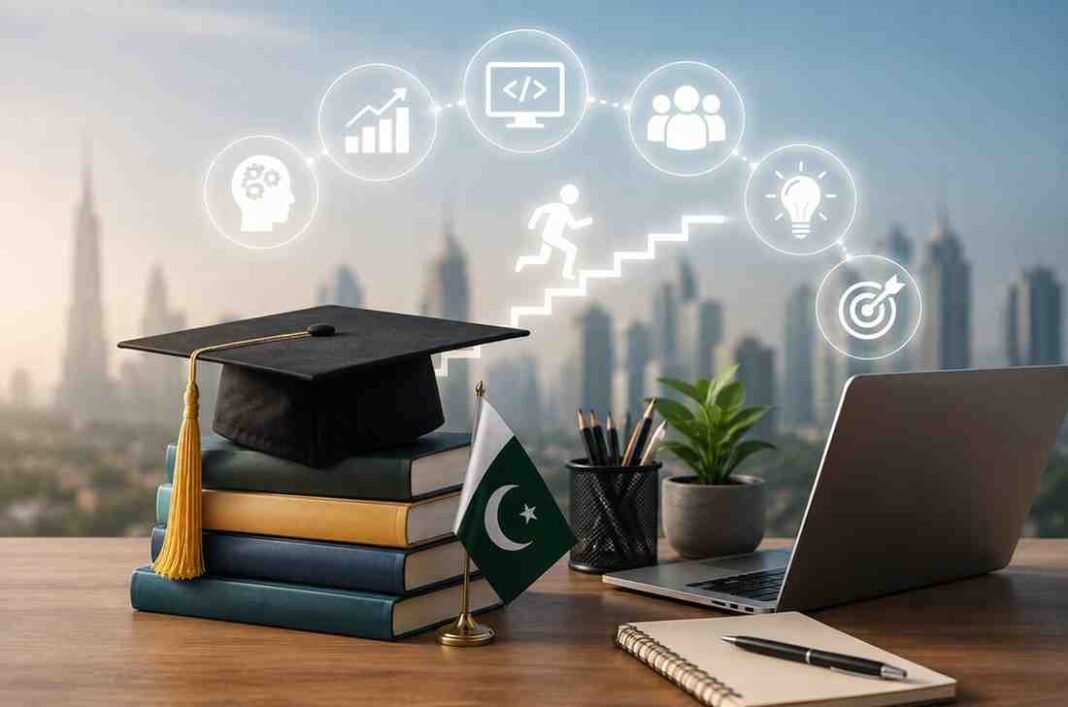
Pakistan has one of the youngest populations in the world. Millions of young people belong to Generation Z, commonly known as Gen Z. This generation grew up with smartphones, social media, artificial intelligence, and instant access to information. Unlike previous generations, they constantly compare opportunities in Pakistan with those available around the world. As a result, they have higher expectations for education, employment, financial stability, and quality of life.
However, the reality they face today is far different from what many expected. Rising inflation, political uncertainty, unemployment, and economic instability have created an environment where many young Pakistanis feel uncertain about their future. While previous generations also experienced economic challenges, Pakistan Gen Z is entering adulthood during one of the country’s most difficult economic periods. They are making career decisions, completing university degrees, and searching for employment while facing increasing financial pressure and limited opportunities.
Despite these concerns, Pakistan’s youth continue to demonstrate resilience, creativity, and determination. Many are learning digital skills, exploring freelancing, starting online businesses, and searching for global opportunities. Their challenges are real, but so is their potential. Understanding what worries this generation is the first step toward creating policies and opportunities that can help them build a brighter future.
Along with financial stress and career uncertainty, Pakistan’s Gen Z is also facing growing mental health challenges. Sleep problems, anxiety, and emotional exhaustion are becoming common among young people due to excessive screen time, academic pressure, job insecurity, and lifestyle changes. Read our detailed guide on Why Sleep Problems Are Increasing Among Pakistan’s Gen Z to understand the causes, effects, and practical solutions.
Understanding Pakistan Gen Z and Their Aspirations
Generation Z generally includes people born between the late 1990s and the early 2010s. In Pakistan, this generation represents a significant share of the population and will shape the country’s future workforce, economy, and leadership. They are more connected to technology than any previous generation. They learn through online platforms, communicate through social media, and follow international trends every day.
Unlike earlier generations that often accepted traditional career paths, Pakistan Gen Z has broader ambitions. Many dream of working remotely for international companies, launching technology startups, becoming digital entrepreneurs, or building careers in artificial intelligence, software development, content creation, and e-commerce. They understand that the global job market has changed, and they want to compete on an international level.
At the same time, their expectations have grown because they see success stories from around the world every day. Through platforms such as LinkedIn, YouTube, and Instagram, they watch young entrepreneurs build successful businesses and professionals secure remote jobs with global companies. Naturally, many Pakistani young people want similar opportunities. Unfortunately, local economic conditions often make these ambitions difficult to achieve.
Pakistan Gen Z Faces the Reality of Rising Inflation
Inflation has become one of the biggest concerns for young Pakistanis. The rising cost of food, transportation, electricity, fuel, education, and healthcare affects almost every household. Even students who do not earn an income feel the impact because their families must spend more money on daily necessities.
For graduates entering the workforce, inflation creates even greater challenges. Entry-level salaries often fail to keep pace with the increasing cost of living. As a result, many young professionals struggle to save money, support their families, or plan for long-term goals such as buying a home or starting a business.
The situation becomes even more difficult for those who have recently completed university. Many expected that earning a degree would provide financial security. Instead, they discover that living expenses continue to rise while available salaries remain relatively low. This gap between expectations and reality increases frustration and uncertainty.
Inflation also changes lifestyle choices. Many young people postpone marriage, delay purchasing property, or continue living with their parents because independent living has become increasingly expensive. These decisions are not simply personal preferences. In many cases, they are economic necessities.
Youth Unemployment in Pakistan Is Shaping Gen Z’s Future
Finding stable employment has become one of the greatest challenges facing Pakistan Gen Z. Every year, thousands of graduates enter the job market with hopes of beginning successful careers. Unfortunately, the number of qualified candidates often exceeds the number of available positions.
Competition has become extremely intense. Employers frequently ask for several years of experience even for entry-level jobs. Consequently, many talented graduates struggle to gain their first professional opportunity. This situation creates disappointment because education alone no longer guarantees employment.
Many young people spend months or even years searching for suitable work after graduation. During this period, they often face financial dependence on their families while also dealing with emotional pressure from society. Questions about employment become a source of stress rather than encouragement.
This employment challenge has also changed career preferences. Instead of relying entirely on traditional office jobs, many young Pakistanis now pursue freelancing, remote work, digital marketing, software development, graphic design, and online entrepreneurship. They understand that the digital economy may offer opportunities beyond local employment markets.
Despite having degrees and skills, many young Pakistanis struggle with limited job openings, experience requirements, and changing market demands. Our detailed analysis on Pakistan Gen Z Unemployment Crisis: Why Young People Are Struggling to Find Jobs in 2026 explores the major reasons behind youth unemployment and possible solutions.
The Pakistan Economy Directly Influences Youth Confidence
Economic growth creates jobs, attracts investment, and increases business activity. On the other hand, economic uncertainty reduces hiring, slows investment, and limits opportunities for new graduates. For this reason, the overall health of the Pakistan economy strongly influences how young people feel about their future.
Whenever businesses reduce expansion plans, graduates become concerned about finding employment. When companies postpone recruitment, students question whether their education will lead to meaningful careers. This uncertainty affects long-term planning because young adults cannot confidently predict their financial future.
Small businesses also experience similar difficulties. Many young entrepreneurs have innovative ideas but struggle to secure funding or affordable financing. Rising operational costs make it difficult for startups to survive during their early stages. Consequently, some promising business ideas never move beyond the planning phase.
Despite these challenges, Pakistan’s growing digital economy offers reasons for cautious optimism. Technology companies, e-commerce platforms, fintech businesses, and digital service providers continue creating new opportunities. Young people who invest in digital skills often discover career paths that were almost impossible a decade ago.
Political Uncertainty and the Future of Pakistan Youth
Economic concerns cannot be separated from politics. Political stability plays an important role in attracting investment, encouraging business confidence, and supporting long-term economic growth. Whenever uncertainty increases, businesses often delay expansion, investors become more cautious, and employers may slow recruitment.
For Pakistan Gen Z, political uncertainty creates additional questions about the future. Many students wonder whether they will find rewarding careers after graduation. Young professionals question whether economic conditions will improve enough to support long-term financial goals. Entrepreneurs often hesitate before investing their savings because they remain uncertain about future business conditions.
This uncertainty does not affect everyone in the same way. Some young Pakistanis remain optimistic and continue building their careers despite difficult circumstances. Others become discouraged and begin exploring opportunities abroad. The different reactions reflect personal experiences, financial situations, and career goals, but the underlying concern about future stability is common among many members of this generation.
Social Media Is Shaping How Pakistan Youth View Success
Social media has transformed the way young Pakistanis see the world. Platforms such as Instagram, TikTok, YouTube, LinkedIn, and X expose them to lifestyles, career achievements, and business success stories from every corner of the globe. While this constant access to information creates learning opportunities, it also increases pressure.
Many young people compare their lives with carefully edited online content. They see entrepreneurs buying luxury cars, influencers traveling internationally, and professionals announcing high-paying remote jobs. These success stories can inspire ambition, but they can also create unrealistic expectations when viewed without context.
For someone already facing unemployment or financial hardship, these comparisons may increase frustration and self-doubt. Instead of celebrating their own progress, some individuals begin measuring success against unrealistic online standards.
Social media also spreads political debates, economic news, and breaking events at an unprecedented speed. Continuous exposure to negative headlines can create information overload. As a result, many members of Pakistan Gen Z feel mentally exhausted before they even begin their day.
Creating healthier digital habits has become increasingly important. Limiting unnecessary screen time and following educational or motivational content instead of constant negative news can improve emotional well-being.
Why Many Young Pakistanis Want to Move Abroad
One of the most discussed topics among Pakistan’s youth is the desire to seek opportunities overseas. Students, graduates, skilled professionals, and entrepreneurs frequently explore education, employment, and immigration options in countries such as Canada, Australia, the United Kingdom, Germany, and the Gulf region.
Several factors contribute to this growing interest. Better salaries, stronger economies, career growth, research opportunities, and improved quality of life attract ambitious young professionals. Many believe they can achieve financial stability more quickly by working internationally.
The issue is not simply about earning higher incomes. Many young people also seek environments where they believe their skills will be rewarded, innovation will be encouraged, and career progression will depend more on performance than limited opportunities.
However, leaving Pakistan is not an option for everyone. Financial limitations, family responsibilities, and immigration requirements prevent many from pursuing international opportunities. Consequently, a significant number of talented young people continue searching for ways to build successful careers within Pakistan.
This trend highlights the importance of creating more employment opportunities, supporting entrepreneurship, and improving the overall business environment so that talented individuals feel confident investing their future at home.
Economic challenges, limited job growth, and uncertainty about personal progress are encouraging many young Pakistanis to explore opportunities abroad. Our detailed article Why Are Young Pakistanis Leaving Their Homeland? explains the key reasons behind this trend and what it means for the country’s future.
Rising Education Costs Are Increasing Financial Pressure
Education remains one of the strongest aspirations for Pakistan Gen Z. Families continue investing significant resources in schools, colleges, universities, and professional certifications because they believe education offers a path toward economic stability.
Unfortunately, obtaining a quality education has become increasingly expensive. Tuition fees, transportation costs, accommodation, books, internet services, and educational technology have all become more costly in recent years.
Many students complete their degrees expecting better employment opportunities. When graduation is followed by months of job searching, disappointment naturally grows. This gap between educational investment and employment outcomes has become one of the major concerns among young Pakistanis.
Education is becoming another major source of pressure for young Pakistanis. Rising university fees are only part of the problem, as students also face growing costs for transport, accommodation, technology, books and professional skills. Our detailed analysis of Education Cost in Pakistan: Why Gen Z Is Struggling in 2026 explores why higher education is becoming harder to afford and why many young people are questioning the financial value of a traditional degree.
Students are also becoming more selective about the skills they develop. Instead of relying entirely on traditional degrees, many now combine formal education with certifications in artificial intelligence, digital marketing, programming, graphic design, cybersecurity, and data analytics. These practical skills improve their competitiveness in both local and international job markets.
Education was once considered one of the safest routes to financial stability, but many young graduates now find that qualifications alone do not guarantee opportunity. This growing divide is explored in our analysis of why Pakistan’s Gen Z feels left behind despite being more educated.
Digital Skills Are Creating New Opportunities for Pakistan Gen Z
Despite economic challenges, the digital economy continues to create new possibilities for ambitious young people. Freelancing, remote employment, software development, e-commerce, content creation, virtual assistance, and artificial intelligence have expanded career options beyond geographical boundaries.
Pakistan has developed one of the world’s fastest-growing freelance communities. Thousands of young professionals now earn income through international clients by offering digital services online. This shift has reduced dependence on traditional office employment for many skilled individuals.
Artificial intelligence is also changing the future of work. Instead of replacing every job, AI is creating demand for professionals who understand automation, prompt engineering, machine learning, digital productivity, cybersecurity, and data management. Young people who continuously upgrade their skills are better positioned to benefit from these changes.
Learning has become more accessible than ever before. Online platforms now provide affordable courses that allow students to gain internationally recognized skills from their homes. Those who embrace continuous learning often discover opportunities that previous generations could not imagine.
Online platforms, remote work opportunities, and digital skills are helping young people create new income streams beyond traditional jobs. Our detailed article The Rise of Freelancing Among Pakistan’s Gen Z: Why Young People Are Choosing Digital Careers explores how freelancing is changing the future of work for Pakistan’s youth.
Entrepreneurship Is Becoming a New Career Choice
Traditional employment is no longer the only path toward success. Many members of Pakistan Gen Z are choosing entrepreneurship because it provides greater independence and the opportunity to solve real-world problems.
Technology has significantly reduced the cost of starting a business. Young entrepreneurs can launch online stores, consulting services, educational platforms, digital agencies, or software products with relatively small investments compared to traditional businesses.
Although entrepreneurship involves financial risk, it also encourages innovation and creativity. Young business owners learn valuable skills such as leadership, marketing, communication, financial planning, and customer relationship management.
Government institutions, universities, private investors, and business incubators can further strengthen this ecosystem by providing mentorship, training, networking opportunities, and easier access to startup funding.
What the Government Can Do to Restore Youth Confidence
The future of any nation depends on the confidence of its young population. Pakistan has a large youth demographic, and this generation has the potential to drive innovation, economic growth, and social development. However, many young people believe they need greater support to turn their ambitions into reality.
One of the most important priorities is creating sustainable employment opportunities. Public and private investment in industries such as information technology, renewable energy, manufacturing, agriculture, tourism, and digital services can generate thousands of new jobs for graduates and skilled workers.
Supporting entrepreneurship is equally important. Young business owners often struggle to secure funding, mentorship, and affordable financing during the early stages of their startups. Expanding startup incubation centers, providing tax incentives, and offering business development programs can encourage innovation while creating new employment opportunities.
Improving digital infrastructure should also remain a national priority. Reliable internet access, affordable technology, and modern digital education will allow more young Pakistanis to compete in the global economy.
Universities Must Prepare Students for the Modern Job Market
Higher education plays a critical role in shaping future professionals. However, the needs of employers continue to change much faster than traditional academic programs. Many graduates possess theoretical knowledge but lack practical workplace experience.
Universities can reduce this gap by updating curricula to reflect current industry demands. Courses in artificial intelligence, cybersecurity, cloud computing, digital marketing, entrepreneurship, financial literacy, project management, and communication skills should become an essential part of higher education.
Internships should also become more meaningful. Students benefit greatly when they work on real business projects before graduation. These experiences improve confidence, strengthen professional networks, and increase employability.
Career counseling centers can further support students by providing guidance on emerging industries, freelancing opportunities, international scholarships, and remote work. When education aligns more closely with market needs, graduates enter the workforce with greater confidence and stronger practical skills.
Businesses Have an Important Role in Supporting Pakistan’s Youth
The private sector has the ability to shape the future of Pakistan Gen Z by investing in talent development. Companies that provide internships, apprenticeships, graduate trainee programs, and continuous learning opportunities contribute not only to their own success but also to national economic growth.
Organizations should recognize that today’s young professionals value more than salary alone. Career development, flexible working environments, skill-building opportunities, and supportive leadership influence employment decisions just as much as financial compensation.
Businesses can also collaborate with educational institutions to identify future skill requirements. Such partnerships help universities prepare students for real workplace challenges while enabling employers to recruit graduates who are ready to contribute immediately.
Investing in young professionals ultimately strengthens productivity, innovation, and long-term competitiveness.
How Pakistan Gen Z Can Build a Stronger Future
Although economic and political conditions remain challenging, young people still have significant control over their personal development. Waiting for circumstances to improve without taking action may delay growth, while continuous learning creates new opportunities regardless of external conditions.
Developing digital skills has become one of the smartest investments for today’s generation. Knowledge of artificial intelligence, software development, graphic design, digital marketing, content creation, data analysis, video editing, cloud computing, and cybersecurity continues to open doors in both local and international markets.
Financial literacy is equally important. Learning how to manage personal finances, create savings, avoid unnecessary debt, and invest wisely provides greater stability during uncertain economic periods.
Building a strong professional network can also accelerate career growth. Participating in conferences, workshops, online communities, and professional platforms such as LinkedIn allows young professionals to connect with mentors, employers, and business partners who may create future opportunities.
Continuous learning should become a lifelong habit rather than ending after graduation. Technology evolves rapidly, and those who regularly update their knowledge remain competitive throughout their careers.
The Future of Pakistan Gen Z Depends on Opportunity and Innovation
Despite today’s challenges, there are reasons to remain optimistic. Pakistan has a young, energetic, and increasingly technology-oriented population. The country’s freelance industry continues to grow, startups are attracting greater attention, and digital transformation is creating entirely new career paths.
Artificial intelligence, e-commerce, financial technology, renewable energy, health technology, and digital education are expected to generate significant employment opportunities over the coming years. Young professionals who prepare themselves for these industries will likely benefit the most.
Innovation has never depended solely on economic conditions. Throughout history, many successful entrepreneurs built remarkable businesses during difficult periods because challenges encouraged creativity and problem-solving. Pakistan’s youth have the same potential to transform obstacles into opportunities.
The future will depend on cooperation between government institutions, educational organizations, private businesses, and young citizens themselves. When these groups work together, the country can unlock the full potential of its largest and most valuable resource—its youth.
Frequently Asked Questions
Who belongs to Pakistan Gen Z?
Pakistan Gen Z generally includes people born between the late 1997s and the early 2012s. This generation grew up with the internet, smartphones, social media, and rapidly changing digital technology.
Why is Pakistan Gen Z worried about the economy?
Many young Pakistanis face rising inflation, increasing living costs, limited employment opportunities, and financial uncertainty after graduation. These factors make long-term financial planning more difficult.
How does political uncertainty affect young people?
Political uncertainty can influence investment, business growth, employment opportunities, and overall economic confidence. Young people often feel uncertain about their career prospects when long-term stability is unclear.
Why do many young Pakistanis want to move abroad?
Many seek better career opportunities, higher salaries, advanced education, research facilities, and improved quality of life. However, many others continue building successful careers within Pakistan through entrepreneurship and digital work.
What skills should Pakistan Gen Z learn for the future?
Artificial intelligence, digital marketing, software development, cybersecurity, data analytics, cloud computing, communication, leadership, entrepreneurship, and financial literacy are among the most valuable skills for the modern job market.