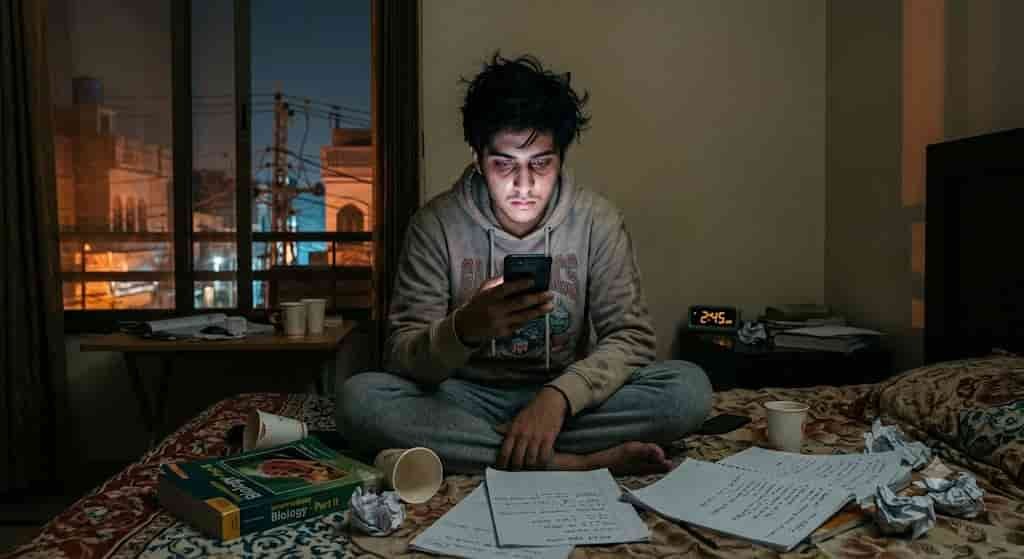
Sleep should be the easiest part of a young person’s day, yet for many young Pakistanis it has become one of the biggest challenges. Pakistan Gen Z sleep problems have grown rapidly over the past few years as smartphones, social media, academic pressure, financial uncertainty, and changing lifestyles reshape daily routines. Many students and young professionals now stay awake long after midnight, only to wake up feeling tired, distracted, and unmotivated.
The consequences go far beyond feeling sleepy. Poor sleep affects mental health, academic performance, physical fitness, productivity, relationships, and even long-term health. Many young people ignore these warning signs because they believe sacrificing sleep is necessary to succeed. However, the opposite is often true. Better sleep improves learning, creativity, focus, and emotional stability.
If you have already read our pillar guide, Pakistan Gen Z Under Pressure: What Is Really Worrying the Country’s Youth?https://featurepakistan.com/pakistan-gen-z/, you know that sleep is just one of several issues affecting today’s youth. Yet it connects to almost every other challenge, making it one of the most important topics to understand.
Why Are Pakistan Gen Z Sleep Problems Becoming More Common?
Today’s generation lives differently from previous ones. Smartphones, high-speed internet, online learning, freelancing, and social media have changed daily routines. Instead of sleeping after dinner, many young people spend several more hours scrolling through TikTok, Instagram, YouTube, or chatting with friends.
Students also face increasing competition. They prepare for board exams, university admissions, scholarships, language tests, and professional certifications at the same time. Meanwhile, many freelancers work for international clients, especially in Europe and North America, forcing them to stay awake during Pakistan’s nighttime hours.
These changing lifestyles make healthy sleep difficult to maintain.
Smartphones Have Become the Biggest Sleep Disruptor
Almost every Gen Z student owns a smartphone. While these devices make learning easier, they also create unhealthy bedtime habits.
Many people promise themselves they will check social media for only five minutes before sleeping. Those five minutes often become an hour or more. Endless short videos, notifications, messages, and trending content keep the brain active long after the lights go off.
Blue light from mobile screens also reduces melatonin production. Melatonin is the hormone that helps the body recognize when it is time to sleep. When melatonin levels remain low, falling asleep becomes much harder.
As a result, many young Pakistanis stay awake even when they feel physically exhausted.
Social Media Creates Mental Noise
Social media affects more than bedtime routines. It also changes how young people think.
Every day, Gen Z watches classmates buying new cars, influencers traveling abroad, entrepreneurs celebrating business success, and creators showing perfect lifestyles. Constant comparison creates pressure to achieve more in less time.
Instead of relaxing before bed, many people spend hours overthinking their future.
Questions such as these often fill their minds:
- Am I successful enough?
- Why is everyone moving ahead?
- Will I ever get a good job?
- Should I leave Pakistan?
- Am I wasting my life?
These thoughts increase stress and delay sleep.
Academic Pressure Keeps Students Awake
Education has become more competitive than ever.
Many Pakistani students attend university during the day, complete assignments in the evening, prepare for competitive exams at night, and still try to develop digital skills or freelancing careers.
Some students also attend coaching academies, language classes, or internship programs after regular classes.
With such demanding schedules, sleep often becomes the first sacrifice.
Unfortunately, sleeping less does not always improve academic performance. Research consistently shows that memory, concentration, and learning improve when students get enough quality sleep.
Freelancing Has Changed Sleeping Patterns
Pakistan has become one of the world’s fastest-growing freelancing countries.
Thousands of young freelancers work with clients from the United States, Canada, and Europe. Because of time differences, meetings often happen late at night.
Many freelancers begin work after dinner and continue until sunrise.
Although freelancing offers financial opportunities, irregular sleep schedules can eventually lead to fatigue, reduced productivity, mood swings, and burnout.
A balanced work routine becomes essential for long-term success rather than simply working longer hours.
Stress and Anxiety Make Falling Asleep Difficult
One of the biggest contributors to Pakistan Gen Z sleep problems is emotional stress.
Young people today worry about many things at once.
They think about university admissions.
They worry about finding jobs.
They compare themselves with others online.
They feel pressure from parents and society.
They worry about inflation and rising living costs.
They fear an uncertain future.
When the mind remains active, the body struggles to rest.
Instead of sleeping peacefully, many people replay conversations, imagine worst-case scenarios, or plan tomorrow’s problems until early morning.
This cycle gradually develops into chronic insomnia for some individuals.
Gaming, Streaming, and Endless Entertainment
Entertainment has never been more accessible.
Netflix, YouTube, online gaming, live streams, and social media provide unlimited content throughout the night.
Many young people say they watch “just one more episode.”
Gamers often promise themselves they will stop after one final match.
However, algorithms encourage continuous engagement, making it difficult to disconnect.
The result is another late bedtime and another tired morning.
Poor Sleep Reduces Academic Performance
Many students believe studying late into the night improves grades.
In reality, sleep helps the brain organize information learned throughout the day.
Without enough sleep, students often experience:
- Poor concentration
- Forgetfulness
- Lower exam performance
- Difficulty solving problems
- Reduced creativity
- Slower learning speed
A well-rested brain learns faster than an exhausted one.
Sleep Problems Affect Mental Health
Sleep and mental health influence each other.
Poor sleep increases stress, anxiety, irritability, and emotional instability.
At the same time, anxiety and depression make it harder to sleep.
This creates a cycle that becomes increasingly difficult to break.
Young people who consistently sleep fewer than seven hours often report feeling emotionally drained, less motivated, and more overwhelmed by everyday challenges.
For this reason, healthy sleep should be considered part of mental health care rather than a luxury.
Physical Health Also Suffers
Many people associate sleep only with tiredness.
However, quality sleep supports almost every system in the body.
Insufficient sleep can contribute to:
- Weakened immunity
- Frequent headaches
- Weight gain
- Hormonal imbalance
- Poor skin health
- Low energy
- Reduced physical performance
- Increased risk of chronic diseases later in life
Even regular exercise becomes less effective when sleep remains poor.
Warning Signs That Should Not Be Ignored
Many young people normalize unhealthy sleep patterns.
However, certain signs indicate that professional advice may be helpful.
These include:
- Difficulty falling asleep most nights
- Feeling tired after a full night’s sleep
- Sleeping during lectures or meetings
- Frequent nightmares
- Heavy dependence on caffeine
- Poor memory
- Mood changes
- Constant daytime fatigue
Ignoring these symptoms may allow sleep problems to worsen over time.
How Pakistan’s Gen Z Can Improve Sleep Naturally
Improving sleep does not always require complicated solutions.
Small daily habits often produce significant results.
Maintaining a consistent bedtime helps train the body’s internal clock.
Reducing screen time at least one hour before sleep allows melatonin levels to recover naturally.
Limiting caffeine during the evening also supports better sleep quality.
Regular physical activity reduces stress and improves nighttime rest.
Keeping the bedroom cool, quiet, and dark creates an environment that encourages deeper sleep.
Most importantly, avoiding work, studying, or scrolling through social media while lying in bed helps the brain associate the bed with sleep rather than activity.
Parents and Educational Institutions Also Have a Role
Sleep problems should not remain solely an individual responsibility.
Parents can encourage healthier routines by promoting balanced schedules instead of glorifying all-night studying.
Schools and universities can educate students about sleep hygiene alongside mental health awareness.
Employers and internship programs should also recognize that productivity depends on healthy employees rather than exhausted workers.
Creating a culture that values well-being benefits everyone.
A Healthier Future Starts With Better Sleep
The future of Pakistan depends on its young population. However, ambition alone cannot build that future. Students, freelancers, entrepreneurs, and professionals all need healthy minds and healthy bodies to perform at their best.
Pakistan Gen Z sleep problems reflect much larger issues, including academic competition, economic pressure, digital addiction, and mental health challenges. Solving these problems will require awareness, healthier habits, supportive families, and institutions that recognize the importance of rest.
Success does not come from staying awake the longest. It comes from thinking clearly, learning effectively, and maintaining the energy to grow consistently over time. For Pakistan’s Gen Z, improving sleep may be one of the simplest yet most powerful steps toward a healthier and more successful future.
Can Technology Be Both the Problem and the Solution?
Technology often receives all the blame for poor sleep, but the reality is more balanced. The same devices that keep many young people awake can also help them develop healthier habits when used wisely.
Many smartphones now include screen time tracking, bedtime reminders, focus modes, and blue light filters. Sleep tracking apps can help users understand their sleeping patterns and identify habits that reduce sleep quality. Meditation apps, relaxing music, and breathing exercises also make it easier to unwind before bed.
The challenge lies in how technology is used. Watching educational videos or listening to calming audio before bedtime creates a very different effect than endlessly scrolling through short videos or reading stressful news. Pakistan’s Gen Z can benefit from technology by setting healthy boundaries instead of allowing technology to control their routines.
The Economic Reality Behind Sleep Problems
Financial pressure has become another major reason behind Pakistan Gen Z sleep problems. Rising inflation, increasing tuition fees, and uncertainty about future employment leave many young people worried about their financial security.
University students often take part-time jobs to support themselves or help their families. Others balance freelancing with full-time education because they want to become financially independent before graduation. While these efforts show determination, they also reduce the time available for rest.
Many young professionals work two jobs or accept extra freelance projects to increase their income. Although this approach provides short-term financial relief, it often leads to long-term exhaustion. A healthy balance between earning money and protecting personal well-being is essential for sustainable success.
Why Poor Sleep Leads to Poor Decision-Making
Sleep influences much more than energy levels. It directly affects the brain’s ability to make good decisions.
When people do not sleep enough, they become more impulsive. They lose patience quickly and find it harder to concentrate. Small problems begin to feel much bigger than they actually are.
Students who sleep poorly often struggle to organize assignments, manage deadlines, and remember important information. Young professionals may find themselves making unnecessary mistakes at work or missing opportunities because they cannot think clearly.
Over time, these small errors accumulate and reduce confidence. Many people blame themselves without realizing that poor sleep is quietly affecting their performance.
The Connection Between Sleep and Physical Fitness
Many members of Gen Z have started paying greater attention to fitness. Gym memberships, home workouts, and outdoor running have become increasingly popular across Pakistan.
However, exercise alone cannot compensate for poor sleep.
The body repairs muscles, restores energy, and balances important hormones during sleep. Someone who exercises regularly but sleeps only four or five hours each night may recover more slowly and see fewer improvements in strength or endurance.
Fitness experts often describe sleep as one of the three foundations of good health, alongside proper nutrition and regular physical activity. Ignoring any one of these pillars limits the benefits of the other two.
What Healthy Sleep Looks Like
Healthy sleep is not only about spending more hours in bed. Quality matters just as much as quantity.
A healthy sleep routine usually includes going to bed and waking up at roughly the same time every day. Most young adults need around seven to nine hours of sleep each night to function at their best.
Good sleep also means falling asleep without spending hours awake, staying asleep throughout the night, and waking up feeling refreshed instead of exhausted.
If someone consistently struggles to meet these goals despite improving their habits, consulting a qualified healthcare professional may be worthwhile.
Building Better Sleep Habits One Step at a Time
Changing sleep patterns overnight is difficult, but gradual improvements often produce lasting results.
Start by setting a fixed bedtime and waking up at the same time every morning, even on weekends. This helps regulate the body’s natural internal clock.
Create a relaxing evening routine. Reading a book, listening to calm music, or practicing deep breathing can prepare the mind for rest. Avoid checking emails or social media immediately before bed, as this keeps the brain alert.
Eating heavy meals late at night may also interfere with sleep. Instead, choose lighter evening meals and drink enough water throughout the day rather than just before bedtime.
Keeping mobile phones away from the bed reduces the temptation to check notifications during the night. Even placing the phone across the room instead of beside the pillow can make a noticeable difference.