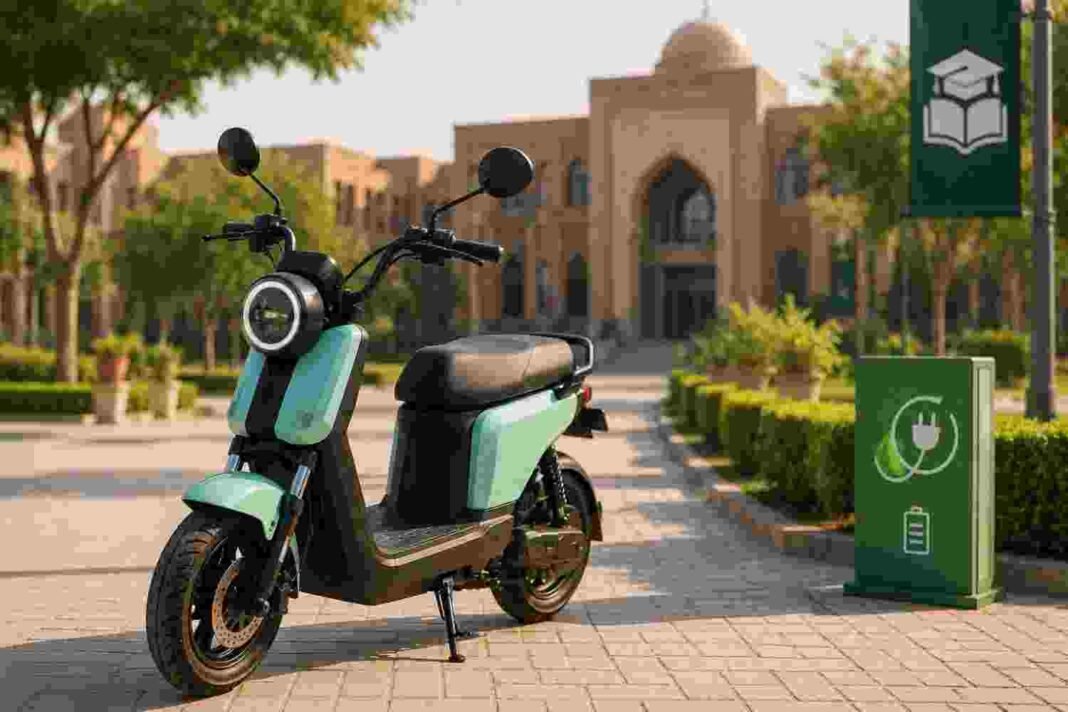
Punjab Chief Minister Maryam Nawaz has directed authorities not to collect any down payment from students under the E-Bike Scheme. The decision aims to make electric bikes more affordable and accessible for eligible students across the province.
According to ARY News, Maryam Nawaz also rejected recommendations for additional charges beyond the monthly installment. Meanwhile, the Punjab government plans to provide 130,000 electric bikes to students under the program.
The government will also cover the interest and insurance costs for the electric bikes. As a result, students may only need to pay a monthly installment of around Rs 3,000.
The proposal received agreement during discussions on the scheme. Therefore, the government hopes to reduce the financial burden on students who want to use electric transport.
The E-Bike Scheme is part of Punjab’s broader efforts to promote affordable, environmentally friendly transportation. The initiative also seeks to help students manage their daily travel needs at a lower cost.
Maryam Nawaz has ordered officials to open the dedicated e-bike portal within this week. Through the portal, eligible students will likely receive information and access to the application process.
In addition, the chief minister has directed relevant departments to ensure the timely delivery of bikes. Authorities aim to provide electric bikes to eligible students within six weeks.
The government wants to make the E-Bike Scheme more efficient and convenient for young people. For this reason, officials will focus on both the application process and the delivery timeline.
The program will initially focus on students who meet the eligibility requirements. However, the Punjab government has also given in-principle approval to expand the initiative gradually.
In the future, the scheme may include government employees and different government departments. Furthermore, the authorities may extend its benefits to the general public and delivery workers.
This expansion could increase the use of electric vehicles across Punjab. At the same time, it may help reduce dependence on conventional fuel-powered motorcycles.
During a briefing, Transport Secretary Imran Sikandar Baloch shared further details about the initiative. He said students would receive additional safety equipment along with their electric bikes.
Under the plan, students will get a helmet and a safety rod free of cost. These measures aim to encourage safer travel among young riders.
The E-Bike Scheme will also offer modern battery technology to participating students. Officials plan to equip the bikes with lithium iron phosphate batteries, which are known for their durability and safety features.
The government has also focused on rider training as part of the program. As a result, interested students will receive free training before they begin using their electric bikes.
Maryam Nawaz has directed authorities to arrange a two-day training program for eligible applicants. The training will help students understand the basics of safely operating an electric bike.
The initiative combines financial support with practical safety measures. As a result, the government hopes to make electric mobility easier for students who travel regularly for education.
Removing the down payment requirement is one of the program’s key features. Students will no longer need to arrange a large upfront payment to receive an electric bike.
Instead, the proposed monthly installment will make payments more manageable. The government’s decision to bear interest and insurance costs could further reduce expenses for beneficiaries.
The E-Bike Scheme may also support Punjab’s efforts to encourage cleaner transportation. Electric bikes can offer an alternative to conventional motorcycles while helping users avoid some fuel expenses.
Moreover, the program could benefit students who face difficulties with daily transportation. Affordable personal mobility may help them travel more conveniently between home and educational institutions.
The government’s plan to distribute 130,000 electric bikes shows the initiative’s scale. However, the program’s success will depend on an efficient application and delivery system.
The upcoming launch of the online portal will provide an important next step. Students interested in the program will be able to follow official updates regarding eligibility and registration.
The E-Bike Scheme also reflects the Punjab government’s growing focus on electric mobility. By expanding the program to other groups in the future, authorities hope to increase the use of electric transport across the province.
For now, the government has placed students at the center of the initiative. With no down payment, subsidized costs, free safety equipment, and training, the program aims to make electric bikes a more practical option.
Maryam Nawaz has instructed officials to move forward with the project without unnecessary delays. As the portal opens and applications begin, thousands of students could benefit from the new transport initiative.
The E-Bike Scheme could mark an important step towards affordable electric transportation in Punjab. Its success may also shape future government programs for cleaner and more accessible mobility.