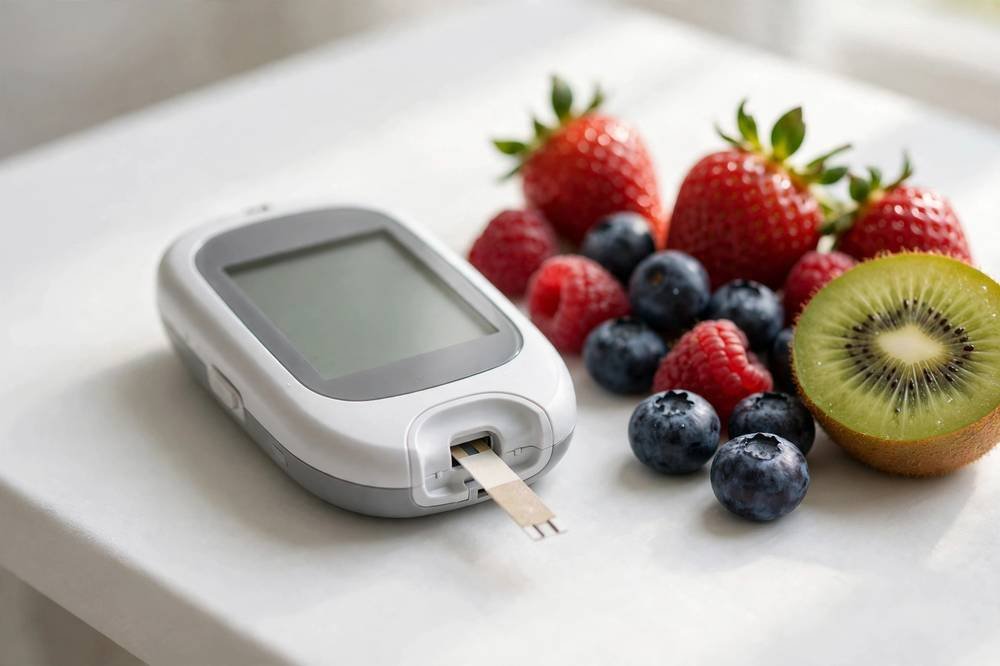
Normal blood sugar levels are the range of glucose in the blood that keeps your body working properly without strain. Blood sugar, or blood glucose, is your body’s main source of energy, and your body works hard to keep it within a fairly narrow band. When levels drift too high or too low, it can signal prediabetes, diabetes, or other health problems. This guide explains normal fasting, post-meal, and bedtime ranges, A1C targets, how the numbers differ by age and diabetes status, what high or low readings mean, and practical steps to keep your levels in range.
What Are Normal Blood Sugar Levels?
Blood sugar is measured in milligrams per deciliter (mg/dL) in the United States and in millimoles per liter (mmol/L) in the United Kingdom and most other countries. To convert, divide mg/dL by 18 to get mmol/L, or multiply mmol/L by 18 to get mg/dL. This article gives both units so the charts work wherever you are.
For an adult without diabetes, a normal fasting blood sugar, measured after at least eight hours without food, is between 70 and 99 mg/dL (3.9 to 5.5 mmol/L). Two hours after eating, blood sugar in a healthy person usually stays below 140 mg/dL (7.8 mmol/L), even after a carbohydrate-rich meal. These are the healthy benchmarks. For people who already have diabetes, doctors set slightly different targets, because keeping levels perfectly normal at all times would risk dangerous lows; the goal is a safe, realistic range instead.
Normal Blood Sugar Levels Chart
The table below summarizes the key reference ranges for adults. Readings vary with the time of day, what you ate, and whether you have diabetes, so a single number never tells the whole story.
| Measurement | Without diabetes | With diabetes (typical ADA target) |
|---|---|---|
| Fasting (8+ hours, morning) | 70–99 mg/dL (3.9–5.5 mmol/L) | 80–130 mg/dL (4.4–7.2 mmol/L) |
| Before meals (preprandial) | 70–99 mg/dL (3.9–5.5 mmol/L) | 80–130 mg/dL (4.4–7.2 mmol/L) |
| 2 hours after meals | Below 140 mg/dL (7.8 mmol/L) | Below 180 mg/dL (10.0 mmol/L) |
| Bedtime | Below 140 mg/dL (7.8 mmol/L) | 100–140 mg/dL (5.6–7.8 mmol/L) |
| Random (any time) | Below 140 mg/dL (7.8 mmol/L) | Below 200 mg/dL (11.1 mmol/L) |
| A1C (average, 2–3 months) | Below 5.7% | Below 7.0% |
| Low blood sugar (hypoglycemia) | Below 70 mg/dL (3.9 mmol/L) | Below 70 mg/dL (3.9 mmol/L) |
Fasting Blood Sugar Levels
Fasting blood sugar is the reading taken first thing in the morning before eating or drinking anything except water. It reflects how well your body manages glucose overnight, and it is one of the most important numbers in diabetes diagnosis. A fasting level of 70 to 99 mg/dL (3.9 to 5.5 mmol/L) is normal. A result of 100 to 125 mg/dL (5.6 to 6.9 mmol/L) indicates prediabetes, a warning stage where blood sugar is higher than normal but not yet in the diabetes range. A fasting reading of 126 mg/dL (7.0 mmol/L) or higher, confirmed on a second day, indicates diabetes.
Several things can temporarily raise a fasting reading: a late-night meal, alcohol the evening before, poor sleep, stress, illness, and certain medications such as steroids. This is why doctors usually repeat an abnormal fasting test rather than diagnosing from one number. If your fasting readings trend upward over weeks, even within the normal range, it is worth discussing with your doctor, because rising fasting glucose often precedes prediabetes.
Post-Meal Blood Sugar Levels
After you eat, blood sugar naturally rises as food digests, peaks within about an hour, and returns toward baseline within two to three hours. In a person without diabetes, the two-hour post-meal level should be below 140 mg/dL (7.8 mmol/L). For people with diabetes, the American Diabetes Association recommends keeping the reading one to two hours after the start of a meal below 180 mg/dL (10.0 mmol/L).
The size of the post-meal spike depends mainly on what and how much you ate. Refined carbohydrates, sugary drinks, and large portions cause the biggest rises, while meals rich in fiber, protein, and fat produce gentler curves. This is also why post-meal readings are such a useful feedback tool: testing two hours after different meals quickly shows which foods your body handles well. A short walk after eating can noticeably blunt the spike, because working muscles pull glucose from the blood.
Bedtime Blood Sugar Levels
Bedtime readings matter because blood sugar that is too low overnight can cause dangerous hypoglycemia while you sleep, and levels that are too high overnight raise morning fasting numbers. For adults without diabetes, bedtime blood sugar is typically below 140 mg/dL. For people with diabetes, many doctors suggest a bedtime target of 100 to 140 mg/dL (5.6 to 7.8 mmol/L): high enough to avoid overnight lows, low enough to wake up near target.
If you take insulin or medications that can lower blood sugar, a small bedtime snack containing protein and complex carbohydrates may be recommended to prevent overnight dips. People who wake up with unexplained high fasting readings may be experiencing the dawn phenomenon, a natural early-morning release of hormones that raises blood sugar, and should discuss the pattern with their doctor rather than adjusting medication on their own.
A1C: Your Long-Term Average
The A1C test, also called glycated hemoglobin, measures the percentage of hemoglobin coated with sugar and reflects average blood sugar over the previous two to three months. Because it smooths out daily ups and downs, it is the main test doctors use to diagnose diabetes and judge long-term control. A normal A1C is below 5.7 percent. Between 5.7 and 6.4 percent indicates prediabetes, and 6.5 percent or higher, confirmed by repeat testing, indicates diabetes.
For most adults with diabetes, the treatment target is an A1C below 7.0 percent, which corresponds to an average blood sugar of roughly 154 mg/dL (8.6 mmol/L). Targets are individualized: younger, healthier people may aim below 6.5 percent to protect against long-term complications, while older adults with other health conditions may accept a target below 8.0 percent to avoid the risks of hypoglycemia. Conditions such as anemia, kidney disease, and pregnancy can make A1C less reliable, in which case doctors rely more on daily readings.
Normal Ranges by Age
Children and Teenagers
Children’s bodies and routines make blood sugar harder to keep perfectly steady, so targets are set with safety first. The American Diabetes Association recommends an A1C below 7.0 percent for most children and teenagers with diabetes, with fasting targets roughly 90 to 130 mg/dL and bedtime targets 90 to 150 mg/dL. For children without diabetes, the same normal ranges as adults apply: fasting 70 to 99 mg/dL and two-hour post-meal below 140 mg/dL. Parents should never try to diagnose diabetes from a home meter alone; persistent high readings in a child warrant prompt medical evaluation, because type 1 diabetes can develop quickly.
Adults (18–59)
Healthy adults follow the standard ranges in the chart above: fasting 70 to 99 mg/dL, post-meal below 140 mg/dL, and A1C below 5.7 percent. Adults with diabetes generally aim for fasting 80 to 130 mg/dL, post-meal below 180 mg/dL, and A1C below 7.0 percent, with tighter goals for those who can achieve them safely.
Older Adults (60+)
For older adults, avoiding hypoglycemia takes priority over tight control, because a low can cause falls, confusion, and heart strain. Guidelines suggest an A1C below 7.5 percent for healthy older adults, below 8.0 percent for those with several chronic conditions, and below 8.5 percent for those with limited life expectancy or significant frailty. Fasting targets of 90 to 130 mg/dL and bedtime targets of 90 to 150 mg/dL are common for this group. These relaxed goals should always be set with a doctor who knows the individual’s health picture.
Pregnancy
Pregnancy demands tighter control because extra glucose reaches the baby. Targets commonly used are fasting below 95 mg/dL, one hour after meals below 140 mg/dL, and two hours after meals below 120 mg/dL. Women with gestational diabetes should follow the testing and management plan set by their obstetrician, as covered in our article on gestational diabetes.
What High Blood Sugar Means
High blood sugar, or hyperglycemia, is a fasting reading consistently above 125 mg/dL or a random reading above 200 mg/dL. In the short term, it causes increased thirst, frequent urination, fatigue, blurred vision, and headaches. These symptoms appear because the kidneys flush out excess glucose along with water, and cells are starved of energy despite the sugar in the blood.
A medical emergency called diabetic ketoacidosis (DKA) can develop when blood sugar is very high, usually above 250 mg/dL, especially in people with type 1 diabetes. Warning signs include fruity-smelling breath, nausea, abdominal pain, rapid breathing, and confusion; DKA requires immediate emergency care. Over years, sustained high blood sugar damages blood vessels and nerves, raising the risk of heart disease, stroke, kidney failure, vision loss, and foot problems. This is why catching prediabetes early matters: lifestyle changes at that stage can prevent or delay type 2 diabetes.
What Low Blood Sugar Means
Low blood sugar, or hypoglycemia, is any reading below 70 mg/dL (3.9 mmol/L). Symptoms include shakiness, sweating, fast heartbeat, hunger, dizziness, irritability, and difficulty concentrating. Below 54 mg/dL (3.0 mmol/L), symptoms can progress to confusion, slurred speech, seizures, and loss of consciousness, which is a medical emergency.
Hypoglycemia is most common in people who take insulin or certain diabetes pills, especially if they skip meals, exercise more than usual, or drink alcohol. The standard treatment is the 15-15 rule: consume 15 grams of fast-acting carbohydrate such as glucose tablets, fruit juice, or regular soda, wait 15 minutes, retest, and repeat if still below 70 mg/dL. People who have frequent lows should discuss their medication doses with their doctor, because repeated hypoglycemia is a sign the treatment plan needs adjusting. Anyone who experiences severe lows should carry glucose tablets and make sure family members know how to help.
When Should You Check Your Blood Sugar?
People without diabetes generally do not need to check blood sugar at home. Routine screening is enough: a fasting glucose or A1C test every three years starting at age 35, or earlier and more often with risk factors such as excess weight, family history, high blood pressure, or a history of gestational diabetes.
People with diabetes check according to their treatment plan. Those on insulin often test before meals, at bedtime, before driving or exercise, and whenever they feel symptoms of highs or lows. Those managing with lifestyle or non-insulin medications may test less often, sometimes just a few times a week, focusing on fasting and post-meal pairs to see how food affects them. Continuous glucose monitors, which track levels day and night through a small sensor, are increasingly used and can reveal patterns that finger-stick tests miss. Whatever the method, logging readings alongside meals, activity, and medication turns raw numbers into useful information for your doctor.
How to Keep Blood Sugar in a Normal Range
Keeping blood sugar steady rests on a few proven habits. Eat balanced meals that pair carbohydrates with protein, fiber, and healthy fats, and favor whole grains, vegetables, legumes, and whole fruit over sugary drinks and refined starches. Keep portions consistent from day to day and avoid skipping meals, which can trigger rebound highs. Aim for at least 150 minutes of moderate activity per week, and add a short walk after large meals to blunt glucose spikes. Maintain a healthy weight: even a 5 to 7 percent weight loss meaningfully improves insulin sensitivity in people with prediabetes. Limit alcohol, which can both raise and lower blood sugar unpredictably, and avoid smoking, which worsens insulin resistance. Finally, manage stress and protect sleep, because stress hormones and short nights both push glucose upward. If readings stay outside the target range despite these habits, see your doctor; medication may be needed, and needing it is not a personal failure.
Important note: This article is for general information only and is not medical advice. Reference ranges can vary slightly between laboratories and guidelines, and targets should always be personalized by your own healthcare provider. If you have symptoms of very high or very low blood sugar, such as confusion, fruity-smelling breath, or loss of consciousness, seek emergency care immediately.