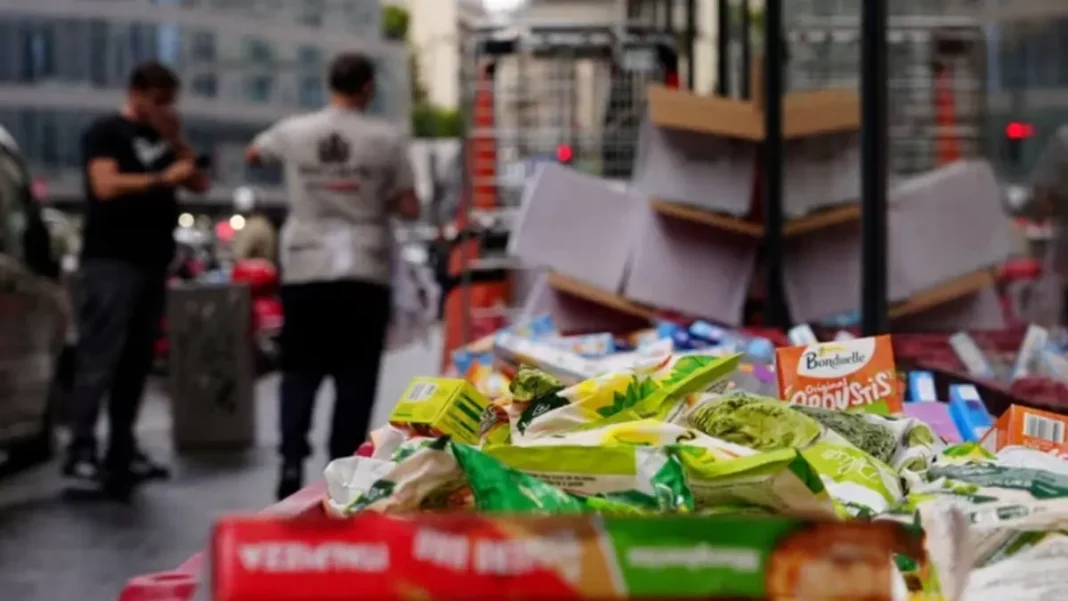
Hackers Turned French Supermarket Fridges Into Ovens, Spoiling Food at Hundreds of Stores
PARIS: Hackers raised the temperature of refrigerators and freezers at hundreds of French supermarkets to as high as 50 degrees Celsius overnight, causing fires and spoiling food in a French supermarket cyberattack officials called unprecedented for the country’s food supply chain.
The attack struck overnight from October 11 to October 12, hitting stores belonging to Intermarché, Netto, Coopérative U, Carrefour, E.Leclerc and Monoprix. The chains do not share a parent company, but they all use refrigeration-control equipment supplied by Danish manufacturer Danfoss.
The Paris prosecutor’s office said on Monday that a “large-scale” attack was “affecting connected refrigerators in several major food retailers across France”, with reported damage including “food losses and fires”. Prime Minister Sébastien Lecornu instructed France’s National Cybersecurity Agency, ANSSI, to investigate.
How the French supermarket cyberattack worked
According to French broadcaster BFM-TV, which first reported the attack, the hackers broke into the software that operates the connected refrigeration units and forced them into extended defrost cycles. Defrosting is a normal, short phase in which a unit briefly heats up to clear ice from its coils. The attackers stretched the cycle from one hour to eight hours so that alarms would go off later, delaying any intervention.
In addition to lengthening the cycle, the hackers raised the defrost temperature setpoint to 50°C. Charles Dezon, owner of an Intermarché supermarket in Gradignan in southwestern France, told Le Monde he had to throw away nearly a dumpster’s worth of frozen food. “The attack was probably launched around 11 pm, but we only realised it at 4 in the morning when our delivery driver saw the storeroom was flooded,” he said. The temperature in his cold room had reached 50°C, setting off the sprinkler system.
At an Intermarché in La Haye in Normandy, some equipment melted as temperatures climbed to 80°C, according to a store Facebook post cited by Le Monde.
Scale of the damage
Les Mousquetaires, which owns Intermarché and Netto, said fridges at around 150 of its stores were heated to 50°C for six hours overnight, and estimated its losses at several million euros. All affected food was discarded to remove health risks, a spokesperson said.
Coopérative U said nearly 100 of its outlets were affected. Its chief executive, Dominique Schelcher, wrote on X that targeting equipment essential to food preservation was “of extreme gravity and is unprecedented”. Carrefour said 80 of its supermarkets were hit, while Monoprix said 5 per cent of its roughly 490 stores were affected.
The fallout spread beyond France. Dutch supermarket operator Ahold Delhaize, which runs the Albert Heijn chain, said it was dealing with a “security issue” in its network and had taken several systems offline. Cyber threat researchers at Sekoia said Spain, Portugal, Poland, Germany and Belgium had also been affected.
EU food commissioner Christophe Hansen condemned the attack, warning that the “weaponisation of food has become a reality”. France said it was coordinating with European counterparts in case other countries were hit. The Tribune reported the investigation.
Why it matters for food security
The attack is one of the first large-scale cyberattacks aimed squarely at food retail infrastructure rather than data or payments. Danfoss told AFP that most affected equipment consisted of legacy products that no longer receive software or security updates, and said it had long advised customers to move away from obsolete models.
Related technology coverage: Ghostscript flaws put servers at risk, Facebook lets users reshape feeds with text prompts, WhatsApp’s new You tab on iPhone, and UK spy chief accuses Iran and Russia of hybrid campaigns.
Who was behind the French supermarket cyberattack?
No group has claimed responsibility. The Paris prosecutor’s office has opened a criminal investigation, and ANSSI, France’s cybersecurity agency, is examining how the attackers gained access.
How did hackers overheat the fridges?
The attackers targeted Danfoss refrigeration controllers, remotely triggering defrost mode and extending it from one hour to eight hours while raising the temperature setpoint to 50°C, which delayed alarms and ruined stock before staff arrived.
Which stores were affected?
Intermarché, Netto, Coopérative U, Carrefour, E.Leclerc and Monoprix stores across France were hit, along with possible spillover to Spain, Portugal, Poland, Germany, Belgium and the Netherlands.