Quick Facts
- Location: Sanghar District, Sindh, about 13 to 18 km southeast of Shahdadpur and roughly 69 km northeast of Hyderabad.
- Altitude: Low plains of lower Sindh, around 20 metres above sea level.
- Famous For: The ruins of Mansura, the first Muslim capital of the subcontinent and the capital of the Umayyad and Abbasid caliphates in Sindh from the 8th to 10th centuries.
- Nearest City: Shahdadpur, a market town on the Karachi to Peshawar main railway line.
- Accessibility: Reached by road from Hyderabad via the Tando Adam road, then a short rural track; day trip from Hyderabad or Karachi.
- Known Landmarks: The great courtyard of the Jamia Masjid, the small “deri” temple structure, ancient mounds and city walls, and a small on-site archaeological museum.
- Best For: History lovers, students of Islamic and Sindhi heritage, and travellers building a deeper cultural itinerary beyond the usual tourist towns.
Why Visit Brahmanabad (Mansura), Sanghar
Most travellers to Sindh go to Mohenjo-daro or Makli, and both are wonderful, but Brahmanabad, better known by its Arab name Mansura, is the site where the region’s recorded Islamic history truly begins. This quiet field of red-brick mounds near Shahdadpur was once a great metropolis, the seat of the Umayyad and later Abbasid caliphates in Sindh for some two and a half centuries. Walking its low mounds, you are standing on the first city the Arabs built in the subcontinent according to deliberate principles of town planning, a city whose lessons would later be applied in Baghdad itself.
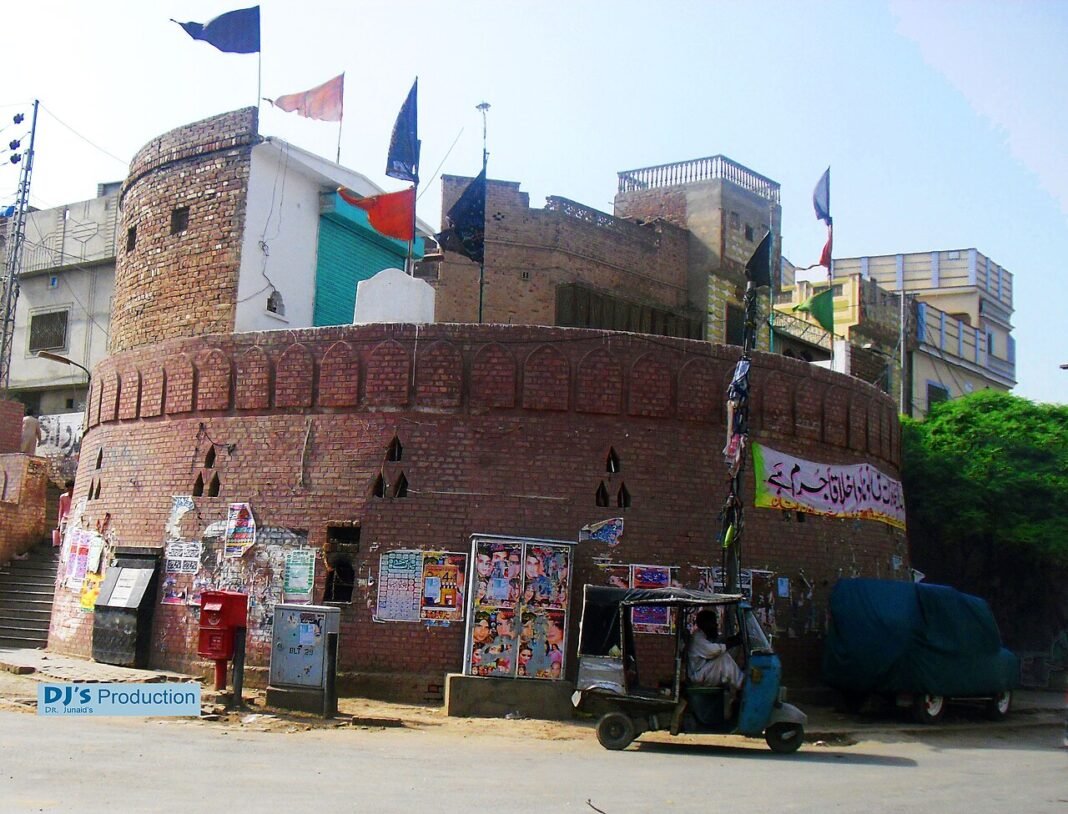
There is something deeply affecting about Mansura’s desolation. Folded across red-tinged earth, the site spreads over a circumference of about six kilometres, dotted with mounds and depressions that archaeologists read as roads, homes, drainage systems and grand buildings. A shell of a temple dome, an eroding tower, the semblance of the Grand Mosque’s plinth and a long covered passage of arched openings all rise in red brick from fields where tractors now plough. It is archaeology you can walk through, unhurried and unbothered by crowds, and it makes the rise and fall of a whole civilisation feel startlingly close.
Mansura also anchors a wider story. It was a trading city on the Indus with merchants linked to Baghdad, a centre of learning where the first Sindhi translation of the Quran was produced, and a fortified city of orchards and date groves. When it was sacked in the 11th century and the Indus later shifted its course, the city faded into legend, and local elders still call it “Sheher Gharq”, the drowned city. For anyone tracing how Sindh became Sindh, from the Rai and Brahman dynasties through the Arab conquest to the present, this Brahmanabad (Mansura), Sanghar travel guide will help you plan a visit that does the place justice.
Practically, the site is easy to reach from Hyderabad or Karachi as a day trip, it has an on-site archaeological museum, and it pairs well with the white desert of Achhro Thar in the same district. If you want your Pakistan travel to include places your friends have never heard of, Mansura belongs high on the list.
History of Brahmanabad (Mansura), Sanghar
The story of this ground is much older than the Arabs. In January 2021, a team of around twenty archaeologists from the Sindh culture department and Shah Abdul Latif University, Khairpur, working under Dr Ghulam Mohiuddin Veesar, reported traces of a third-century settlement at Brahmanabad, pushing the site’s known history back to the pre-Islamic era. This was only the third excavation on the site in some 180 years, and it proved that people were living here centuries before the Arab conquest.
In the mid-7th century, when Raja Chach became ruler of Sindh, Brahmanabad, then called Bahmanwa or Brahminabad, was one of the great cities of the realm. Aror near Rohri was the eastern capital where Raja Dahir lived, and Brahmanabad was effectively the second capital. According to the historian and archaeologist Dr Muhammad Ali Manjhi, Raja Chach renamed the city Brahminabad when he made it his own. The site’s ruins show baked-brick construction and a fortified plan: measured by perambulator in the colonial era, its circumference came within a few yards of four miles, about 6.4 kilometres.
The turning point came with the Arab conquest. In 711 to 712 AD, Muhammad bin Qasim, the young general of al-Hajjaj ibn Yusuf, seized Sindh, and Brahmanabad passed into Muslim hands. The Umayyad caliphs then founded a new garrison city here, al-Mansura, named after the Abbasid caliph al-Mansur. Al-Masudi ascribed its foundation to Mansur ibn Jamhur, the last Umayyad governor of Sindh, while other accounts credit Khalid ibn Barmak, the Barmakid administrator, with its construction. What is agreed is that Mansura became the capital of the caliphates’ Sindh province from the year 750 AD until 1006 AD, serving the Umayyads and then the Abbasids for two and a half centuries.
Mansura flourished as a trading metropolis on the Indus, its merchants connected to Baghdad and the wider Islamic world. It was a centre of learning and administration, and tradition credits it with producing the first Sindhi translation of the Quran. Historians describe it as a beautiful town of vast orchards and date palm groves, built in baked brick, with a great Jamia Masjid, markets and strong walls. Lessons learned in planning Mansura were later applied in Baghdad, where Sindhi-inspired buildings once stood, an extraordinary detail in the history of Islamic urbanism.
The city’s end came in the 11th century, when Mahmud of Ghazni sacked Mansura, beginning its decline. Local folklore, recorded by the earliest colonial excavator Bellasis in his Discoveries at Brahminabad, holds that the city was engulfed by an earthquake or divine fire around 1020 AD, a sudden and complete destruction that changed the Indus’s course. The historical record is less dramatic but no less final: when the Indus shifted its channel in 1757, the last commercial value of the place drained away. Henry Cousens, the doyen of Sindhi archaeology, excavated in 1920 and wrote that no ancient site in western India had given rise to more controversy than Brahmanabad. Federal excavations continued between 1966 and 1998, and after the 18th Amendment devolved antiquities to the provinces, the Sindh government took up the work again.
Today the site is a protected archaeological site under the Antiquities Act 1975, managed by the Sindh Directorate General of Antiquities and Archaeology, with an archaeological museum on site and research continuing alongside academic institutions.
Top Things to Do in Brahmanabad (Mansura), Sanghar
Walk the Ruins of the Old City
The main experience is simply walking the site. The ruins spread over a wide area of mounds and hollows, and explorers have long recorded these as signposts of ancient roads, homes, drainage channels and public buildings. Go in the morning when the light is low and the red brick glows, and give yourself two unhurried hours. Take a local guide if you can find one at the museum, because the mounds read very differently with someone who knows which rise was a mosque and which was a house.
Stand in the Courtyard of the Jamia Masjid
The most significant ruin at Mansura is the large courtyard of the Jamia Masjid, the grand mosque of the caliphal capital. Only the plinth and fragments survive, but standing where a thousand worshippers once prayed, in a city that was the seat of Islamic power in the subcontinent, is a genuinely moving moment. Notice the baked-brick work: this was a city built entirely of baked bricks, an enormous investment that speaks to its wealth.
See the Deri and the Stupa Remains
Among the mounds you will find a small temple structure called a deri or deval, all that remains of the pre-Islamic religious landscape, possibly connected to the practice of sati. Records also note a Buddhist stupa and a watch tower or navigation tower behind the site’s signboard. These fragments of Hindu and Buddhist Mansura, reused and sometimes built over by the city’s Muslim rulers, are what make the site a layered history rather than a single story.
Visit the On-Site Archaeological Museum
The site includes an archaeological museum displaying pottery, coins and objects recovered from the excavations, including material from the recent Shah Abdul Latif University dig. It is small but essential context: without it, the mounds are just mounds, and with it they become a city. Allow thirty to forty minutes, and ask the caretaker about the 2021 finds, the team works here periodically and usually enjoys talking about them.
Photograph the Red-Brick Landscape
Photographers will find Mansura rewarding in winter, when the air is clear and the red earth contrasts with green wheat fields around the site. The long covered passage with its string of arched openings and the lone tower make strong subjects. Drones should be flown with care and permission, as this is a protected antiquities site.
Famous Places In and Around Brahmanabad (Mansura), Sanghar
- Shahdadpur — the nearest town, with bazaars, food stalls and the railway station; the jumping-off point for the site.
- Achhro Thar — the white desert in Sanghar’s arid belt, a striking landscape of pale dunes a drive away from the ruins.
- Tando Adam — a historic railway and market town on the route from Hyderabad, worth a short stop.
- Sanghar town — the district headquarters, surrounded by the mango and date orchards the region is known for.
- Mirpur Khas — a larger city further east, known for its mango orchards and the old Talpur-era sites around it.
How to Reach Brahmanabad (Mansura), Sanghar
The site lies some 13 to 18 km southeast of Shahdadpur. From Hyderabad you drive northeast on the Tando Adam road, continue toward Shahdadpur, then take a left onto a katcha (unpaved) track through agricultural fields to the ruins. The final stretch is rough in the wet season, so a car with decent ground clearance is wise; in winter the track is usually firm.
From Karachi (approx. 230 km, 4 to 5 hours): Take the N-5 National Highway north via Hyderabad, then the Tando Adam road to Shahdadpur and the rural track to the site. This is the most common route for a day trip; leave early to have the morning light at the ruins.
From Hyderabad (approx. 69 km, about 1.5 hours): Drive via Tando Adam toward Shahdadpur, then turn off to the site. Hyderabad is the natural base for this trip, and the drive is easy on good roads until the last few kilometres.
From Lahore (approx. 950 to 1,000 km): The practical route is the N-5 south through Multan and Sukkur to Hyderabad, then on to Shahdadpur. Most travellers fly to Karachi or Hyderabad first and drive the last leg.
From Islamabad (approx. 1,100 to 1,150 km): Fly to Karachi, then drive via Hyderabad, or take the motorway and N-5 down through Punjab and upper Sindh. This is a two-day road journey, so plan an overnight stop.
Nearest airports: Jinnah International Airport, Karachi, is the nearest major airport; Hyderabad has limited domestic connections. By rail: Shahdadpur has a station on the Karachi to Peshawar main line, so you can arrive by train from Karachi, Hyderabad or further north and hire local transport for the last stretch. Local transport: rickshaws and Qingqi vans run around Shahdadpur; for the site itself, hire a car or a motorcycle rickshaw for the round trip, as there is no public transport to the ruins.
Route Details
- Hyderabad to Tando Adam on the main road, roughly 45 minutes.
- Tando Adam to Shahdadpur, a further 20 to 30 minutes.
- At Shahdadpur, take the road southeast out of town toward the villages; after a few kilometres, turn left onto the katcha track signposted for the Mansura/Brahmanabad ruins.
- Follow the field track for the last stretch to the site entrance and the museum. In the dry season a normal car manages it; after rain, wait or use a higher-clearance vehicle.
Where to Stay in Brahmanabad (Mansura), Sanghar
There is no accommodation at the ruins themselves, and almost nobody stays overnight for Mansura alone, it is a day trip. Plan your nights around Hyderabad or Shahdadpur. Hyderabad, about an hour and a half away, has the full range: comfortable mid-range hotels with air conditioning and restaurants, plus budget guesthouses near the railway station and in the Saddar area. Shahdadpur has small local hotels and guesthouses suited to an overnight stop, simple rooms, fans or air conditioning, and food available in the bazaar.
If you are combining Mansura with Achhro Thar or a wider Sanghar district tour, Sanghar town also has modest hotels. Camping at the ruins is not advisable: it is a protected archaeological site with no facilities, and the nearby fields are private farmland. For most visitors the best formula is simple, sleep in Hyderabad, leave early, spend the morning at Mansura, eat in Shahdadpur, and be back in Hyderabad by evening.
Where to Eat: Local Foods of Brahmanabad (Mansura), Sanghar
This is Sindhi country, and the food around Shahdadpur and Sanghar is classic Sindhi fare. Look for dal pakwan, the beloved breakfast of lentils with crisp fried bread; koki, the spiced whole-wheat flatbread eaten with yogurt or tea; sai bhaji, a slow-cooked spinach and lentil dish; and Sindhi biryani, which locals will insist is distinct from the Karachi version. In the bazaar you will find fresh samosas, pakoras and jalebi at the sweet shops, and in winter, roasted peanuts and sesame sweets appear on every corner.
Sanghar district is mango country, and in season (roughly May to July) the orchards around Shahdadpur and Sanghar produce excellent Sindhri and other varieties, sold cheaply at roadside stalls. Dates are the other local staple, sold in the bazaar in many grades. A simple meal at a dhaba, dal, roti, sabzi and chai, is budget-friendly, and even a fuller restaurant meal in Shahdadpur costs modestly by city standards. Carry drinking water, and if you visit in mango season, do not leave without buying a crate from a roadside seller.
Weather in Brahmanabad (Mansura), Sanghar
Mansura sits in the hot plains of lower Sindh, where summers are fierce and winters are the only comfortable season for walking ruins. The archaeological site is completely exposed, with no shade, so heat and sun dictate your plans. The best months, November to February, bring clear skies and mild days; from mid-April to late June the region endures some of Pakistan’s hottest weather, with May highs around 41 degrees Celsius, and the monsoon can make the final track to the site muddy.
| Season | Temperature Range | Conditions |
|---|---|---|
| Winter (Nov-Feb) | 8 to 26°C | Clear, mild days and cool nights; the ideal season for the ruins. |
| Spring (Mar-Apr) | 20 to 38°C | Warming quickly; mornings still workable, afternoons hot. |
| Summer (May-Jun) | 30 to 44°C | Extremely hot with dust; avoid midday; May highs around 41°C. |
| Autumn (Jul-Oct) | 28 to 40°C | Monsoon humidity, possible rain; the site track can turn muddy. |
Language and Culture of Brahmanabad (Mansura), Sanghar
Sindhi is the language of the district, spoken everywhere from the bazaar to the fields, with Urdu widely understood and enough English in Hyderabad to get by. The people are ethnically Sindhi, known for a hospitality that is warm but reserved: accept the offered chai, greet elders first, and you will be welcomed like family. The district’s culture is deeply rooted in Sufi tradition, and respect for shrines and elders is part of daily life.
For visitors, the norms are straightforward. Dress modestly, shoulders and knees covered, which matters at the rural site as much as in town. Ask before photographing people, especially women. Remove shoes if you enter any mosque or shrine enclosure you pass, and keep voices low at the site itself, it is a place of the dead as well as of history. Bargaining in the bazaar is expected and friendly. If you visit during Ramadan, avoid eating or drinking openly in public during daylight hours out of respect.
Shopping in Brahmanabad (Mansura), Sanghar
There are no shops at the ruins, so do your shopping in Shahdadpur or Hyderabad. Shahdadpur’s bazaar is a good place for Sindhi handicrafts: ajrak, the block-printed shawl that is Sindh’s cultural signature, sold in many qualities; Sindhi embroidered caps (topis); and rilli, the colourful applique quilts made across rural Sindh. In mango season the real shopping is fruit, crates of Sindhri mangoes at roadside prices. Dates, sold loose or in boxes, make a fine gift to carry home. Hyderabad’s larger markets offer a wider selection of the same crafts. There are no shopping malls in the immediate area, and none are needed, the bazaar is the experience.
Travel Tips for Brahmanabad (Mansura), Sanghar
Packing Essentials
Sun protection is non-negotiable: a wide hat, sunscreen and sunglasses, because the site has zero shade. Carry at least two litres of water per person in the warm months, plus snacks, since there is nothing to buy at the ruins. Wear sturdy closed shoes, the mounds are uneven brick and rubble, and long trousers protect against thorns. A fully charged phone doubles as your camera and map; there is no formal signage beyond the entrance board.
Safety Tips
The area is generally safe for daytime visitors, and the site caretakers are used to guests. Go in daylight only, the track has no lighting and the mounds are hazardous in the dark. Keep to the established paths across the ruins to protect the archaeology underfoot. If travelling as a woman alone, the usual rural-Sindh common sense applies: modest dress and a local contact or guide smooth everything.
Money & Connectivity
Carry cash, rupees in small notes, because there are no card facilities at the site and few in the villages. Shahdadpur has bank branches and ATMs, so withdraw there before heading out. Mobile signals from all major networks reach the site, though data can be slow on the track. Fuel up in Shahdadpur or Hyderabad; there are no fuel stations near the ruins.
Best Time to Visit Brahmanabad (Mansura), Sanghar
Winter (November to February)
The best season by far. Days are clear and mild, the light on the red brick is beautiful, and you can walk the full site comfortably. This is when to plan your trip, and it coincides with the most pleasant weather across lower Sindh.
Spring (March to April)
A workable shoulder season if you start at sunrise and finish by late morning. The wheat in the surrounding fields turns golden, which photographs well, but afternoons grow genuinely hot by April.
Summer (May to June)
Avoid if you can. With highs around 41 degrees and no shade at the site, walking the ruins is punishing and potentially unsafe at midday. If you must come, restrict yourself to the first two hours after dawn.
Autumn (July to October)
Monsoon humidity and occasional rain make this the least predictable season, and the katcha track to the site can become impassable after heavy rain. Early October, as the rains retreat, is the first reasonable window after summer.
Final Thoughts
Brahmanabad, or Mansura, will never be a crowded tourist attraction, and that is precisely its power. Where else can you stand alone in the capital of a caliphate, reading thirteen centuries of Sindh’s history in red brick, with only a tractor’s Sindhi song for company? It rewards the traveller who has done a little reading and brings a little imagination, and it punishes no one, entry is simple and the welcome is genuine.
Pair it with Hyderabad’s food, a detour to Achhro Thar’s white dunes, and the drive back through mango orchards, and you have one of Sindh’s most rewarding day trips. Come in winter, walk slowly, and let the drowned city tell you its story. For more ideas across the country, browse our Explore Pakistan section, or compare the mountain experience with our Malam Jabba guide and Hunza Valley guide.
FAQs
Where is Brahmanabad (Mansura) located?
It is in Sanghar District, Sindh, about 13 to 18 km southeast of Shahdadpur and roughly 69 km northeast of Hyderabad, in the low plains of lower Sindh.
What is the best time to visit Brahmanabad (Mansura)?
November to February, when days are mild and clear. Avoid mid-April to late June, when May temperatures reach around 41 degrees Celsius.
How do I reach Mansura from Karachi or Hyderabad?
From Karachi it is roughly 230 km (4 to 5 hours) via the N-5 through Hyderabad; from Hyderabad about 69 km (1.5 hours) via the Tando Adam road to Shahdadpur, then a short rural track to the ruins.
Is Brahmanabad (Mansura) safe for tourists?
Yes, for daytime visits. The site is a protected archaeological area with caretakers, and the surrounding villages are accustomed to visitors. Go in daylight and stick to the paths.
Is Mansura suitable for families?
Yes, with caveats. Children interested in history will enjoy the mounds and museum, but there is no shade, no food and uneven ground, so bring water, hats and snacks, and keep visits to the cooler hours.
Where can I stay near the ruins?
There is no lodging at the site. Stay in Hyderabad (full range of hotels, 1.5 hours away) or in simple guesthouses in Shahdadpur, and visit as a day trip.
What food is available near Brahmanabad?
Classic Sindhi food in Shahdadpur and the villages: dal pakwan, koki, sai bhaji, Sindhi biryani, plus seasonal Sindhri mangoes and dates from the local orchards.
Why is Mansura historically important?
It was the first planned Muslim city of the subcontinent and the capital of the Umayyad and Abbasid caliphates in Sindh from 750 to 1006 AD, a centre of trade with Baghdad and of learning, credited with the first Sindhi translation of the Quran.