Quick Facts
- Location: Toba Achakzai range, Qilla Abdullah District, Balochistan — between Qila Abdullah and Chaman
- Altitude: Around 2,290 m (7,513 ft); the Khojak (Shela Bagh) railway tunnel runs beneath it at 1,945 m
- Famous For: One of South Asia’s great historic mountain passes; the 3.91-km Khojak railway tunnel (1891), once Pakistan’s longest tunnel, pictured on the old Rs 5 banknote
- Nearest City: Quetta (around 113–130 km); Chaman (around 22 km beyond the pass)
- Accessibility: Moderate — the N-25 highway crosses the pass; winter snow can block it; the region needs sensible travel planning
- Known Landmarks: Khojak/Shela Bagh Tunnel, Shela Bagh railway station, hilltop forts, the Quetta–Chaman railway
- Best For: Railway and engineering enthusiasts, history lovers, frontier-landscape photographers, and travelers crossing between Quetta and the Afghan border
Why Visit Khojak Pass
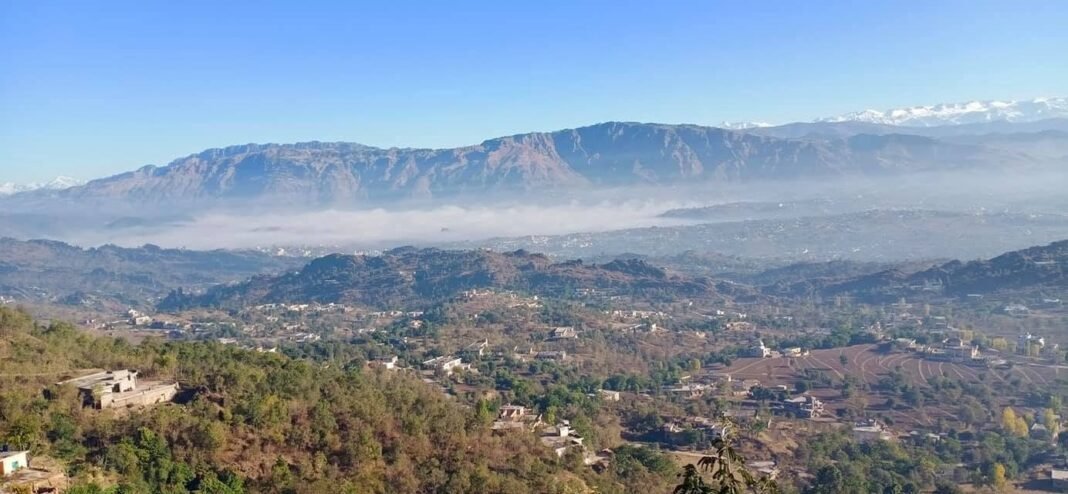
Most mountain passes you visit for the view. Khojak Pass you visit for the story — though the views, all rust-red and ochre ridges rolling toward Afghanistan, are considerable. This is one of the two great historic gateways between the Middle East and the Indian subcontinent, the other being the more famous Khyber. For over a century, everything that moved between British India and Afghanistan — troops, trade, mail, ambition — squeezed through this notch in the Toba Achakzai range. Standing at the pass, you are standing in the geography of empires.
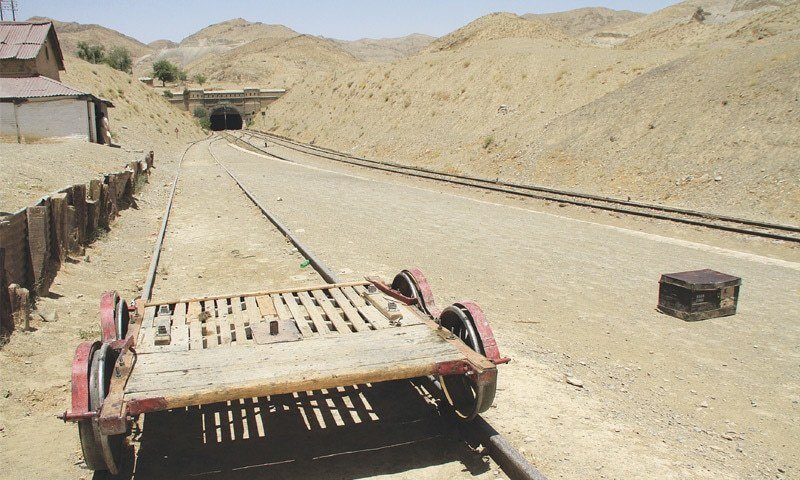
The engineering alone justifies the trip. Beneath the pass runs the Khojak Tunnel — 3.91 kilometers of Victorian railway engineering completed in 1891, when the British bored straight through the mountain to carry the strategic railway to Chaman and the Afghan frontier. It was the longest tunnel in Pakistan until the Lowari Tunnel surpassed it in 2018, and its image graced the country’s five-rupee banknote for decades. The tunnel mouth, the vintage Shela Bagh station with its old signboards, and the little forts still crowning the hilltops make this a living museum of the Great Game.
Khojak is also one of Pakistan’s great railway journeys. The Quetta–Chaman passenger train — the Chaman Mixed — still rattles through the tunnel on its 142-km run, and riding it is like stepping into a slower century: the lights flicker out in the tunnel, the air cools, and nearly four kilometers later you emerge blinking into frontier light. For rail fans, there are few rides in South Asia to match it.
A Khojak Pass travel guide itinerary makes most sense as part of a Quetta–Chaman journey: base in Quetta, take the N-25 highway or the train over the pass, explore Shela Bagh, and continue to the Chaman border if your plans allow. Pair it with our Bolan Pass guide for Balochistan’s two legendary passes in one trip, and browse Quetta’s heritage through the Archaeological Museum of Balochistan.
History of Khojak Pass
Khojak Pass sits in the Khwaja-Amran offshoot of the Toba-Kakar mountains, and its strategic importance is ancient — any army or caravan moving between Kandahar and the Indus plains had to reckon with it. In the 19th century it became a chess piece in the Great Game, the rivalry between the British and Russian empires for Central Asia. The British needed a railway to the Afghan frontier to move troops quickly against any Russian threat, and the Khojak Pass stood squarely in the way.
The answer was the Khojak Tunnel. Work began on April 14, 1888, and the first steam engine rolled through the completed tunnel on September 5, 1891. The project was a logistical marvel: with no skilled tunneling labour available locally and equipment ordered from England, the British recruited an extraordinary workforce — labourers from Herat, Seistan, Kandahar, Ghazni, Kabul, Jalalabad, Swat, Bannu, Kafiristan, Kashmir, Tibet, Punjab and Mekran, Arabs from the Persian Gulf and Zanzibar, Hazara workers, Sikh carpenters, masons and Bengal brick-burners, plus 65 Welsh miners brought in for their experience with the treacherous water-bearing strata of England’s Severn Tunnel.
The tunnel — 3.91 km long, at 1,945 m above sea level — became part of the Rohri–Chaman railway line and one of the longest tunnels in South Asia. Its civil engineering stature was recognized after independence when its image was printed on Pakistan’s five-rupee banknote in 1976, remaining in circulation until 2005. The 1935 Quetta earthquake destroyed the two decorative towers that once flanked the tunnel entrance, but the tunnel itself endured. Small forts on the hilltops above the pass, built to defend it, still stand as silent sentinels.
Local legend has embroidered the history: Shela Bagh, the settlement at the tunnel’s mouth, is said by some to be named for a dancer who entertained the tunnel labourers, while a darker tale claims the project’s chief engineer took his own life before his masterpiece was complete. Neither can be verified — but they are told with conviction, and they add to the pass’s mystique. The vintage Shela Bagh station even found cinematic fame, appearing in Jami’s Moor (2015), Pakistan’s Oscar-submitted film. Today, with a new highway tunnel project underway to bypass the pass’s most dangerous bends, Khojak is writing its next chapter.
Top Things to Do in Khojak Pass
See the Khojak (Shela Bagh) Tunnel Mouth
The great draw is the tunnel entrance itself — the 1891 bore through which trains have run for well over a century. A small inscribed plate on the front records its name and construction period. Stand before it and consider the audacity: Victorian engineers, Welsh miners and labourers from a dozen lands, carving four kilometers through a mountain at nearly 2,000 meters, with 1880s technology.
Ride the Quetta–Chaman Train Through the Tunnel
If you do one thing at Khojak, ride the train. The Chaman Mixed (349 Up from Quetta, 350 Down from Chaman) covers the 142 km in about 4 hours 45 minutes, passing through Shela Bagh, Qila Abdullah, Gulistan and Yaru before the long dark of the Khojak Tunnel. It is economy-class, unhurried and utterly atmospheric — book through Pakistan Railways and confirm the current schedule before planning around it.
Explore Shela Bagh Station
The station at Shela Bagh — “shela” is Pashto for a seasonal mountain stream, “bagh” a garden — was built after the tunnel and retains its vintage character: old signboards, keys and fittings that are relics of the railway’s past. Film buffs will recognize it from Moor. It sits right beside the Quetta–Chaman highway (N-25), so it is an easy stop on the road journey too.
Drive the Pass on the N-25
The N-25 National Highway — the 813-km RCD Highway running Karachi–Quetta–Chaman — climbs over Khojak Pass about 22 km before Chaman. The mountain section is dramatic: hairpin bends, coloured rock faces in browns and maroons, and sudden sweeping views. Drive it in daylight, in fair weather, and with a reliable vehicle; a major NHA reconstruction of the highway began in late 2025 to tame its notorious accident record.
Spot the Hilltop Forts
Look up as you cross: small forts defend the pass from the hilltops, built when controlling this notch meant controlling movement between empires. They are not developed tourist sites, but they photograph beautifully against the big Balochistan sky and remind you what this landscape once meant strategically.
Continue to the Chaman Border
Chaman, at the Afghan frontier, is the natural extension of a Khojak trip — a bustling border town where cross-border trade and daily life spill across one of the region’s most storied boundaries. Visit with realistic expectations (it is a working frontier town, not a resort), respect the heavy security presence, and follow local guidance throughout.
Famous Places In and Around Khojak Pass
- Shela Bagh railway station — vintage station at the tunnel mouth, seen in the film Moor
- Qila Abdullah — district town on the Quetta–Chaman route
- Chaman — the Pakistan–Afghanistan border town, ~22 km beyond the pass
- Quetta — the provincial capital and natural base, ~113–130 km away
- Bolan Pass — Balochistan’s other legendary pass, on the Quetta–Sibi route
How to Reach Khojak Pass
Khojak Pass lies on the Quetta–Chaman corridor in western Balochistan, and every route runs through Quetta. From Quetta, the pass is roughly 113–130 km by road — about a 3-hour drive to Chaman via the N-25 — and the railway covers 142 km to Chaman in under five hours.
From Karachi, drive the N-25 north to Quetta (approximately 680 km, a long 10–12 hour journey on a highway currently being rebuilt to motorway standard) or fly to Quetta and continue by road or rail. From Islamabad and Lahore, the practical route is to fly to Quetta International Airport — the nearest airport — and then travel overland; the overland drive from Islamabad is roughly 950–1,000 km and best treated as a multi-day expedition. Pakistan International Airlines and private carriers operate flights to Quetta from the major cities, though schedules change — confirm before booking.
Between Quetta and the pass, your options are a private car or hired 4×4 on the N-25, the Quetta–Chaman passenger train, or intercity coaches to Chaman that cross the pass. Given the region’s security sensitivities and the highway’s ongoing reconstruction, traveling with a reputable local operator or guide is strongly advisable — and always check current travel advisories before setting out.
Route Details
- Fly or drive to Quetta (Quetta International Airport; or N-25 from Karachi).
- From Quetta, take the N-25 Quetta–Chaman highway west through Kuchlak and Bostan toward Qila Abdullah.
- The road climbs to Khojak Pass (~2,290 m); the railway dives through the Khojak Tunnel below at Shela Bagh.
- Continue ~22 km beyond the pass to Chaman at the Afghan border — or return to Quetta the same day.
Where to Stay in Khojak Pass
There is no tourist accommodation at the pass itself — this is a transit corridor, not a resort. The correct base is Quetta, which offers the full range: Serena-level luxury hotels, solid mid-range business hotels, and budget guesthouses. Book a reputable hotel in Quetta and do Khojak as a day trip by road or rail.
Chaman has basic local hotels, but they are aimed at traders and transit travelers rather than tourists; most visitors are better served returning to Quetta for the night. If you are traveling with an organized tour, your operator will typically arrange the Quetta stay and the day’s transport. Whatever you choose, confirm your booking in advance — Quetta’s better hotels fill up during business and government travel peaks.
Where to Eat: Local Foods of Khojak Pass
The food of this region is classic Baloch–Pashtun frontier cooking: meat, fire and bread. In Quetta before you set out, eat sajji — the whole lamb or chicken roasted on skewers over coals that is Balochistan’s most famous dish — along with namkeen gosht, rosh (slow-cooked mutton) and fresh kaak, the hard round bread baked on hot stones. Quetta’s dhabas and barbecue restaurants do these superbly at budget-friendly prices.
Along the N-25, roadside dhabas serve karahi, dal, fresh naan and doodh patti — simple, filling and cheap. Carry snacks and plenty of water for the pass crossing itself, as there is little between settlements. In winter, the hot soups and qehwa at Quetta’s cafes are the perfect pre- or post-pass warmer. As everywhere in Balochistan, hospitality is generous: if a local family or shopkeeper offers tea, it is rude to refuse outright.
Weather in Khojak Pass
At 2,290 m in arid Balochistan, Khojak has a classic high-plateau climate: bitterly cold winters with snow, hot summer days with cool nights, and brilliant sunshine most of the year. Winter snowstorms have historically blocked the pass — one reason the new all-weather highway tunnel is being built — so season choice matters here more than at most Pakistani destinations.
| Season | Temperature Range | Conditions |
|---|---|---|
| Winter (Dec–Feb) | -5 to 10°C | Cold with snowfall; pass can be blocked by snowstorms; travel only with local advice |
| Spring (Mar–May) | 10–25°C | The best season — mild, clear, wildflowers on the lower slopes |
| Summer (Jun–Aug) | 25–35°C | Hot days, cool nights; dry and clear; start drives early |
| Autumn (Sep–Nov) | 10–25°C | Crisp and clear; excellent visibility; the other best season |
Language and Culture of Khojak Pass
This is Pashtun country: Pashto is the language of the road, the bazaars and the villages, with the Achakzai tribe historically dominant around the pass. Urdu works with officials, hotel staff and transport operators; English is limited outside Quetta’s better hotels. The culture is tribal, conservative and deeply hospitable — the Pashtun code of melmastia (hospitality) is taken seriously.
Dress conservatively: long sleeves and trousers for men, and women should cover arms, legs and head with a scarf. Always ask before photographing people — many will decline, and that must be respected without argument. Avoid photographing military installations, checkpoints or the border fencing; this is a sensitive frontier zone and security personnel have zero tolerance for it. Keep political and cross-border topics out of casual conversation, travel with a local guide, and follow their instructions on where to stop and where to keep moving.
Shopping in Khojak Pass
There is no shopping at the pass — buy in Quetta before you go. Quetta’s bazaars are among Pakistan’s most interesting: dry fruits (almonds, pistachios, pine nuts) from the orchards of the province, Balochi embroidery, woolen shawls and rugs, and the famous Quetta pottery. Liaquat Bazaar and the surrounding markets are the main hunting grounds.
Chaman’s bazaar, at the border, is a different experience — a frontier trading post with goods from both sides of the border — but shop there only with local guidance and realistic expectations about quality. Prices in Quetta’s bazaars are negotiable; start at roughly two-thirds of the asking price and meet in the middle with good humour.
Travel Tips for Khojak Pass
Packing Essentials
Layers for the altitude swing — warm jacket even in summer for early mornings, sun protection for the fierce highland sun, sturdy closed shoes, and a daypack with water and snacks. Carry a scarf (useful for dust, sun and cultural dress codes), a power bank, and any medication you need — pharmacies thin out beyond Quetta. A camera with a zoom lens is ideal for the forts and rock formations.
Safety Tips
Khojak sits in a sensitive border region — plan accordingly. Check current travel advisories before you go, travel with a reputable local operator or guide, keep identification on you at all times, cooperate politely at checkpoints, and never photograph security installations. Drive the N-25 only in daylight; the highway has a serious accident history and reconstruction work is ongoing. In winter, do not attempt the pass during snowstorms — wait for clearance.
Money & Connectivity
Carry all the cash you will need from Quetta — there are no ATMs at the pass and card acceptance is nil beyond the city. Mobile coverage exists along the N-25 corridor on the major networks but is unreliable in the mountains; download offline maps and share your itinerary with someone before leaving Quetta. Fuel up in Quetta; stations thin out on the frontier road.
Best Time to Visit Khojak Pass
March to May — The Prime Window
Spring is Khojak at its best: mild temperatures, clear skies, open roads and the hills briefly touched with green. This is the season for the drive, the train ride and photography alike.
September to November — Autumn Clarity
Crisp air, superb visibility and comfortable temperatures make autumn the year’s other excellent window — arguably the best for the big frontier landscapes.
June to August — Summer Heat
Doable but hot: the pass road shimmers by midday, though nights cool pleasantly. Travel early, carry extra water, and combine with Quetta’s relatively mild summer evenings.
December to February — Winter Caution
Beautiful and crowd-free, but snowstorms can close the pass with little warning. Only attempt with expert local guidance, a capable vehicle and flexible plans — or admire it from Quetta and wait for spring.
Final Thoughts
Khojak Pass is not an easy destination, and it isn’t trying to be. It is a frontier crossing with an imperial past, a railway tunnel that was a wonder of its age, and landscapes that look the way the edge of empires ought to look — vast, austere and quietly dramatic. For travelers who have done the north’s green valleys and want to understand Pakistan’s other half, the rugged west, there is no better classroom.
Build it into a wider Balochistan journey on our Explore Pakistan trail: pair it with the Bolan Pass, Quetta’s bazaars and the Archaeological Museum of Balochistan, and for a different flavour of mountain Pakistan entirely, our Malam Jabba and Hunza Valley guides await. Go in spring, ride the train, and stand a while at the tunnel mouth — history feels very close there.
FAQs
Where is Khojak Pass located?
Khojak Pass is in the Toba Achakzai range of Qilla Abdullah District, Balochistan, connecting Qila Abdullah with Chaman near the Afghan border — about 113–130 km from Quetta on the N-25 highway, at around 2,290 m elevation.
What is the Khojak Tunnel?
The Khojak (Shela Bagh) Tunnel is a 3.91-km railway tunnel built by the British between 1888 and 1891 beneath the pass, at 1,945 m altitude. It was Pakistan’s longest tunnel until 2018 and appeared on the old Rs 5 banknote from 1976 to 2005.
What is the best time to visit Khojak Pass?
March to May and September to November offer mild, clear weather and open roads. Winter brings snow that can block the pass; summer is hot but workable with early starts.
How do I reach Khojak Pass from Quetta?
Drive the N-25 Quetta–Chaman highway (about 3 hours to Chaman, crossing the pass), or take the Quetta–Chaman passenger train, which runs 142 km through the Khojak Tunnel in about 4 hours 45 minutes.
Is Khojak Pass safe for tourists?
It is a sensitive border region, so plan carefully: check current advisories, travel with a reputable local operator, carry ID, cooperate at checkpoints, avoid photographing security installations, and drive only in daylight.
Can I ride a train through the Khojak Tunnel?
Yes — the Chaman Mixed passenger train (349 Up / 350 Down) runs between Quetta and Chaman through the tunnel. Confirm the schedule with Pakistan Railways before planning your trip, as timings can change.
Where should I stay when visiting Khojak Pass?
Base yourself in Quetta, which has hotels across all budgets, and visit the pass as a day trip. There is no tourist accommodation at the pass itself.
What should I combine with a Khojak Pass trip?
Quetta city and its bazaars, the Chaman border town, the Bolan Pass on the Quetta–Sibi route, and — for railway enthusiasts — the full Quetta–Chaman rail journey.