While the tour buses queue for Hunza and Skardu, one of Gilgit-Baltistan’s most rewarding valleys sits quietly to the west, waiting for travelers who like their mountains uncrowded. Chatorkhand is the main town of the Ishkoman valley in Ghizer district — a green ribbon of fields and orchards along the Karambar River, cupped between high brown mountains with snow peaks on the horizon. It is the kind of place where you come for a night and stay for a week. This Chatorkhand travel guide will show you why this gentle valley town deserves a place on your itinerary, when to go, and how to get there.
Chatorkhand is not a thrill-a-minute destination, and it never pretends to be. There are no chairlifts here, no lakeside resorts, no selfie-point infrastructure. What there is: a small bazaar with tea houses, riverside walks through some of the greenest fields in the region, a meadow landscape that turns gold in autumn and white in winter, and — for those with stronger legs — the trailheads to some of the great adventures of the Hindu Kush–Karakoram borderland, including Karambar Lake, one of the highest alpine lakes in Pakistan. If your idea of a perfect trip is slow mornings, mountain air, and trails that start at your guesthouse door, Chatorkhand is your town.
Quick Facts
- Location: Ishkoman valley, Ghizer district, Gilgit-Baltistan, Pakistan — on the Karambar River, about 80 km north-west of Gilgit
- Altitude: Around 6,850 ft (about 2,090 m)
- Famous For: Being the headquarters town of Ishkoman tehsil, green riverside fields, the small bazaar, and as the base for treks to Karambar Lake and the Pakora Pass
- Nearest City: Gilgit (about 80 km); Gahkuch, the Ghizer district headquarters, is about 25 km away
- Accessibility: Road only — jeep or van from Gilgit via Gahkuch up the Ishkoman valley road (about 4 hours)
- Known Landmarks: Karambar River, Karambar Lake (4,300 m), Imit village and fort, Pakora Pass (4,700 m), Dain waterfall, Hayol Meadows
- Best For: Slow travelers, trekkers, nature lovers, photographers, families wanting a peaceful mountain break, and bikers riding the Ghizer valleys
Why Visit Chatorkhand
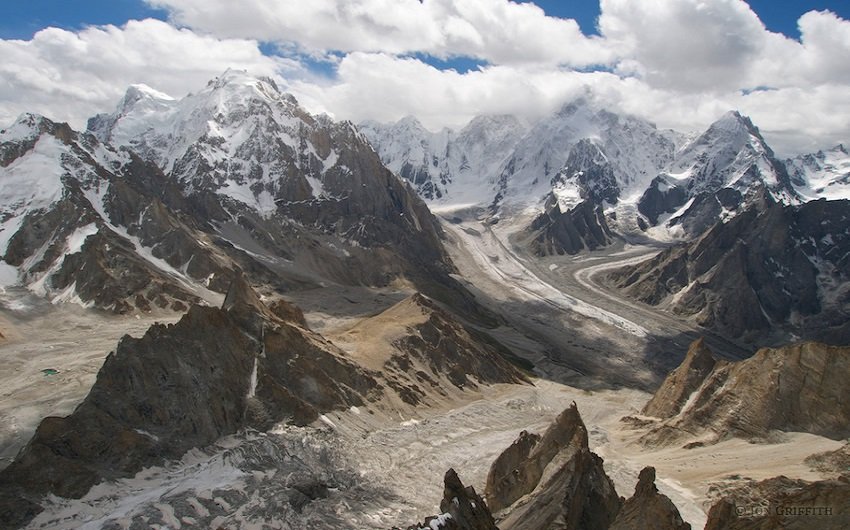
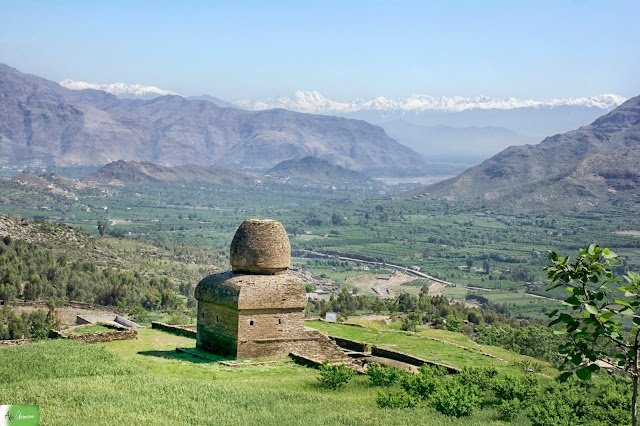
The first reason is the valley itself. Ishkoman is one of those rare places that divides two of the world’s great mountain ranges — the Karakoram on one side, the Hindu Kush on the other — and Chatorkhand sits right in its green heart. The town is a deep valley settlement between high, dry brown mountains, with the Karambar River running bright and cold past fields of wheat, maize, and orchards. Walk the riverside in the evening and the light does extraordinary things: gold on the fields, pink on the distant snow peaks, and a quiet so complete you can hear the river thinking.
The second reason is the seasons, which here are not a background detail but the whole show. March and April bring the blossom season, when cherry, apricot, almond, and apple trees flower across the valley in waves of white and pink. June through August is summer: fruit ripening on the branch, harvest in the fields, long warm days made for walking. September to November is autumn, when the poplars and orchards turn yellow and gold and photographers lose all self-control. December to February buries the town in snow and turns it into a silent white world. Few towns in Pakistan wear all four seasons this well.
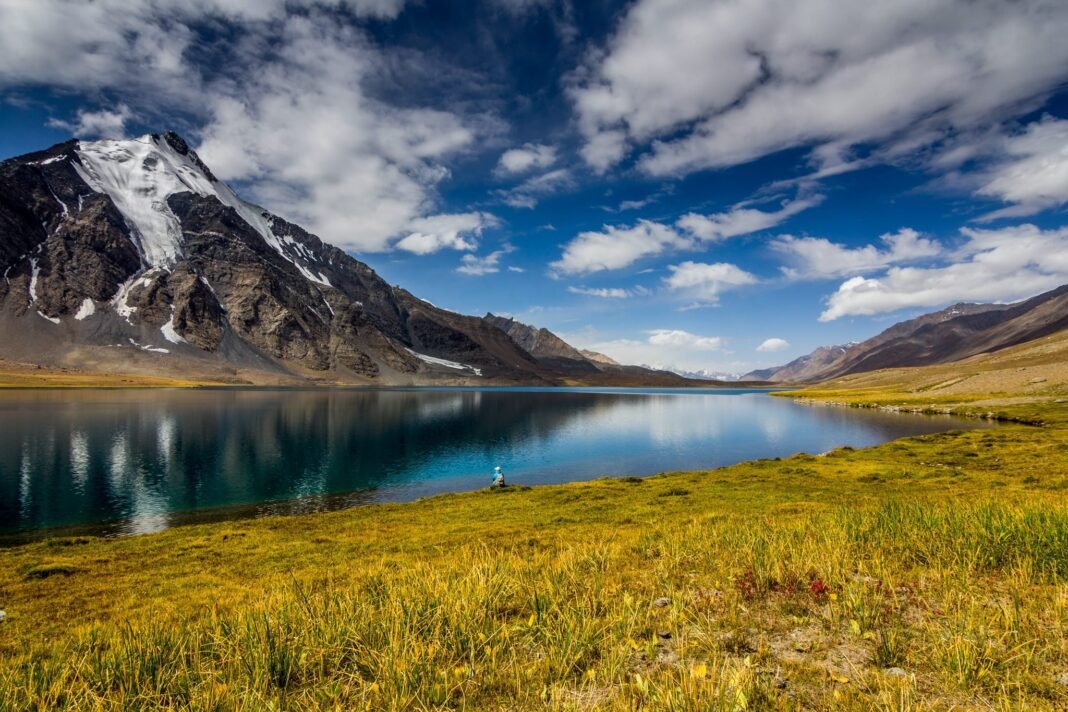
The third reason is adventure on a human scale. The treks that start from Chatorkhand are gentler than the expedition routes of Baltistan — real mountain journeys, but ones a fit walker can actually do. Up the valley lies Karambar Lake at 4,300 metres, one of the highest lakes in the country, a two-to-three-day trek through spectacular high country. The Pakora Pass trek (4,700 m) crosses from near Nalter to Ishkoman over three to four days and a glacier — a genuine traverse. Shorter walks lead to the Dain waterfall, Hayol Meadows, and riverside picnic spots. Chatorkhand lets you choose your own level of wild.
Finally, there is the culture. Ishkoman is famously remote — so remote that local tradition says its people still consult fairies — and that isolation has preserved something precious: a way of life built around masonry, orchards, and mountain hospitality. Travelers describe stone cottages, family-style dinners, shepherds’ walks, and a travellers’ hostel culture that welcomes bikers and wanderers. Come to Chatorkhand and you do not just see a valley; you are briefly adopted by one.
History of Chatorkhand
Chatorkhand’s history is the history of Ishkoman — a valley that spent most of its past beyond the reach of empires. The broader region was known to the ancient world: Chinese pilgrim-chroniclers of the fifth and sixth centuries described this area as a “valley of hanging chairs,” and Alexander of Macedonia’s armies fought some of their hardest battles in these mountains before pushing toward the Indus. But the high valleys of Ghizer were, for most of history, the domain of small local chiefs and independent communities, too rugged for distant capitals to hold.
In the 19th century, the valleys of what is now Gilgit-Baltistan became pawns in the Great Game between British India and Russia, and the British established the Gilgit Agency to watch the northern passes. Ishkoman’s position — guarding routes toward the Wakhan Corridor and Afghanistan — gave it quiet strategic importance far beyond its size. The valley’s famous masonry tradition, still praised by visitors today, built the stone houses, forts, and terraces that define its villages; Imit, down the valley, preserves one of the old fortified settlements.
Modern Chatorkhand grew as the administrative centre of Ishkoman tehsil — the headquarters town where the valley’s bazaar, lodgings, and government offices cluster. While Hunza and Skardu boomed with tourism, Ishkoman stayed off the main circuit, which is why it still feels undiscovered. In recent years, travelers’ hostels, guesthouses, and jeep and trekking services have grown up around Chatorkhand, and the town is slowly finding its audience: trekkers bound for Karambar Lake, bikers crossing Ghizer, and travelers who heard about the valley from someone who had been there and could not stop talking about it.
Top Things to Do in Chatorkhand
Trek to Karambar Lake
The headline adventure. Karambar Lake sits at about 4,300 metres, making it one of the highest alpine lakes in Pakistan, and the trek from the Ishkoman side takes two to three days through high meadows and stark mountain scenery. The lake’s deep blue water against brown peaks is unforgettable. Go with a local guide, carry full trekking gear, and allow buffer days for weather.
Cross the Pakora Pass
For serious trekkers, the Pakora Pass traverse (about 4,700 m) links Nalter with the Ishkoman valley — a three-to-four-day, roughly 45 km journey including a glacier crossing. It is a proper expedition-style trek with enormous rewards: high passes, empty valleys, and a real sense of crossing from one world into another. Arrange it through an experienced operator.
Walk the Karambar River
The gentlest and loveliest thing to do in Chatorkhand: simply walk. Follow the river through green fields, watch the trout in the clear water, picnic on the banks, and photograph the contrast of green valley floor against rugged brown slopes and distant snow. Early morning and late evening light are magical.
Visit Imit village and fort
Down the valley toward the entrance of Ishkoman, Imit is one of the old settlements, with a historic fort and village architecture that shows the valley’s celebrated masonry tradition. It makes a good half-day excursion from Chatorkhand, combined with the bazaar stops along the way.
Chase the Dain waterfall
A local favourite for a day walk — ask in the bazaar or at your guesthouse for current trail conditions. The waterfall is at its best in late spring and summer when the meltwater runs strong.
Tea in the bazaar
Chatorkhand’s small bazaar is the town’s living room. Drink tea in a tea house, watch valley life go by, and stock up on dried fruit and supplies. This is also where you will arrange jeeps, guides, and porters for the bigger treks.
Famous Places In and Around Chatorkhand
- Karambar Lake (4,300 m) — one of Pakistan’s highest alpine lakes, 2–3 days’ trek up the valley.
- Pakora Pass (4,700 m) — high trekking pass on the Nalter–Ishkoman traverse.
- Imit village and fort — historic settlement at the valley’s entrance.
- Dain waterfall — local waterfall, best in late spring and summer.
- Hayol Meadows — high pastures for jeep trips and camping.
- Karambar River — the valley’s lifeline; trout fishing, riverside walks, photography.
- Baroghil valley — further up toward the Wakhan border, stark and stunning.
- Shandur Pass — the famous high pass and polo ground, reachable as a longer excursion in Ghizer.
How to Reach Chatorkhand
Chatorkhand is reached via Gilgit, and the journey is part of the experience. From Islamabad, fly to Gilgit (about an hour, weather permitting — the mountain approach means cancellations are common, so keep buffer days) or drive the Karakoram Highway, a spectacular 18-to-20-hour journey best broken into two or three days with stops at Besham and Chilas. From Gilgit, the road runs west to Gahkuch (the Ghizer district headquarters) and then turns north up the Ishkoman valley to Chatorkhand — about 80 km in total, roughly four hours by private jeep or taxi.
The Ishkoman valley road is a mountain road: unpaved in stretches, narrow in places, and not a drive for the nervous — but jeeps and high-clearance vehicles handle it routinely, and local drivers know every bend. Public vans run from Gilgit toward Gahkuch and up the valley, but for Chatorkhand specifically a hired jeep or taxi gives you the flexibility to stop for the views. Fill your fuel tank before leaving Gilgit or Gahkuch, since there are no petrol pumps in the upper valley. The road is generally open from spring through autumn; winter snow can close or complicate the upper stretches.
Route Details
- From Islamabad: Fly Islamabad–Gilgit (about 1 hour, subject to weather) or drive the Karakoram Highway via Besham and Chilas to Gilgit (18–20 hours; split over 2–3 days).
- From Lahore: Travel to Islamabad first (M-2, about 4–5 hours), then follow the Islamabad route above.
- From Karachi: Fly to Islamabad (about 2 hours), then fly or drive onward to Gilgit as above.
- Gilgit to Chatorkhand: Drive west on the Gilgit–Ghizer road to Gahkuch (about 2 hours), then north up the Ishkoman valley road to Chatorkhand (about 1–2 hours more). Total roughly 80 km, about 4 hours by jeep. Carry your passport/CNIC for roadside checkpoints.
For more northern valley ideas, browse our Explore Pakistan guides or the Hunza Valley guide.
Where to Stay in Chatorkhand
Accommodation in Chatorkhand is basic but full of character — this is a town of guesthouses, homestays, and hostels, not hotels. The standout for budget travelers is the travellers’ hostel in town: a sprawling property of stone cottages set in a rose-filled garden, built from local pine, poplar, and river stone, with family-style dinners in a mud-walled dining room — exactly the kind of place where bikers and wanderers swap route notes over chai. Simple guesthouses in Chatorkhand offer clean rooms at local prices, and homestays with local families give you the warmest welcome of all.
Expect to pay roughly PKR 2,500–5,000 per night for a guesthouse room in the valley; hostels are cheaper. Camping is easy and popular — the meadows around town and along the trekking routes are made for tents, and your trekking operator will handle camp logistics on the Karambar Lake or Pakora Pass routes. Book ahead in the peak months of July to September, when the limited rooms fill up. Do not expect luxury; do expect to be looked after like family.
Where to Eat: Local Foods of Chatorkhand
Ishkoman’s food is mountain food: simple, filling, and built on what the valley grows. Start with chapshuro, the beloved meat-filled pastry of Gilgit-Baltistan, and mamtu, delicate steamed dumplings. Butter tea is the traditional drink — salty and warming at altitude. Local kitchens also make diram and phitti, hearty valley staples, and no visit is complete without the fruit: fresh apricots, cherries, and mulberries from the orchards in summer, plus dried apricots, organic honey, and yak cheese to take home.
Trout from the valley’s cold rivers appears on some menus — ask locally. Meals at guesthouses are home-style and generous; a simple local meal typically costs around PKR 400–800. The bazaar’s tea houses serve the basics, and your guesthouse or hostel will usually cook dinner if you ask in advance. Carry snacks and water for day walks — there are no restaurants on the trails.
Weather in Chatorkhand
At around 2,090 metres, Chatorkhand enjoys four distinct, well-behaved seasons — one of the town’s great charms. Summers are warm but rarely harsh, winters bring real snow, and the shoulder seasons deliver the blossom and autumn colour that photographers travel for. Even in summer, nights cool down properly, so always pack a warm layer.
| Season | Temperature Range | Conditions |
|---|---|---|
| Winter (Dec–Feb) | -10°C to 5°C | Snow covers the town; quiet, stark, beautiful. Road access can be difficult. For winter lovers only. |
| Spring (Mar–May) | 5°C to 20°C | Blossom season (March–April): cherry, apricot, almond, and apple trees in flower. Superb walking weather. |
| Summer (Jun–Aug) | 12°C to 28°C | Fruit season; wheat and maize harvest; long warm days. Peak trekking and travel season. |
| Autumn (Sep–Nov) | 2°C to 18°C | Golden poplars and orchards; crisp air; superb photography. Arguably the most beautiful season. |
Language and Culture of Chatorkhand
Ishkoman is a linguistic crossroads: Shina is widely spoken, alongside Khowar and Wakhi in different parts of the valley, with Urdu as the common language for visitors. The population is predominantly Shia Muslim, and the culture blends mountain pragmatism with deep hospitality — guests are genuinely honoured here, and the valley’s travellers’ hostels run on that spirit.
Dress modestly, ask before photographing people, and accept tea when it is offered — refusing can offend. The valley is conservative but welcoming; women travelers are fine here with standard modest dress and the usual common sense. Local tradition holds the valley’s fairies in affectionate regard — ask a shepherd about them and you will get a story worth the whole trip. On treks, follow Leave No Trace principles and respect grazing land and livestock.
Shopping in Chatorkhand
The small bazaar in Chatorkhand covers the essentials: basic supplies, dried fruit and nuts, and simple trekking provisions. The real shopping here is edible — stock up on dried apricots, apricot oil, organic honey, and yak cheese from local sellers; they make superb gifts and the money stays in the valley. You may also find local handicrafts and woolen items in the bazaar. For serious gear or a wider selection, shop in Gilgit before heading up the valley. There are no shopping malls anywhere near Chatorkhand — the bazaar and its tea houses are the commercial centre, and that is plenty.
Local Events and Festivals
Chatorkhand itself celebrates the valley’s seasonal rhythms — blossom time, harvest, and the fruit season are the real local festivals, marked by family gatherings and orchard work rather than staged events. The great regional event within reach is the Shandur Polo Festival, held each summer at Shandur Top in Ghizer district — the famous “highest polo ground in the world,” where teams from Chitral and Gilgit play before thousands of spectators, with folk music, dance, and traditional sports alongside the matches. Festival dates are announced annually by the Gilgit-Baltistan tourism department (recent editions have fallen in June–July); if your trip coincides, it is an unforgettable detour. Otherwise, time your visit for the valley’s own seasons — blossom in April or gold in October — and you will not miss the crowds at all.
Travel Tips for Chatorkhand
Packing Essentials
Layers for all seasons: warm clothes even in summer (nights are cool), a good jacket for spring and autumn, and full winter gear if visiting in the cold months. Sturdy walking shoes or trekking boots, sunscreen and sunglasses (mountain sun is strong), a power bank (electricity can be limited), water purification for treks, and a basic medical kit. Trekkers need a sleeping bag and full camping gear unless going with an operator.
Safety Tips
The everyday hazards are mountain hazards: landslides, rockfall, fast weather changes, and altitude on the high treks. Keep buffer days in your plan, avoid mountain roads after dark, and never attempt the Karambar Lake or Pakora Pass routes without a local guide. Carry your passport or CNIC at all times for roadside checkpoints. Use registered operators for multi-day treks.
Money & Connectivity
Carry cash — there are no ATMs in the upper Ishkoman valley, and guesthouses, jeeps, and guides all deal in cash. Mobile coverage is patchy: some networks reach Chatorkhand town, but signals fade quickly up the valley and on treks. Download offline maps, and tell someone your trekking plan before you set off.
Best Time to Visit Chatorkhand
Spring (March to May) — blossom season
March and April are pure magic: cherry, apricot, almond, and apple blossom across the valley, mild walking weather, and hardly any visitors. If you can only pick one season for beauty-per-effort, pick this.
Summer (June to August) — fruit and trekking season
The main travel season: ripe fruit, harvest activity, warm days, and open high trails to Karambar Lake and the Pakora Pass. Book guesthouses ahead in July and August.
Autumn (September to November) — the golden season
Yellow poplars, golden orchards, crisp air, and extraordinary light. Many photographers rate October in Ishkoman among the finest autumn shows in Pakistan.
Winter (December to February) — snow and silence
The town under snow is hauntingly beautiful, but access is difficult and facilities minimal. Only for experienced winter travelers with local contacts.
Final Thoughts
Chatorkhand will not overwhelm you, and that is its gift. It is a town that asks you to slow down — to walk the river in the evening, to drink tea in the bazaar without checking your phone, to let a week shape itself around blossom or harvest or a sudden decision to walk up toward Karambar Lake. In a region where famous valleys strain under their own popularity, Ishkoman’s headquarters town remains what travelers say they are looking for and so rarely find: the real thing.
Come in spring for the blossom or in autumn for the gold, base yourself in a stone cottage or a family guesthouse, and give the valley time to work on you. When you are ready for the next valley, our Explore Pakistan guides are waiting — but do not be surprised if Chatorkhand makes you cancel those plans.
FAQs
Where is Chatorkhand?
Chatorkhand is the main town of the Ishkoman valley in Ghizer district, Gilgit-Baltistan, Pakistan — on the Karambar River, about 80 km north-west of Gilgit, at around 6,850 ft.
What is the best time to visit Chatorkhand?
March–April for blossom, June–August for fruit season and trekking, and September–October for autumn colours. Winter (December–February) brings snow and difficult access.
How do I reach Chatorkhand?
Fly or drive from Islamabad to Gilgit, then take a jeep or taxi west to Gahkuch and north up the Ishkoman valley — about 80 km, roughly 4 hours. Fill fuel before the upper valley; carry ID for checkpoints.
Is Chatorkhand safe for tourists?
Yes — it is a peaceful valley town with regular domestic and foreign visitors. Standard mountain precautions apply: daylight travel, buffer days, and local guides for treks.
Is Chatorkhand suitable for families?
Very. The town’s riverside walks, bazaar, orchards, and gentle scenery are ideal for families, including children and older travelers. The high treks (Karambar Lake, Pakora Pass) are for fit adults only.
Where can I stay in Chatorkhand?
Guesthouses, homestays, and a travellers’ hostel with stone cottages — basic but characterful, roughly PKR 2,500–5,000 per night. Book ahead in July–September.
What food is the Ishkoman valley known for?
Chapshuro (meat pastry), mamtu (dumplings), butter tea, diram and phitti, fresh apricots, cherries and mulberries in summer, plus dried apricots, honey, and yak cheese.
What is Karambar Lake and how do I get there from Chatorkhand?
Karambar Lake (about 4,300 m) is one of Pakistan’s highest alpine lakes, up the Ishkoman valley from Chatorkhand — a 2–3 day guided trek. Go with a local guide and full trekking gear.