Quick Facts
- Location: I.I. Chundrigar Road (formerly McLeod Road), Karachi’s financial district, Sindh
- Altitude: Sea level
- Famous For: A rare Art Deco landmark, Pakistan’s oldest commodity exchange (founded 1933), and its role in the nation’s cotton economy
- Nearest City: Karachi itself, minutes from Saddar and the city center
- Accessibility: Easy road access; about 30 minutes from Jinnah International Airport
- Known Landmarks: The Exchange building itself, the State Bank of Pakistan Museum, Habib Bank Plaza, Merewether Tower
- Best For: Heritage architecture lovers, history buffs, photographers, and travelers exploring old Karachi
Why Visit Cotton Exchange Building, Karachi
Most travelers come to Karachi for the sea, the food, and the chaos, and they should. But if you want to understand the city’s soul, walk down I.I. Chundrigar Road, Pakistan’s Wall Street, and stop in front of the Cotton Exchange Building. This is no ordinary office block. It is a rare Art Deco jewel from the 1930s, the home of Pakistan’s oldest commodity exchange, and a building whose walls have absorbed nearly a century of the deals, debates, and drama that built the country’s cotton economy.
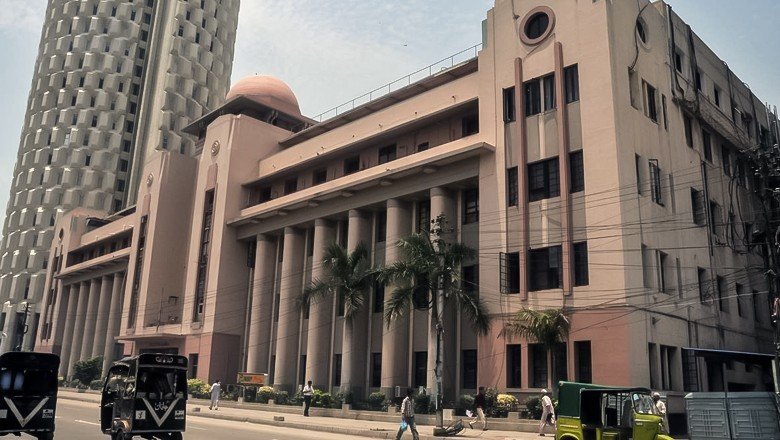
What makes it special is how different it feels from everything around it. Karachi’s pre-independence architecture is mostly classical or revivalist, all arches and columns. The Cotton Exchange breaks the mold: clean Art Deco lines, a facade that still looks strikingly contemporary, and interiors that time forgot, with slow-moving ceiling fans, historic portraits, and furnishings preserved much as they were decades ago. Architecture lovers will recognize it instantly as one of the finest examples of its style in South Asia.
The building is also a living lesson in economic history. Cotton was the crop that made Karachi rich: the port that shipped Sindh’s cotton to the mills of Europe, the merchants who built fortunes on it, and the exchange that gave the trade its rules and its prices. Standing before this building, you are standing at the source of the wealth that built much of old Karachi’s grand architecture.
Come for the architecture, stay for the heritage walk down Chundrigar Road, and finish with the old city’s food streets. It is the perfect half-day for travelers who like their sightseeing with substance, and it pairs beautifully with an evening at Clifton Beach. For more heritage destinations, browse the Explore Pakistan collection.
History of Cotton Exchange Building, Karachi
The story begins in the 1860s, when Karachi started its transformation from a small port town into a commercial city. Merchants from Bombay used the port to ship products manufactured in Sindh to Europe and back, and as trade grew, Bombay companies set up local offices in Karachi. The Karachi Chamber of Commerce was established, and the town became a business hub, with the cotton trade at its heart. A dedicated home for the cotton trade was seen as proof of the city’s commercial importance.
Before 1927 the cotton business was regulated by the Karachi Chamber of Commerce and the Karachi Indian Merchants Association. As the trade expanded, the Cotton Association was formally created on April 20, 1933, and the Karachi Cotton Exchange, founded in 1933, became the oldest commodity exchange in what is now Pakistan. The scale was enormous: in 1933 alone, cotton arrivals in Karachi totaled some 1.6 million bales.
The building’s own plot has a deep paper trail. The land was originally leased by the Karachi municipality on November 20, 1883, for 99 years to local merchants, and in 1936 the Karachi Cotton Association Limited purchased the property through a registered conveyance deed, well before Partition. The distinctive Art Deco building rose on this site, a deliberate departure from the classical and revivalist styles of surrounding colonial construction, and it has kept its character ever since: the exterior facade remains largely as built, and the interiors, with their original furnishings and portraits, preserve a remarkable authenticity.
The Exchange long served as the central platform connecting growers, ginners, textile manufacturers, exporters, and brokers through a transparent trading mechanism, anchoring Pakistan’s cotton economy for generations. In December 2025 the building was sealed in a joint operation by the Federal Investigation Agency and the Evacuee Trust Property Board over an ownership dispute, a matter that has since moved through the Sindh High Court, with the Karachi Cotton Association asserting its pre-Partition purchase and a renewed lease running to 2081. The dispute remains before the courts, so visitors should admire this landmark from the outside and check current access conditions before planning any closer look.
Top Things to Do in Cotton Exchange Building, Karachi
Admire the Art Deco Facade
Stand across the street and take in the building’s clean geometric lines, a striking contrast to the colonial classical buildings around it. Heritage experts describe it as a fine example of Art Deco, a style whose origins are barely a century old, which is why the building still looks contemporary. It is one of Karachi’s most photogenic heritage structures, best captured in morning light.
Walk the Heritage Mile of I.I. Chundrigar Road
The former McLeod Road is Pakistan’s financial artery, lined with historic banks, trading houses, and corporate towers. Walk it slowly: the Cotton Exchange, the State Bank buildings, Habib Bank Plaza, and the old merchant offices tell the story of Karachi’s commercial century in a single stroll. Bring a camera and comfortable shoes.
Visit the State Bank of Pakistan Museum
On the same road, the SBP Museum and Art Gallery traces the history of currency and banking in the region, from ancient coins to modern notes, housed in a historic building of its own. It is the natural companion to a Cotton Exchange visit and one of Karachi’s best museums.
See Merewether Tower and Empress Market
A short ride away, Merewether Tower rises over the old city as a classic colonial landmark, and nearby Empress Market in Saddar offers the full sensory experience of old Karachi: spice pyramids, fabric stalls, and street food. Together with the Exchange, they make a perfect old-city heritage circuit.
Photograph Karachi’s Architectural Layers
Chundrigar Road compresses a century of architecture into a few blocks: colonial banks, Art Deco gems like the Exchange, mid-century modern towers, and glass high-rises. For photographers interested in urban heritage, few streets in Pakistan reward a slow walk as richly.
Famous Places In and Around Cotton Exchange Building, Karachi
- State Bank of Pakistan Museum: The currency and banking museum on I.I. Chundrigar Road, excellent for history lovers.
- Habib Bank Plaza: The landmark tower that long defined Karachi’s skyline, on the same financial strip.
- Merewether Tower: The colonial-era clock tower landmark near the old city.
- Empress Market: Saddar’s historic bazaar for spices, dry fruits, fabrics, and street life.
- Frere Hall: The beautiful colonial hall and gardens, hosting exhibitions and book fairs.
- Mohatta Palace: The 1920s palace museum in Clifton, a masterpiece of Rajput-Mughal revival architecture.
- Burns Road Food Street: Karachi’s legendary old-city food street, a short drive away.
- Clifton Beach (Sea View): The city’s beloved shoreline, ideal for a sunset after a day of heritage walks.
- Pakistan Maritime Museum: Naval history and a real submarine to explore, near DHA.
How to Reach Cotton Exchange Building, Karachi
The Cotton Exchange Building sits on I.I. Chundrigar Road in central Karachi, one of the easiest heritage landmarks in the city to reach. From Jinnah International Airport it is about a 30-minute drive via Shahrah-e-Faisal. From Clifton and DHA, allow 20 to 30 minutes depending on traffic; from Saddar and the old city, it is barely 10 minutes away. Ride-hailing apps are the simplest option, and any driver will know Chundrigar Road.
From Lahore, Karachi is roughly 1,200 to 1,250 km, about 16 to 18 hours by road, so visitors almost always fly: the flight takes under 2 hours. From Islamabad it is roughly 1,500 km by road or about 2 hours by air. Intercity buses arrive at Karachi’s terminals, from which a taxi completes the short trip to the financial district. Karachi’s railway stations, including Karachi Cantt, connect to the national rail network, and Chundrigar Road is a short ride from any of them.
Route Details
- From the Airport: Shahrah-e-Faisal toward the city, then follow signs to I.I. Chundrigar Road. About 30 minutes.
- From Clifton/DHA: Via Clifton Bridge and M.T. Khan Road or through Saddar. 20 to 30 minutes.
- From Saddar: Head south on M.A. Jinnah Road toward the financial district. About 10 minutes.
- Best approach: Visit on a weekday morning when the financial district is active but traffic is manageable; park in a nearby commercial plaza and explore on foot.
Where to Stay in Cotton Exchange Building, Karachi
The financial district is a business area, so the best stays are the comfortable business hotels nearby. Mid-range and upper-mid-range hotels cluster around Saddar, Shahrah-e-Faisal, and the Clifton fringe, all within 10 to 25 minutes of the Exchange, offering air-conditioned rooms, restaurants, and Wi-Fi at moderate rates. Karachi’s well-known five-star hotels on Shahrah-e-Faisal and in Clifton/DHA make luxurious bases for a heritage-focused trip.
Budget travelers will find simple hotels and guest houses in Saddar, close to the Exchange and the old city’s food streets. For longer stays, serviced apartments in Clifton and DHA offer space and kitchens. There is no reason to stay right on Chundrigar Road itself; base yourself in Saddar or Clifton and the Exchange is an easy excursion.
Where to Eat: Local Foods of Cotton Exchange Building, Karachi
The area around the Exchange sits between two of Karachi’s great food zones. A short drive away, Burns Road is the city’s legendary food street: nihari, haleem, sajji, rabri, and falooda served in shops that have perfected their recipes over generations. It is an essential Karachi experience and pairs perfectly with a heritage day.
Closer to the financial district, Saddar’s eateries serve everything from dhabas dishing out dal fry and chicken karahi to old Irani cafes with their famous chai and bun maska. Street vendors around Empress Market sell bun kebabs, samosas, and fresh sugarcane juice. For a sit-down meal, the restaurants of nearby Clifton and Boat Basin offer barbecue, seafood, and continental options. Eating around the Exchange is delicious and inexpensive; even a feast on Burns Road stays budget-friendly.
Weather in Cotton Exchange Building, Karachi
Karachi’s arid coastal climate applies here: hot, humid summers, mild winters, and most rain falling in the July to August monsoon. The financial district’s concrete can feel warmer than the breezy beach areas, so plan outdoor heritage walks for cooler months.
| Season | Temperature Range | Conditions |
|---|---|---|
| Winter (Nov-Feb) | 11-27 C | Pleasant and dry. Ideal for walking tours of the heritage district. |
| Spring (Mar-Apr) | 18-35 C | Warming; mornings still good for sightseeing. |
| Summer (May-Aug) | 26-35 C | Hot and humid; monsoon rains in July and August. Walk early or late. |
| Autumn (Sep-Oct) | 23-33 C | Improving; October is pleasant for outdoor exploration. |
Language and Culture of Cotton Exchange Building, Karachi
Urdu and English are the working languages of the financial district; you will hear both in every office and shop. Sindhi, Punjabi, and other Pakistani languages fill the streets beyond. The culture here is businesslike by day and traditional at heart: dress smartly but modestly, and you will fit right in.
This is a working commercial area, not a tourist zone, so be respectful of office routines: ask before photographing buildings closely, avoid blocking entrances, and keep voices down near office lobbies. Friday afternoons are quiet as the city pauses for prayers; plan heritage walks for other days. The old city’s warmth is never far away, though: a polite question to a shopkeeper will often earn you a story about the street’s history.
Shopping in Cotton Exchange Building, Karachi
The Exchange area is about heritage, but shopping is minutes away in every direction. Empress Market in Saddar is the classic destination: spices, dry fruits, fabrics, crockery, and pets, all under one historic roof. Bohri Bazaar nearby is famous for fabrics and ready-made garments at bargain prices, while Zaib-un-Nisa Street (the old Elphinstone Street) is Karachi’s beloved market for electronics, watches, and shoes.
For handicrafts and souvenirs, the shops around Frere Hall and the Sunday craft bazaars offer Sindhi embroidery, ajrak prints, and camel-skin lamps. For mall shopping, Dolmen Mall Clifton is a 20-minute drive away. Bargaining is expected in bazaars and street markets; malls charge fixed prices.
Travel Tips for Cotton Exchange Building, Karachi
Packing Essentials
Light, modest business-casual clothing works best for this district. Carry sunscreen and a hat for the walking portions, a water bottle, and cash in small notes for street vendors and bazaars. A camera is essential; a power bank keeps it going through a full heritage day.
Safety Tips
The financial district is busy and well-policed on weekdays. Keep valuables secure in crowded bazaars like Empress Market, beware of pickpockets in dense crowds, and use designated parking areas. Traffic on Chundrigar Road is heavy; cross at signals and footbridges. Note that the Exchange building’s interior access is restricted due to the ongoing court matter, so plan your visit as an exterior and street-level experience.
Money & Connectivity
This is Pakistan’s banking heart: ATMs are everywhere and cards are widely accepted. Street vendors and bazaar stalls are cash-only. Mobile signals are excellent on all major networks, and most cafes and malls offer Wi-Fi.
Best Time to Visit Cotton Exchange Building, Karachi
Winter (November to February) – The Best Season
Cool, clear days make this the perfect season for walking the heritage district, photographing facades, and combining the Exchange with Empress Market and Burns Road in a single glorious day.
Spring (March to April) – Pleasant Shoulder Season
Mornings remain comfortable for sightseeing. Start early to enjoy the streets before the afternoon warmth builds.
Summer and Monsoon (May to September) – The Off Season
Heat, humidity, and monsoon rains make extended walking tours uncomfortable. If visiting, keep outdoor time to early mornings and retreat to museums and malls by midday.
Autumn (October) – The Sweet Spot Returns
October’s easing temperatures and thinner crowds make it a fine month for unhurried heritage exploration.
Final Thoughts
The Cotton Exchange Building is Karachi’s history written in Art Deco: the cotton fortunes, the merchant princes, the exchange floors where Pakistan’s economy found its rhythm. It asks for only an hour of your time and repays it with a deeper understanding of the city than a week at the beach alone could give.
Walk Chundrigar Road, visit the SBP Museum, eat on Burns Road, and end the day watching the sun set over the Arabian Sea. That is Karachi in a day, and the Exchange is where its story starts.
FAQs
Where is the Cotton Exchange Building in Karachi?
It stands on I.I. Chundrigar Road, formerly McLeod Road, in Karachi’s financial district, about 10 minutes from Saddar and 30 minutes from the airport.
What is the Cotton Exchange Building famous for?
It is a rare Art Deco landmark and the home of Pakistan’s oldest commodity exchange, founded in 1933, which anchored the country’s cotton trade for generations.
Can I go inside the Cotton Exchange Building?
Interior access is currently restricted due to an ownership dispute before the Sindh High Court. Visitors should enjoy the architecture from the outside and check current conditions locally.
What is the history of the Cotton Exchange?
The Cotton Association was formed in 1933, and the Association purchased the Chundrigar Road site through a registered deed in 1936. The Art Deco building has preserved its facade and interiors ever since.
How do I reach the Cotton Exchange from Karachi airport?
It is about a 30-minute drive via Shahrah-e-Faisal. Ride-hailing apps are the easiest option.
What is the best time to visit?
November to February offers cool, pleasant weather for walking the heritage district. October is also good.
What else can I see nearby?
The State Bank Museum, Habib Bank Plaza, Merewether Tower, Empress Market, Frere Hall, Burns Road food street, and Clifton Beach are all nearby.
Is the area good for shopping?
Yes. Empress Market, Bohri Bazaar, and Zaib-un-Nisa Street offer spices, fabrics, electronics, and handicrafts within minutes of the Exchange.