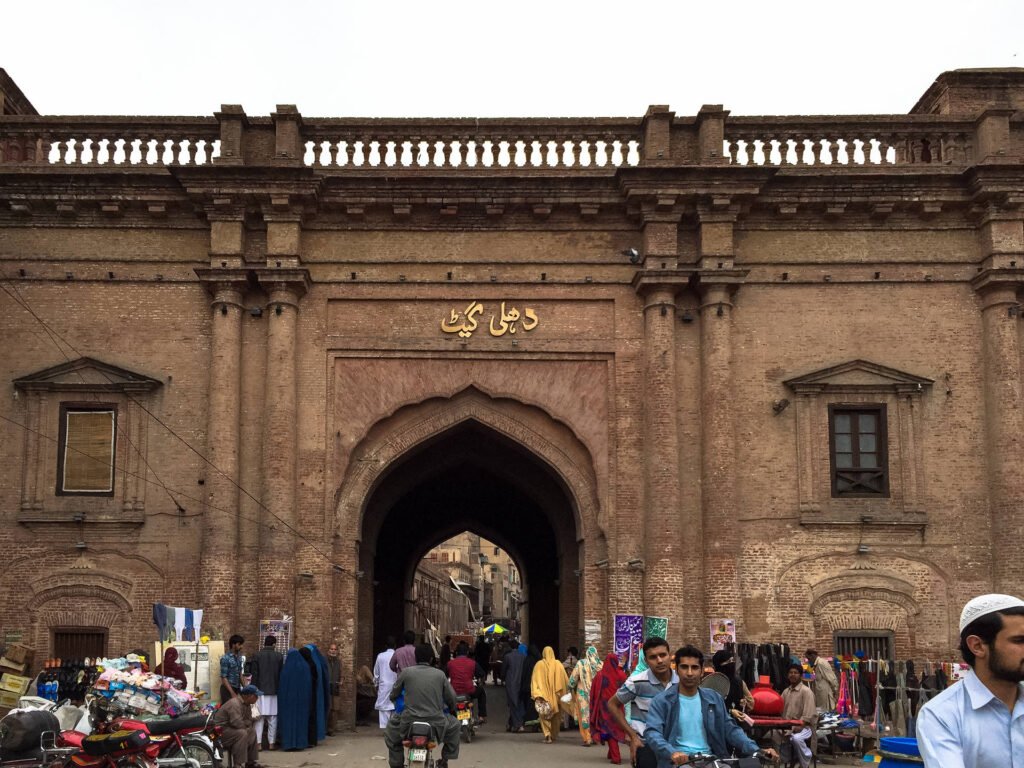
Most visitors to Karachi head straight for the sea at Clifton or the white marble of the Quaid’s Mausoleum — and they miss one of the city’s most meaningful buildings entirely. Tucked into a triangular corner where M.A. Jinnah Road meets Murad Khan Road in old Saddar Town stands Denso Hall, a honey-colored sandstone landmark from 1886 with a story that says everything about Karachi’s soul. If you are putting together a Karachi itinerary and want to see the city the way history lovers do, this Denso Hall travel guide will show you why this quiet old library deserves a place on it.
Denso Hall is officially the Max Denso Hall and Library — and it was Karachi’s first library built for the local population, at a time when the city’s grand reading rooms admitted only British officers and their families. It is a beautiful piece of Venetian Gothic architecture by the same architect who shaped much of colonial Karachi, it still anchors one of the city’s great heritage streetscapes, and the walk around it strings together Empress Market, Merewether Tower, and some of the oldest food streets in Pakistan. For heritage lovers, photographers, and anyone who believes a city’s libraries tell you who it really is, Denso Hall is essential Karachi.
This guide covers the hall’s fascinating history, the best things to do around it, how to reach Denso Hall from Islamabad, Lahore, and Karachi’s airport, where to stay, what to eat, Karachi’s weather, language and culture, shopping, local events, and practical travel tips.
Quick Facts
- Location: Triangular corner of M.A. Jinnah Road, Murad Khan Road, and Marriott Road, Saddar Town, Karachi, Sindh
- Altitude: Around 10 meters (33 feet) — Karachi is a coastal city on the Arabian Sea
- Famous For: Karachi’s first library for the native population (1886); Venetian Gothic architecture; the historic clock tower
- Nearest City: Karachi itself — Jinnah International Airport is about 15–20 km away
- Accessibility: Easy — in central Saddar, reachable by car, rickshaw, taxi, bus, or ride-hailing from anywhere in Karachi
- Known Landmarks: Denso Hall clock tower, Jahangir Kothari Building, Empress Market, Merewether Tower
- Best For: Heritage lovers, architecture photographers, history buffs, and travelers exploring old Karachi on foot
Why Visit Denso Hall
Visit Denso Hall because it is one of those rare buildings that tells you a whole city’s story in a single facade. In 1886, when the British ran libraries in Karachi that admitted only colonial officers and their families, this building opened its doors to everyone else — the merchants, teachers, clerks, and students of native Karachi. That single fact makes Denso Hall more than a pretty colonial building: it is a monument to the idea that knowledge belongs to everybody.
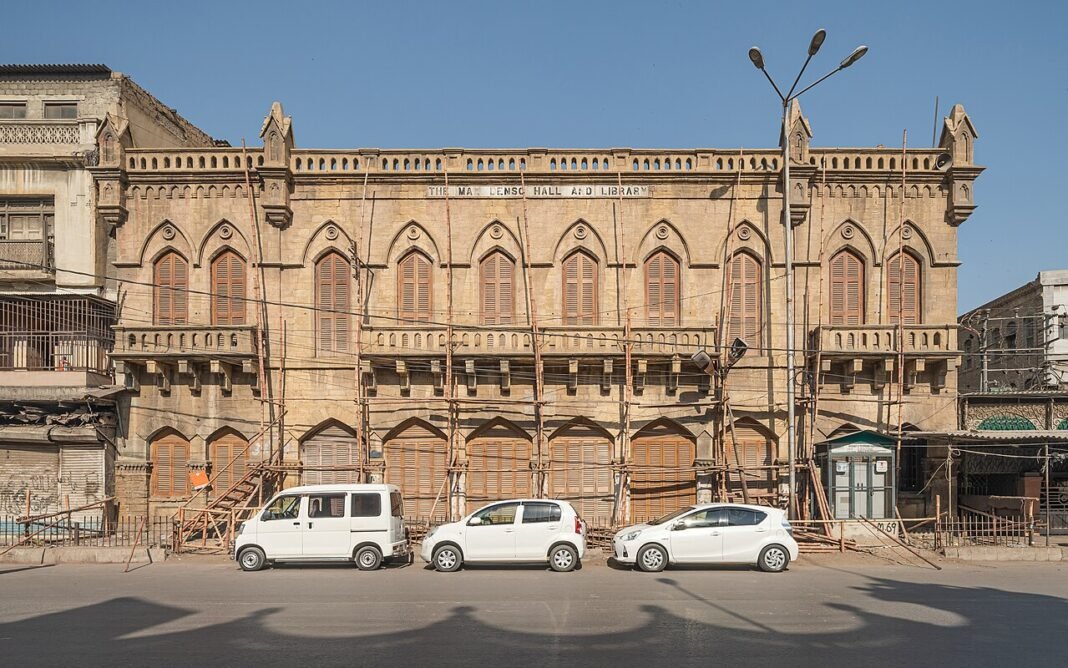
The building itself rewards a slow look. Designed by James Strachan — the architect behind several of Karachi’s finest colonial landmarks — in a Venetian Gothic style with Tudor touches on the top floor, it is built from warm local Gizri sandstone that glows in the late-afternoon light. Sculpted balconies line the road-facing side, pointed arches frame the windows, and above it all sits the clock that a Parsi philanthropist gifted to the city more than a century ago. Architecture lovers will recognize it instantly as one of the great surviving streetscapes of British-era Karachi.
But the real reason to come is the neighborhood. Denso Hall anchors a walkable heritage quarter: the Jahangir Kothari Building (by the same architect) stands on one side, the grand Empress Market is minutes away, Merewether Tower rises nearby, and the lanes of Saddar hold some of Karachi’s oldest food spots and bazaars. Pair it with our Explore Pakistan city guides and you have the makings of a perfect old-Karachi day — history, architecture, shopping, and food, all within a couple of kilometers.
History of Denso Hall
The history of Denso Hall begins with an injustice and a community’s answer to it. When the British East India Company took Karachi in 1839 and began developing it into a major port city, the colonial government built institutions for itself — including libraries, such as the one at Frere Hall, that were restricted to British officers and their families. The native population of the fast-growing city had no public library of its own.
Denso Hall, completed in 1886, changed that. It was constructed as the first library in Karachi intended for the local population, and it was named for Max Denso, a prominent citizen who had chaired the Karachi Chamber of Commerce in the 1870s. Funds for the building were subscribed by Denso’s friends, while the Karachi Municipality provided the site and additional financial support — a genuine civic partnership.
The architect was James Strachan, whose work defines much of Victorian-era Karachi. He designed Denso Hall in the Venetian Gothic revival style with Tudor elements on the top floor, building it from locally quarried Gizri sandstone. When completed, the building held a library and reading room on the ground floor and the main hall on the first floor, with balconies of sculpted balusters facing the main road.
What makes the hall’s early history especially touching is how the community stocked it. The local Khoja community donated 1,200 books, and the Parsi philanthropist Rao Sahib Ramdas Morarji donated 1,800 books — along with the clock that still crowns the building. For generations afterward, Denso Hall served as a civic institution: a venue for public meetings, lectures, reading, and community gatherings, woven into the educational and social life of the city.
In 2010, recognizing its heritage value, it was announced that the Heritage Foundation Pakistan would restore Denso Hall as a protected heritage site, with financial support from the Karachi Electric Supply Corporation. Conservation work in the years since has helped preserve the building’s original character and decorative stonework, and today it stands as a protected landmark — a reminder of the philanthropy, public education, and shared community spaces that shaped the growth of Karachi.
Top Things to Do in Denso Hall
Admire the Architecture Up Close
Walk slowly around the building’s triangular corner site and study the details: the pointed Venetian Gothic arches, the carved stone balconies, the Tudor touches on the upper floor, and the warm buff-colored Gizri sandstone. Late afternoon light brings out the stone’s honey tones beautifully. The clock tower is the signature shot — frame it against the sky from across M.A. Jinnah Road.
Step Inside the Library and Hall
When open, the ground-floor library and reading room and the first-floor main hall are worth a look. Access can vary depending on events and restoration schedules, so the building is often best appreciated as part of a heritage walk — but if the doors are open, step in and imagine the generations of Karachiites who read, debated, and gathered here.
Walk the Strachan Streetscape
Denso Hall does not stand alone. On one side along M.A. Jinnah Road sits the Jahangir Kothari Building — also designed by James Strachan — and across the road stretch more historic facades built by the old merchant princes in the days when Karachi was among the British Empire’s great wheat-exporting ports. This is one of the finest colonial streetscapes in Pakistan; walk it slowly with your camera.
Visit Empress Market
A short walk away lies Empress Market, built between 1884 and 1889 and named for Queen Victoria. It remains one of Karachi’s busiest traditional bazaars, selling everything from spices and dried fruits to textiles, stationery, and pets. The market’s own colonial architecture and chaotic energy make it a perfect companion stop to Denso Hall.
Explore Saddar’s Heritage Quarter
Use Denso Hall as the starting point for a wider old-Karachi walk: Merewether Tower, the Karachi Port Trust Building (completed 1915), Frere Hall (1865) with its Sadequain Gallery, and the Quaid-e-Azam House Museum (Flagstaff House). Each is a chapter of the same story — a port town becoming a great city.
Famous Places In and Around Denso Hall
- Jahangir Kothari Building — Strachan-designed colonial landmark flanking Denso Hall on M.A. Jinnah Road
- Empress Market — 1884–89 colonial marketplace, Karachi’s oldest major bazaar
- Merewether Tower — landmark clock tower of old Karachi
- Frere Hall — 1865 colonial building with the Sadequain Gallery and peaceful gardens
- Mohatta Palace — 1927 palace-museum in Clifton
- Mazar-e-Quaid — the mausoleum of Muhammad Ali Jinnah, Karachi’s most iconic monument
- Burns Road — Karachi’s legendary food street, a short drive away
How to Reach Denso Hall
Denso Hall sits in Saddar Town in central Karachi, one of the easiest heritage sites in Pakistan to reach — it is on a major road junction served by every form of city transport.
From Karachi Airport: Jinnah International Airport is about 15–20 km from Saddar. A taxi or ride-hailing car (Careem, InDrive, Uber) takes 30–45 minutes depending on traffic; ask for “Denso Hall, M.A. Jinnah Road, Saddar” — drivers know the area well.
From Islamabad: Fly to Karachi (about 2 hours, with frequent daily flights) and continue by road to Saddar. By road it is roughly 1,400 km via the motorway and national highway network — a 16–18 hour drive best split over two days, or an overnight train journey.
From Lahore: Direct flights to Karachi take about 1 hour 40 minutes. By road it is roughly 1,200 km (14–16 hours); overnight trains including the Karachi Express connect the two cities.
Getting around Saddar: Once in central Karachi, auto-rickshaws are the classic way to hop between Denso Hall, Empress Market, and the surrounding landmarks. Ride-hailing apps work well and spare you fare negotiations. Karachi’s traffic is heavy at peak hours — plan heritage walks for the morning.
Route Details
- By air: Fly into Jinnah International Airport (KHI) from Islamabad, Lahore, or international destinations.
- Airport to Saddar: Take a taxi or ride-hailing car along Shahrah-e-Faisal toward Saddar (30–45 minutes). Tell the driver “Denso Hall on M.A. Jinnah Road.”
- On foot: The hall stands at the triangular junction of M.A. Jinnah Road, Murad Khan Road, and Marriott Road — walk the perimeter for the best views.
- Combine: From Denso Hall, walk or take a short rickshaw ride to Empress Market, then onward to Merewether Tower and Frere Hall.
- From Islamabad/Lahore by road: Motorway and national highway south to Karachi; enter the city via the Superhighway and follow signs to Saddar.
Where to Stay in Denso Hall
There is no accommodation inside the heritage building itself, but Saddar and central Karachi offer stays at every level within minutes of Denso Hall.
Luxury: Karachi’s top international hotels sit along Shahrah-e-Faisal and in Clifton/DHA, roughly 20–30 minutes from Saddar by car. Expect full five-star facilities — pools, spas, business centers, and multiple restaurants.
Mid-range: Well-run three- and four-star hotels cluster around Shahrah-e-Faisal, PECHS, and Saddar itself, putting Denso Hall 10–20 minutes away. Many offer breakfast, Wi-Fi, and airport transfers — the practical choice for a heritage-focused trip.
Budget: Budget hotels and guesthouses in Saddar and near the Cantonment station area are the cheapest options and place you within walking or short-rickshaw distance of the hall. Rooms are simple but the location is unbeatable for old-city exploring.
Tips: For a heritage trip, staying in Saddar or on Shahrah-e-Faisal minimizes time lost to Karachi’s traffic. Confirm air-conditioning (essential most of the year) and, if driving, secure parking.
Where to Eat: Local Foods of Denso Hall
Saddar is one of Karachi’s great eating districts, and Denso Hall puts you within easy reach of flavors the city is famous for across Pakistan.
Must-try dishes: Karachi’s legendary biryani — fragrant, fiery, and non-negotiable — plus bun kebab (the city’s beloved street burger), nihari, haleem, seekh kebabs, and katakat. End with falooda, kulfi, or rabri from an old Saddar sweet shop. The Burns Road food street, a short drive away, is Karachi’s most celebrated food destination — its eateries have been serving since long before food streets were fashionable.
Where to eat: Saddar’s lanes hold old Irani-style cafes, barbecue houses, and sweet shops within walking distance of the hall. For the full experience, head to Burns Road in the evening, when the street comes alive with food stalls and family crowds.
Costs: Street food around Saddar is very budget-friendly — a filling meal typically costs a few hundred rupees per person. Mid-range restaurants cost more; carry cash for the old bazaars and smaller eateries.
Weather in Denso Hall
Denso Hall shares Karachi’s coastal climate — milder than the Punjab plains, humid for much of the year, and rarely extreme. Sea breezes take the edge off the heat, but humidity can make summer days feel heavy. Outdoor heritage walks are comfortable for most of the year.
| Season | Temperature Range | Conditions |
|---|---|---|
| Winter (Dec–Feb) | 12–26°C | Mild and pleasant — the best season for walking tours |
| Spring (Mar–Apr) | 22–34°C | Warm and bright; comfortable mornings |
| Summer (May–Jun) | 28–40°C | Hot and humid; sea breeze helps; sightsee early or late |
| Monsoon (Jul–Sep) | 28–36°C | Humid with rain spells; streets can flood after heavy downpours |
| Autumn (Oct–Nov) | 22–34°C | Warm but drier — good for heritage walks |
The prime window is November to February, when Karachi is at its most pleasant. Summer visits are entirely doable — just schedule Denso Hall and the Saddar walk for the morning, and keep water handy.
Language and Culture of Denso Hall
Karachi is Pakistan’s great melting pot, and Saddar is where that mix is most visible. Urdu is the common language of the bazaars, Sindhi is widely spoken as the provincial language, and English is understood in hotels, museums, and by most guides. You will also hear Punjabi, Pashto, Balochi, and Gujarati in the markets — a reminder that Karachi belongs to everyone.
The culture around Denso Hall is the old mercantile Karachi: Parsi, Khoja, Memon, and Hindu merchant communities built these streets, and their legacy survives in the architecture, the cafes, and the philanthropic institutions. Visitors are welcome but should respect the working neighborhood — this is a busy commercial district, not a museum. Dress modestly, ask before photographing shopkeepers closely, and accept offered tea graciously.
Shopping in Denso Hall
Saddar is one of Karachi’s oldest shopping districts, and the area around Denso Hall is made for traditional bazaar shopping.
Empress Market is the centerpiece: spices, dried fruits, fresh produce, textiles, stationery, crockery, and even pets, all under one 19th-century roof. Nearby Zainab Market and the Saddar lanes are famous for fabrics, ready-made garments, electronics, and handicrafts at bargain prices.
Souvenirs: Look for Sindhi embroidery, ajrak prints, camel-skin lamps, brassware, and dried fruits and nuts from Empress Market. Bargaining is expected in the bazaars — offer below the asking price and negotiate with good humor.
Modern malls: If you want brands and air-conditioning after the bazaars, Karachi’s modern shopping malls are concentrated in Clifton and DHA, about 20–30 minutes from Saddar.
Local Events and Festivals
Karachi’s cultural calendar gives visitors extra reasons to time their trip. The Karachi Literature Festival, held annually (usually in February), is Pakistan’s premier literary gathering — three days of talks, book launches, and debates that draw writers from across the country and beyond. Food lovers should watch for Karachi Eat, the city’s big annual food festival (usually in January), where dozens of eateries set up stalls for a weekend of tasting. Dates can shift year to year, so confirm before traveling.
Travel Tips for Denso Hall
Packing Essentials
Comfortable walking shoes, sunscreen and a hat (Karachi’s sun is strong even in winter), a light jacket for December–January evenings, a reusable water bottle, and a power bank for a full day of photography.
Safety Tips
Saddar is busy and generally fine for tourists during the day. Keep valuables discreet in crowded markets, agree on rickshaw fares in advance (or use ride-hailing), and carry the hotel’s address card. As in any big city, avoid poorly lit side streets late at night.
Money & Connectivity
ATMs are plentiful on M.A. Jinnah Road and throughout Saddar; small bazaar shops are cash-only, so carry rupees. All major networks (Jazz, Telenor, Zong, Ufone) have strong 4G coverage in central Karachi. Hotels and many cafes offer Wi-Fi.
Best Time to Visit Denso Hall
November to February — Peak Season
Karachi at its best: mild days, cool evenings, and perfect walking weather for the Saddar heritage trail. This is also festival season, with the literature and food festivals typically on the calendar.
March to April — Warm but Lovely
Temperatures climb but mornings remain pleasant for architecture walks. A good shoulder season with fewer crowds.
May to September — Hot and Humid
Summer heat plus monsoon humidity makes midday walking uncomfortable. Visit Denso Hall early in the morning, spend midday in air-conditioned museums or malls, and return to Saddar’s food streets in the evening.
October — The Turn
Humidity drops and the city breathes again — a fine time for heritage exploring before the peak winter season.
Final Thoughts
Denso Hall will not shout for your attention the way Karachi’s beaches and malls do. It rewards the traveler who slows down: who reads the plaque, looks up at the clock, runs a hand along the old sandstone, and thinks about the generations of Karachiites who found their education between these walls. In a city that is always racing toward the future, Denso Hall is a quiet argument for remembering.
Pair it with Empress Market, Merewether Tower, and an evening on Burns Road, and you will have seen a Karachi that most tourists miss entirely — the old mercantile city, built by many communities, still standing proud on M.A. Jinnah Road. For more city heritage, explore our Karachi guides and the wider Explore Pakistan collection.
FAQs
Where is Denso Hall located?
Denso Hall stands at the triangular junction of M.A. Jinnah Road, Murad Khan Road, and Marriott Road in Saddar Town, central Karachi.
What is Denso Hall famous for?
Built in 1886, it was Karachi’s first library for the native population, designed by James Strachan in Venetian Gothic style with a historic clock gifted by a Parsi philanthropist.
What is the best time to visit Denso Hall?
November to February offers Karachi’s most pleasant weather for heritage walks. Summer visits work if you go early in the morning.
How do I reach Denso Hall from Karachi Airport?
Jinnah International Airport is 15–20 km away; a taxi or ride-hailing car takes 30–45 minutes to Saddar depending on traffic.
Is Denso Hall open to visitors inside?
Access to the interior can vary with events and restoration work. The exterior architecture and the surrounding heritage streetscape are always worth the visit; check locally for interior access.
What else can I see near Denso Hall?
Empress Market, Merewether Tower, the Jahangir Kothari Building, Frere Hall, Mohatta Palace, and the Burns Road food street are all within easy reach.
Is Saddar safe for tourists?
Yes, during the day it is a busy commercial area that is generally safe. Keep valuables discreet, use ride-hailing or agree fares in advance, and avoid isolated streets late at night.
What food should I try near Denso Hall?
Try Karachi biryani, bun kebabs, nihari, haleem, and falooda in Saddar, and make an evening trip to the Burns Road food street for the full Karachi food experience.