Quick Facts
- Location: Bagh District, Azad Jammu and Kashmir — between union council Birpani and Sudhan Gali town, in the village of Bani Minhasan
- Altitude: 3,045 metres (9,990 feet)
- Famous For: 360-degree panoramic summit views, an accessible beginner-friendly trek, lush pine forests, and heavy winter snowfall
- Nearest City: Bagh city (Azad Kashmir); Rawalakot is about 59 km away
- Accessibility: Reached via an 8-km uphill hike from Sudhan Gali (off-road vehicles can shorten part of it); two approach routes — via Chikkar or via the Bagh–Sudhan Gali road
- Known Landmarks: Ganga Choti summit, Sudhan Gali, Bagh Valley viewpoints
- Best For: Beginner and amateur trekkers, photographers, nature lovers, families seeking a real mountain summit without technical climbing, winter snow-hike adventurers
Why Visit Ganga Choti
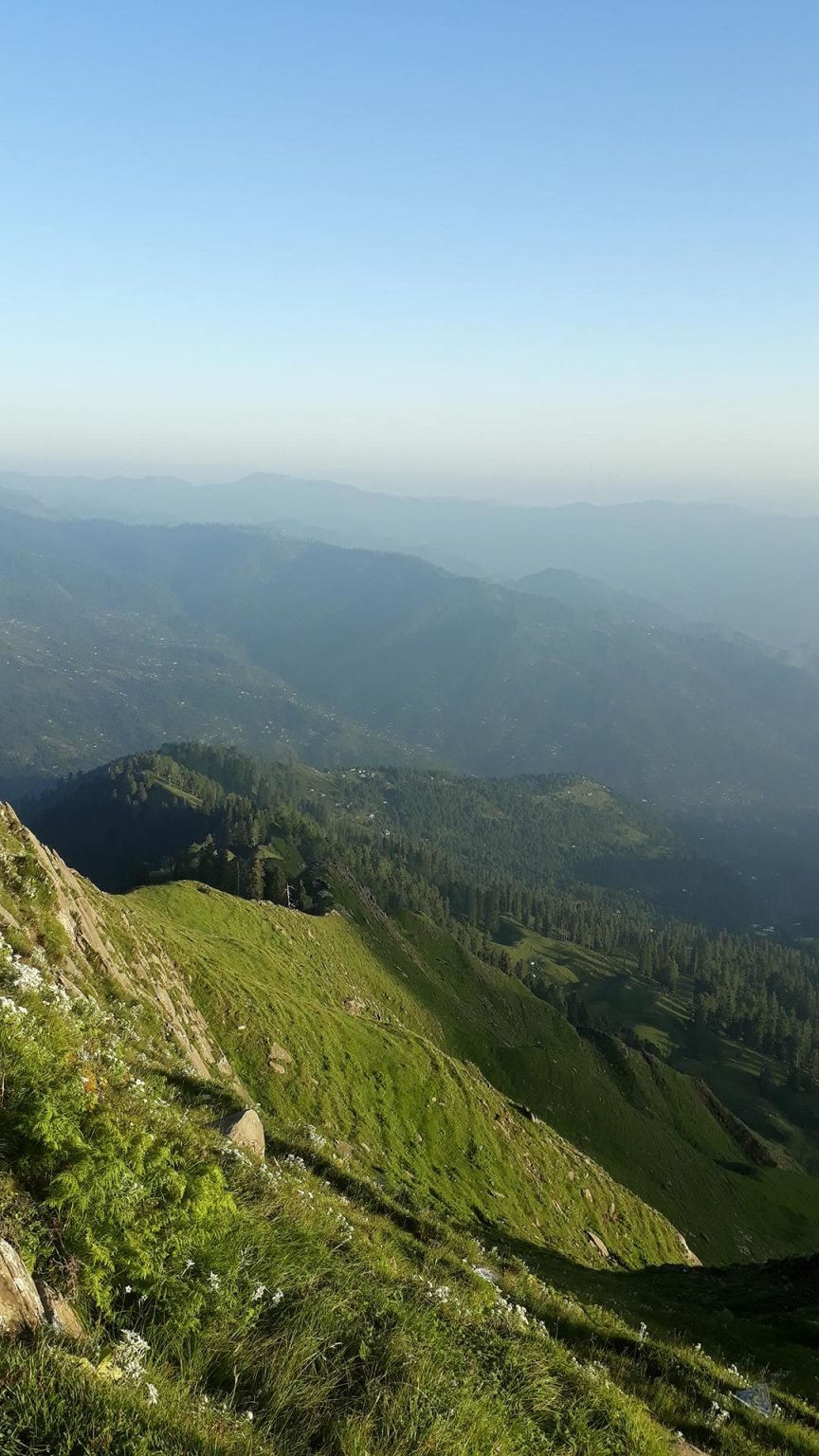
There is a particular magic to standing on a summit you climbed with your own legs — and Ganga Choti is one of the most rewarding places in Pakistan to earn that feeling without being a mountaineer. At 3,045 metres, it is the rooftop of Bagh District, a proud Pir Panjal peak whose summit unfolds into a full 360-degree panorama: the rolling green of Bagh Valley on one side, the lights and ridges around Muzaffarabad on another, and on a clear day the distant snow-clad giants of the high Himalaya floating on the horizon. It is the kind of view people usually fly to famous valleys to see — and here it is, waiting at the end of a hike that even a fit beginner can manage in a couple of hours.
What makes Ganga Choti special is how democratic it is as a mountain. The trek from Sudhan Gali is considered fairly easy in summer, and experienced hikers describe the core trail as a 45-minute to one-hour ascent from the trailhead — genuinely one of the most accessible high summits in Azad Kashmir. That accessibility has made it a beloved training ground for amateur backpackers and a favourite weekend escape for families from Rawalakot, Bagh and Islamabad. You don’t need crampons, ropes or a guide with decades of Himalayan experience; you need decent shoes, water, and the willingness to keep walking uphill through pine forest until the trees fall away and the whole of Kashmir opens beneath you.
And then there is winter. When snow blankets the Pir Panjal, Ganga Choti transforms into one of Azad Kashmir’s classic snow hikes — a proper winter summit with deep powder, slippery traverses and that cathedral silence only snow brings. A winter festival with an organized snow hike is held here in February, drawing trekkers who want the full white-mountain experience without the logistics of the high Karakoram. Whether you come for the green summer meadows or the February snow, Ganga Choti delivers the rare combination of real adventure and real attainability. Few peaks in Pakistan give you this much mountain for this little effort.
History of Ganga Choti
Ganga Choti belongs to the Pir Panjal Range of the Lower Himalayas, the great forested rampart that runs through this part of Kashmir. The peak sits in Bagh District’s Birpani area, just a few kilometres north of which lies Hattian Bala district. Before the Partition of the subcontinent, this peak stood on the border between the Kashmir and Jammu districts — a frontier mountain in a frontier land, which goes some way to explaining the wild, far-from-everywhere feeling you still get on its upper slopes.
The name itself carries the region’s layered history. According to locals, the peak got its name from the Hindus who lived in the area before the Partition of India in 1947 — “Ganga” evoking the sacred, with “Choti” meaning peak or summit in the local tongue. It is a reminder that Kashmir’s mountains were named by many hands over many centuries, and that the stories of who lived here are written into the landscape itself.
For most of the 20th century, Ganga Choti was simply a local mountain — known to shepherds, villagers and the Sadozai-descended communities of nearby Sudhan Gali, whose very name comes from the Pashtun Sadozai tribe that migrated here during the British era. Its life as a travel destination is much more recent, growing with the rise of domestic adventure tourism in Azad Kashmir over the past decade and a half. Trip reports from the mid-2010s onward describe it as an established trekking route, and today it is firmly on the map as one of Azad Kashmir’s signature day hikes — famous enough to host an annual winter snow-hike festival, yet still far less crowded than the marquee valleys of the north. There are no ancient ruins or royal forts here; the history of Ganga Choti is the honest history of a working Kashmiri mountain that travellers have only recently learned to love.
Top Things to Do in Ganga Choti
Summit the Peak
The main event. From Sudhan Gali, it is an eight-kilometre uphill hike to the summit, though off-road vehicles can shorten the journey for those who prefer a lighter walk. The final approach is steep — and in snow, slippery — but the reward is one of the finest viewpoints in Azad Kashmir. Stand on the 3,045-metre top, turn slowly, and take in Bagh Valley, Muzaffarabad and the far Himalayan wall in a single sweeping panorama. Arrive by late morning for the clearest views before afternoon haze builds.
Trek Through Pine Forests and Alpine Meadows
The trail climbs through lush green slopes and pine forest, opening into alpine meadows scattered with wildflowers in summer. The air smells of pine resin and wet earth, and the forest sections are cool even on warm days. Keep an eye out for local birdlife and the grazing livestock of Gujjar herders who bring their animals to the high pastures.
Photography at the Top
Ganga Choti is a photographer’s mountain. Sunrise and sunset paint the Pir Panjal ridges gold, and the layered valleys below create natural depth in every frame. In winter, the snow-loaded pines and the white summit dome are spectacular. Bring a wide-angle lens — and a fully charged battery, because the cold drains them fast.
Join the February Winter Festival Snow Hike
If you want the mountain at its most dramatic, time your visit for the winter festival held in February, which includes an organized snow hike to the summit. Trekking Ganga Choti through dense snowfall is a completely different experience from the summer walk — harder, slower, and utterly magical. Proper winter gear is essential.
Explore Sudhan Gali
The small town of Sudhan Gali, about four kilometres from the peak at roughly 2,134 metres (7,000 ft), is the natural base camp. It has a few shops and hotels, a basic guest house, and limited food options. Spend an evening here, talk to the locals — famous for their hospitality — and acclimatize before an early summit push.
Famous Places In and Around Ganga Choti
- Sudhan Gali — the base town, 4 km from the peak, with shops, basic hotels and the trailhead
- Bagh city — the district headquarters, about 50 minutes’ drive from Sudhan Gali, with bazaars and eateries
- Chikkar — the alternative approach route to the peak, a scenic town in its own right
- Rawalakot — about 59 km away, the “Pearl Valley” city with Banjosa Lake nearby
- Lasdana — a high meadow area in Bagh District popular for camping
- Muzaffarabad — visible from the summit on clear days; the AJK capital with the Red Fort and confluence of the Jhelum and Neelum rivers
How to Reach Ganga Choti
There are two ways to reach Ganga Choti: one from Chikkar, and the other from the Bagh–Sudhan Gali road. The Sudhan Gali route is the standard choice. The journey begins long before the trailhead, though — this is a proper Kashmir road trip through some of the greenest country in Pakistan.
From Islamabad: Drive via the Kashmir Highway / Murree Road toward Kohala and on to Bagh, or via Rawalakot. The commonly used itinerary puts Islamabad to Sudhan Gali at roughly 6 hours of driving (about 200+ km of mountain road). Most groups leave Islamabad early morning, overnight in Sudhan Gali, summit the next morning, and return to Islamabad the same evening.
From Lahore: Drive to Islamabad first (M-2, ~4.5 hours), then follow the Islamabad–Sudhan Gali route. Realistically this is a two-day trip: Lahore to the Bagh region on day one, summit on day two.
From Karachi: Fly to Islamabad (about 2 hours), then drive to Sudhan Gali. The road journey from Karachi is far too long to attempt by car for a weekend trip.
Nearest airport: Islamabad International Airport (ISB). From there it is a full day’s drive into the Bagh region.
Road conditions: The roads to Bagh and Sudhan Gali are paved but winding mountain roads — fine for cars in summer, slower in winter when snow and ice can close or complicate the upper stretches. In deep winter, confirm locally that the Sudhan Gali road is open before setting out. A 4×4 or high-clearance vehicle is a comfort, not a necessity, in summer; in winter it is strongly recommended. Public transport runs to Bagh city; from Bagh, hire a jeep or taxi to Sudhan Gali (about a 50-minute drive).
Route Details
- Islamabad → Kohala / Rawalakot → Bagh (mountain highway, roughly 5–6 hours total to the Bagh region).
- Bagh → Sudhan Gali (about 50 minutes by road; small town with basic hotels and the trailhead).
- Sudhan Gali → trailhead (about 30 minutes further by vehicle).
- Trailhead → Ganga Choti summit (45–60 minutes of hiking on the short route; the full uphill trek from Sudhan Gali is about 8 km and takes 2–2.5 hours at a steady pace).
- Descend the same way (about 45 minutes from summit to trailhead) and return to Sudhan Gali or Bagh for the night.
Where to Stay in Ganga Choti
Accommodation here is simple and functional — this is a trekking mountain, not a resort town. Plan accordingly and you will be comfortable.
Mid-range: The best mid-range hotels are in Bagh city and Rawalakot (about 59 km / 2 hours from the trailhead). Both towns have decent private hotels with hot water and heating — a good base if you want comfort before and after the hike.
Budget and guesthouses: Sudhan Gali has a basic-level guest house and a few small hotels with limited food. They are simple but perfectly placed for an early summit start. Book ahead in summer weekends and during the February winter festival.
Camping: Camping near the trailhead or in the meadows below the summit is possible in summer — bring your own tent, sleeping bag and food, as there are no facilities on the mountain. Winter camping is for experienced, well-equipped trekkers only.
Where to Eat: Local Foods of Ganga Choti
Dining around Ganga Choti is humble, hearty mountain food. Sudhan Gali’s small eateries serve daal, sabzi, chicken karahi and fresh tandoori roti — simple, filling and inexpensive. The restaurant owners here are famously hospitable; don’t be surprised if conversation stretches long over Kashmiri chai (the pink salty tea) or doodh patti.
Bagh city’s bazaar has a wider choice: BBQ shops, karahi houses and bakeries. For the hike itself, pack dry fruit, biscuits, chocolate and at least 2 litres of water per person — there is nothing to buy once you leave Sudhan Gali. In winter, carry a thermos of hot tea; you will thank yourself at the windy summit. A full dhaba meal in the area typically costs around PKR 300–600 per person.
Weather in Ganga Choti
At 3,045 metres, Ganga Choti’s weather is a world apart from the plains. Summers are cool and green, winters bring serious snow, and the shoulder seasons swing between the two. Always check the local forecast before a summit attempt — mountain weather changes fast.
| Season | Temperature Range | Conditions |
|---|---|---|
| Winter (Dec–Feb) | -5 to 5°C | Heavy snowfall; the classic snow-hike season. The February winter festival runs in these conditions. |
| Spring (Mar–Apr) | 5–18°C | Melting snow, fresh green slopes, wildflowers beginning. Trails can be muddy. |
| Summer (May–Sep) | 12–25°C | Best hiking weather — cool, green, clear. The easiest and most popular summit season. |
| Autumn (Oct–Nov) | 8–20°C | Crisp air, golden forests, thinning crowds. Early snow possible in late November. |
Ranges are approximate for the summit and upper trail; Sudhan Gali town below is a few degrees warmer in every season.
Language and Culture of Ganga Choti
The local language of the Bagh region is Pahari (the Pothwari-Pahari continuum spoken across Azad Kashmir’s southern districts), with Urdu widely understood. You will also hear Gojri among Gujjar herder communities in the high pastures.
The people of this region — including Sudhan communities around Sudhan Gali — are known for exceptional hospitality toward travellers. Cultural norms are those of rural Kashmir: dress modestly (especially women trekkers — long sleeves and trousers are wise), greet elders respectfully, and ask before photographing people. If you are offered food or tea in Sudhan Gali, accept graciously — refusing hospitality can genuinely offend. Keep noise down in the forests, carry all litter back down, and never cut or damage trees; the mountain’s beauty is the community’s livelihood.
Shopping in Ganga Choti
There is no souvenir industry on the mountain — and that is part of its charm. Sudhan Gali’s few shops sell trekking essentials (snacks, water, basic gear) rather than handicrafts. For real shopping, stop in Bagh city’s bazaar for Kashmiri dry fruits — walnuts, almonds and apricots from local orchards, honey, and woollen items like shawls and caps. Rawalakot’s markets offer a wider selection of Kashmiri handicrafts, including embroidered shawls and walnut-wood items. There are no shopping malls anywhere near Ganga Choti — buy your souvenirs in Bagh or Rawalakot on the way back.
Local Events and Festivals
Ganga Choti hosts a winter festival in February featuring an organized snow hike to the summit — the mountain’s signature event and the best time to experience it in full winter dress. Trekkers gather at Sudhan Gali for the guided ascent through deep snow, and the festival atmosphere makes the challenging climb a shared celebration. If you plan to attend, book Sudhan Gali accommodation well in advance and bring proper winter trekking gear: insulated boots, layered clothing, gloves, and trekking poles for the slippery final ascent.
Travel Tips for Ganga Choti
Packing Essentials
Summer: sturdy hiking shoes with ankle support, 2+ litres of water, snacks, sun protection, a light rain jacket, and a daypack. Winter: insulated waterproof boots, thermal layers, fleece, windproof outer shell, gloves, warm cap, trekking poles, and a thermos. Year-round: a basic first-aid kit, fully charged phone, and a power bank (cold drains batteries).
Safety Tips
Start early — afternoon weather on the summit can turn quickly. In winter, the last part of the trek is steep and slippery; go with a group and consider a local guide. Tell your hotel where you are going and when you expect to return. Mobile signal is patchy on the upper mountain. Do not attempt the summit in a snowstorm or after fresh heavy snowfall without local advice.
Money & Connectivity
Bring cash — there are no ATMs in Sudhan Gali, and small hotels and eateries don’t take cards. The nearest ATMs are in Bagh city. Mobile coverage (Jazz, Telenor, Zong) is reasonable in Sudhan Gali and Bagh but fades on the trail and summit — download offline maps before you go.
Best Time to Visit Ganga Choti
Summer (May–September) — Best for Trekking
The classic season. Cool temperatures, green meadows, clear trails and the easiest summit conditions. Ideal for beginners, families and photographers. Weekends can be busy — go on a weekday for solitude.
February — Best for Snow Adventure
The winter festival and its organized snow hike make February the choice for experienced winter trekkers. Deep snow, dramatic landscapes, and a festive atmosphere at base — but this is a serious undertaking requiring proper gear.
Spring (March–April) — Beautiful but Variable
Melting snow and blooming slopes, with fewer crowds. Trails can be slushy; check conditions locally before committing to the summit.
Autumn (October–November) — Quiet and Golden
Crisp, clear days and autumn colours with hardly another trekker around. A lovely time for those who value solitude — just watch for early snow in late November.
Final Thoughts
Ganga Choti is the mountain that proves you don’t need to be a mountaineer to stand on top of the world — or at least on top of Bagh District. It asks for a few honest hours of uphill walking and gives back a 360-degree Kashmir panorama, pine-scented air, and the quiet pride of a real summit. In summer it is the perfect first big hike; in February it is a proper winter adventure.
Go prepared, go early, carry your litter down, and let the mountain do the rest. For more mountain journeys across Pakistan, explore our Explore Pakistan collection — and when the high Karakoram calls, our Malam Jabba travel guide covers another of the country’s great accessible peaks.
FAQs
Where is Ganga Choti located?
Ganga Choti is a 3,045-metre (9,990 ft) peak in Bagh District, Azad Jammu and Kashmir, part of the Pir Panjal Range. It lies between union council Birpani and Sudhan Gali town, in the village of Bani Minhasan.
What is the height of Ganga Choti?
Ganga Choti stands at 3,045 metres (9,990 feet) above sea level, making it the highest and most prominent peak of the Bagh region.
What is the best time to visit Ganga Choti?
May to September is best for trekking — cool, green and clear. February is best for the winter snow-hike festival, suited to experienced winter trekkers with proper gear.
How do I reach Ganga Choti from Islamabad?
Drive to Bagh via Kohala/Rawalakot (roughly 6 hours to the region), then to Sudhan Gali (about 50 minutes from Bagh). From Sudhan Gali it is an 8-km uphill hike — or a shorter walk if you take an off-road vehicle partway — to the summit.
Is Ganga Choti safe for beginners?
Yes, in summer it is considered one of Azad Kashmir’s most beginner-friendly summit treks — the short route from the trailhead takes 45–60 minutes. In winter it becomes a serious snow hike requiring proper equipment and preferably a guide.
Is Ganga Choti suitable for families?
In summer, absolutely — fit families with older children regularly summit. The base town of Sudhan Gali has basic hotels, and the trail is non-technical. Winter summits are not recommended for young children.
Where can I stay near Ganga Choti?
Sudhan Gali has a basic guest house and small hotels near the trailhead. For more comfort, stay in Bagh city or Rawalakot (about 59 km away), which have proper mid-range hotels.
What does the name Ganga Choti mean?
“Choti” means peak or summit. According to locals, the “Ganga” part of the name comes from the Hindu communities who lived in the region before the Partition of India in 1947.