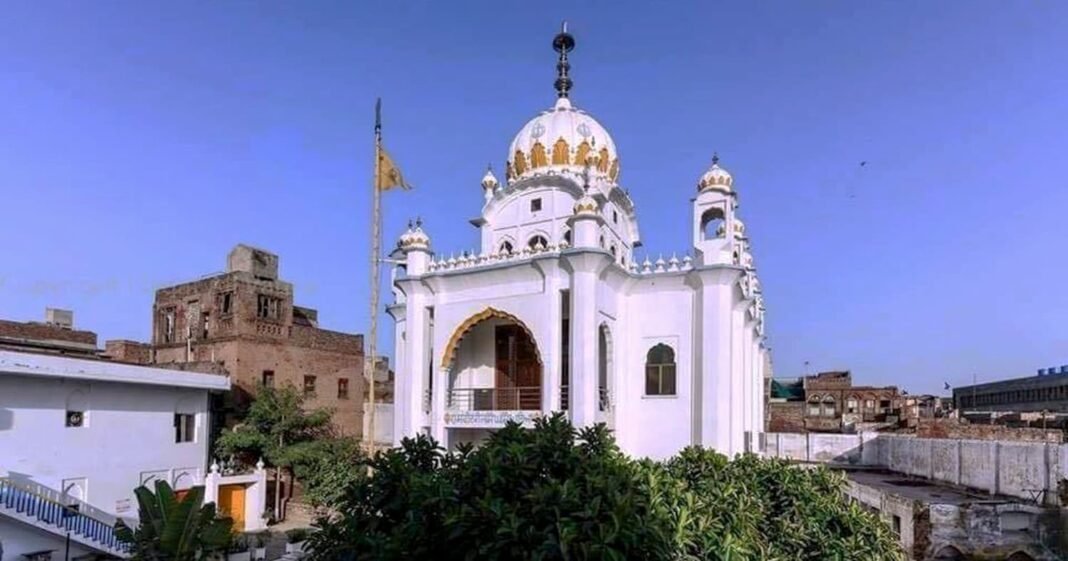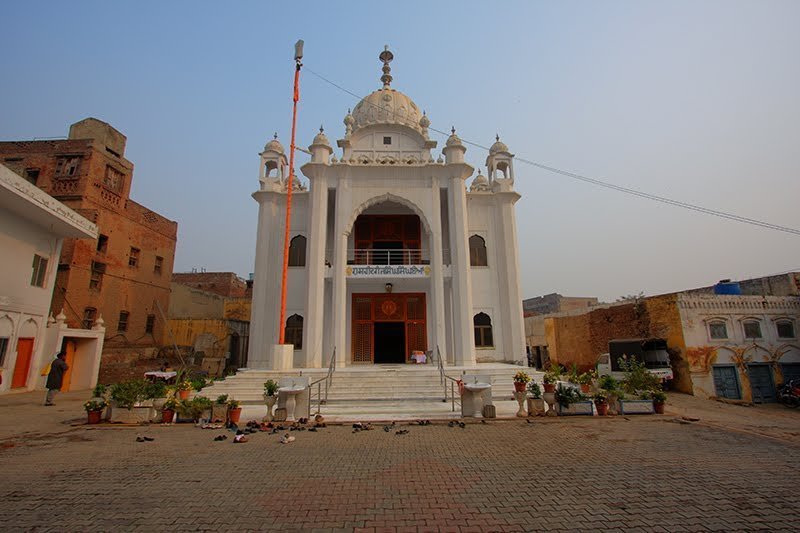
This Gurdwara Shaheed Ganj Singh Singhnian, Lahore travel guide brings you to the ground in Naulakha Bazaar where, in the 18th century, tens of thousands of Sikh men and women were executed for refusing to abandon their faith — and where their memory is honoured in a shrine that has survived governors, courtrooms and riots. If the story of Bhai Taru Singh across the lane moves you, this twin shrine will humble you: it commemorates not one martyr but a multitude. This guide covers why it deserves your visit, the history of the Shaheed Ganj ground, how to reach it from Lahore, Islamabad and Karachi, the best time to go, and how to visit with the respect the place demands.
Quick Facts
- Location: Naulakha Bazaar, Lahore — directly opposite the Gurdwara Shaheed Ganj Bhai Taru Singh, near Lahore Railway Station
- Famous For: Marking the ground where Sikh men and women were martyred in the 18th century under the Mughal governors of Lahore; Bhai Mani Singh was martyred here on 14 June 1738
- Scale of Martyrdom: Sikh historians record at least 100,000 martyrs at this site; some accounts put the figure at 250,000
- Origins: Once the site of the Shaheed Ganj mosque (early 1700s); handed over to the Sikhs by Diwan Kaura Mal and converted into a gurdwara
- Legal History: Ownership was contested in courts from 1910 onward; the final case was dismissed in 1996 and the site remains a gurdwara
- Managed By: Evacuee Trust Property Board (ETPB)
- Accessibility: In the old city near the railway station; walk the last stretch through Naulakha Bazaar
- Best For: Pilgrims, historians of Sikh-Mughal history, heritage walkers, and anyone seeking the deeper story of Lahore
Why Visit Gurdwara Shaheed Ganj Singh Singhnian, Lahore
There are places of worship, and then there are places of witness. The Gurdwara Shaheed Ganj Singh Singhnian belongs to the second kind. This ground in Naulakha Bazaar is where, across the 18th century, Sikh men and women were brought in chains and executed — under Zakaria Khan, under Yahya Khan and Shah Nawaz Khan, and above all under Mir Mannu, the governor of Lahore who took a vow to leave not a single Sikh alive. Sikh historians record at least a hundred thousand martyrs here; some accounts say a quarter of a million. The numbers are almost beyond grasping, which is precisely why the shrine matters: it gives that ocean of sacrifice a single address, a doorway you can walk through, a floor you can stand on.
The Sikhs of that century answered the slaughter with one of the most defiant sayings in their history, and it was born on ground like this: “Mir Mannu is our sickle, and we are his crop — the more he cuts us, the more we grow.” That spirit is what the shrine commemorates. It honours Bhai Mani Singh, the revered priest of the Harmandir Sahib, who was hacked to death here on 14 June 1738 rather than pay an impossible fine for holding the Diwali congregation. It honours the nameless thousands — farmers, mothers, artisans — who chose death over conversion. Standing here, you understand something essential about Sikh history: that the community’s survival was not an accident but a decision, made over and over, on ground exactly like this.
The shrine also carries one of the most extraordinary legal histories of any religious site in South Asia. It began as the Shaheed Ganj mosque of the early 1700s; Diwan Kaura Mal handed it to the Sikhs, who made it a place of worship. From 1910 the site was fought over in courtrooms — a dispute so grave that police opened fire in 1936, the lower court ruled one way, the higher court another, and the Privy Council’s 1940 judgment on the adjoining complex became a landmark studied alongside the Ayodhya case. The final suit was dismissed in 1996 for non-appearance of witnesses, and the site remains a gurdwara to this day. Few heritage visits in Pakistan pack this much history — religious, legal and political — into a single lane.
Visit it together with its twin across the lane, the Gurdwara Shaheed Ganj Bhai Taru Singh, and you get the complete Shaheed Ganj story: the single martyr and the multitude, the personal courage and the collective endurance. Come in the cool months, come early, and come prepared to be quiet. This is not a sightseeing stop; it is a place of remembrance, and it rewards the visitor who treats it as one.
History of Gurdwara Shaheed Ganj Singh Singhnian, Lahore
The ground now known as Shahidganj began its recorded history in the early 1700s as a public square facing a mosque — the Shaheed Ganj mosque, dedicated in the early 1720s, built on premises associated with the Sufi saint Pir Shah Kaku. Some traditions hold that the wider area once housed the palace of Prince Dara Shikoh, the Mughal prince who governed Lahore before his execution on his brother Aurangzeb’s orders. What is certain is that under the Mughal governors of the 18th century, this open ground became an execution site for Sikhs.
The persecution unfolded in waves. Zakaria Khan, appointed governor of Lahore in 1721, launched a campaign to eradicate the Sikhs; in 1739 hundreds of Sikhs were rounded up and executed in Lahore at the horse-market that became known as Shahidganj, and rewards were offered for Sikh heads and for information against anyone sheltering Sikhs. It was on this ground that Bhai Mani Singh — the great scholar, scribe of the Guru Granth Sahib’s final recension, and head priest of the Harmandir Sahib at Amritsar — was martyred on 14 June 1738, hacked to death joint by joint for refusing to pay a punitive tax on the Diwali gathering. The persecution continued under Yahya Khan, Shah Nawaz Khan and Adina Beg, and reached its peak under Mir Mannu, made subedar of Punjab in the mid-1700s, who vowed to exterminate the Sikhs: men and women were arrested across the province, brought to this ground, and murdered here.
The site’s transformation came through Diwan Kaura Mal, the influential Hindu minister who persuaded the Sikhs to assist Mir Mannu at the battle of Multan; in return he handed this place over to the Sikhs, who converted it into a gurdwara — the Shaheed Ganj of the Singh Singhnian, the martyrs’ memorial of the Sikh men and women. After the Bhangi Misl Sikhs conquered Lahore in 1762, Sikh control of the complex was consolidated, and during Maharaja Ranjit Singh’s reign the shrines received land grants for their upkeep. The Sikhs’ defiant adage about Mir Mannu’s sickle — the more he cut them, the more they grew — was the living theology of this ground.
The modern legal saga began in 1910, when attempts were made to take possession of the site, and turned grave in the 1930s: in 1936 the dispute escalated to the point that police opened fire. The Muslims filed suit; the lower court decided in their favour, but the higher court dismissed the case, and Governor Emerson maintained the site’s status as a gurdwara. The adjoining complex’s litigation reached the Privy Council, which ruled in 1940 that claims had lapsed with time — a judgment that survived Partition and is still cited in discussions of religious property law. The last case over this shrine was dismissed on 6 May 1996 owing to the non-appearance of witnesses, and the Gurdwara Shaheed Ganj Singh Singhnian continues as a gurdwara under the Evacuee Trust Property Board.
Top Things to Do in Gurdwara Shaheed Ganj Singh Singhnian, Lahore
Stand on the historic martyrs’ ground
The shrine marks the execution ground of the 18th-century martyrdoms. Enter quietly, cover your head, remove your shoes, and take time to absorb what this soil represents. Many pilgrims recite hymns here in memory of the shaheeds; even silent reflection is a fitting tribute.
Remember Bhai Mani Singh
Ask about the spot associated with Bhai Mani Singh’s martyrdom of 14 June 1738. The great scholar-priest’s death here connects this ground directly to the Harmandir Sahib at Amritsar and to the story of the Sikh scripture itself.
Visit the twin shrine across the lane
Directly opposite stands the Gurdwara Shaheed Ganj Bhai Taru Singh, the shaheedi asthan of the farmer-martyr scalped in 1745. The two shrines are two halves of one story — see them together or you have only half the picture.
Trace the legal history in the old city
For history enthusiasts, the Shaheed Ganj complex is a landmark in South Asian property law — the 1850 suits, the 1935 demolition and riots, the 1940 Privy Council judgment. Walking the ground with that knowledge turns a shrine visit into a seminar in the subcontinent’s communal history.
Walk Naulakha Bazaar to the railway station
Complete the visit with the bazaar walk — from the Landa Bazaar end through the old shop-houses to the colonial railway station. It is one of old Lahore’s most atmospheric strolls, and it frames the shrines in the living city that grew up around them.
Famous Places In and Around Gurdwara Shaheed Ganj Singh Singhnian, Lahore
- Gurdwara Shaheed Ganj Bhai Taru Singh — the twin martyrs’ shrine directly opposite.
- Lahore Railway Station — the 1860s colonial terminus at the end of Naulakha Bazaar.
- Gurdwara Dera Sahib — the samadhi of Maharaja Ranjit Singh beside the Lahore Fort.
- Badshahi Mosque & Lahore Fort — Mughal Lahore’s twin masterpieces, a short ride away.
- Walled City gates — Delhi Gate and the restored old-city streets for a full heritage day.
How to Reach Gurdwara Shaheed Ganj Singh Singhnian, Lahore
The shrine stands in Naulakha Bazaar, directly opposite the Gurdwara Shaheed Ganj Bhai Taru Singh, near Lahore Railway Station in central Lahore. Reach the bazaar from the Landa Bazaar end or from the station side; the lanes are narrow, so walk the final stretch.
Route Details
- From Islamabad: M-2 motorway south to Lahore — roughly 375 km, about 4.5 to 5 hours by car. From the motorway exits, head for the railway station area (30–45 minutes in city traffic).
- From Lahore (within city): A 10–15 minute rickshaw or taxi ride from Anarkali or Mall Road; the Metrobus and Orange Line serve the wider area, with the station as the landmark stop.
- From Karachi: Fly to Allama Iqbal International Airport (about 2 hours) and drive 30–45 minutes to Naulakha; or take the train to Lahore Junction — the shrine is a short walk or rickshaw ride away. By road it is roughly 1,210 km via the N-5.
- By rail: Lahore Junction connects to Karachi, Rawalpindi, Peshawar, Quetta and Multan. The shrine is practically in the station’s neighbourhood.
Nearest airport: Allama Iqbal International Airport, about 30–45 minutes by road. Road conditions: All paved; bazaar lanes are congested — walk the last part. Transport options: Rickshaw, taxi and ride-hailing apps all serve the old city well.
Where to Stay in Gurdwara Shaheed Ganj Singh Singhnian, Lahore
Stay anywhere central in Lahore — the shrine is in the middle of the city’s hotel belt around the station and Mall Road.
Luxury: Five-star hotels on Mall Road and in Gulberg for international visitors and yatri groups.
Mid-range: Dozens of comfortable hotels near the railway station, Regal Chowk and the Mall — the practical base for a heritage trip, minutes from Naulakha Bazaar.
Budget: Simple lodges around the station and in the old city for the economical traveller.
Heritage option: Restored old-city havelis operating as boutique guesthouses — an atmospheric base inside the walled city.
Where to Eat: Local Foods of Gurdwara Shaheed Ganj Singh Singhnian, Lahore
The lanes around Naulakha serve the full old-Lahore canon: nihari and paye for breakfast, halwa puri on weekends, samosas and pakoras through the day, and the great Punjabi lassi with malai whenever you need reviving. The bazaar’s own food stalls are the cheapest eats in central Lahore. For dinner, the Fort Road Food Street near the Badshahi Mosque offers barbecue and karahi platters against the illuminated fort — the classic Lahori evening. Anarkali’s food streets are a short ride away for more variety. Everything here is budget-friendly by big-city standards; the old city eats well and cheap.
Weather in Gurdwara Shaheed Ganj Singh Singhnian, Lahore
Lahore’s plains climate rewards winter visitors and tests summer ones. Plan shrine and bazaar walks for the cool months.
| Season | Temperature Range | Conditions |
|---|---|---|
| Winter (Dec–Feb) | 5–20°C | Cool with foggy mornings; ideal for old-city heritage walks. |
| Spring (Mar–Apr) | 20–36°C | Pleasant early; hot by late April. Mornings are best. |
| Summer (May–Jul) | 30–45°C | Fierce heat; monsoon humidity from July. Avoid midday. |
| Autumn (Sep–Nov) | 20–37°C | Cooling from October; November is superb for walking. |
Language and Culture of Gurdwara Shaheed Ganj Singh Singhnian, Lahore
Punjabi and Urdu are the languages of these lanes, with English widely understood in hotels and restaurants. The culture of the old city is Lahori to the core — warm, witty, and welcoming to strangers. The Shaheed Ganj ground sits in a mixed neighbourhood where Sikh heritage and Muslim daily life have overlapped for centuries; visitors should treat the lanes as a living community, not an exhibit.
At the shrine, the etiquette is the same as at any gurdwara: cover your head, remove your shoes, dress modestly, speak quietly. Ask before photographing inside. In the bazaar, bargaining is part of the fun and always good-natured. This is a place of remembrance for a community’s martyrs — a little extra solemnity here is noticed and appreciated.
Shopping in Gurdwara Shaheed Ganj Singh Singhnian, Lahore
The Landa Bazaar end of Naulakha is Lahore’s legendary bargain market — second-hand clothing, shoes and household goods at unbeatable prices, a treasure hunt that draws shoppers from across Punjab. For traditional goods, Anarkali offers fabrics, khussa shoes, jewellery and street food; Ichhra and Liberty cover modern retail. The old city around the shrine is for bazaar shopping, not malls — and that is exactly its charm.
Local Events and Festivals
As with its twin shrine across the lane, the great Sikh festivals bring Lahore’s gurdwaras to life. Vaisakhi in mid-April is the peak — yatri jathas from India and the diaspora tour the city’s Sikh heritage sites, and the atmosphere at the shaheedi asthans is deeply moving. Guru Nanak’s birth anniversary (usually November) also draws devotees. During large yatras, ETPB security protocols apply, so confirm arrangements in advance — but if your dates align with a festival, the experience is unforgettable.
Travel Tips for Gurdwara Shaheed Ganj Singh Singhnian, Lahore
Packing Essentials
Head covering, comfortable walking shoes, water, sunscreen, small cash for the bazaar. Winter needs a jacket for foggy mornings; summer demands a hat and a dawn start.
Safety Tips
The bazaar is crowded — keep valuables secure and stay alert in the crush. Daylight visits are best. The area is well-trafficked and accustomed to heritage visitors.
Money & Connectivity
ATMs near the station and Mall Road; cash rules in the bazaar, so carry small notes. Excellent mobile coverage and 4G across the old city on all major networks.
Best Time to Visit Gurdwara Shaheed Ganj Singh Singhnian, Lahore
Winter (November to March) — the ideal season
Cool dry days for walking the old city. Arrive early to enjoy the lanes before the bazaar crowds build, and visit both twin shrines in one unhurried morning.
Spring (March to April) — festival season
March is pleasant; mid-April’s Vaisakhi brings the yatras and the city’s Sikh heritage to its most vibrant. A special time to be here.
Summer (May to August) — avoid midday
Lahore’s summer punishes bazaar walkers. Dawn visits only, with water and a quick retreat to cooler quarters.
Autumn (September to October) — the shoulder season
Heat breaks in October; November offers superb light and comfortable walking weather for the full heritage circuit.
Final Thoughts
The Gurdwara Shaheed Ganj Singh Singhnian is a place that recalibrates your sense of history. The numbers — a hundred thousand, a quarter of a million — are too large to feel, until you stand on the actual ground and realise that every one of them was a person who chose faith over life. The shrine honours them all, and it honours the defiance that grew from their sacrifice: the sickle that only made the crop grow thicker. In a city crowded with monuments, this quiet ground in a roaring bazaar may be the most meaningful stop of all.
Come in winter, cross the lane from Bhai Taru Singh’s shrine, spend unhurried time at both, and end with the bazaar walk to the railway station. You will carry home one of the deepest stories Punjab has to tell. For more sacred heritage across the province, browse our Explore Pakistan guides — starting with the twin shrine, Gurdwara Shaheed Ganj Bhai Taru Singh, directly across the lane.
FAQs
Where is Gurdwara Shaheed Ganj Singh Singhnian?
In Naulakha Bazaar, Lahore, directly opposite the Gurdwara Shaheed Ganj Bhai Taru Singh, near Lahore Railway Station.
Who is commemorated here?
The tens of thousands of Sikh men and women executed on this ground in the 18th century under the Mughal governors — including Bhai Mani Singh, martyred here on 14 June 1738.
What is the best time to visit?
November to March, early in the day. Mid-April’s Vaisakhi brings the yatri season and a special atmosphere.
How do I reach it from Islamabad?
M-2 motorway to Lahore (about 375 km / 4.5–5 hours), then city roads or a rickshaw to Naulakha Bazaar near the railway station.
What is the site’s legal history?
Ownership was contested from 1910; police fired on rioters in 1936; courts ruled both ways before the site’s gurdwara status was upheld, with the final case dismissed in 1996.
Is it suitable for families?
Yes, as part of an old-Lahore heritage day — combine with the Badshahi Mosque, Lahore Fort and the food street. Keep children close in the crowded lanes.
Where should I stay?
Central Lahore — mid-range hotels near the station and Mall Road are minutes from the shrine.
What food is nearby?
Old-Lahore staples: nihari, paye, halwa puri, samosas and thick lassi in the bazaar lanes, plus the Fort Road Food Street nearby.
Can I see both Shaheed Ganj shrines together?
Absolutely — they stand directly opposite each other in Naulakha Bazaar. See the Gurdwara Shaheed Ganj Bhai Taru Singh travel guide for the twin shrine’s full story.