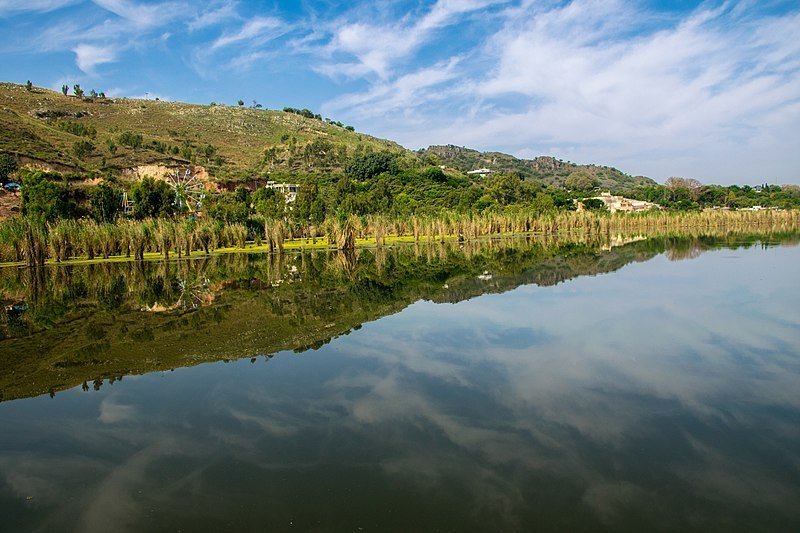
Few places in Pakistan blend natural beauty, imperial history and roadside convenience the way Kallar Kahar Lake does. Sitting right beside the M-2 motorway in the Salt Range of Chakwal district, this saltwater lake has been stopping travellers in their tracks since 1519, when the first Mughal emperor Zahir-ud-Din Babur camped on its shores and declared it a charming spot with good air. Today it remains one of the easiest, most rewarding day trips in Punjab, a place where dancing peacocks, a rock-carved imperial throne, paddle boats and winter migrations of birds from as far as Siberia all share the same quiet shoreline.
This Kallar Kahar Lake travel guide covers everything you need to plan your visit: the lake’s history, the best time to visit, things to do, how to reach it from Islamabad, Lahore and Karachi, where to stay and what to eat.
Quick Facts
- Location: Salt Range, Chakwal district, Punjab, Pakistan, beside the M-2 motorway
- Altitude: Around 1,500 feet (about 500 metres) above sea level
- Famous For: Saltwater lake, Takht-e-Babri (Babur’s rock throne), dancing peacocks, winter migratory birds
- Nearest City: Chakwal (25 km); Islamabad is around 135 to 156 km away, Lahore around 224 to 250 km
- Accessibility: Excellent year-round road access directly off the M-2; nearest airport is Islamabad International Airport
- Known Landmarks: Takht-e-Babri, Bagh-i-Safa garden, fossil museum, TDCP Lake View Resort
- Best For: Families, day-trippers, history lovers, birdwatchers and photographers
Why Visit Kallar Kahar Lake
Kallar Kahar is that rare destination that asks almost nothing of you and gives back generously. You do not need a jeep, a trekking permit or a week of leave. You step off the busiest motorway in the country and within minutes you are looking at a shimmering lake framed by Salt Range hills, with peacocks strutting between the trees. It is the kind of place that turns an ordinary Lahore-to-Islamabad drive into a memory.
History buffs will find few day trips in Punjab richer. This is where Babur rested in 1519 before marching on to found the Mughal Empire. The throne his men carved from a living rock still stands, and the garden he planted, Bagh-i-Safa, is still green. Standing at Takht-e-Babri, you are standing exactly where an emperor once addressed the army that would change the subcontinent’s history.
For families, it is simply practical: easy access, boating on the lake, swings and lawns for children, food stalls and a TDCP resort with clean rooms. For birdwatchers, winter is the prize season, when thousands of migratory birds, including species arriving from as far as Siberia, join the resident peacocks around the water. For photographers, sunrise and sunset over the lake, with reflections doubling the hills, are hard to beat.
And because Kallar Kahar sits at the crown of the Salt Range, it makes a perfect hub. From here you can branch out to the Katas Raj temples, the Khewra Salt Mines and the hidden waterfalls of the valley, turning one stop into a full weekend of exploration.
History of Kallar Kahar Lake
The recorded history of Kallar Kahar begins in the early sixteenth century, though the lake itself was formed by the ancient geology of the Salt Range. The Salt Range is one of the most important geological formations in Pakistan, squeezed between the Potohar Plateau and the Indus and Jhelum rivers. The lake occupies a natural depression created by fault movements in this range, fed by springs that flow down from the surrounding hills.
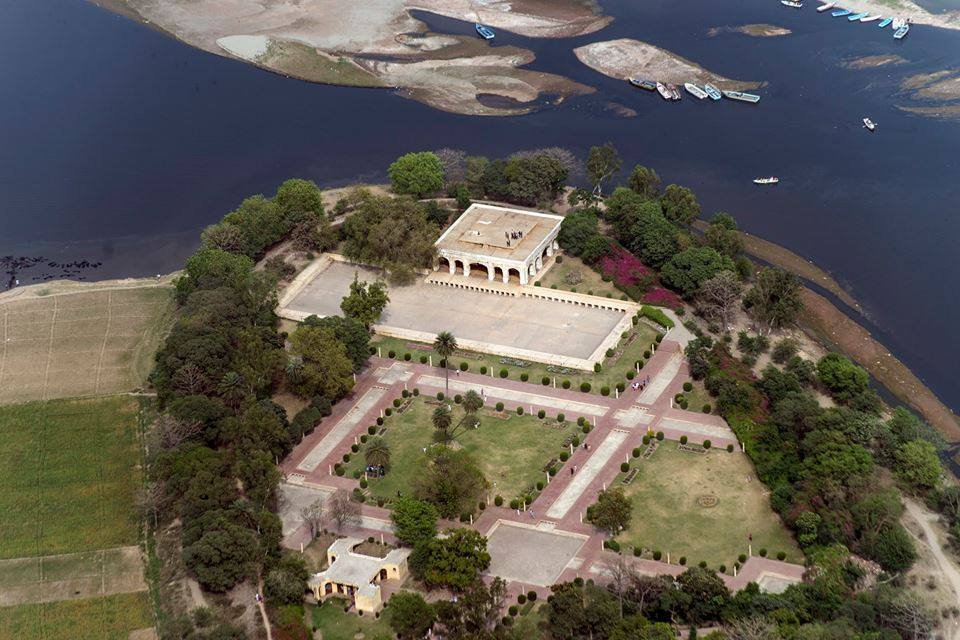
In 1519, Zaheer-ud-Din Babur crossed the Indus and marched through this region with his army on his way from Kabul toward Delhi. Struck by the beauty of the lake and its valley, Babur camped here. According to historical accounts, he ordered the construction of a beautiful garden by the lake, which he named Bagh-i-Safa (the Garden of Purity), and he had a podium carved out of a large rock from which to address his military. That rock throne became known as Takht-e-Babri, the Throne of Babur, and it still exists today as Kallar Kahar’s most visited historical monument.
Babur’s own admiration for the place survives in his memoirs, where he described Kallar Kahar as a charming spot with good air. The garden he laid out near the lake is considered one of the earliest Mughal gardens on what is now Pakistani soil, predating the great Mughal gardens of Lahore.
In the centuries that followed, the lake remained a local landmark and a resting point on old trade routes through the Salt Range. After Partition, it grew into a recognised tourist destination with the development of roads, a TDCP motel and resort facilities, boating and visitor amenities. A fossil museum was later established near the district council rest house by the archaeology department, displaying rare fossil specimens discovered in the surrounding Salt Range, a reminder that this entire landscape was once under an ancient sea.
Top Things to Do in Kallar Kahar Lake
Boating on the Lake
The lake is the main event, and the best way to meet it is from the water. Both pedal boats and motor boats are available for rent at the shoreline. A slow paddle across the calm water gives you the Salt Range mirrored beneath you, and because the lake’s maximum depth is only about four to five feet, the surface stays glassy and gentle. Mornings are quietest; late afternoons bring the best light.
Visit Takht-e-Babri
The stone throne of Babur is a short walk from the lake and the single most historic object in the area. Carved in 1519 from a single rock so the emperor could address his army, it is a strikingly simple monument: a raised platform, weathered by five centuries, sitting among old trees. History does not come much more tangible than this. Guides at the site will recount how Babur’s army did the carving, and it makes for a genuinely memorable photograph.
Stroll Through Bagh-i-Safa
The garden Babur planted near the lake still exists, a green, shaded refuge of old trees and flower beds. It is the kind of place where you can sit for an hour with tea and watch the peacocks wander through. Local accounts say the garden has been maintained, in one form or another, since Babur’s time.
Watch the Peacocks
Kallar Kahar is famous as a land of dancing peacocks, and the birds are genuinely wild here. They come down from the surrounding hills, particularly in the late afternoon, and on warm days the males fan their iridescent tails in full display. Keep a respectful distance, stay quiet, and let them come to you.
Winter Birdwatching
From late autumn through winter, the lake becomes a magnet for migratory birds, with large flocks arriving from northern regions, including Siberia. The shoreline and shallow water offer easy, close-range birdwatching, and the mix of resident peacocks and winter visitors makes it one of Punjab’s most accessible birding spots. Bring binoculars if you have them.
Explore the Fossil Museum
The small fossil museum near the district council rest house displays rare fossils found in the Salt Range. It is a short, fascinating detour that tells the deeper story of this landscape: hundreds of millions of years ago, these hills were seabed. Children tend to love the strange shapes on display.
Picnic and Family Time
The banks of the lake are dotted with picnic spots, swings and lawns, and the area draws families from across Punjab on weekends. There are gift shops and food stalls along the shore, so even a spontaneous stop can turn into a full afternoon. If you stay into the evening, the sunset over the water is the lake’s finest daily show.
Famous Places In and Around Kallar Kahar Lake
- Katas Raj Temples: Ancient Hindu temple complex with a sacred pond, one of the most atmospheric heritage sites in the Salt Range.
- Khewra Salt Mines: The world’s second-largest salt mine, with illuminated salt chambers and an underground mosque.
- Neela Wahn Waterfall: A scenic waterfall about 25 km from Kallar Kahar toward Munara, popular for day trips.
- Swaik Lake: A smaller, quieter lake in the valley, good for a peaceful picnic.
- Malot Fort: Ruins of an old fort in the Salt Range with sweeping views.
- Chakwal City: The nearest city, famous for its rewari (a traditional sweet) and Potohari culture.
How to Reach Kallar Kahar Lake
Kallar Kahar is one of the easiest destinations in Punjab to reach, because it sits directly on the M-2 motorway between Lahore and Islamabad. From Islamabad, the drive is approximately 135 to 156 km, taking around two to three hours via the M-2 southbound. From Lahore, it is approximately 224 to 250 km, roughly three to three and a half hours on the M-2 northbound. It lies almost exactly at the midpoint of the two cities, which is why so many travellers stop here en route.
From Karachi, the distance is around 1,500 to 1,600 km. The sensible option is to fly to Islamabad and then drive down the M-2 (about two and a half hours from the airport). The long road journey from Karachi takes a full day and night and is only for dedicated road-trippers.
The nearest airport is Islamabad International Airport. From the airport you can rent a car, hire a private taxi or join one of the many day-trip tours that run to Kallar Kahar and the nearby Salt Range attractions. Local transport options include motorway coaches that can drop you at the Kallar Kahar interchange, though having your own car or a hired vehicle is far more convenient for exploring the lake, Takht-e-Babri and the surrounding sights.
Road conditions are good year-round: the M-2 is a modern motorway, and the approach roads from the interchange to the lake are paved. In winter, early-morning fog can slow the motorway drive, so plan to travel after the fog lifts.
Route Details
From Islamabad: Leave Islamabad on the Srinagar Highway, join the M-2 motorway at the Peshawar Mor interchange heading toward Lahore. Stay on the M-2 for about 110 km and exit at the Kallar Kahar interchange. Follow the signs to the lake, which is a short drive from the exit. Total driving time: around two and a half hours.
From Lahore: Join the M-2 at the Thokar Niaz Beg interchange heading toward Islamabad. Drive about 200 km and exit at the Kallar Kahar interchange. Follow the signs to the lake. Total driving time: around three to three and a half hours.
From Karachi: Fly to Islamabad (around two hours), then follow the Islamabad route above. Alternatively, drive the full N-5 and motorway network via Hyderabad, Sukkur, Multan and Lahore to the Kallar Kahar exit, a journey of eighteen hours or more, best split across two days.
Where to Stay in Kallar Kahar Lake
Staying overnight at Kallar Kahar is a lovely option, because the lake at dawn, before the day-trippers arrive, is a different and quieter world. The best-known option is the TDCP Lake View Resort, built by the Tourism Development Corporation of Punjab near the lake. It sits at the foot of the Kallar Kahar hills with views of the water, and offers rooms, dining halls, a BBQ area, car parking and a mosque on site. It is the natural first choice for families and first-time visitors.
There are also several smaller private hotels and guesthouses around the lake and along the main road, offering mid-range rooms at budget-friendly rates. For a tighter budget, simple rest houses and guesthouses serve basic needs. If you are visiting as part of a Salt Range tour, many travellers base themselves here and make day trips to Katas Raj, Khewra and Neela Wahn.
Camping is not an established facility at the lake itself, and the area is a day-visit zone with resort accommodation. Book ahead on weekends and public holidays, when the resort fills up quickly with families from Lahore, Islamabad and Rawalpindi.
Where to Eat: Local Foods of Kallar Kahar Lake
Kallar Kahar sits in the Potohar region, and the food here reflects Potohari country cooking: hearty, wholesome and generous with desi ghee. Expect dishes like saag with makai ki roti in winter, slow-cooked dal, desi chicken curries, and fresh lassi served in clay cups. The restaurants and dhabas near the lake serve standard Pakistani fare: karahi, BBQ, daal fry and chapati, all at budget-friendly prices that suit a family outing.
If you pass through Chakwal, do not miss the city’s famous rewari, a sweet confectionery of sesame and jaggery that Chakwal is known for across Pakistan. It makes an excellent edible souvenir. Around the lake itself, food stalls sell tea, pakoras, corn and snacks, and the TDCP resort’s dining hall offers proper sit-down meals for its guests.
A full meal at a local restaurant will generally cost a modest amount per person; fine-dining prices do not exist here, which is part of the charm.
Weather in Kallar Kahar Lake
Kallar Kahar has a semi-arid Salt Range climate with noticeable extremes: summers are hot and dry, winters are mild to chilly, and spring and autumn are the sweet spots. The lake area gets little rainfall, and winter mornings can bring fog that usually burns off by mid-morning.
| Season | Temperature Range | Conditions |
|---|---|---|
| Winter (Dec-Feb) | Around 2-18°C | Mild days, chilly nights; occasional fog in the mornings; best season for migratory birds |
| Spring (Mar-May) | Around 10-30°C | Pleasant and green; wildflowers around the hills; ideal for sightseeing |
| Summer (Jun-Aug) | Around 24-42°C | Hot and dry days, warm nights; carry water and sun protection |
| Autumn (Sep-Nov) | Around 10-30°C | Warm days, cool nights; clear skies and excellent light for photography |
Language and Culture of Kallar Kahar Lake
The language of the area is Punjabi, in its Potohari dialect, and Urdu is widely understood everywhere. The people of the Salt Range are known across Pakistan for their hospitality, and many local families have a tradition of military service, which gives the region a distinctive pride and discipline.
As a visitor, standard Pakistani etiquette applies: dress modestly, especially around villages and religious sites; ask before photographing people; and remove shoes if you enter any shrine or mosque. Picnic culture is strong here, and you will find families sharing food and music on weekends. If you are offered tea by a local shopkeeper or guide, accepting it is the warm thing to do.
The peacocks hold a special place in local affection. Residents will tell you, with genuine pride, how the birds come down from the hills after Asar prayers to dance, and harming or harassing wildlife is frowned upon.
Shopping in Kallar Kahar Lake
Shopping here is a pleasant, low-key affair. Gift shops near the lake sell souvenirs, local handicrafts, and Salt Range-themed keepsakes. Chakwal’s famous rewari and other traditional sweets are the most popular take-home items, along with locally produced items like desi ghee, honey and dried fruits sold by roadside vendors.
The region is also known for its orchards: potatoes, apricots and Japanese plums grow abundantly in the valley, and seasonal fruit from local orchards is worth buying fresh. There are no shopping malls here, and that is fine; the market experience is about small shops, friendly bargaining and things made close to home.
Travel Tips for Kallar Kahar Lake
Packing Essentials
Bring sun protection, a hat and water in summer; a warm jacket for winter evenings. Comfortable walking shoes are useful for Takht-e-Babri and the garden paths. Binoculars will reward you in the birding season, and a camera is non-negotiable at sunset.
Safety Tips
Kallar Kahar is a safe, family-friendly destination visited by thousands of Pakistanis every weekend. The lake is shallow, but supervise children near the water. Boating operators provide the boats; stick to the designated boarding points. Keep valuables out of sight in parked cars, as you would anywhere.
Money & Connectivity
Bring cash: small shops, food stalls and boat rentals operate on cash, and ATMs near the lake are limited. All major mobile networks (Jazz, Zong, Telenor, Ufone) have coverage in the area, and the TDCP resort offers WiFi. Fuel stations are available on the motorway, so top up before exiting at Kallar Kahar.
Best Time to Visit Kallar Kahar Lake
Winter (December to February) — Best for Birds
Winter is arguably the finest season at Kallar Kahar. The migratory birds arrive, the air is crisp, daytime temperatures are comfortable for walking, and the low sun gives the lake a golden glow. This is the season photographers and birdwatchers should choose.
Spring (March to May) — Best for Families
Spring brings mild weather, green hillsides and flowering trees. It is the most comfortable all-round season for boating, picnics and exploring Takht-e-Babri and the fossil museum without heat or cold to worry about.
Summer (June to August) — Go Early or Late
Summer days can be very hot, but the lake is still enjoyable in the early morning and late afternoon. If you visit in summer, plan a half-day trip rather than a full day under the sun, and combine it with the cooler interiors of Khewra Salt Mines.
Autumn (September to November) — Best Light
Autumn offers clear skies, warm days and cool evenings, with some of the year’s best photography light. Crowds thin out after the summer holidays, making it a peaceful time for couples and solo travellers.
Final Thoughts
Kallar Kahar Lake is the kind of destination that reminds you why you travel in the first place. It does not demand weeks of planning or special equipment. It simply asks you to slow down for a few hours beside the water, watch the peacocks, stand where an emperor once stood, and let the Salt Range do the rest.
Whether you are a family looking for an easy weekend outing, a history lover tracing Babur’s footsteps, or a photographer chasing the perfect reflection, Kallar Kahar earns its place on your itinerary. Pair it with Katas Raj and Khewra for a full Salt Range weekend, or stop for an hour on your way between Lahore and Islamabad. Either way, you will leave wondering why you had not come sooner. Explore more of the country’s hidden corners in our Explore Pakistan series.
FAQs
Where is Kallar Kahar Lake?
Kallar Kahar Lake is in the Salt Range of Chakwal district, Punjab, directly beside the M-2 motorway, about 25 km from Chakwal city and roughly midway between Lahore and Islamabad.
What is the best time to visit Kallar Kahar Lake?
Winter (December to February) is best for migratory birds, while spring (March to May) and autumn (September to November) offer the most comfortable weather for sightseeing and boating.
How do I reach Kallar Kahar Lake?
Take the M-2 motorway and exit at the Kallar Kahar interchange. It is about two and a half hours from Islamabad and three to three and a half hours from Lahore by car.
Is Kallar Kahar Lake safe for families?
Yes. It is one of Punjab’s most popular family picnic spots, with boating, lawns, swings, food stalls and a TDCP resort. The lake is shallow, but children should be supervised near the water.
What is Takht-e-Babri?
Takht-e-Babri is a throne carved from a single rock in 1519, from which the Mughal emperor Babur addressed his army while camped at Kallar Kahar. It still stands near the lake.
Can you swim in Kallar Kahar Lake?
No. It is a saltwater lake, and boating and sightseeing are the main activities. Swimming is not an established or recommended activity here.
Where can I stay near Kallar Kahar Lake?
The TDCP Lake View Resort near the lake is the best-known option, with rooms, dining and parking. Smaller private hotels and guesthouses are also available around the lake and on the main road.
What should I eat at Kallar Kahar?
Try Potohari country dishes like saag, desi chicken curry and fresh lassi at local restaurants, and pick up Chakwal’s famous rewari sweet on your way through.