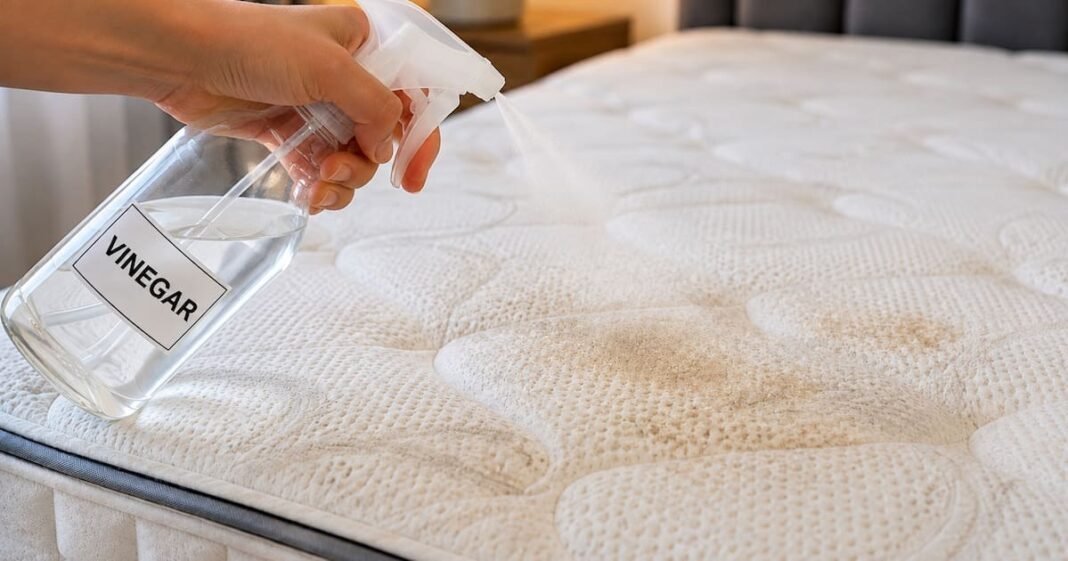
A Cheap Bottle With a Surprising Job
White vinegar already earns its place in most homes — it cuts through grease in the kitchen, freshens up bathroom surfaces, and costs almost nothing. But a growing number of households are now using it somewhere less expected: on the mattress. Spraying a simple vinegar-and-water mix on a mattress is being shared as a low-cost way to tackle odors, soften stains, and keep the bed fresher for longer.
It is not a miracle cure, and it has to be done carefully. Here is what the method is actually for, how to do it correctly, and where its limits lie.
What Spraying Vinegar on the Mattress Is For
Over time, a mattress quietly collects things a quick tidy-up never reaches: body odors, dust, and everyday dirt that settles deep into the fabric. Vinegar steps in as a practical helper in three ways.
- Odor neutralizing: Vinegar is a natural deodorizer. Rather than masking smells with fragrance, it helps neutralize them — which makes it especially useful in bedrooms that get little airflow or stay shut up during the day.
- Loosening dirt and light stains: Vinegar will not erase every stain completely, but its acetic acid softens residue and surface dirt so it can be lifted more easily with scrubbing or vacuuming.
- Keeping small pests away: The sharp, acidic scent of white vinegar helps repel tiny insects that like to hide in dark, undisturbed corners of bedding.
Because of this, a vinegar spray can be a gentler alternative to harsh chemical cleaners on a surface you spend a third of your life lying on. Mattress care guides — including the cleaning guide from mattress maker Tuft & Needle — list vinegar alongside baking soda and mild detergents as reasonable options for treating spills and odors.
How to Apply It Correctly
The method is deliberately simple. You will need white vinegar, water, and a spray bottle.
- Mix the solution: Fill a spray bottle with a simple mixture of white vinegar and water.
- Spray lightly: Mist the mixture evenly over the mattress surface. A light, even spray is enough — the goal is damp, not soaked.
- Let it sit: Leave the mixture on the mattress for at least one hour so it can work on odors and residue.
- Scrub or vacuum: Gently scrub any stained areas, then vacuum the surface to lift loosened dirt and particles.
- Dry completely: Let the mattress air-dry fully before putting sheets back on. For best results, treat both sides of the mattress and make sure each side is fully dry before flipping it back onto the bed frame.
The One Warning That Matters
The most important caution is moisture. Too much liquid can seep into the mattress layers, damage the materials inside, and take a very long time to dry — and a damp mattress is worse than a dusty one. Spray lightly, ventilate the room well, and never remake the bed while the surface is still damp. If your mattress has a “do not get wet” care label or a memory-foam core that traps moisture, test a small hidden area first or skip the spray and stick to vacuuming.
How Often Should a Mattress Be Cleaned?
A mattress needs regular care, not just emergency stain treatment. A few simple habits go a long way:
- Air it out daily: Leave the bed uncovered for 15 to 20 minutes each morning so moisture and warmth from the night can escape.
- Vacuum regularly: Run a vacuum over the mattress every 7 to 15 days to remove dust and the fine particles that attract dust mites.
- Wash the protector: Clean the mattress protector every 15 days to once a month — it is the first line of defense against dirt.
- Change sheets weekly: Fresh sheets each week keep sweat and skin cells from reaching the mattress itself.
These habits line up with mainstream medical advice: the Mayo Clinic recommends washing sheets weekly, using protective covers on mattresses and pillows, and keeping indoor humidity below 50% to help limit dust mites — all of which keep the sleeping environment healthier.
Frequently Asked Questions
Will vinegar remove old stains from a mattress?
Not completely. Vinegar softens surface dirt and helps with fresh spills and odors, but deep or set-in stains usually need more targeted treatment.
Will my mattress smell like vinegar afterward?
The vinegar smell fades as the mattress dries. Good ventilation speeds this up — which is another reason to let it dry completely before remaking the bed.
Is it safe for all mattress types?
Use caution with memory foam and any mattress whose care label warns against liquids. When in doubt, test a small hidden spot first or stick to dry methods like vacuuming and baking soda.
The Bottom Line
Spraying white vinegar on a mattress is a cheap, practical trick for fresher-smelling bedding and lighter surface stains — as long as you spray lightly and dry thoroughly. Pair it with regular vacuuming, weekly sheet changes, and daily airing, and the place you sleep will stay cleaner for years longer.
Source: Cronista, “Spraying vinegar on the mattress: What it’s for and how to apply it” (October 17, 2026). Photo: Cronista.