Quick Facts
- Location: Aliabad town, Hunza District, Gilgit-Baltistan, on the Karakoram Highway between Gilgit and the upper Hunza valley.
- Altitude: Around 2,206 metres (7,238 feet) above sea level.
- Famous For: Being the administrative and commercial centre of Hunza District, the Aliabad bazaar, sweeping views of Rakaposhi, and its role as the gateway to Karimabad and upper Hunza.
- Nearest City: Gilgit, about 2.5 to 3 hours by road.
- Accessibility: Directly on the Karakoram Highway (KKH). Reachable by road from Islamabad via Gilgit, or by air to Gilgit followed by the road journey.
- Known Landmarks: The historic watch tower of Aliabad, Aliabad bazaar, Rakaposhi viewpoints, and the nearby Sacred Rocks petroglyphs.
- Best For: Families, first-time Hunza visitors, shoppers, and travellers who want a convenient, well-connected base for exploring the valley.
Why Visit Aliabad Hunza
Every traveller to Hunza passes through Aliabad, and smart ones stop. This is the town where the Karakoram Highway meets the Hunza valley proper: the administrative and commercial centre of the district, the place where buses from Rawalpindi, Gilgit, and Karachi terminate, and the junction from which the hill road climbs to Karimabad and the forts. If Hunza is the destination, Aliabad is its front door.
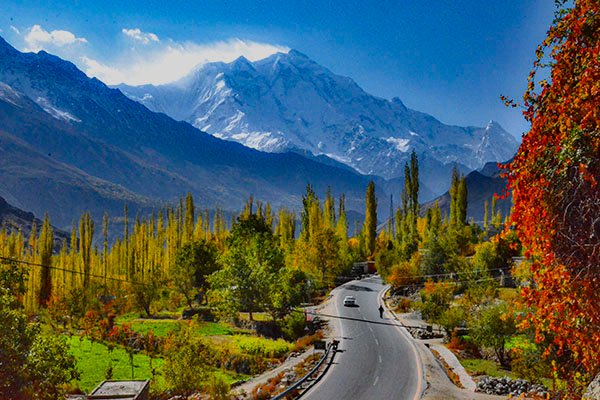
What makes Aliabad worth more than a drive-through is its position and its practicality. The town sits in a relatively wide section of the valley between two forks of the Hunza River, which means the views open up in a way they do not in the narrower gorges below. Rakaposhi, the 7,788-metre giant, dominates the skyline, and sunset from the Aliabad viewpoints is one of the great free shows in northern Pakistan. The bazaar is the valley’s main shopping street, busier and better stocked than the tourist-oriented lanes of Karimabad, and prices for everyday goods are fairer here.
Aliabad is also the sensible base for a Hunza trip. Hotels and guesthouses cluster along the KKH at every price level, transport connections are the best in the district, and the famous sights, Baltit Fort, Altit Fort, Attabad Lake, Duikar’s Eagle’s Nest, are all within easy day-trip range. Travellers who stay in the prettier but pricier villages uphill end up coming down to Aliabad for the bazaar and the buses anyway. This Aliabad Hunza travel guide covers the town’s real story, the best things to do in and around it, honest hotel and food guidance, seasonal weather, and step-by-step routes from Islamabad, Lahore, and Karachi.
History of Aliabad Hunza
Aliabad’s history is the history of modern Hunza. For centuries the valley was an independent princely state ruled by hereditary Mirs from their forts at Altit and later Baltit. Aliabad itself was a modest settlement in the lower valley, but its location on the natural corridor between Gilgit and upper Hunza made it strategically important: the hill road to Karimabad, the old capital, climbs directly from here, and the town sits between two forks of the Hunza River in the northeastern corner of the Karakoram range.
The transformation began with the Karakoram Highway. Before the KKH, Hunza’s communities depended on subsistence farming and the valley was effectively cut off in winter; after the highway connected the valley to the rest of Pakistan, Aliabad’s position on the road made it the natural commercial and administrative hub. When Hunza became a district, Aliabad became its headquarters town. Bus companies established routes linking it to Gilgit, Rawalpindi, and Karachi, the bazaar grew into the valley’s main market, and hotels and guesthouses multiplied along the highway.
The princely state itself formally ceased to exist in 1974, and the valley moved into the modern administrative era. Aliabad’s recent history includes a dramatic episode: in January 2010 a massive landslide at Attabad, upstream in Gojal, dammed the Hunza River and created Attabad Lake. By May 2010, government officials were warning that the rising lake was close to flooding parts of Aliabad, and the town watched anxiously as the water found its level. The lake stabilised, and today it is one of Hunza’s biggest attractions, but the episode is still remembered locally as the year the river nearly came for the town.
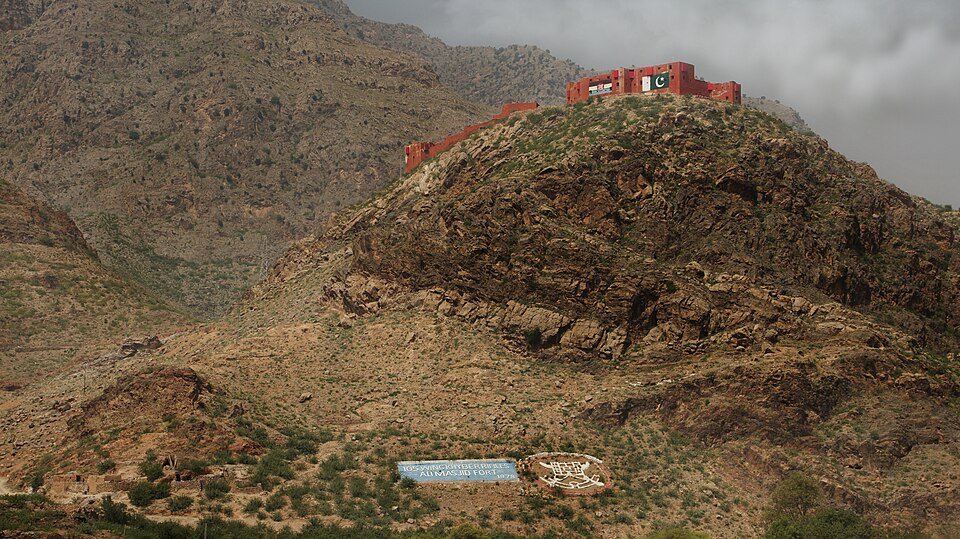
One landmark reaches much further back than the highway era: the historic watch tower of Aliabad, a stone tower from the days of the independent princely state when such towers guarded the valley against raids. It stands as a reminder that this was a frontier long before it was a tourist route, and it is one of the few historic structures in the lower valley that visitors can still see.
Top Things to Do in Aliabad Hunza
Walk the Aliabad bazaar
The bazaar is the beating heart of the town and the valley’s main market street. Unlike the boutique lanes of Karimabad, this is a working bazaar where locals shop: general stores, fruit sellers, tailors, mobile shops, and eateries line the road. It is the best place in Hunza to buy dried apricots, almonds, and walnuts at local prices, and the tea houses here are good spots to watch valley life go by. Come in the late afternoon when the light softens and the street fills up.
Visit the historic watch tower
The old watch tower of Aliabad dates back to the era of the independent Hunza state, when towers like this served as lookouts and defensive posts for the local rulers. The climb up the winding path is rewarded with sweeping views over the town, the Hunza River forks, and the Karakoram peaks beyond. It is a quiet spot, far less visited than the forts uphill, and the stone work is a fine example of traditional Hunza construction.
Watch sunset over Rakaposhi
Rakaposhi, at 7,788 metres, is one of the most beautiful mountains in the Karakoram, and Aliabad has some of the best roadside viewpoints of it in the lower valley. As the sun drops, the peak turns gold, then pink, then deep violet. The viewpoints along the KKH on the town’s edge fill with photographers in the evening; arrive early for a good spot. On clear autumn mornings the mountain is equally spectacular, floating above the valley haze.
See the Sacred Rocks of Hunza
A short drive from Aliabad toward Karimabad lie the Sacred Rocks, ancient petroglyphs carved into boulders by travellers and hunters over the centuries. These rock carvings, depicting ibex, hunters, and inscriptions in old scripts, are among the oldest human traces in the valley. They sit close to the road and make an easy stop combined with the Ganish village visit.
Day trip to Karimabad and Baltit Fort
Karimabad, the old capital, is about 7 kilometres east of Aliabad up the hill road, and the 700-year-old Baltit Fort crowns the town. The fort, on UNESCO’s tentative World Heritage list, was the seat of the Mirs after they moved from Altit, and its Tibetan-influenced architecture and museum are the single best history lesson in Hunza. Combine it with a walk through Karimabad’s old lanes and bazaar, and the Queen Victoria Monument viewpoint.
Day trip to Altit Fort and village
Altit village lies 3 kilometres west of Karimabad, an easy continuation of the same day trip. The 1,100-year-old Altit Fort, the oldest monument in Gilgit-Baltistan and a UNESCO heritage award winner, sits on a cliff above the Hunza River with its restored royal garden. The village around it is one of the oldest continuously inhabited settlements in the valley.
Drive to Attabad Lake and beyond
Attabad Lake, the turquoise lake born of the 2010 landslide, is roughly an hour’s drive north of Aliabad on the KKH, through a series of tunnels. Boating, jet skiing, and lakeside cafes make it the valley’s adventure playground. Continue to the Hussaini suspension bridge and the Passu cones in Gojal if you have a full day.
Sunrise at Duikar, the Eagle’s Nest
Duikar village, above Altit, is famous for its sunrise and sunset viewpoint over the whole Hunza valley. From Aliabad it is a 45-minute to one-hour drive, best done before dawn. Watching the first light hit Rakaposhi, Ultar, and the Golden Peak from the Eagle’s Nest is worth the early alarm.
Famous Places In and Around Aliabad Hunza
Karimabad — the old capital, 7 km east, with Baltit Fort and the main tourist bazaar. Baltit Fort — 700-year-old former seat of the Mirs, museum and viewpoint. Altit Fort — 1,100-year-old fort and royal garden, the valley’s oldest monument. Attabad Lake — turquoise boating lake about an hour north on the KKH. Rakaposhi Viewpoints — roadside stops with the great peak in full view. Ganish — ancient settlement south of Karimabad with old mosques and watchtowers. Duikar (Eagle’s Nest) — the valley’s famous sunrise and sunset point. Hussaini Bridge — the thrilling suspension bridge of Gojal, a full-day trip. For the wider valley, see our Hunza Valley travel guide, more northern routes in Explore Pakistan, and our classic hill-station guide to Malam Jabba.
How to Reach Aliabad Hunza
Aliabad sits directly on the Karakoram Highway, so every road route to Hunza passes through it. The standard approach is via Gilgit: fly or drive to Gilgit, then continue on the KKH to Aliabad, a journey of about 100 kilometres that takes roughly 2.5 to 3 hours by van or car, with the Hunza River for company most of the way.
The nearest airport is Gilgit Airport, with daily flights from Islamabad that take about an hour but are frequently delayed or cancelled in bad weather. Skardu Airport is an alternative, with a longer but spectacular road journey to Hunza via the KKH. From Gilgit airport or bus stand, shared vans and private cars to Aliabad are easy to find; most Hunza-bound transport terminates here or in Karimabad.
From Islamabad, the road journey to Gilgit is roughly 600 kilometres on the KKH via Mansehra, Thakot, and Besham or Kohistan, and takes 12 to 14 hours of actual driving, so most travellers break it overnight in Besham or Chilas. The faster seasonal alternative is the Babusar Pass route: Islamabad to Naran, over Babusar Top (open roughly June to October) to Chilas, then the KKH to Gilgit and on to Aliabad. This cuts several hours but is only possible in summer and early autumn. From Lahore, drive the M-2 motorway to Islamabad (about 380 km, 4 to 5 hours) and continue as above. From Karachi, the practical route is to fly to Islamabad and then to Gilgit; the overland journey is over 1,800 kilometres.
Road conditions on the KKH are generally good but the highway is a mountain road: landslides after rain, rockfall zones, and single-lane stretches demand a careful driver. Do not drive the Gilgit–Hunza section at night. In winter the Babusar route closes, but the KKH via Besham usually stays open, though the Gilgit flight becomes even less reliable.
Route Details
Step 1 (by air): Fly Islamabad to Gilgit (about 1 hour, weather permitting). Take a van or hired car from Gilgit to Aliabad on the KKH, about 2.5 to 3 hours.
Step 2 (by road, KKH): Islamabad → Mansehra → Thakot → Besham/Chilas → Gilgit (12–14 hours; overnight halt recommended) → Aliabad (2.5–3 hours).
Step 3 (by road, summer only): Islamabad → Naran → Babusar Top → Chilas → Gilgit → Aliabad. Faster, but the pass closes in winter.
Step 4: From Aliabad, local vans and taxis run to Karimabad (20 minutes), Altit, and the Attabad Lake side; jeeps for Duikar and side valleys are hired from the bazaar.
Where to Stay in Aliabad Hunza
Aliabad has the widest range of accommodation in the district because it is the transport hub. At the upper end, the PC Legacy Hunza in Nasirabad (Tehsil Aliabad) is the valley’s Pearl Continental property, and the Ambiance Resort Hunza on the main Aliabad road is a well-reviewed resort option. The Hard Rock Hunza Resort and Villas, up on Eagle Nest Road toward Duikar and Altit, suits travellers who want resort facilities with big mountain views. In nearby Karimabad, the Hunza Serena Hotel is the established premium choice with gardens overlooking the valley and Baltit Fort.
The mid-range tier is where Aliabad shines: dozens of family-run hotels and guesthouses along the KKH offer clean rooms with hot water and valley views at moderate prices. Many include breakfast and can arrange jeeps and guides. Budget travellers will find hostels and simple lodges near the bus stands, and in summer some guesthouses offer camping space. Whatever your budget, book ahead for June to September and for the autumn colour season in October, when the valley fills up. In winter many hotels close or run on reduced services, so confirm heating and hot water before booking.
Where to Eat: Local Foods of Aliabad Hunza
Hunza has its own distinct cuisine, shaped by the mountain climate and the valley’s famous apricot orchards, and Aliabad’s eateries are the most affordable place to try it. Start with chapshuro, the signature Hunza meat pie: minced beef or yak mixed with onions and spices, sealed in wheat dough and baked. Diram fiti (also called dirum pitti), a hearty wheat-and-butter dish, is the traditional festival food of the valley. Gilmindi, a savoury pancake layered with local cheese and herbs, and tumoro, the salted butter tea, complete the classic set. At the Ginani harvest festival, the first wheat is cooked into diltar, a buttermilk drink shared with the whole community.
Beyond the traditional dishes, the valley’s produce is the real star: dried apricots, apricot oil, walnuts, almonds, and mulberries are sold everywhere in the bazaar, and fresh trout from the cold mountain streams appears on many restaurant menus. The bazaar eateries serve Pakistani staples, karahi, dal, grilled meats, at local prices, while the hotel restaurants in Karimabad and the resorts cater to tourists with Chinese and continental options at higher prices. A simple local meal in the bazaar is genuinely budget-friendly; a dinner at a resort restaurant costs several times more. If you are offered Hunza’s apricot cake or walnut cake with tea, accept.
Weather in Aliabad Hunza
Aliabad has a cold desert climate: very little rain through the year, hot sunny summers, and cold winters. The annual average temperature is around 11°C, with July averaging about 23.6°C and January about minus 3°C. Because the air is dry and the sun is strong at 2,200 metres, days feel warmer than the thermometer suggests and nights cool down fast. The table below gives approximate seasonal ranges.
| Season | Temperature Range | Conditions |
|---|---|---|
| Winter (Dec–Feb) | -7°C to 4°C | Cold, dry, and clear. Snow on the surrounding peaks; the town itself gets light snow. Crisp mountain air. |
| Spring (Mar–May) | 4°C to 22°C | Blossom season in late March and April: apricot, cherry, and almond trees flower across the valley. Warming days, cool nights. |
| Summer (Jun–Aug) | 14°C to 30°C | Warm, dry, and sunny. Peak tourist season; long daylight hours. The most reliable weather of the year. |
| Autumn (Sep–Nov) | 0°C to 25°C | Golden poplar and apricot foliage in October. Cooling fast by November; first snows on the high peaks. |
Rain is rare at any season, but summer cloudbursts can trigger landslides on the KKH, so check road conditions before travelling. Winter nights demand proper heating; confirm your hotel has it.
Language and Culture of Aliabad Hunza
The main language of Aliabad and the central Hunza valley is Burushaski, a language isolate spoken by the Burusho people. Wakhi is spoken in upper Hunza (Gojal), Shina in parts of the lower valley, and Urdu is the lingua franca that every visitor can use. English is widely understood in hotels and by guides, and Hunza’s famously high literacy rate means you will find English speakers in the bazaar too.
The majority of Hunza’s people are Ismaili Muslims, followers of the Aga Khan, and the valley is known across Pakistan for its progressive outlook, near-universal education, and the prominent role of women in public life. Visitors consistently remark on how safe and welcoming the valley feels, including for solo women travellers. That said, this is still a conservative mountain society: dress modestly, ask before photographing people, and respect religious spaces. The old mosques of Ganish and the village shrines are active places of worship, not museums. If you are invited into a home for tea, which happens often, accept graciously and remove your shoes at the door.
Shopping in Aliabad Hunza
The Aliabad bazaar is the valley’s main market and the best place to shop like a local. Dried apricots are the signature buy: the valley produces dozens of varieties, and the bazaar shops sell them loose at fair prices, along with apricot kernels, apricot oil, walnuts, almonds, and dried mulberries. Look for pure apricot oil, a local specialty used for cooking and as a traditional remedy.
Handicrafts include handwoven wool shawls and caps, embroidered purses, and woodwork. Hunza rubies and other gemstones are sold in the gem shops, but buy only from reputable dealers and get stones certified if you are spending real money. There are no shopping malls in Aliabad or anywhere in Hunza; the bazaar is the genuine article, and bargaining is gentle rather than aggressive. For the widest handicraft selection, combine the bazaar with Karimabad’s craft shops, where women’s cooperatives sell embroidery directly.
Local Events and Festivals
Ginani (21 June) is Hunza’s great traditional festival and the one event worth planning a trip around. Celebrated on the summer solstice, Ginani marks the wheat harvest: the community gives thanks that the crop survived the year’s weather. For about ten days beforehand, musicians at Altit Fort play the traditional hareep tunes on surnai and dadang. On the day itself, people gather at the villages, butter is spread on the young wheat, and the first grain is cooked into diltar and shared. Main gatherings are held in Altit, Baltit, and Aliabad, with music, dancing in traditional dress, and the special dish dirum pitti. In recent years polo matches, tug of war, and cultural performances have been added. If you are in Aliabad on 21 June, follow the music.
Harvest season (late June–July) in the villages around Aliabad is a working festival in itself: threshing, winnowing, and communal labour in the fields, with visitors often welcomed to watch and photograph. Independence Day (14 August) is celebrated enthusiastically across the valley with flag hoisting, school events, and evening gatherings in the bazaar.
Travel Tips for Aliabad Hunza
Packing Essentials
Pack for strong sun and big temperature swings. Sunscreen, sunglasses, and a hat are essential at 2,200 metres, where the sun burns fast. Bring layers: a warm fleece or jacket for evenings even in summer, and full winter gear from November to March. Comfortable walking shoes handle the bazaar and the watch tower path; add sturdier shoes if you plan hikes to Duikar or the forts. A refillable water bottle, basic medicines, and any prescription drugs are wise, as pharmacies stock the basics but not everything.
Safety Tips
Hunza is widely considered one of the safest tourist regions in Pakistan, and Aliabad’s main street is busy and well-lit into the evening. The real risks are on the road: landslides on the KKH, rockfall zones, and drivers who overtake on blind curves. Hire experienced local drivers, avoid night driving on the highway, and check conditions after heavy rain. Altitude is mild here compared to the high valleys, but take it easy on your first day if you flew in. Keep children supervised near the river and the irrigation channels.
Money & Connectivity
There are ATMs in Aliabad and Karimabad, but they occasionally run dry in peak season, so carry enough cash from Gilgit or Islamabad. Hotels and larger shops accept bank transfers and cards more often than they used to, but the bazaar is cash. Mobile coverage is good in town: SCOM, Telenor, and other networks work in Aliabad, though signals weaken on the road to the side valleys. Buy a local SIM in Gilgit or Islamabad before heading up if you need data. WiFi is standard in hotels but can be slow when the town is full.
Best Time to Visit Aliabad Hunza
Spring: Blossom Season (Late March–April)
The valley’s most magical season. Apricot, cherry, almond, and apple trees bloom in waves from the lower valley upward, covering Aliabad in white and pink blossom against the snow peaks. Temperatures are mild, crowds are thin, and photographers consider this the finest time in Hunza.
Summer (June–August)
Peak season: warm dry days, the Ginani festival on 21 June, all roads and side valleys open, and Attabad Lake at its bluest. Book hotels well ahead. This is the best time for families and for combining Hunza with the Babusar route.
Autumn (October)
The poplars and apricot orchards turn gold and russet, and the harvest is in. October is the photographers’ second-favourite month and the bazaar is full of fresh dry fruit. Nights turn cold by month’s end.
Winter (December–February)
Quiet, starkly beautiful, and very cold at night. Snow dusts the town occasionally and blankets the peaks permanently. Most tourist facilities run minimally, but winter travellers get empty viewpoints and the clearest mountain air of the year. The KKH via Besham usually stays open; the Babusar route is closed.
Final Thoughts
Aliabad will never be the prettiest town in Hunza, and it does not try to be. Its value is different: it is the town that makes Hunza work. The buses, the bazaar, the banks, the viewpoints, the junction to everywhere else. Travellers who base themselves here get the most practical and the most local version of the valley, with every famous sight still within easy reach.
Use this Aliabad Hunza travel guide to plan the logistics, then let the town surprise you: a sunset over Rakaposhi from an unmarked viewpoint, a conversation in a bazaar tea house, the old watch tower with the whole valley spread below. Hunza’s magic is not confined to its famous forts. Some of it is right here, on the main street, where the valley goes about its day.
FAQs
Where is Aliabad Hunza?
Aliabad is a town in Hunza District, Gilgit-Baltistan, on the Karakoram Highway between Gilgit and upper Hunza. It is the district’s administrative and commercial centre, about 7 km west of Karimabad.
What is the best time to visit Aliabad Hunza?
Late March to April for the blossom season, June to August for summer weather and the Ginani festival, and October for autumn colours. Winter is cold but beautifully quiet.
How do I reach Aliabad from Islamabad?
Fly Islamabad to Gilgit (1 hour, weather permitting) then drive 2.5–3 hours on the KKH; or drive the KKH via Besham (12–14 hours, overnight halt advised); or in summer drive via Naran and Babusar Top.
Is Aliabad Hunza safe for tourists?
Yes. Hunza is considered one of the safest tourist regions in Pakistan, welcoming to families and solo women travellers. Take normal mountain-road precautions on the KKH.
Is Aliabad suitable for families?
Very. It has the best transport links, the main bazaar, hotels at all prices, and easy day trips to the forts, the lake, and the viewpoints, with no strenuous walking required.
Where should I stay in Aliabad?
The PC Legacy Hunza and Ambiance Resort are the established upper-end options; the KKH is lined with mid-range family guesthouses; budget hostels cluster near the bus stands. Nearby Karimabad has the Hunza Serena Hotel.
What food is Aliabad famous for?
Hunza dishes: chapshuro (meat pie), diram fiti, gilmindi, and salted butter tea, plus dried apricots, apricot oil, walnuts, and fresh trout from the mountain streams.
What is the Ginani festival?
Ginani, held on 21 June, is Hunza’s traditional wheat-harvest thanksgiving, with hareep music, dancing, and the sharing of diltar. Main gatherings take place in Altit, Baltit, and Aliabad.