Quick Facts
- Location: Sariab Road, near the University of Balochistan, Quetta, Balochistan
- Altitude: Around 1,680 meters (5,500 feet); Quetta sits in a high valley ringed by mountains
- Famous For: Artifacts of the Mehrgarh civilization, one of the oldest known human settlements on earth, and the archaeology of Balochistan
- Nearest City: Quetta itself, the provincial capital of Balochistan
- Accessibility: Easily reached by road from anywhere in Quetta; Quetta is connected by air, rail, and highway to Karachi, Islamabad, and Lahore
- Known Landmarks: The new museum building on Sariab Road, galleries of Neolithic pottery, seals, figurines, and stone tools
- Best For: History lovers, students, researchers, families, and cultural travelers visiting Quetta
Why Visit Archaeological Museum of Balochistan, Quetta
Few places in Pakistan can show you nine thousand years of human history in a single afternoon. The Archaeological Museum of Balochistan in Quetta, often called the Mehrgarh Museum, is built around the finds of Mehrgarh, a Neolithic settlement on the Kacchi Plain that flourished from around 7000 BCE, thousands of years before the great cities of Mohenjo Daro and Harappa were even imagined. Standing in front of a hand-molded pottery bowl or a tiny terracotta figurine made by someone seven millennia ago is a quietly staggering experience, and this museum is the one place in the country where those objects live under one roof.
The museum is also brand new. Inaugurated in September 2022, the building is Balochistan’s first modern, purpose-built archaeological museum, and in January 2024 the United States pledged over $320,000 through its Ambassadors Fund for Cultural Preservation to improve the museum’s displays and train its staff. That means visitors get clean, organized galleries instead of the cramped, aging halls of the old museum, and a curation standard that is still being raised. For anyone interested in the deep past of South Asia, a visit now puts you at the front of the museum’s story rather than at its tired end.
Beyond the artifacts, the museum fills an important gap in most Pakistani itineraries. Quetta is famous for its dry fruits, its snowfall, and its rugged mountain setting, but few travelers realize the province holds some of the subcontinent’s most important archaeological sites. This archaeological museum of Balochistan Quetta travel guide shows how the museum connects the dots: Mehrgarh, the pre-Harappan cultures, the trade routes that linked the Indus Valley to the west, and the crafts, from bead-making to early metallurgy, that made Balochistan a cradle of civilization. It is an essential stop on any cultural tour of Quetta, and a perfect half-day visit for families, students, and anyone who has ever wondered where Pakistan’s story really begins.
Finally, the museum sits in a city that rewards exploration. Pair your visit with Hanna Lake, the Quetta bazaars, and the Geological Survey museum on the same Sariab Road, and you have a full day of discovery. The museum staff and guides are knowledgeable and proud of the collection, and a guided walkthrough turns a quiet hall of pottery into a vivid story of farmers, traders, and craftspeople who lived thousands of years before written history. For more ideas across the country, browse the Explore Pakistan section.
History of Archaeological Museum of Balochistan, Quetta
The story of this museum begins more than a century ago with a very different institution. In 1900, work started on a museum in Quetta established by Sir Arthur Henry McMahon, the British administrator and chief commissioner of Balochistan. Known as the McMahon Museum, it was formally opened to the public in 1906 and housed natural history, arts, crafts, and archaeological collections representing the cultures of Balochistan, Afghanistan, Persia, and Arabia, gathered jointly by Mr. Hughes Buller and Sir Aurel Stein. For nearly three decades it was one of the subcontinent’s oldest museums.
Then came May 31, 1935, when a devastating earthquake struck Quetta, killing at least 30,000 people and destroying much of the city. The McMahon Museum building was heavily damaged, and the museum was shut down. Its antiquities were shifted out of Quetta, and over the following decades Balochistan’s archaeological treasures were scattered: thousands of artifacts ended up in the exploration branch of the National Museum in Karachi, while others had already been taken to Kolkata and British museums before Partition. For nearly ninety years, Balochistan, one of Pakistan’s most archaeologically rich provinces, had no proper museum of its own.
The turnaround began with the discovery that defines the museum: Mehrgarh. In 1974, a French archaeological team directed by Jean-Francois Jarrige and Catherine Jarrige discovered the site on the Kacchi Plain near the Bolan Pass, between Quetta, Kalat, and Sibi. Excavations ran from 1974 to 1986 and again from 1997 to 2000, revealing a settlement occupied continuously from about 7000 to around 2000 BCE. Mehrgarh yielded the earliest known evidence in South Asia of farming (wheat and barley), animal herding, and early metallurgy, along with exquisite painted pottery, terracotta figurines, beads, and seals. Today it is recognized as one of the world’s oldest civilizations and a direct forerunner of the Indus Valley Civilization. Artifacts from Mehrgarh are displayed in world-famous museums, including the Metropolitan Museum of Art in New York and the Musee Guimet in Paris.
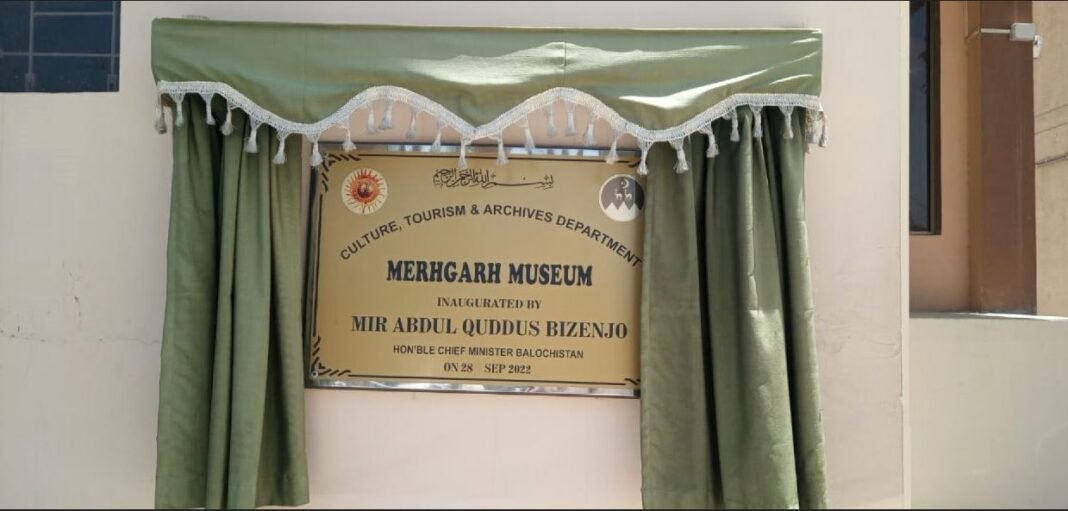
The provincial government spent years negotiating the return of Balochistan’s artifacts from Karachi, and in 2022 the new museum was ready. Balochistan Chief Minister Mir Abdul Qudoos Bizenjo inaugurated the Mehrgarh Museum on September 28, 2022, on Sariab Road in Quetta, announcing that artifacts recovered from Mehrgarh and other sites would be carefully shifted into the new building. In January 2024, US Ambassador Donald Blome and interim Chief Minister Ali Mardan Khan Domki launched the first-ever Ambassadors Fund for Cultural Preservation project in Balochistan, pledging $320,470 to preserve the Neolithic artifacts and upgrade the museum’s displays, working with the Balochistan Directorate of Archaeology and the Sindh Exploration and Adventure Society. The museum is now the living home of Balochistan’s deep past, and its galleries continue to grow as more artifacts return to Quetta.
Top Things to Do in Archaeological Museum of Balochistan, Quetta
Walk the Mehrgarh Galleries
The heart of the museum is its Mehrgarh collection, which covers the region’s pre and early history. The galleries trace the Neolithic story from simple farming villages to complex craft traditions, displaying artifacts excavated from the site’s six mounds. You will see the progression of pottery styles, from early handmade wares to the famous black-on-buff painted pottery, alongside stone tools that were used to grind grain and shape wood. Allow at least an hour here; the story builds layer by layer, and reading the labels turns the display cases into a narrative of human ingenuity.
Study the Terracotta Figurines
Among the most beloved objects from Mehrgarh are the small female figurines, dated as early as around 5500 BCE, which rank among the oldest sculpted human forms found in South Asia. These tiny figures, with their elaborate hairstyles and painted decoration, are among the most photographed objects in the museum. Look closely at the details: the jewelry, the posture, the care taken by artisans five thousand years before the Indus cities rose. They are a reminder that the Mehrgarh people had art, ritual, and a sense of beauty as well as survival skills.
Examine Seals, Beads, and Early Craftsmanship
Mehrgarh was a center of early craft. The museum displays seals, steatite beads, shell ornaments, and tools that show how the settlement’s artisans worked in stone, shell, and early metals. The bead-making tradition of the region was sophisticated, and some of the drilling techniques used on hard stone were remarkably advanced for the Neolithic. These cases appeal to anyone interested in how technology develops; you are looking at the ancestors of the Indus Valley’s famous craft traditions.
Learn the Story of the Museum’s Return
Ask the staff about the museum’s own history, because it is worth hearing. The displays include information about the old McMahon Museum of 1906, the 1935 earthquake that destroyed it, and the long campaign to bring Balochistan’s artifacts home from Karachi. The inauguration plaque unveiled by Chief Minister Bizenjo in September 2022 is itself part of the story. Understanding this background makes the artifacts feel even more precious: they are objects that nearly never came home.
Visit the Conservation and Research Corner
The US-backed AFCP project at the museum includes staff training and improved curation, and the institution is developing as a research hub as well as a display center. If you visit with a school group or as a researcher, the Directorate of Archaeology staff can often arrange a briefing on conservation work and ongoing projects. Students of history, archaeology, and anthropology will find this especially valuable; it is a working museum, not just a storehouse.
Famous Places In and Around Archaeological Museum of Balochistan, Quetta
- Hanna Lake: Quetta’s famous reservoir and picnic spot in the hills, a short drive from the city, popular for boating and trout.
- Hazarganji-Chiltan National Park: A protected area near Quetta famous for the rare Chiltan markhor and dramatic desert-mountain scenery.
- Geological Survey of Pakistan Museum: Also on Sariab Road, housing rocks, minerals, gemstones, and the famous Baluchitherium fossils.
- Liaquat Bazaar: Quetta’s main market for dry fruits, handicrafts, carpets, and local snacks.
- Quetta Fort (Miri): The historic fort of the city, reflecting Quetta’s long military and trading history.
- Bolan Pass: The historic mountain pass near Quetta, on the ancient trade route that passed by Mehrgarh itself.
How to Reach Archaeological Museum of Balochistan, Quetta
The museum is on Sariab Road, near the University of Balochistan in Quetta, and it is easy to reach from anywhere in the city by taxi, rickshaw, or ride-hailing service. From the city center it is a short drive, and drivers know Sariab Road well. If you are staying at a hotel like the Quetta Serena Hotel on Shahrah-e-Zarghun, the museum is only a few minutes away by car.
From Islamabad: The road distance from Islamabad to Quetta is about 890 kilometers, and the drive takes roughly 12 hours via the M-14 motorway and the N-50 through Dera Ismail Khan and Zhob. Most travelers prefer to fly: the aerial distance is around 690 kilometers and direct flights take about 1 hour and 20 minutes. Pakistan International Airlines and private carriers operate flights between Islamabad and Quetta International Airport, though schedules change with the season, so book early. There is also a rail link between Rawalpindi and Quetta, a long but scenic overnight journey.
From Lahore: Travelers from Lahore can fly to Quetta with a connection through Karachi or Islamabad, or take the longer road journey west. The road trip from Lahore to Quetta is well over 1,200 kilometers and takes the better part of a day and night, so most visitors break it or fly. Lahore-based travelers often combine the museum with a wider Balochistan tour.
From Karachi: Karachi is the closest major city to Quetta. The road distance is about 687 kilometers via the N-25 (RCD Highway) through the Bolan Pass, and the drive takes around 10 hours. Buses run daily between Karachi and Quetta, and Pakistan Railways operates a direct train that takes roughly 21 to 24 hours. The fastest option is flying: direct flights from Karachi to Quetta International Airport take about 1 hour and 20 minutes.
Nearest airport: Quetta International Airport is about 15 minutes from the city center, with direct flights from Karachi, Islamabad, and Lahore. Taxis and ride-hailing cars are available outside the terminal.
Road conditions by season: Quetta’s roads are generally in good condition year-round. In winter (December to February), the Bolan Pass route from Karachi can be affected by cold and occasional snow, so check conditions before a winter road trip. Summer driving is straightforward, though the heat on the plains between Karachi and Quetta is intense. Within Quetta, city roads are fine in all seasons.
Route Details
- From Quetta city center to the museum: Head southwest toward Sariab Road. The museum sits on Sariab Road near the University of Balochistan; the drive from central Quetta takes 15 to 20 minutes depending on traffic.
- From Quetta International Airport: Take the airport road into the city, then follow signs toward Sariab Road and the University of Balochistan. About 15 to 20 minutes by taxi.
- From Karachi by road: Take the N-25 (RCD Highway) northwest through Hub, Lasbela, and Khuzdar, then over the Bolan Pass to Quetta. Around 687 kilometers and roughly 10 hours of driving.
- From Islamabad by road: Take the M-14 toward Dera Ismail Khan, then the N-50 through Zhob to Quetta. Around 890 kilometers and roughly 12 hours of driving.
- By train: Pakistan Railways runs daily services to Quetta station from Karachi and from Rawalpindi. From Quetta station, take a taxi to Sariab Road.
Where to Stay in Archaeological Museum of Balochistan, Quetta
Quetta has a good range of hotels for a provincial capital, and staying in the city makes the museum an easy half-day trip. For the top end, the Quetta Serena Hotel on Shahrah-e-Zarghun is the city’s landmark luxury hotel, with full amenities including restaurants, a pool, and event halls; it sits very close to Sariab Road and the museum, making it the most convenient premium base for a cultural visit. Book in advance during winter, when Quetta’s snowfall season fills the best hotels.
Mid-range options cluster in the city center and along the main roads. Several well-regarded three-star hotels and guesthouses around Jinnah Road, Zarghun Road, and the cantonment area offer comfortable rooms with heating (essential in winter), hot water, and in-house restaurants. These are practical choices for families and tour groups, and most can arrange taxis for sightseeing. Prices are moderate compared to Karachi or Islamabad.
Budget travelers will find economy hotels and guesthouses in the older parts of the city and near the railway station. Standards are basic but serviceable; check that the room has heating in winter, since Quetta nights drop below freezing. For researchers and students visiting the museum on academic trips, the University of Balochistan area has simple guesthouses. Wherever you stay, confirm your booking by phone, and ask the hotel about the current security situation and any travel advisories for the city, since conditions can change.
Where to Eat: Local Foods of Archaeological Museum of Balochistan, Quetta
Quetta is one of Pakistan’s great food cities, and a museum visit pairs perfectly with its famous cuisine. The signature dish is sajji: a whole lamb or chicken roasted slowly over coals, seasoned simply with salt, and served with naan. It originated in Balochistan and the best versions are found in Quetta’s specialist restaurants. Another must-try is kaak, the hard, round Balochi bread baked in a clay oven, often eaten with rosh (a light mutton broth) or dum pukht, the slow-steamed meat dish of the region. In winter, landi (dried, salted meat) appears on traditional menus.
Quetta’s food streets and bazaars are centered on areas like Prince Road and the streets around Liaquat Bazaar, where you will find barbecue shops, chai khanas, and bakeries. The city’s doodh pati (milky tea) is famous across Pakistan, and the bakeries sell excellent sheermal and kulcha. Quetta is also Pakistan’s dry fruit capital: the bazaars overflow with almonds, pistachios, walnuts, and dried apricots from the orchards of the surrounding valleys, sold at prices far lower than in Karachi or Lahore.
A meal at a mid-range restaurant in Quetta is budget-friendly, with generous barbecue platters and family-sized dishes. Street food is even cheaper. Near the museum on Sariab Road there are local dhabas and tea shops, but for the full experience, head into the city center in the evening. Vegetarian travelers should note that Balochi cuisine is meat-heavy, though dal, sabzi, and fresh naan are widely available. Drink bottled water, and in winter, warm up with a glass of hot doodh pati from a roadside chai khana.
Weather in Archaeological Museum of Balochistan, Quetta
Quetta has a semi-arid, high-altitude climate with sharp seasonal contrasts. Summers are hot and dry, with daytime highs reaching 30 to 35 degrees Celsius in June and July, while winters are cold, with January days around 9 degrees and nights near freezing, plus occasional snowfall. The museum itself is indoors, so it can be visited in any season, but the overall travel experience is most pleasant in spring and autumn. October, November, and April are widely considered the best months to visit Quetta: the skies are clear, the air is crisp, and daytime temperatures sit in the comfortable teens and twenties.
| Season | Temperature Range | Conditions |
|---|---|---|
| Winter (Dec-Feb) | 0°C to 12°C | Cold days, freezing nights, occasional snow; Quetta’s famous snowfall season; roads can be icy |
| Spring (Mar-May) | 7°C to 30°C | Mild and pleasant; March can be rainy; orchards bloom; one of the best times to visit |
| Summer (Jun-Aug) | 17°C to 35°C | Hot and very dry; intense midday sun; indoor sightseeing like the museum is ideal |
| Autumn (Sep-Nov) | 6°C to 30°C | Clear skies, cool evenings, harvest season for dry fruits; the other best time to visit |
Language and Culture of Archaeological Museum of Balochistan, Quetta
Quetta is a multilingual city where Pashto, Balochi, Brahui, and Urdu are all spoken, reflecting its position at the meeting point of several cultures. Pashto is the most widely heard language in the bazaars, Balochi and Brahui are the languages of much of the province’s heritage, and Urdu works everywhere as the common language of communication. English is understood in hotels, the museum, and among educated professionals. Learning a few polite phrases in Urdu will smooth every interaction.
The culture of the region blends Baloch, Pashtun, and Hazara traditions. Hospitality is taken seriously: guests are honored, tea is offered freely, and refusing it too quickly can seem rude. The dress code is conservative; both men and women should dress modestly, and women will feel more comfortable in a headscarf and loose clothing, especially in the bazaars and around religious sites. Friday is the weekly holiday, and many shops close for part of the day for prayers.
Inside the museum, behave as you would in any museum: speak quietly, do not touch the artifacts or display glass, and ask before taking photographs, since flash photography is usually prohibited around ancient materials. Guides and staff are proud of the collection and happy to answer questions; engaging with them enriches the visit. When visiting the surrounding city, respect local customs around photography, especially of people, and note that Quetta has a significant Hazara community with its own distinct culture and neighborhoods.
Shopping in Archaeological Museum of Balochistan, Quetta
Quetta’s bazaars are among the best shopping grounds in Pakistan for certain goods. Liaquat Bazaar and the surrounding markets are famous for dry fruits: almonds, pistachios, pine nuts, walnuts, and dried apricots, all sold in bulk at wholesale-ish prices. This is the single best souvenir buy in the city; a bag of Quetta almonds is a gift every Pakistani appreciates. The same bazaars sell Balochi embroidery, mirror-work textiles, woolen shawls, and traditional caps.
For carpets and rugs, Quetta’s dealers offer Balochi and Afghan-style weaves at competitive prices, though buying a carpet requires knowledge and careful bargaining. The city’s shops also carry gemstones and onyx products, since Balochistan is rich in minerals; small onyx vases and ashtrays make good gifts. There are modern shopping areas in the city center with clothing and electronics, but Quetta is not a mall city; the bazaar experience is the point.
Bargaining is expected in the bazaars, so start well below the asking price and negotiate with a smile. Check dry fruit quality before buying in bulk, and buy from established shops rather than street vendors for larger purchases. There is no verified large shopping mall near the museum; plan your serious shopping for the city-center bazaars after your museum visit.
Travel Tips for Archaeological Museum of Balochistan, Quetta
Packing Essentials
Pack for Quetta’s climate rather than the museum: in winter, bring a heavy jacket, warm layers, gloves, and a cap, since the city gets genuinely cold; in summer, bring sun protection, a hat, and light layers for the big day-night temperature swing. For the museum itself, carry a small notebook if you like recording what you learn, and a camera (ask about photo policies on arrival). Comfortable walking shoes help for combining the museum with Sariab Road’s other attractions.
Safety Tips
Quetta’s security situation has varied over the years, so check current travel advisories before your trip and ask your hotel about any areas to avoid. Stick to main roads, travel in daylight, and keep valuables out of sight in the bazaars. Inside the museum the environment is calm and controlled. Foreign visitors should carry their passport and any required travel permissions, and it is wise to register your travel plans with your hotel. Daytime sightseeing in the main tourist areas, including the museum, Hanna Lake, and the central bazaars, is the standard pattern for visitors.
Money & Connectivity
ATMs are widely available in Quetta’s city center and near major hotels, but carry enough cash for bazaar shopping and small restaurants, where cards may not be accepted. Mobile networks work well in Quetta, with 4G coverage from all major operators, so connectivity is not an issue the way it is in the northern mountains. Hotels offer Wi-Fi, and ride-hailing apps operate in the city, making it easy to get to Sariab Road and back.
Best Time to Visit Archaeological Museum of Balochistan, Quetta
Spring (March to May): Mild and Blooming
Spring is one of the best times to visit Quetta and its museum. Temperatures are mild, the surrounding orchards are in bloom, and the city feels fresh after winter. March can bring some rain, but April and May are delightful. This is an excellent season for combining the museum with outdoor sights like Hanna Lake and Hazarganji-Chiltan National Park.
Autumn (September to November): Clear and Comfortable
Autumn rivals spring as the best season. October and November bring clear blue skies, crisp air, and comfortable daytime temperatures, and the dry fruit harvest fills the bazaars with fresh stock. Sightseeing is pleasant, photography is at its best, and the museum’s indoor galleries are a perfect midday stop.
Summer (June to August): Hot but Manageable
Summer in Quetta is hot and dry, with highs in the mid-30s, but the low humidity makes it more bearable than the Punjab or Sindh. The museum is air-conditioned and indoors, making it an ideal summer activity. Plan outdoor sightseeing for early morning or late afternoon.
Winter (December to February): Snow and Chill
Winter brings Quetta’s famous cold, with freezing nights and occasional snowfall that turns the city into a winter postcard. The museum remains open and is a warm, quiet refuge on cold days. Pack heavy winter clothing and check road conditions if you are driving in from Karachi via the Bolan Pass.
Final Thoughts
The Archaeological Museum of Balochistan is more than a building full of old objects; it is the reclaimed memory of a province. After nearly ninety years without a proper museum, Quetta finally has a modern home for the artifacts of Mehrgarh and the other ancient sites of Balochistan, and the pride of the staff shows in every gallery. For history lovers, the museum is the single most important stop in Quetta; for everyone else, it is a fascinating, easy half-day that puts the rest of the city’s sights into a much deeper context.
Plan your visit as part of a wider Quetta itinerary: the museum in the morning, the Geological Survey museum on the same road, the bazaars in the afternoon, and a sajji dinner to finish the day. Come in spring or autumn for the best weather, carry cash for the bazaars, and give yourself time to read the labels and talk to the guides. Nine thousand years of history is waiting on Sariab Road, and it is well worth the trip.
FAQs
Where is the Archaeological Museum of Balochistan located?
The museum, also known as the Mehrgarh Museum, is on Sariab Road near the University of Balochistan in Quetta, Balochistan, Pakistan.
What is the best time to visit the museum?
The museum is indoors and can be visited year-round, but the best time to travel to Quetta is October, November, and April, when the weather is clear and comfortable.
How do I reach the museum from Karachi?
Fly from Karachi to Quetta International Airport (about 1 hour 20 minutes), drive the 687-kilometer N-25 highway (about 10 hours), or take the direct train (about 21 to 24 hours). From the city center, the museum is a short taxi ride to Sariab Road.
Is the museum safe to visit?
The museum itself is a secure, controlled environment. Check current travel advisories for Quetta before your trip, stick to main tourist areas in daylight, and ask your hotel about local conditions.
Is the museum suitable for families and children?
Yes. The museum is educational, indoors, and easy to walk through, making it ideal for families and school groups. Children enjoy the figurines, beads, and pottery, and guides can tailor explanations for young visitors.
Where can I stay near the museum?
Quetta has hotels for all budgets. The Quetta Serena Hotel on Shahrah-e-Zarghun is the premium option and very close to Sariab Road; mid-range hotels cluster in the city center, and budget guesthouses are available near the railway station and university area.
What food should I try in Quetta?
Try sajji (slow-roasted lamb or chicken), kaak (Balochi bread), rosh, and dum pukht, plus doodh pati tea and the city’s famous dry fruits from Liaquat Bazaar.
What is Mehrgarh and why is it important?
Mehrgarh is a Neolithic site on the Kacchi Plain of Balochistan, occupied from about 7000 to 2000 BCE and discovered in 1974. It holds the earliest known evidence in South Asia of farming, herding, and metallurgy, and is considered a direct forerunner of the Indus Valley Civilization.