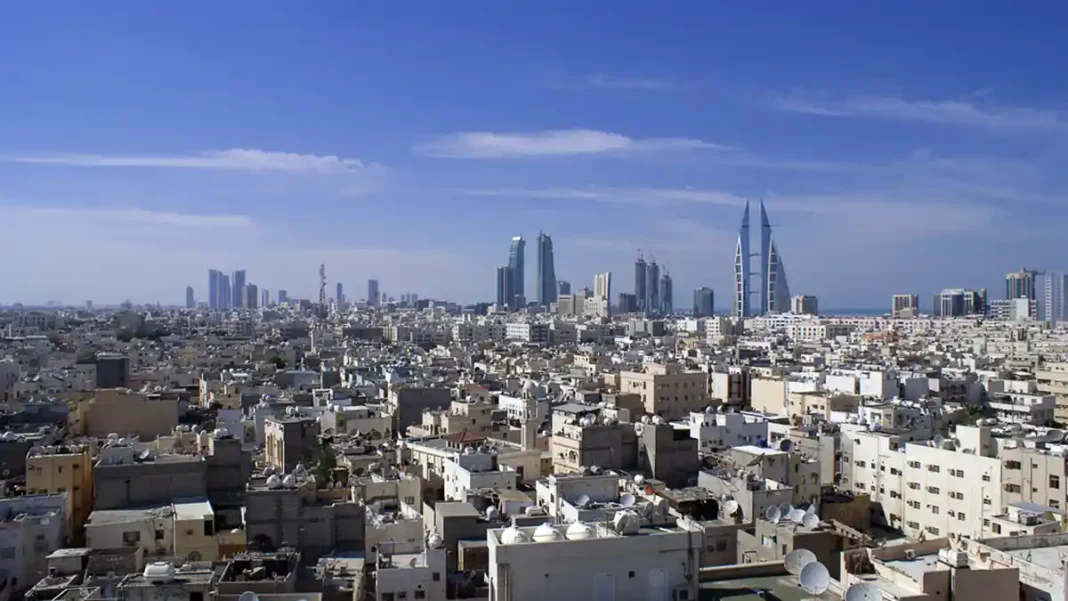
Bahrain and Kuwait Air Defences Intercept Attacks
Bahrain and Kuwait air defences intercepted aerial attacks early on Wednesday, the two Gulf states said, as tensions across the region rose and the United States said there was no imminent threat to its homeland.
Bahrain and Kuwait air defences in action
Bahrain’s defence force said its systems stopped Iranian aerial attacks. It accused Tehran of a “systematic hostile approach” against the kingdom, which hosts the headquarters of the US Navy’s Fifth Fleet. The interior ministry issued two threat alerts, telling residents to move to the nearest safe place, and then gave the all-clear after each warning.
Kuwait’s army said its air defences were countering hostile drone attacks early on Wednesday. It gave no further details about the number of drones or any damage.
Washington plays down threat to US soil
US Secretary of State Marco Rubio said there was no “imminent threat” to the US homeland from Iran. He spoke to reporters in Manila while travelling in Asia with President Donald Trump.
Trump had warned on Tuesday that if there was an imminent threat, Iran would “pay a price the likes of which no other country has ever paid before”. He added: “We take it very seriously because they happen to be crazy.”
US Central Command rejected a claim by Iran’s Revolutionary Guard Corps that its drones had hit an American radar system at a base in Bahrain. “Multiple Iranian one-way attack drones launched by the IRGC today towards Bahrain were intercepted without any damage to US equipment or injury to American personnel,” it said.
Qatar urges restraint as oil prices ease
Qatar called for restraint after an Iranian attack targeted a US base in Bahrain. Foreign ministry spokesman Majed Al Ansari warned that further escalation posed an “extremely serious” threat to the chances of reaching an agreement to end the war in the Middle East.
Oil prices eased on Wednesday. Brent crude fell 16 cents to $92.98 a barrel, while US West Texas Intermediate dropped 56 cents to $85.45. Traders pointed to a rise in US crude stocks, although disruption to shipping through the Strait of Hormuz limited the fall.
Pakistan keeps pushing for talks
The attacks came as Pakistan continued to press for a negotiated settlement. Foreign Minister Ishaq Dar told a meeting of the Economic Cooperation Organization on Monday that Pakistan had “not given up hope” for peace. Iran’s foreign minister was in Islamabad for the event and praised Pakistan’s efforts to broker peace. Pakistan has backed a peace push at the ECO summit.
Days earlier, Iran’s Foreign Minister Abbas Araghchi met Pakistan’s Chief of Defence Forces, Field Marshal Asim Munir, in Islamabad. Both sides stressed sustained engagement and mutual trust. Araghchi and Munir discussed regional security in Islamabad.
The United States has built up a large naval presence in the region in recent weeks. The US naval build-up has raised fears of a wider war. Oil markets have stayed nervous, with prices swinging on each new report from the Gulf. Oil prices fell as Middle East exports recovered.
What happens next
The European Union Aviation Safety Agency has extended its warnings for airlines across most of the Middle East until January 31, 2027. It kept its advice against flying in Iranian, Iraqi and most Lebanese airspace, and over much of the Gulf.
For now, the pattern is clear. Each side is testing the other’s defences while diplomats search for a way back to talks. Pakistan’s message has stayed the same: the region needs a settlement, not another round of strikes.
Frequently asked questions
What did Bahrain say?
Its defence force said its air defences intercepted Iranian aerial attacks and accused Tehran of a systematic hostile approach. The interior ministry issued two threat alerts and then gave the all-clear after each one.
What happened in Kuwait?
Its army said air defences were countering hostile drone attacks early on Wednesday, without giving further details.
Is there a threat to the US homeland?
Secretary of State Marco Rubio said there was no imminent threat to the US homeland from Iran.
What did Qatar say?
It called for restraint and warned that escalation threatened the chances of an agreement to end the war in the Middle East.
What is Pakistan’s role?
Pakistan has been pressing for a negotiated settlement, and its foreign minister said this week that it had not given up hope for peace.