Every traveler heading up the Swat Valley toward Kalam passes through Bahrain — and most of them wish they had stopped longer. Set about 60 km north of Mingora at an altitude of 4,700 feet, this riverside town sits exactly where the turquoise Daral River crashes into the grey-green Swat River. Its very name means “two rivers.” With rows of hotels built right over the water, a bazaar famous for Swati handicrafts, and trails to alpine lakes starting at its doorstep, Bahrain is the most rewarding overnight stop in upper Swat. This Bahrain Swat travel guide covers the town’s Torwali heritage, the best things to do, how to reach Bahrain from Islamabad, Lahore, and Karachi, where to stay and eat, the weather, and when to plan your trip in 2026.
Quick Facts
- Location: Right bank of the Swat River, Swat District, Khyber Pakhtunkhwa, Pakistan — 60 km north of Mingora, on the road to Kalam
- Altitude: Around 1,430 metres (4,700 feet) above sea level
- Famous For: The confluence of the Daral and Swat rivers; riverside hotels; Swati handicrafts; trailhead for Daral and Saidgai lakes
- Nearest City: Mingora (about 60 km / 1.5–2 hours); Kalam is about 36 km further north
- Accessibility: Paved N-95 valley road all the way; easy by car, van, or public transport from Mingora
- Known Landmarks: The river confluence viewpoint; the old bridges across the Swat River; the main handicraft bazaar
- Best For: Families, couples, nature lovers, trekkers, and shoppers of local crafts
Why Visit Bahrain, Swat
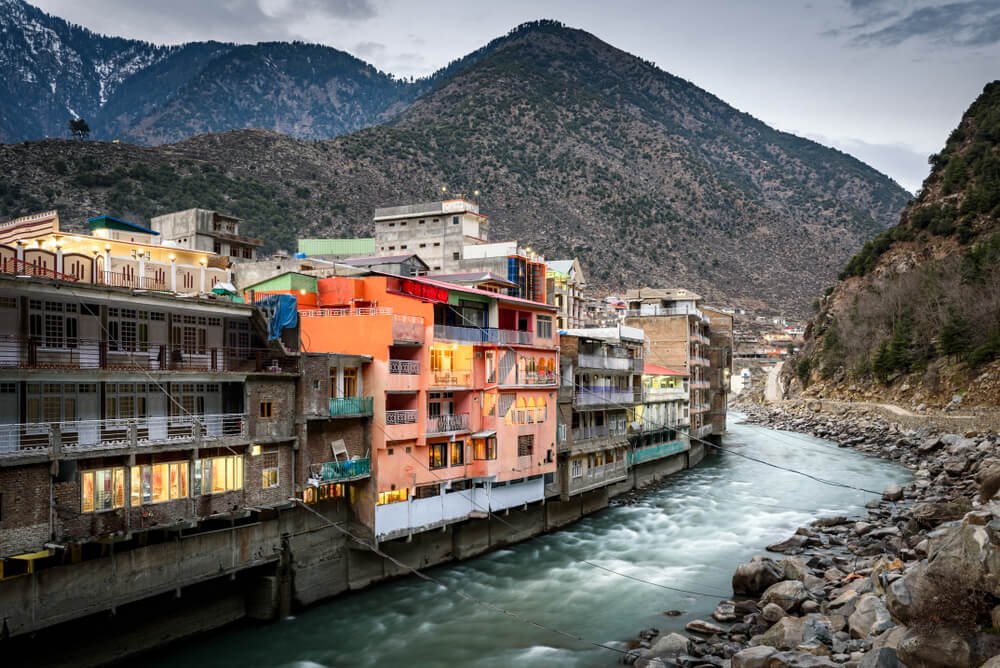
Bahrain has something that the bigger destinations of Swat do not: it is beautiful without trying to impress you. Mingora is a busy city, Kalam is a bustling resort town packed with jeeps and day-trippers, but Bahrain is a place where you can sit on a hotel balcony with your feet practically over the river, listen to the water, and watch the light change on the mountains. The town’s signature sight — the point where the Daral River’s bright water meets the Swat River — costs nothing to see and never gets old. Early in the morning, before the bazaar wakes up, you can watch the two colours of water push against each other and merge, with mist rising off the current.
Then there is the practical case. Bahrain sits almost exactly halfway between Mingora and Kalam, making it the natural overnight stop on any upper Swat itinerary. The town’s hotels are famous for being right on the river — many rooms have balconies over the water — and the bazaar is the best place in the valley to buy genuine Swati handicrafts: woolen shawls, wood carvings, and tribal-style jewelry. You can arrive from Islamabad by lunchtime, spend the afternoon exploring the confluence and the market, eat fresh trout by the river at night, and head up to Kalam or out on the Daral Lake trail the next morning.
For trekkers, Bahrain is a genuine base camp. The trails to Daral Lake and Saidgai Lake — two of the most beautiful alpine lakes in Swat — begin here, climbing from the valley floor into high meadows and glacier country. Even if you are not a trekker, the town’s position in the Swat Kohistan, the mountainous upper part of the valley, means the scenery is wilder and the air cooler than anywhere south of it. Add the warmth of the Torwali people, the town’s original inhabitants, and you have a destination that rewards a slow pace.
History of Bahrain, Swat
The history of Bahrain is the history of the upper Swat Valley itself — a story that runs from Alexander the Great to the mountain kings of the 20th century.
Swat was part of the ancient region of Gandhara, and the upper valley around Bahrain lay within the Buddhist civilisation that flourished here from the 3rd century BCE. When Alexander the Great’s army reached Swat in 326 BCE, his forces fought their way through these same mountains. Later, under the Kushan emperor Kanishka, the valley became a centre of Buddhist learning, and the ruins of stupas and monasteries scattered around the region — at Butkara, Udegram, and Shingardar near Mingora — are the surviving evidence. The upper valley that Bahrain anchors was the remote, forested backcountry of that world: the Swat Kohistan, home to Dardic-speaking mountain peoples.
The people who have lived around Bahrain the longest are the Torwali, a Dardic ethnic group whose language, Torwali, belongs to the Dardic branch of the Indo-Aryan family. Their old name for the town was Bhaunal. The name “Bahrain” — Arabic for “two rivers” — was given in the 1920s by the rulers of the Yousafzai State of Swat, the princely state founded in 1915 under Miangul Abdul Wadud (Bacha Sahib) and later ruled by his son, the Wali of Swat, Miangul Abdul Haq Jehanzeb. During the Wali’s reign, many native place-names in upper Swat were replaced with Arabic or Persian ones, and Bhaunal became Bahrain for its position at the meeting of the Daral and Swat rivers. The state, known for its remarkable administration, schools, and roads, acceded to Pakistan in 1969.
Modern Bahrain grew up with tourism. As the road up the valley improved through the late 20th century, the town’s riverside location made it the natural hotel stop between Mingora and Kalam, and generations of Pakistani families have memories of summer evenings on its bridges. The devastating floods of 2010 damaged much of the town’s riverside infrastructure, and the valley’s tourism suffered badly during the militancy of 2007–2009 — but the military operation of 2009 restored security, and Swat’s tourism revival over the last decade has brought Bahrain roaring back. Today the town is busier, better built, and better connected than at any point in its history — and the confluence of the two rivers still does what it has always done.
Top Things to Do in Bahrain, Swat
Watch the Two Rivers Meet
This is Bahrain’s signature experience and it is free. Walk to the confluence point below the town where the bright, fast Daral River joins the broader Swat River. The contrast in the water colours — turquoise against grey-green — is visible for a surprising distance downstream. Go early in the morning for the best light and the least noise, when the bazaar is still quiet and the mist hangs over the water. It is one of the most photographed river scenes in Pakistan, and it earns every frame.
Walk the Old Bridges
Bahrain’s most iconic man-made sight is its bridges across the roaring Swat River — including old suspension bridges that sway gently as you cross, adding a small thrill to an evening stroll. Standing mid-bridge with white water crashing below is a rite of passage for Swat visitors. The bridges are also the best photography spots in town, framing the riverside hotels against the forested mountains behind.
Shop the Main Bazaar for Handicrafts
Bahrain’s bazaar is one of the best craft markets in northern Pakistan. The town is famous for Swati woolen shawls — warm, beautifully embroidered, and genuinely local — as well as intricate wood carvings (decorative pieces, lamps, and furniture made by local artisans) and tribal-style jewelry. Bargaining is expected and part of the fun. Unlike the generic souvenir shops of bigger resort towns, many Bahrain shops sell work made in the surrounding valleys.
Trek to Daral and Saidgai Lakes
Bahrain is the base camp for the trails to Daral Lake and Saidgai Lake, two high alpine lakes above the Daral valley. These are serious multi-day treks through pine forest and high meadows, best done in summer (June to September) with a local guide. Even the first day’s walk up the Daral valley is spectacular. Arrange guides and porters in town — the tourist information available at hotels can connect you with reliable locals.
Try the Cable Car / Chairlift Views
A cable car ride in Bahrain gives you a bird’s-eye view of the town, the river confluence, and the surrounding peaks. It is a short, family-friendly outing and a good way to get your bearings on the valley’s geography before heading further north.
Fish for Trout and Eat by the River
The Swat River’s cold water is famous for trout, and Bahrain’s riverside restaurants will grill your catch (or one from their tanks) with local spices. Eating hot, fresh trout to the sound of the river is the quintessential Bahrain evening. Fishing in the river is possible with local guidance — ask at your hotel.
Famous Places In and Around Bahrain, Swat
- Daral Lake — a stunning alpine lake above the Daral valley, reached by a multi-day trek from Bahrain.
- Saidgai Lake — another high lake on the trekking circuit above Bahrain, ringed by peaks.
- Madyan — the charming town about halfway between Mingora and Bahrain, worth a stop for its own riverside scenery.
- Kalam — the famous resort valley 36 km north, gateway to Mahodand Lake and Ushu Forest.
- Mankyal Valley and Taip Banda — a side valley east of Bahrain with forested trails and high meadows.
- Kedam Village — a traditional village near Bahrain offering a glimpse of Torwali rural life.
How to Reach Bahrain, Swat
Bahrain lies on the N-95 valley road, 60 km north of Mingora and 36 km south of Kalam. The road is paved and scenic all the way from Mingora, running alongside the Swat River.
Route Details
From Islamabad (about 260–310 km, roughly 5.5 to 6.5 hours): Take the M-1 motorway to Nowshera, then the Swat Expressway to Chakdara, and continue on the valley road through Mingora, Manglor, Khwazakhela, and Madyan to Bahrain. Leave by 6:30 AM to arrive for lunch. This is the standard route used by virtually all Swat tour packages.
From Lahore (about 490–500 km, roughly 8.5 to 9.5 hours): M-2 to Islamabad, then the Islamabad route above. Most Lahore travelers break the journey with an overnight in Islamabad or drive straight through with an early 4:30 AM departure.
From Karachi: There are no direct practical road routes — fly to Islamabad (about 2 hours) and follow the Islamabad route, or fly to Peshawar (the closest major airport to Swat, about 155 km from Mingora) and drive up via the Swat Expressway.
Nearest airport: Peshawar’s Bacha Khan International Airport is the closest major airport (Mingora’s Saidu Sharif airport has very limited or no scheduled commercial service). Islamabad International is the most convenient for connections.
Road conditions and transport: The Swat Expressway and the valley road to Bahrain are paved and in generally good condition; the drive from Mingora takes 1.5 to 2 hours. Beyond Bahrain toward Kalam the road narrows but has been much improved in recent years. Options include your own car, hired cars and tour vans from Islamabad or Mingora, and public coasters/vans from Mingora’s bus stands. In winter, check road conditions before traveling, as snow can affect the upper valley.
Where to Stay in Bahrain, Swat
Bahrain’s accommodation is one of its biggest selling points: a dense cluster of riverside hotels, many built right over the water, plus guesthouses and campsites up and down the valley road. Here is what to expect by tier.
Budget tier: Simple guesthouses and small hotels line the main bazaar road, a few minutes’ walk from the river. Clean rooms with attached bathrooms and hot water (usually via electric geysers) are the norm. These are excellent value for backpackers and large family groups.
Mid-range tier: This is Bahrain’s sweet spot. Mid-range riverside hotels offer river-view rooms where the Swat River is visible — or at least audible — from your window, in-house restaurants serving trout and BBQ, and help arranging treks and transport. Always ask for a river-facing room; the difference in experience is enormous and the difference in price is often zero.
Luxury tier: Bahrain is not a luxury-resort town — for true high-end stays, look to Kalam or Malam Jabba. But the best riverside properties in Bahrain are comfortable, scenic, and far cheaper than equivalent rooms in the bigger resorts.
Camping: The valley around Bahrain has campsites where you can sleep under the stars, and the Daral and Saidgai lake treks are camping expeditions by nature. Bring proper gear — nights are cold even in summer.
No specific hotel is named here because none could be individually verified — but the riverside mid-range tier described above is exactly what Bahrain is known for, and you will be spoiled for choice on arrival.
Where to Eat: Local Foods of Bahrain, Swat
Swat’s food is one of the underrated pleasures of the valley, and Bahrain’s riverside restaurants are among the best places to taste it. The undisputed king is trout — rainbow and brown trout from the cold Swat River, fried crisp or cooked in a karahi with tomatoes and local spices. Many restaurants let you pick your fish from a tank; eating it hot on a riverside terrace, with the river roaring a few metres away, is the definitive Bahrain meal.
The other pillar is chapli kebab, the spiced flat kebab of the Pashtun belt, eaten with naan — demand for it surges in the colder months, and Swat’s bazaars are famous for it. Mutton karahi (often called butt karahi in the upper valley), kabuli pulao, and riverside BBQ platters round out the evening menus. For breakfast, do as the valley does: fresh parathas, fried eggs, and doodh patti chai. Qehwa (green tea), served after meals, is the traditional Swati digestive.
Snacks and provisions come from the bazaar: dry fruits (walnuts, almonds, apricots), local honey, and fresh fruit in season. A full riverside dinner is moderately priced by Pakistani tourist standards — trout dishes cost more than standard desi food, but a family can eat very well without breaking the budget. Prices are general here because they shift with the season; summer peak season is the most expensive.
Weather in Bahrain, Swat
At 1,430 metres, Bahrain enjoys a mountain climate that is dramatically more pleasant than the plains below. Summers are warm but rarely oppressive, winters are cold with regular snowfall, and the shoulder seasons are glorious. The town is reachable most of the year, but the high lake treks above it open only in summer.
| Season | Temperature Range | Conditions |
|---|---|---|
| Winter (Dec–Feb) | 0–10°C (days), below freezing at night | Cold with regular snowfall; the town turns into a quiet winter landscape. Some hotels close. |
| Spring (Mar–May) | 10–22°C | Mild and fresh; fruit trees blossom, rivers run high with snowmelt. Lovely and uncrowded. |
| Summer (Jun–Sep) | 20–30°C (July averages around 27°C) | Pleasantly warm days, cool nights. Peak tourist season; all treks and roads open. |
| Autumn (Oct–Nov) | 8–18°C | Crisp air, golden foliage, thinning crowds. Beautiful, but nights turn cold fast. |
Language and Culture of Bahrain, Swat
Bahrain is the main town of the Torwali people, and their language, Torwali — a Dardic language — is still spoken in the town and surrounding villages, alongside Pashto, which dominates the lower valley, and Urdu, which every hotel and shopkeeper speaks. You will also hear Shina and Gujari in the upper valleys. English is understood in most hotels.
The culture is mountain hospitality at its finest. The Torwali and the Pashtuns of Swat are famous for their warmth toward guests, and the valley has a long, proud tradition of welcoming travelers — a tradition that survived the difficult years and is now the backbone of the local economy. Dress modestly (covered shoulders and knees; women should carry a scarf for religious sites), greet shopkeepers with a smile and an assalam-o-alaikum, and bargain in the bazaar with good humour rather than aggression.
A note on the river: the Swat River is powerful and deceptively dangerous. Every year, visitors underestimate it. Do not swim in the main current, keep children well back from unfenced banks, and take local advice seriously when crossing bridges or walking riverside paths during high water.
Shopping in Bahrain, Swat
Bahrain’s main bazaar is a genuine craft market, not a tourist trap — and it is the best place in Swat to shop. The specialties: Swati woolen shawls with traditional embroidery, warm and beautifully made; wood carvings — decorative panels, lamps, and furniture from local workshops; tribal-style jewelry in silver and stone; and hand-woven caps. Dry fruits (walnuts, almonds, dried apricots) and local honey are excellent edible souvenirs.
Prices are fair and bargaining is normal — start at roughly two-thirds of the asking price and meet in the middle with a smile. Buy shawls and carvings here rather than in Kalam or Mingora; the selection is better and the prices are lower at the source. There are no shopping malls in Bahrain — the bazaar is the mall, and it is better.
Travel Tips for Bahrain, Swat
Packing Essentials
Layers are everything: even in July, evenings by the river are cool, and winter demands proper cold-weather gear. Bring a warm jacket year-round, sturdy walking shoes for the bazaar and bridges, sunscreen (mountain sun is strong), and a power bank — load-shedding happens. If you plan the Daral or Saidgai treks, bring broken-in hiking boots, a warm sleeping bag, and rain gear.
Safety Tips
Swat is considered one of the safest tourist regions in Pakistan, with a visible police and tourism-police presence. The real risks are natural: the river’s current, slippery rocks, and mountain driving. Hire local drivers for the upper valley roads if you are not confident on narrow mountain roads, and never attempt the lake treks without a guide.
Money & Connectivity
Bring cash — ATMs exist in Mingora but are unreliable in Bahrain itself, and most hotels and shops are cash-only. Mobile signals (Jazz, Telenor, Zong) work in the town, though data can be slow at peak times; expect weak or no coverage on the high treks. Download offline maps before leaving Mingora.
Best Time to Visit Bahrain, Swat
Summer (May to September) — Peak Season
The classic window. Warm days (20–30°C), cool nights, all roads and treks open, the bazaar at its liveliest, and the rivers at their most dramatic. June to August is the busiest — book hotels ahead, especially on weekends and Eid holidays.
Spring (March to April) — Quiet and Green
Mild weather, blossoming orchards, and far fewer tourists. The high treks are still snowbound, but for a relaxed riverside stay, spring is lovely.
Autumn (October to November) — Golden and Calm
The valley turns gold, the crowds vanish, and hotel prices drop. Nights are cold, but the days are crisp and clear — a photographer’s season.
Winter (December to February) — For Snow Lovers
Bahrain gets proper snow, and the town is hauntingly beautiful in winter. But many hotels close, the lake treks are impossible, and you should check road conditions before traveling. Come prepared, not casually.
Final Thoughts
Bahrain is the Swat Valley’s best-kept open secret — hiding in plain sight on the road everyone drives. Travelers rush through it on their way to Kalam’s famous lakes, and in doing so they miss the town where the valley is at its most itself: two rivers becoming one, wooden balconies over white water, the smell of grilling trout drifting through the bazaar at dusk.
Give Bahrain at least one night — two if you can. Walk the bridges at sunset, watch the confluence at dawn, buy a shawl you will actually wear, and let the river do the talking. However far north you go in Swat, this is the town you will remember.
FAQs
Where is Bahrain in Swat located?
Bahrain is a town on the right bank of the Swat River in upper Swat, Khyber Pakhtunkhwa — about 60 km north of Mingora and 36 km south of Kalam, at 4,700 feet above sea level.
Why is it called Bahrain?
Bahrain means “two rivers” in Arabic. The name was given in the 1920s by the rulers of the Swat state for the town’s position at the confluence of the Daral and Swat rivers. Its older Torwali name was Bhaunal.
What is the best time to visit Bahrain, Swat?
May to September is the best overall window — warm days, open treks, and the liveliest bazaar. March–April and October–November are quieter and beautiful; winter is for snow lovers only.
How do I reach Bahrain from Islamabad?
Drive the M-1 to Nowshera, the Swat Expressway to Chakdara, then the valley road through Mingora and Madyan — about 260–310 km, roughly 5.5 to 6.5 hours.
Is Bahrain Swat safe for tourists?
Yes. Swat is considered one of Pakistan’s safest tourist regions, with tourism police and a strong local hospitality culture. Take normal mountain precautions around the river and roads.
Is Bahrain suitable for families?
Absolutely — it is one of the most family-friendly stops in Swat, with riverside hotels, easy walks, the bazaar, and gentle sightseeing. The lake treks, however, are for fit, prepared hikers only.
Where should I stay in Bahrain?
Choose a mid-range riverside hotel and ask for a river-facing room — the sound of the Swat River outside your window is the valley’s signature experience. Book ahead in summer.
What food is Bahrain famous for?
Fresh river trout (fried or karahi-style), chapli kebabs, mutton karahi, kabuli pulao, and qehwa — best eaten at the riverside restaurants along the Swat River.
What can I buy in Bahrain’s bazaar?
Swati woolen shawls, wood carvings, tribal-style jewelry, hand-woven caps, dry fruits, and local honey — the best craft shopping in the Swat Valley.
Can I trek to Daral Lake from Bahrain?
Yes — Bahrain is the base camp for the Daral and Saidgai lake treks. They are multi-day, summer-only treks requiring a local guide; arrange one through your hotel.
Exploring more of the north? Browse our Explore Pakistan guides, read our Malam Jabba travel guide, or plan the Hunza Valley next.