Beneath the bustling bazaars of modern Barikot, on the banks of the Swat River, lies one of the most remarkable archaeological sites in South Asia. This is Bazira, the walled city that Alexander the Great’s army besieged in 327 BCE, and beneath it the layered remains of a settlement occupied since around 1700 BCE. Excavated by the Italian Archaeological Mission since 1984, Barikot has yielded everything from Chalcolithic villages to Indo-Greek streets, Mauryan coins, and Pakistan’s earliest known apsidal Buddhist temple. If you love places where history is still being dug out of the ground, this bazira barikot swat travel guide is for you.
Quick Facts
- Location: Barikot town, middle course of the Swat River, Swat District, Khyber Pakhtunkhwa
- Altitude: Around 808 metres above sea level
- Famous For: The ancient walled city of Bazira, besieged by Alexander the Great in 327 BCE, and 3,700 years of continuous settlement
- Nearest City: Mingora, about 20 kilometres away
- Accessibility: Easy day trip by road from Mingora or Saidu Sharif; the site sits within the town itself
- Known Landmarks: The Barikot acropolis, Indo-Greek city walls, the apsidal Buddhist temple, the Swat River
- Best For: History lovers, archaeology enthusiasts, photographers, and families combining heritage with a Swat Valley trip
Why Visit Bazira (Barikot), Swat
Few places on Earth let you stand on a single spot and look across nearly four thousand years of human history. Barikot is one of them. The excavated acropolis rises above the modern town, and from its top you can see the Swat River curling below, the green valley spreading toward Mingora, and the very ground where one of antiquity’s most famous sieges took place. It is history you can walk through, not just read about.
The Alexander connection is what first draws most visitors. In the autumn of 327 BCE, during his campaign through what the Greeks called the land of the Assakenoi, Alexander’s army besieged and captured the fortified city the classical writers called Bazira (or Beira). Arrian’s Anabasis records the campaign, and the Roman historian Curtius Rufus later called the city an “urbs opulenta”, a rich city, a rare compliment he reserved for only a handful of places in the ancient world, including Babylon and Persepolis. Standing on the acropolis, that story stops being a textbook paragraph and becomes something you can feel under your feet.
But Barikot’s importance runs far deeper than one siege. Archaeologists have traced settlement here from around 1700 BCE, through a large village of 1200 to 800 BCE, to a fortified town by the middle of the first millennium BCE, and onward through Achaemenid, Mauryan, Indo-Greek and Kushan layers. In 2021 the Italian mission announced the discovery of an apsidal Buddhist temple dating to the age of the Mauryan emperor Ashoka, around 250 BCE, the earliest apsidal temple yet found in Pakistan. Finds have included Achaemenid-style tulip bowls, a Mauryan coin, terracotta figurines, glass and shell beads, and evidence of bead-making, metallurgy and long-distance trade.
Practically, Barikot is also one of the easiest major archaeological sites in Pakistan to visit. It sits at the entrance to central Swat, twenty minutes from Mingora, on good roads, with hotels, restaurants and the Swat Museum all close by. You can explore the dig in the morning, eat chapli kebabs in Mingora at lunch, and be at the Butkara Stupa by afternoon. For anyone building a heritage tour of Gandhara, Bazira is an essential stop.
History of Bazira (Barikot), Swat
The story of Barikot begins around 1700 BCE, when the first farming communities settled on the fertile plain beside the Swat River. By 1200 to 800 BCE there was a large village here with a hilltop acropolis, the high ground that would anchor the settlement for the next three thousand years. After a period of decline, the town began to take shape between 500 and 350 BCE, developing earthen fortifications and a distinct urban character as the Swat Valley became a prosperous agricultural region praised by ancient writers for its crops and herds.
The most famous chapter came in the autumn of 327 BCE. Alexander the Great, campaigning down the Swat Valley against the Assakenoi, besieged the fortified stronghold the Greek sources call Bazira. The defenders reportedly slipped away by night to a nearby mountain stronghold, and Alexander’s forces took the city. In the centuries that followed, the town passed through the hands of the Mauryan Empire (250 to 150 BCE in this region, the age of Ashoka, when Buddhism spread through Gandhara), then the Indo-Greeks, whose planned streets and defensive walls have been found by excavators, and then the Kushans, under whom Bazira grew into a major town with workshops, temples and busy commercial streets. Earthquakes in the 3rd century CE led to the city’s abandonment, though the valley remained inhabited.
Modern rediscovery began with the Italian Archaeological Mission founded by the orientalist Giuseppe Tucci, which has excavated at Barikot since 1984 in cooperation with Pakistan’s archaeology authorities. Today’s work is led by the mission’s team from ISMEO and Ca’ Foscari University of Venice, and it continues to rewrite the valley’s history. In 2023 the mission announced a pre-Buddhist sacred monument from the 4th century BCE, the very century of Alexander’s invasion, built around a natural sacred space and later converted into a Buddhist temple in Ashoka’s time. Each digging season adds new chapters to a story that began nearly four millennia ago.
Top Things to Do in Bazira (Barikot), Swat
Explore the Excavated Acropolis
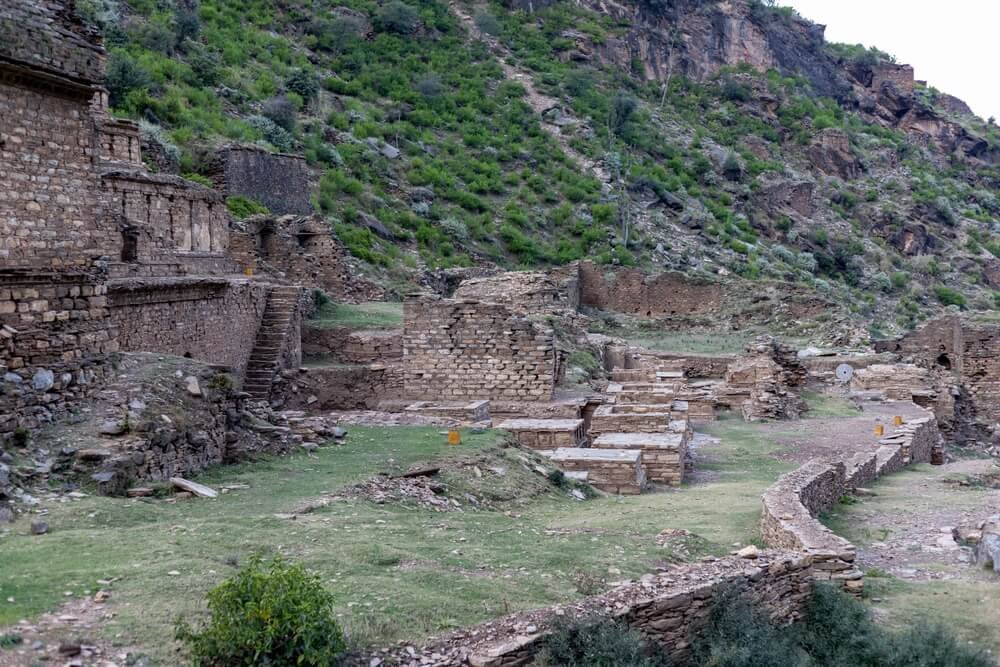
Climb the hilltop acropolis at the heart of the site, where the Italian mission’s trenches have revealed the defensive walls, streets and houses of the ancient city. Information panels explain the layers, and from the top you get a sweeping view over the Swat River and the modern town. Go in the morning light for the best photography, and take a guide if you can find one locally, as the story of the layers is far richer when explained on the spot.
See the Indo-Greek City Walls
Walk the lines of the ancient fortifications, including stretches of the Indo-Greek urban wall that once enclosed Bazira. Excavators have traced planned streets, residential compounds, storage structures and workshops, giving a rare picture of ordinary urban life in ancient Gandhara rather than just its temples and palaces. Look for the areas where the different building phases are visible in section, like pages in a book.
Visit the Apsidal Temple Site
Ask locally about the area of the 2021 discovery, the apsidal Buddhist temple from around 250 BCE, the earliest of its kind found in Pakistan. Even if active excavation areas are fenced, the significance of the spot is worth absorbing: this is where Gandhara’s Buddhist architecture began, in the age of Ashoka, when the pre-Buddhist shrine of Bazira was converted into a Buddhist place of worship.
Walk the Swat River Bank
Barikot sits on the middle course of the Swat River, and the riverside at sunset is one of the valley’s simple pleasures. The river that watered Bazira’s fields three thousand years ago still flows past the town, and a slow walk along its banks connects the ancient and modern settlements in the most literal way.
Combine with the Swat Museum and Butkara
No visit to Barikot is complete without the Swat Museum, about 20 kilometres to the west near Mingora, which houses Gandharan sculptures, coins and artefacts from the valley’s excavations, and the Butkara Stupa complex nearby. Together the three sites give you the full arc of Swat’s Buddhist and pre-Buddhist history in a single day.
Famous Places In and Around Bazira (Barikot), Swat
- Butkara Stupa – the great Buddhist stupa complex near Mingora, one of Gandhara’s most important monuments
- Swat Museum – superb collection of Gandharan art, coins and excavated finds, about 20 km from Barikot
- Saidu Sharif – the old capital of the Swat state, with the White Palace and archaeological remains
- Odigram – ancient Ora, another Alexandrian campaign site, with the Mahmud Ghaznavi-era mosque
- Shingardara Stupa – a well-preserved stupa in a quiet valley setting, worth the detour
- Mingora Bazaar – the valley’s main market, famous for chapli kebabs, shawls and dry fruits
How to Reach Bazira (Barikot), Swat
Barikot lies about 20 kilometres from Mingora on the road into central Swat, making it one of the most accessible archaeological sites in northern Pakistan. From Islamabad, the drive to Mingora is roughly 230 kilometres and takes around 3 to 3.5 hours via the M-1 motorway and the Swat Motorway (M-16), one of the country’s best highway corridors. From Lahore the distance to Mingora is about 420 kilometres, roughly 6 to 7 hours by the M-2 and M-1. Travellers from Karachi face a journey of more than 1,100 kilometres and at least 14 hours by road, so flying to Islamabad or Peshawar and driving onward is the sensible option. Barikot itself is a short taxi or rickshaw ride from Mingora, and local vans run constantly along the valley road.
Route Details
From Islamabad: Take the M-1 motorway west, then the Swat Motorway (M-16) north to the Chakdara interchange, and follow the N-95 valley road through to Mingora and onward to Barikot. The route has service areas with restaurants and rest rooms, and is comfortable for families.
From Lahore: Take the M-2 to Islamabad, then continue as above. Leave early to reach Swat by afternoon.
From Karachi: Fly to Islamabad International Airport, then drive or take a Daewoo or NATCO coach to Mingora. Coaches run between the major cities and Swat daily.
Transport options: Private car, rented car with driver, Daewoo Express and other coach services to Mingora, local Suzuki vans and rickshaws within the valley, and taxis for the Mingora-Barikot hop. The site is within Barikot town, so no jeep or special vehicle is needed.
Where to Stay in Bazira (Barikot), Swat
Most visitors base themselves in Mingora, twenty minutes away, which has the widest choice of accommodation in the valley, from budget guesthouses to comfortable mid-range hotels along the main roads. Saidu Sharif, the quieter twin town, has several pleasant hotels in a more relaxed setting. Barikot itself has simple local guesthouses and a few small hotels that suit travellers who want to wake up near the site, but for the best choice of restaurants and services, Mingora is the practical base. During the summer season and on long weekends, Swat’s hotels fill quickly, so book ahead, and always confirm that hot water and heating are available if you visit in winter.
Where to Eat: Local Foods of Bazira (Barikot), Swat
Swat’s food is classic Pashtun mountain cuisine, and its star is the chapli kebab. Mingora’s bazaars are famous for it, with more than 200 shops selling the spiced minced-beef patties in the city alone, and the winter months see demand surge as locals and tourists crowd the kebab houses. The Takht Bhai Kebab Center in Mingora’s Abasin Market has been serving kebabs since 1976 and is a local institution, offering seekh kebabs and chapli kebabs with naan and chutney at budget-friendly prices. Beyond kebabs, try lamb karahi cooked in the wok-like karahi pan, slow-cooked mutton dishes, and the valley’s freshwater trout, served fried or grilled in restaurants along the Swat River. Meals are hearty and inexpensive, and the dhabas along the Mingora-Barikot road serve honest, filling food to travellers all day.
Weather in Bazira (Barikot), Swat
Barikot sits at a modest altitude of around 808 metres, so its climate is moderate for a mountain valley. Winters rarely drop below freezing, while summers can be properly warm. Rain falls through much of the year, and the surrounding peaks catch snow in winter while the town itself stays green. The most pleasant visiting weather comes in spring and autumn.
| Season | Temperature Range (approx.) | Conditions |
|---|---|---|
| Winter (Dec-Feb) | 5°C to 15°C | Cool and crisp, rarely below freezing; quiet season, clear views of snowy peaks |
| Spring (Mar-May) | 15°C to 28°C | Pleasant and green; one of the best times to visit, blossom and mild days |
| Summer (Jun-Aug) | 25°C to 35°C | Warm, occasionally hot; busy tourist season; afternoon showers possible |
| Autumn (Sep-Nov) | 14°C to 28°C | Comfortable and clear; excellent for sightseeing and photography |
Language and Culture of Bazira (Barikot), Swat
Barikot is a Pashtun town, and Pashto is the mother tongue of the overwhelming majority of residents, around 96.7 percent according to the 2023 census. Urdu is widely understood, especially in shops, hotels and around the tourist sites, and English is spoken by guides and hotel staff. The valley’s culture is traditional and hospitable; guests are treated with great respect, and you will often be offered tea before any business is discussed. Dress modestly, particularly when visiting villages and religious sites, ask permission before photographing people, and remember that Friday prayers bring a pause to the working day. The people of Swat are proud of their valley’s history, from ancient Bazira to the princely state’s more recent past, and showing genuine interest in it is the fastest way to make friends.
Shopping in Bazira (Barikot), Swat
The bazaars of Mingora and Barikot are the shopping grounds for this trip. Swat is known for its honey, walnuts, dried fruits and embroidered shawls, all sold in the main Mingora market at fair prices. Look for handwoven wool shawls, traditional embroidery, and local handicrafts in the shops around the old bazaar. There are no large shopping malls in Barikot itself; the valley’s retail life is in its traditional bazaars, which is part of the charm. Prices are generally lower than in Islamabad, bargaining is normal, and the dry fruits bought here travel well as gifts.
Travel Tips for Bazira (Barikot), Swat
Packing Essentials
Comfortable walking shoes are essential, as the acropolis involves a climb over uneven ground. Bring sun protection, a hat and water, especially in summer, and a light jacket for spring and autumn evenings. A camera with a zoom lens helps capture the excavation details and valley views. Modest clothing that covers shoulders and knees suits the local culture.
Safety Tips
Swat is a popular and well-travelled tourist region, and Barikot is a short, easy trip from Mingora. Stay on marked paths at the excavation site, as active trenches can be deep, and do not climb on ancient walls. Keep valuables secure in bazaars, carry your CNIC or passport, and check local advice before venturing into remote side valleys.
Money & Connectivity
ATMs are plentiful in Mingora, so withdraw cash there before heading to Barikot, and carry cash for the site, small shops and local transport. Mobile signals from all major networks are strong throughout central Swat. Most hotels in Mingora offer Wi-Fi, though speeds vary.
Best Time to Visit Bazira (Barikot), Swat
Spring (March to May)
The ideal season. Temperatures are pleasant, the valley is green, and the light is perfect for exploring the acropolis and photographing the excavations. This is the best time for a dedicated archaeology trip.
Summer (June to August)
Warm but manageable, and the busiest tourist season in Swat. Combine Barikot with the cooler upper valley at Kalam and Malam Jabba. Start site visits early in the day to avoid the midday heat.
Autumn (September to November)
Clear skies, comfortable temperatures and thinning crowds make autumn excellent for sightseeing. The harvest season brings fresh walnuts and fruits to the bazaars.
Winter (December to February)
Cool and quiet, with the surrounding peaks snow-covered. The site is still visitable on clear days, hotels are cheap, and you will have the acropolis nearly to yourself.
Final Thoughts
Barikot is that rare destination where a single afternoon can carry you from the Bronze Age to the Kushan Empire, with Alexander the Great marching through the middle of the story. The excavations are active, the discoveries are recent, and every season seems to add a new chapter, from the 2021 apsidal temple to the pre-Buddhist shrine announced in 2023. It is living archaeology, not a fenced-off ruin.
Pair it with the Swat Museum, the Butkara Stupa and Mingora’s kebab houses, and you have one of the finest heritage day trips in Pakistan, all within a few hours’ drive of Islamabad. For more ideas across the valley, explore our Explore Pakistan guides and the classic Malam Jabba ski-resort guide.
FAQs
Where is Bazira (Barikot) located?
Barikot is a town on the Swat River in Swat District, Khyber Pakhtunkhwa, about 20 kilometres from Mingora at the entrance to central Swat. Ancient Bazira lies beneath and around the modern town.
What is the history of Bazira?
Settlement began around 1700 BCE. Alexander the Great besieged the city in 327 BCE. It later passed through Mauryan, Indo-Greek and Kushan rule before earthquakes in the 3rd century CE led to its abandonment. The Italian Archaeological Mission has excavated here since 1984.
What is the best time to visit Barikot?
March to May and August to November offer the most pleasant weather. Summer is warm and busy; winter is cool and quiet.
How do I reach Barikot from Islamabad?
Drive about 230 kilometres via the M-1 and Swat Motorway to Mingora (3 to 3.5 hours), then continue 20 kilometres to Barikot. Coaches also run from major cities to Mingora.
Is Barikot safe for tourists?
Yes. Central Swat is a well-established tourist region, and Barikot is a short, easy trip from Mingora on good roads.
Is Barikot suitable for families?
Very much so. The site involves a manageable climb, the roads are good, and Mingora offers family-friendly hotels and restaurants.
Where should I stay near Barikot?
Mingora, 20 minutes away, has the best range of hotels and guesthouses. Simple guesthouses are also available in Barikot town itself.
What food is Barikot famous for?
Chapli kebabs are the valley’s signature dish, with hundreds of shops in Mingora, plus lamb karahi and freshwater trout from the Swat River.