Quick Facts
- Location: Multan Road and Bahawalpur Road junction, central Lahore, Punjab, Pakistan
- Altitude: around 210 metres (Lahore sits on the Punjab plains)
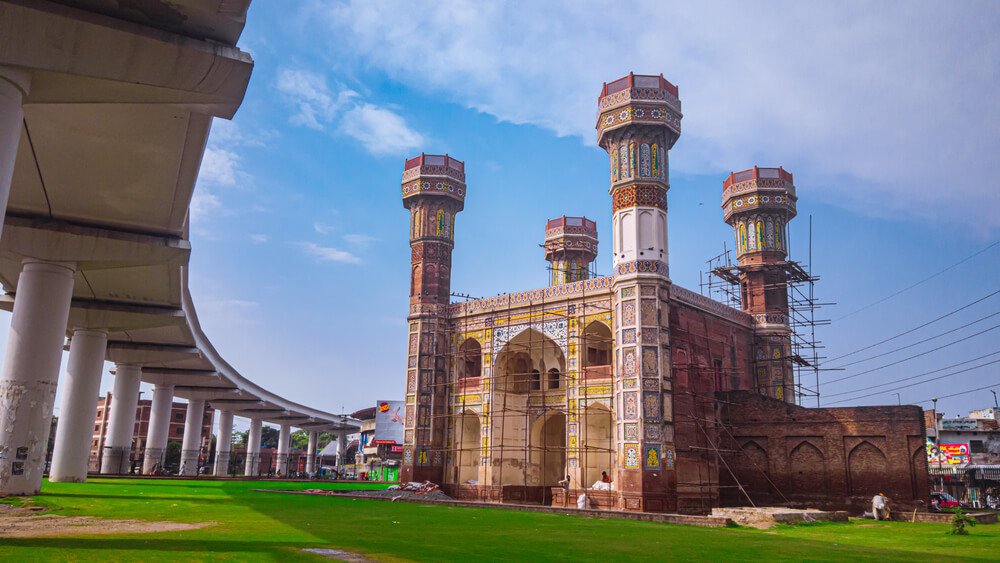
- Famous For: Mughal-era four-towered gateway with brilliant kashi-kari tile mosaic work, built in 1646
- Nearest City: Lahore itself — the monument stands inside the city
- Accessibility: reached by road within the city; Orange Line Metro has a “Chauburji” station close by
- Known Landmarks: the four octagonal minarets, the tile-worked central arch, the Ayat-al-Kursi inscription panel
- Best For: history lovers, architecture fans, photographers, and anyone exploring Mughal Lahore
Why Visit Chauburji
Every great city has a landmark that rewards the traveler who looks past the famous palaces, and in Lahore that landmark is Chauburji. It is not a fort and not a mosque. It is something rarer: a monumental Mughal gateway that has stood beside a busy road for nearly four hundred years, its tiled minarets still catching the sun the way they did when Shah Jahan ruled the empire. When you stand in front of it, you are looking at the last survivor of a lost garden — the entire world it once guarded has vanished, and only the gate remains.
Chauburji is perfect for the traveler who loves history but hates crowds. Unlike the Badshahi Mosque or Shalimar Gardens, there is no long queue, no ticket line, and no rush. You can arrive with a camera in the soft light of the morning, walk around all four sides of the monument, and read the carved inscriptions at your own pace. The kashi-kari tile mosaics — blues, yellows, and greens set in intricate geometric patterns — are among the finest Mughal tilework you can see up close in Lahore, and because the monument stands at a roundabout, every angle is yours to enjoy.
This is also the ideal stop for anyone already exploring the city. Chauburji sits at a major crossroads of Multan Road and Bahawalpur Road, and the Orange Line Metro brings you almost to its doorstep. It pairs beautifully with a full day of Mughal Lahore: the Shahi Qila in the morning, a food street lunch, and Chauburji at golden hour when the tilework glows. For photographers, it is one of the most photogenic monuments in the city precisely because it is small enough to frame in a single shot and ornate enough to reward a long lens.
Above all, Chauburji carries a mystery that makes the visit memorable. Nobody is entirely certain which royal lady founded it. The inscription names a “Sahib-e-Zebinda Begam-e-Dauran” — the elegant lady of the age — and historians have debated for generations whether it was Zeb-un-Nisa, Jahanara Begum, or someone else entirely. Few monuments let you touch four centuries of courtly intrigue in a single visit. That is why Chauburji deserves a place on your Lahore itinerary.
History of Chauburji
Chauburji was built in 1646 CE (1056 AH) during the reign of the Mughal emperor Shah Jahan, the same emperor who built the Taj Mahal and Lahore’s own Shalimar Gardens. It was never a standalone monument. It served as the grand entrance gateway to a vast Mughal charbagh garden that stretched across what is now the Multan Road corridor. The garden itself is believed to have extended from Nawankot in the south toward Lahore, a landscape of terraces, water channels, and orchards typical of the high Mughal style.
The founder named in the gateway’s Persian inscription is “Sahib-e-Zebinda Begam-e-Dauran,” which translates as “the elegant lady of the age.” For years the garden was attributed to Mughal princess Zeb-un-Nisa, but historians note she was only eight years old when the gateway was built, so the reference more likely points to her aunt Jahanara Begum, Shah Jahan’s eldest daughter and a celebrated patron of gardens in Lahore. Some later scholarship connects the monument to a noblewoman called Mian Bai, honored in inscriptions as Fakhr-un-Nisa, the Pride of Women — a reminder that the story of who truly commissioned Chauburji is still an open question.
The garden it guarded did not survive long. Flooding from the Ravi river is believed to have destroyed most of the garden during the reign of Aurangzeb, and with the garden gone the gateway lost its purpose. Over the centuries the name “Chauburji” — meaning “four towers” — was given to the structure by later generations, describing the four octagonal minarets that rise from its corners. In 1846 an earthquake struck Lahore and brought down the northwest minaret, cracking the central arch and leaving the monument with three towers.
Rescue came in the late 1960s, when the Department of Archaeology restored Chauburji, rebuilt the destroyed tower, and stabilized the surviving structure. It is now listed on the Protected Heritage Monuments of the Archaeology Department of Punjab. In the 2010s the construction of the Orange Line Metro brought the city even closer to the monument — a station named “Chauburji” now stands nearby — and the monument survived the metro works to remain one of Lahore’s most photographed heritage sites.
Top Things to Do in Chauburji
Admire the Tile Mosaic Work
The single greatest pleasure of a Chauburji visit is the kashi-kari — Persian-style glazed tile mosaic — that covers the entire facade. Walk slowly around the structure and study the panels: geometric star patterns, floral arabesques, and calligraphic bands in cobalt blue, turquoise, and yellow. The tilework on Chauburji is considered a hallmark of Mughal craftsmanship, and because the monument is small, you can see it all in one unhurried circuit. Bring a zoom lens or simply your phone camera; the details repay close looking.
Read the Inscriptions
The main vault carries a panel inscribed with the Ayat-al-Kursi, a verse from the Holy Quran, rendered in stunning blue enameled lettering. Beside the sacred text, the inscription records the Islamic year 1056, fixing the monument’s completion in 1646. These epigraphic panels are not decoration alone — they are the monument’s own birth certificate, and reading them (or having a guide read them for you) connects you directly to the Mughal court that built the gate.
Study the Minarets
Chauburji’s four octagonal minarets have a distinguishing feature found nowhere else in the subcontinent: they widen dramatically at the top. Architectural historians consider this flared profile unique to Chauburji, and some believe cupolas once crowned the towers before collapsing with the passage of time. Stand back and compare the towers against each other — the rebuilt northwest tower, restored in the 1960s, lets you appreciate both original and restored Mughal masonry side by side.
Photograph It at Golden Hour
Because Chauburji stands on a traffic roundabout, you can circle it completely and shoot it from every side. Early morning light gives the tilework a soft, saturated glow, while late afternoon light warms the brick and makes the blue mosaics stand out dramatically against the sky. Night photography is possible too, as the roundabout is well lit. Keep your visits short and stay on the traffic island — the roads around it are busy.
Combine It with a Mughal Lahore Circuit
Chauburji makes the perfect anchor for a self-designed Mughal architecture trail. Start at the Lahore Fort and Badshahi Mosque in the Walled City, drive through the city to Shalimar Gardens, and finish at Chauburji for sunset. Alternatively, use Chauburji as your first stop in the morning before the Walled City crowds build. Either way, it gives your day of sightseeing a monument that most casual tourists never find.
Famous Places In and Around Chauburji
- Lahore Fort (Shahi Qila) — the great Mughal citadel with the Sheesh Mahal and Alamgiri Gate.
- Badshahi Mosque — Aurangzeb’s grand mosque, one of the largest of its era.
- Shalimar Gardens — Shah Jahan’s terraced pleasure gardens, a UNESCO World Heritage Site.
- Tomb of Jahangir — the emperor’s mausoleum at Shahdara across the Ravi.
- Data Darbar — the shrine of Data Ganj Bakhsh, Lahore’s most revered Sufi saint.
- Anarkali Bazaar — one of South Asia’s oldest markets, ideal for shopping after sightseeing.
- Lahore Museum — Mughal and Gandharan collections on Mall Road.
How to Reach Chauburji
Chauburji is inside Lahore, so reaching it is a matter of getting to Lahore and then navigating the city. The monument stands on the roundabout where Multan Road meets Bahawalpur Road, and it is a well-known city landmark — any rickshaw driver, taxi driver, or ride-hailing driver knows “Chauburji Chowk.” The Orange Line Metro has a station named Chauburji within walking distance, making it one of the easiest heritage sites in Pakistan to reach by public transport.
From Islamabad, Lahore is roughly 375 kilometres away via the M-2 motorway, a drive of about five to six hours. From Multan, it is roughly 350 kilometres via the M-3/M-4 motorways, about five hours. From Karachi, the distance is around 1,200 kilometres — most visitors fly into Lahore’s Allama Iqbal International Airport (a one-and-a-half-hour flight) and then take a car or metro into the city. Within Lahore, Chauburji is about 20 to 30 minutes from the Walled City by car, depending on traffic.
Road conditions are good year-round on the motorways and city roads. The best transport options are your own car, a hired car with driver, ride-hailing apps, or the Orange Line Metro for the city leg. Because the monument sits on a traffic island, visits are short stops rather than long stays — plan 30 to 45 minutes for a full circuit with photographs.
Route Details
- From Islamabad: take the M-2 motorway south to Lahore, exit at Thokar Niaz Beg, and follow Multan Road northeast toward the city centre. Chauburji Chowk is the major roundabout on Multan Road — about 45 minutes from the motorway exit.
- From Multan: take the M-4 then M-3 motorways to Lahore, join Multan Road at Thokar Niaz Beg, and follow it to the Chauburji roundabout.
- From Lahore Airport: take the airport road toward Cantt, then follow Canal Road or the metro feeder to Multan Road; the Orange Line “Chauburji” station drops you within walking distance.
- From the Walled City: head south via Lower Mall or Mozang toward Multan Road; Chauburji Chowk is roughly 5 kilometres from the Badshahi Mosque area.
Where to Stay in Chauburji
Chauburji is a monument, not a town, so you will stay in Lahore itself — which means you have the full range of a major Pakistani city’s hotels at your disposal. Luxury options cluster around Mall Road, Gulberg, and the airport road: landmark five-star hotels like Pearl Continental and Avari offer the classic high-end Lahore experience with pools, multiple restaurants, and heritage architecture of their own. Mid-range hotels and business guesthouses line the main roads in Gulberg and DHA, offering comfortable rooms at moderate prices.
Budget travelers can find clean, simple guesthouses and family-run hotels in areas like Mozang, Samanabad, and near the railway station, often within a short drive of Chauburji. If you want to be close to the monument, look at hotels along Multan Road and in Gulberg — both put you within 15 to 25 minutes of Chauburji Chowk. Book in advance during winter wedding season (December to February) when Lahore’s hotels fill up. Since Chauburji is a daytime stop, choose your hotel for its comfort and location relative to your wider Lahore plans rather than its proximity to the monument itself.
Where to Eat: Local Foods of Chauburji
A visit to Chauburji puts you in the middle of one of the world’s great food cities. Lahore’s cuisine is rich, meaty, and unapologetic, and the areas around Multan Road and the nearby food streets give you easy access to it. Start with the classics: Lahori paye (slow-cooked trotters), nihari, and chargha (steeped and fried chicken) are the dishes Lahore is famous for, and you will find them at roadside dhabas and established restaurants alike. For breakfast, few experiences beat a Lahori nashta of halwa puri, chickpeas, and a tall glass of lassi.
The famous food streets of Lahore — Fort Road near the Badshahi Mosque and the newer setups around Gawalmandi and Anarkali — are a short drive from Chauburji and come alive in the evening with grilled kebabs, karahi, and tandoori fish. A meal at a regular dhaba is budget-friendly, while a sit-down dinner at a popular restaurant costs a moderate amount by Pakistani standards. Do not leave Lahore without trying the seasonal fish of winter, the dahi bhalla of Anarkali, and the falooda that generations of Lahoris swear by. Street food is delicious but go with bottled water and choose busy stalls where the food turns over quickly.
Weather in Chauburji
Chauburji shares Lahore’s climate — hot summers, a monsoon season, and mild winters. Since the monument is visited outdoors on a traffic island with no shade beyond its own arches, timing matters. The best visiting weather is from October to March, when the air is clear, the light is soft, and the tilework photographs beautifully. Summer visits are possible but keep them short and early in the day.
| Season | Temperature Range | Conditions |
|---|---|---|
| Winter (Dec–Feb) | 5–22°C | Mild, sunny days; cool mornings; occasional fog in late December and January |
| Spring (Mar–Apr) | 18–35°C | Pleasant in March; warming rapidly through April; clear skies ideal for photography |
| Summer (May–Jul) | 32–45°C | Hot and dry; dust storms possible; monsoon rains arrive in July |
| Autumn (Aug–Nov) | 25–38°C | Humid in August; monsoon retreats in September; October brings cool, golden light |
Language and Culture of Chauburji
The languages you will hear around Chauburji are Punjabi and Urdu. Punjabi is the mother tongue of most Lahoris and the language of the city’s street culture, jokes, and food; Urdu is the shared language of education, business, and visitors. English is widely understood in hotels, restaurants, and by younger people. A few basic Urdu greetings — “Assalam-o-Alaikum” for hello, “Shukriya” for thank you — will be warmly received.
Lahore’s culture is famously hospitable and expressive. Strangers will offer directions, tea, and conversation without being asked, and this warmth extends to the area around Chauburji. Dress modestly as you would anywhere in Pakistan — comfortable clothes that cover the shoulders and knees are respectful and practical in the heat. Photography of the monument is welcome, but be mindful when photographing people; a smile and a gesture are usually enough to get a happy nod. Bargaining is expected in nearby bazaars but not at fixed-price shops.
Shopping in Chauburji
Chauburji itself has no dedicated souvenir market, but it sits a short drive from some of Lahore’s best shopping. Anarkali Bazaar, one of the oldest markets in South Asia, is the place for traditional crafts: embroidered shawls, khussa shoes, bangles, and brassware. Ichhra Bazaar is famous for fabrics and ready-made clothes at good prices, while Liberty Market in Gulberg serves the modern shopper with boutiques and bookshops.
For souvenirs tied to your Chauburji visit, look for miniature paintings, blue pottery, and camel-skin lamps — crafts that echo the tilework and artistry of the Mughal monuments you have seen. Lahore also has modern shopping malls like Emporium and Packages Mall if you want air-conditioned comfort and fixed prices. Prices in bazaars are negotiable, so bargain politely — starting at about two-thirds of the quoted price is normal.
Travel Tips for Chauburji
Packing Essentials
Carry sunscreen, a hat, and a water bottle, because Chauburji offers almost no shade and Lahore’s sun is strong for most of the year. A camera with a zoom lens is ideal for the tilework; a tripod is unnecessary for a short stop. In winter (December–January), bring a light jacket for cool mornings. Comfortable walking shoes are enough — the monument is circled in a few minutes on flat ground.
Safety Tips
Chauburji stands on a busy traffic roundabout, so the main safety concern is the road, not crime. Stay on the traffic island, cross roads carefully at marked crossings or with the flow of pedestrians, and avoid standing in the roadway for photographs. Visit during daylight hours. The area is a busy commercial junction, so keep valuables close as you would in any large city.
Money & Connectivity
ATMs are plentiful around Multan Road and throughout Lahore, and most hotels and restaurants accept cards. Keep some cash for rickshaws, small dhabas, and bazaar shopping. Mobile signals from all major Pakistani networks (Jazz, Zong, Telenor, Ufone) are strong in this part of the city, and 4G data works well — useful for maps and ride-hailing apps.
Best Time to Visit Chauburji
Winter (October–March)
This is the prime season for Chauburji and for Lahore generally. Temperatures are mild, the skies are clear, and the low winter sun makes the kashi-kari mosaics glow. Morning fog in December and January usually burns off by mid-morning, so plan midday visits then. This is also when Lahore’s food scene and cultural life are at their liveliest.
Spring (March–April)
A very good second choice. The weather is pleasant, gardens across the city are in bloom, and the light is excellent for photography. April starts getting warm, so visit the monument in the morning and save indoor sights — museums and forts’ interiors — for the afternoon.
Summer and Monsoon (May–September)
Visits are still possible but less comfortable. If you come in summer, see Chauburji before 10 a.m. or after 5 p.m., stay hydrated, and expect hazy skies. The monsoon brings dramatic clouds that can make for striking photographs, but also traffic chaos on Multan Road — check conditions before heading out.
Final Thoughts
Chauburji is proof that a monument does not have to be enormous to be unforgettable. In a city of grand forts and giant mosques, this small gateway — a survivor of a garden that vanished centuries ago — tells one of Lahore’s most poetic stories. Its tiles, its inscriptions, and its mystery founder make it a place that stays in your memory long after you have walked back across the roundabout.
If you are planning a Lahore trip, give Chauburji the half hour it asks for and the attention it deserves. Arrive with the camera ready, circle the monument slowly, and let the “four towers” remind you that in the Mughal world, even a garden gate could be a work of art. For more inspiration on historic destinations across the country, browse our Explore Pakistan collection, and pair this visit with a day at Malam Jabba or the valleys of Hunza for a fuller picture of Pakistan’s heritage.
FAQs
Where is Chauburji located?
Chauburji stands on the roundabout where Multan Road meets Bahawalpur Road in central Lahore, Punjab. It is a well-known city landmark with its own Orange Line Metro station nearby.
When was Chauburji built?
It was built in 1646 CE (1056 AH) during the reign of Mughal emperor Shah Jahan, as the gateway to a large Mughal garden that no longer exists.
Who built Chauburji?
The inscription credits “Sahib-e-Zebinda Begam-e-Dauran” — the elegant lady of the age. Historians debate whether this was Zeb-un-Nisa, her aunt Jahanara Begum, or another noblewoman, so the true founder remains an open question.
How do I reach Chauburji?
Any taxi, rickshaw, or ride-hailing driver in Lahore knows Chauburji Chowk. The Orange Line Metro’s Chauburji station is within walking distance, making it one of Lahore’s easiest heritage sites to reach by public transport.
Is Chauburji safe to visit?
Yes. The main precaution is traffic — it stands on a busy roundabout, so stay on the traffic island and cross roads carefully. Daylight visits are best.
Is Chauburji suitable for families?
Yes, for a short stop. Children will enjoy the colorful tilework and the story of the lost garden. Keep them close to you on the roundabout and plan 30 to 45 minutes.
Where should I stay near Chauburji?
Stay anywhere in Lahore — Gulberg, Mall Road, or along Multan Road all put you within a short drive. Luxury, mid-range, and budget guesthouse options are all available in the city.
What is Chauburji famous for?
Its four octagonal minarets (which widen at the top, a feature unique in the subcontinent), its brilliant kashi-kari tile mosaics, its Quranic inscription panel, and the mystery of its royal founder.