Quick Facts
- Location: Near Chinji village in Talagang, Punjab, Pakistan — in the Salt Range foothills of the Potohar plateau, about 130 kilometres south of Islamabad.
- Altitude: Around 400–600 metres (1,300–2,000 feet) above sea level, in low rolling hills.
- Famous For: Being the type locality of the world-famous Chinji Formation — Middle Miocene fossil beds, roughly 14 to 11 million years old, that have yielded extinct mammals, ancient apes, and petrified wood; plus the only wild olive forest of its kind in the country.
- Nearest City: Talagang, with Rawalpindi and Islamabad about 130 kilometres to the north.
- Accessibility: Road access from Islamabad and Rawalpindi via the motorway and Talagang road; the final approach is on local roads. A private car or hired van is the practical way to visit.
- Known Landmarks: The Chinji National Park area (established 1987, about 15,000 acres), the fossil-bearing red clay beds of the Chinji Formation, and the wild olive stands.
- Best For: Geology and fossil enthusiasts, nature lovers, birdwatchers, families looking for an easy day trip from Islamabad, and anyone curious about Pakistan’s prehistoric past.
Why Visit Chinji Reserve Forest
Here is a thought to carry into the Chinji Reserve Forest: the ground beneath your feet was once a subtropical woodland where ancient apes climbed through the trees, three-horned giraffe relatives browsed the leaves, and elephant-like deinotheres moved along the riverbanks. That was roughly 12 million years ago, in the Middle Miocene — and the Chinji Formation, named for this very place, is one of the world’s great windows into that lost world. Palaeontologists have been coming here for over a century, and the fossils they found — including a 11.4-million-year-old ankle bone of the ancient ape Sivapithecus indicus — rewrote chapters of the story of life on earth.
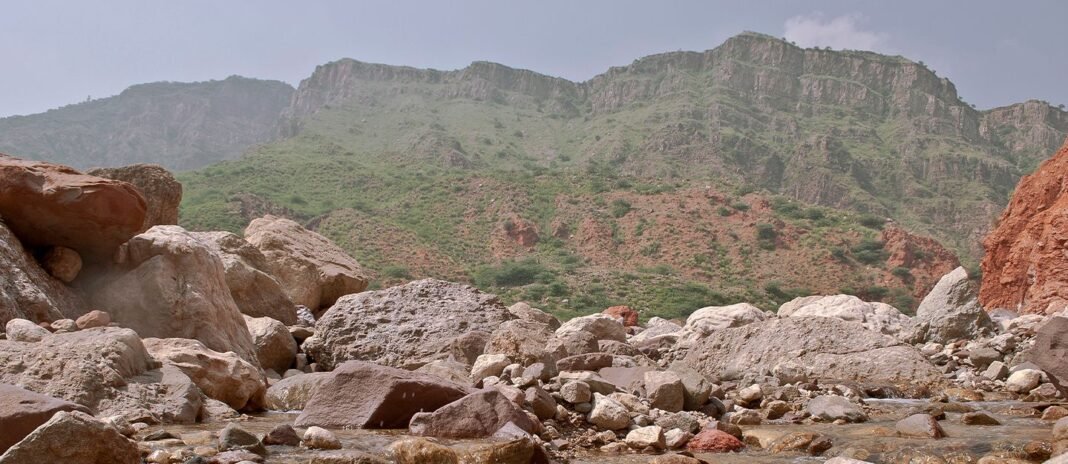
You do not need to be a scientist to feel the magic of that. Walking the red clay badlands and low hills of Chinji, with the Salt Range on the horizon, you are walking through deep time. The landscape itself tells the story: the bright red clays, the grey sandstones, the petrified wood weathering out of the slopes — some fossil logs here run 4 to 6 metres long. And the forest that grows on these ancient beds is special in its own right: Chinji holds the country’s only significant stands of wild olive, along with a small population of urial (the wild sheep of the Salt Range) and golden jackals.
Then there is the sheer convenience of it. Chinji sits about 130 kilometres south of Islamabad — close enough for a day trip or an easy overnight, far enough to feel like a genuine escape from the city. In 2020 the Punjab Forest Department began developing the area as a national park with visitor facilities, a fossil museum, walking tracks, and boating, so the infrastructure for tourism is growing. For families, students, photographers, and anyone who has driven the motorway south and wondered what lies beyond the Salt Range, Chinji is the answer.
This Chinji Reserve Forest travel guide gives you the full picture: the real fossil history with dates and discoveries, how to reach Chinji from Islamabad, Lahore, and beyond, the best time to visit, where to stay and eat, and practical tips for exploring responsibly. Come for the fossils, stay for the forest — and leave with a new sense of how ancient Pakistan really is.
History of Chinji Reserve Forest
The deep history of Chinji is written in its rocks. The Chinji Formation — the geological unit named for the type locality near Chinji village — belongs to the Lower Siwalik subgroup of the great Siwalik deposits that run along the Himalayan foothills. The term “Chinji Formation” was formally established by the geologist Lewis in 1937, but scientific attention began much earlier: the British palaeontologist Pilgrim was working on these beds as far back as 1910, recognising their extraordinary fossil wealth. The formation is about 2,300 feet thick at its type section, built of bright red clays and grey sandstones laid down by ancient rivers, and it is dated to the Middle Miocene — roughly 14 to 11 million years ago.
What lived here in those days is astonishing. The Chinji beds have yielded a classic Lower Siwalik fauna: rhinoceroses (including Gaindatherium browni and Brachypotherium perimense), primitive pigs like Listriodon pentapotamiae, the giraffe relative Giraffokeryx punjabiensis, antelopes, chevrotains, crocodiles, and carnivores. The vegetation, reconstructed from the fossils, was seasonal woodland with riverside forest — a landscape of wet and dry seasons, much like parts of Africa today. And among the most celebrated finds is YGSP 1656, a distal tibia — an ankle bone — of the ancient ape Sivapithecus indicus, 11.4 million years old, one of only a handful of such bones known in the world. Studies of it suggest an ape that climbed vertically through the trees in a way that has no exact modern equivalent. Fossil wood is everywhere too: petrified logs of legume-family trees, some species named for Chinji itself, weather out of the slopes to this day.
The human history of the area is far younger but still remarkable. Archaeologists have found signs of human habitation in the Chinji area going back over a thousand years. In the modern era, the forest was brought under protection as Chinji National Park in 1987 — a protected area of IUCN category II covering about 15,000 acres — recognising both its wildlife and its unique fossil heritage. For decades it remained little-visited, known mainly to geologists and foresters.
That began to change in October 2020, when the Punjab Forest Department announced a development programme for Chinji as part of a drive to revive forest areas and promote local tourism. The plan included a museum to display the area’s fossils and archaeological finds, breeding arrangements for the forest’s wild animals, a mini dam to secure drinking water for wildlife, boating facilities, benches, jogging tracks, 50 washrooms, cafeterias and food stalls — and the planting of 20,000 new saplings alongside the existing wild olive forest, which officials described as the only such forest in the country. Whether you come as a fossil hunter, a nature lover, or simply a curious traveller, you are visiting a place whose scientific fame is matched by very few sites in South Asia.
Top Things to Do in Chinji Reserve Forest
Walk the fossil beds of the Chinji Formation
The single most extraordinary thing to do at Chinji is also the simplest: walk the red clay badlands and look at the ground. The bright red clays and grey sandstones of the Chinji Formation weather out fossils — bone fragments, enamel, and petrified wood — that you can spot with a careful eye. Some fossil logs exposed on the slopes run 4 to 6 metres long. Go with a local guide if you can; they know which gullies and slopes produce the best finds. The golden rule: look, photograph, and leave everything exactly where it lies. Fossils belong to Pakistan’s heritage — collecting them is illegal and robs science of its context.
Visit the fossil museum
As part of the national park’s development, the Punjab Forest Department planned a museum to display the fossils and archaeological discoveries of the Chinji area — from extinct mammals to the thousand-year-old traces of human habitation. Check locally whether the museum is open on your visit; it is the best place to see the area’s finds properly identified and explained, including the story of the great Miocene fauna.
See the wild olive forest
Chinji’s living fame matches its fossil fame: this is the only forest in the country with significant stands of wild olive trees. Walk among these gnarled, silver-leaved trees and you are seeing a vegetation type found almost nowhere else in Pakistan. The forest department has been planting thousands of new saplings to extend the cover, so the woodland is literally growing before visitors’ eyes.
Watch for urial and jackals
The forest holds a small population of urial — the handsome wild sheep of the Salt Range, with its curved horns and reddish coat — along with golden jackals. Dawn and dusk are the best times to spot them, when they come out to graze and the light is soft. Bring binoculars, move quietly, and keep your distance; these are genuinely wild animals, and Chinji’s quiet is part of what protects them.
Birdwatching and nature walks
The mix of scrub forest, open badlands, and water points makes Chinji rewarding for birdwatchers, especially in the cooler months when winter visitors arrive. The jogging tracks and walking paths developed in the park make for easy morning walks, and photographers will find the red-and-grey banded hills, olive trees, and big Potohar skies endlessly photogenic.
Boating and family picnic facilities
The park’s development plan included boating facilities on the mini dam built to water the wildlife, along with benches, cafeterias, and food stalls — aimed squarely at making Chinji a family day-trip destination from Islamabad and Rawalpindi. Check what is operational when you visit; even without the full facilities, the forest makes a wonderful picnic spot under the olive trees.
Famous Places In and Around Chinji Reserve Forest
Chinji village — the village that gave its name to a world-famous geological formation. Kallar Kahar — the Salt Range lake and shrine complex, on the onward route. Khewra Salt Mine — the great salt mine of the Salt Range, a classic combined trip with Chinji. Rawalpindi and Islamabad — the cities 130 km north, base for the trip. Pair this fossil adventure with mountain scenery from our Malam Jabba travel guide or browse all destinations in Explore Pakistan.
How to Reach Chinji Reserve Forest
Chinji is one of the easiest “wild” destinations to reach from the capital. From Islamabad, drive south on the motorway toward Lahore and exit for Talagang; the total distance to the Chinji area is about 130 kilometres, roughly 2.5 to 3 hours depending on traffic and the final local roads. From Rawalpindi the journey is similar. The route takes you off the motorway onto the Talagang road and then local roads toward Chinji village and the forest — the last stretch is rural, so a private car, hired van, or jeep is the practical choice. Public vans run from Rawalpindi to Talagang town, from where you would need local transport to the forest itself.
From Lahore, take the motorway north toward Islamabad and exit for Talagang — roughly 300 kilometres, about 4 to 5 hours of driving. From Karachi or other distant cities, fly to Islamabad and continue by road; the forest is a comfortable day trip or overnight from the capital. There is no railway station at Chinji and no commercial airport nearby — this is road-trip country, and that is part of its charm.
Road conditions are generally good on the motorway and main roads; the final rural approach can be rough in places, so allow extra time and avoid arriving after dark if you do not know the road. Fuel up and stock supplies in Talagang town, which has bazaars, fuel stations, and eateries. If you are combining Chinji with Khewra Salt Mine or Kallar Kahar, plan a two-day loop — the Salt Range rewards slow travel.
Route Details
Islamabad to Chinji: Islamabad — Motorway (M-2) south — exit for Talagang — Talagang road — local roads to Chinji village and the reserve forest (about 130 km, 2.5–3 hours). Lahore to Chinji: Lahore — Motorway (M-2) north — Talagang exit — Talagang — Chinji (about 300 km, 4–5 hours). Rawalpindi to Chinji: via the motorway and Talagang road, similar to the Islamabad route.
Where to Stay in Chinji Reserve Forest
Chinji is best done as a day trip from Islamabad or Rawalpindi, and most visitors do exactly that — but if you want to stay over, you have options. Talagang town, the nearest urban centre, has basic hotels and guesthouses that are clean, inexpensive, and perfectly adequate for a night. Staying locally lets you be in the forest at dawn, when the wildlife is most active and the light on the red badlands is at its best.
For more comfort, base yourself in Islamabad or Rawalpindi, where the full range of hotels is available, and drive down for the day — the 130-kilometre journey is easy in the morning. As the national park’s visitor facilities develop, on-site accommodation may follow; check locally for forest rest houses, which the Punjab Forest Department traditionally maintains at its reserves. These are usually simple but well-located, and advance booking through the department is the way to secure one. Campers should seek permission from forest staff before pitching tents anywhere in the reserve.
Where to Eat: Local Foods of Chinji Reserve Forest
Chinji sits in the Potohar plateau, and the food is classic rural Punjabi: hearty, fresh, and unpretentious. In Talagang town and the villages around the forest you will find dhabas serving daal, sabzi, chicken karahi, fresh tandoori roti, and lassi — the thick, creamy yoghurt drink that is the Potohar’s pride. In winter, the beloved combination of sarson ka saag with makai ki roti, topped with white butter, appears on local menus and is worth timing a trip for.
The national park’s development plan included cafeterias and food stalls for visitors, so check what is operating when you go. Otherwise, the smart move is the classic Pakistani day-trip formula: eat a full breakfast in Talagang, carry fruit, dry fruits, and plenty of drinking water into the forest, and stop for a proper meal on the way back. There are no restaurants inside the reserve itself, so come self-sufficient — and carry all your litter out with you.
Weather in Chinji Reserve Forest
Chinji has the classic Potohar climate: very hot summers, cool winters, and most of its rain in the July–August monsoon and the winter months. Summer afternoons in the open badlands can be fierce, with temperatures pushing into the 40s Celsius, while winter days are crisp and pleasant and nights can be properly cold. Spring and autumn are the sweet spots for walking the fossil beds in comfort.
| Season | Temperature Range | Conditions |
|---|---|---|
| Winter (Dec–Feb) | Around 3–18°C | Cool and clear; excellent for walking, wildlife spotting, and photography. Cold nights — bring warm layers. |
| Spring (Mar–May) | Around 18–35°C | Warming up; wildflowers in the scrub. One of the best seasons for fossil walks before the heat arrives. |
| Summer (Jun–Aug) | Around 30–44°C | Very hot and dry, with monsoon rain in July–August. Visit at dawn, carry lots of water, and avoid midday walks. |
| Autumn (Sep–Nov) | Around 18–32°C | Cooling down with clear skies; ideal for long walks, birdwatching, and picnics under the olive trees. |
Language and Culture of Chinji Reserve Forest
The language of the Chinji area is Punjabi, in its Potohari dialect, with Urdu universally understood. This is rural Punjab at its most traditional: conservative, hospitable, and proud of its land. Visitors should dress modestly, greet elders respectfully, and accept offers of tea — refusing hospitality outright is considered impolite, though a polite, grateful acceptance of even a small cup is always appreciated.
The forest itself deserves the same respect as the people. Do not collect fossils, cut wood, light fires outside designated spots, or disturb wildlife. The fossil beds are a scientific resource of world importance — every bone fragment left in place is data for future researchers. If you are walking with a forest guard or local guide, follow their lead on where to go and what not to touch. Tread lightly, and this 12-million-year-old landscape will still be here for the next visitor.
Shopping in Chinji Reserve Forest
There is no tourist shopping at Chinji, which is part of its unspoiled appeal — but Talagang’s bazaar covers the practical side well. Stock up on snacks, water, and sun protection before heading into the forest. The Potohar is known for its peanuts and gram, sold fresh in season, and local honey is worth asking after. For fossils or “antique” stones offered by roadside sellers anywhere in the region, be cautious: removing fossils from protected areas is illegal, and most such items are either fake or illegally collected. The honest souvenirs of Chinji are photographs, not specimens.
Travel Tips for Chinji Reserve Forest
Packing Essentials
Sun protection is critical: hat, sunglasses, and sunscreen, since the badlands offer no shade. Sturdy walking shoes with ankle support handle the uneven clay slopes. Carry far more drinking water than you expect to need — at least 2 litres per person for a half-day walk — plus snacks, a basic first-aid kit, and binoculars for wildlife. In winter, bring warm layers for cold mornings; in summer, light clothes and a refillable bottle.
Safety Tips
The fossil badlands are uneven and can be slippery after rain — watch your footing on the clay slopes and keep children close. Summer heat is the main hazard: walk early in the morning, rest in shade at midday, and know the signs of heat exhaustion. Jackals are shy and harmless, but give all wildlife space. Let someone know your walking plans, and stick to known tracks rather than wandering into unfamiliar gullies.
Money and Connectivity
Carry all the cash you need — there are no ATMs in the forest, and Talagang town’s machines should not be relied upon exclusively. Mobile signals from the major networks generally work around Chinji village and the main tracks but can fade in the deeper valleys. Download offline maps before leaving Islamabad, and confirm your route with locals in Talagang before the final approach.
Best Time to Visit Chinji Reserve Forest
Winter (December–February)
Arguably the best season: cool, clear days perfect for long fossil walks, active wildlife, and crisp photography light. Mornings are cold, so layer up — by midday it is usually glorious.
Spring (March–May)
Beautiful and comfortable, with wildflowers dotting the scrub and pleasant temperatures for walking. Visit before the May heat builds for the easiest exploring.
Summer (June–August)
Challenging but possible. Go at dawn, carry abundant water, and plan indoor or shaded rest for the afternoons. The monsoon can make clay tracks slippery — check conditions after rain.
Autumn (September–November)
A lovely season: the heat breaks, skies clear, and the forest is at its most inviting. Ideal for birdwatching, picnics, and unhurried fossil hunting.
Final Thoughts
Few places in Pakistan let you touch deep time the way Chinji does. This is not a dramatic mountain valley or a famous fort — it is something rarer: a landscape where the ground itself is a museum, where 12-million-year-old bones weather out of red clay and wild olive trees grow over the graves of ancient apes. The scientists have known about Chinji for a century; now it is travellers’ turn.
Come in winter or spring, walk the badlands slowly with a guide, visit the museum, and stand quietly among the olive trees. You will drive the 130 kilometres back to Islamabad with a new perspective — on Pakistan, on the planet, and on just how long the story of life here really is.
FAQs
Where is Chinji Reserve Forest located? Near Chinji village in Talagang, Punjab — in the Salt Range foothills of the Potohar plateau, about 130 kilometres south of Islamabad.
What is the best time to visit Chinji Reserve Forest? Winter (December–February) and spring (March–May) are ideal for walking and wildlife. Autumn (September–November) is also excellent. Summer is very hot — visit at dawn if you go then.
How do I reach Chinji Reserve Forest? By road from Islamabad or Rawalpindi via the motorway and Talagang (about 130 km, 2.5–3 hours), or from Lahore via the motorway (about 300 km, 4–5 hours). A private car or hired van is the practical option for the final rural approach.
Is Chinji Reserve Forest safe to visit? Yes. The main precautions are heat in summer, uneven ground on the clay slopes, and carrying enough water. Walk in daylight and let someone know your plans.
Is Chinji Reserve Forest suitable for families? Yes — it makes an excellent educational day trip from Islamabad for school-age children. Keep walks short in summer, carry water and snacks, and combine fossil spotting with a picnic.
Where can I stay near Chinji Reserve Forest? Talagang town has basic hotels and guesthouses; most visitors day-trip from Islamabad or Rawalpindi. Ask the Punjab Forest Department about forest rest houses for a rustic overnight stay.
What food is available near Chinji? Talagang’s dhabas serve classic Potohari Punjabi food — daal, karahi, fresh roti, and lassi; sarson ka saag with makai ki roti in winter. Carry water and snacks into the forest itself.
Can I collect fossils at Chinji? No. The Chinji Formation is a protected scientific resource — look, photograph, and leave every fossil exactly where you find it. Collecting fossils from the reserve is illegal.