


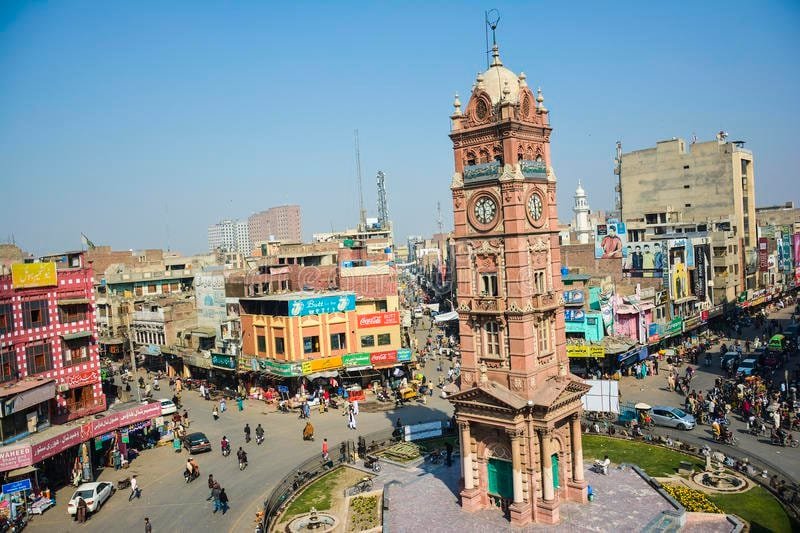
Quick Facts
- Location: Clock Tower Chowk, central Faisalabad, Punjab, at the heart of the old city bazaars
- Altitude: Around 180 meters above sea level
- Famous For: The 1906 colonial clock tower, the Union Jack city layout, and the eight bazaars radiating from it
- Nearest City: Faisalabad itself; Lahore is about 185 km away
- Accessibility: Easy road access via motorways; Faisalabad International Airport nearby; well connected by rail
- Known Landmarks: Ghanta Ghar, the eight bazaars, Lyallpur Museum, Jinnah Garden, Chenab Club
- Best For: History lovers, photographers, shoppers, and travelers exploring Punjab’s heritage cities
Why Visit Clock Tower (Ghanta Ghar), Faisalabad
There is a famous saying in Faisalabad: if you start walking away from the Clock Tower, you will end up back at the Clock Tower. It sounds like a riddle until you stand at Ghanta Ghar Chowk and see the eight bazaars radiating out from it like the spokes of a wheel, and then you understand. This is one of the most remarkable pieces of urban design in South Asia: an entire city planned on the pattern of the Union Jack, with a graceful colonial clock tower at its exact center, and it has been the beating heart of Faisalabad for well over a century.
Faisalabad is often skipped by travelers rushing between Lahore and Islamabad, which is exactly why Ghanta Ghar rewards the curious. This is not a sanitized monument behind a ticket counter. It is a living landmark wrapped in the glorious chaos of the old city’s bazaars: cloth merchants calling out their prices, the smell of spices drifting from Karkhana Bazaar, jewelry glittering in the shop windows, and the tower’s clock face watching over it all as it has since 1906. Few places in Pakistan let you feel history and everyday life colliding so vividly.
The tower itself is a gem of colonial architecture, built in memory of Queen Victoria with inscriptions in four languages that tell the story of a remarkably diverse pre-Partition city. Climb the surrounding streets at golden hour and you will get photographs that look like they belong in a history book. Then dive into the bazaars, where Faisalabad’s fame as Pakistan’s textile capital means you can buy quality lawn, khaddar, and cotton at prices that will make Lahore shoppers weep.
Come for the architecture, stay for the bazaars, and leave understanding why the people of this city, once called Lyallpur, still orient their entire lives around a clock tower. It is Punjab’s most underrated heritage experience, and it is waiting for you.
History of Clock Tower (Ghanta Ghar), Faisalabad
The story of Ghanta Ghar begins with the city itself. In the 1890s the British developed this area as a planned mandi town, a market and administrative center for the newly irrigated Chenab Colony, and named it Lyallpur after Sir James Lyall, the Lieutenant Governor of Punjab. It was designed as one of British India’s first properly planned cities, and its layout, based on the Union Jack flag, was drawn up by the engineer Poham Young, with the celebrated town planner Sir Ganga Ram later improving on the design.
At the center of this Union Jack plan stood a well. The well was filled with earth brought from Chak Ram Dewali on Sargodha Road, and on that spot the Clock Tower was raised. Its foundation stone was laid in November 1903, and the tower was built between 1903 and 1905 at a cost of 40,000 rupees, completed in 1906 under the supervision of Gulab Khan, whose family was associated with the construction of the Taj Mahal in Agra. The stone for the tower came from Sangla Hill, about 50 kilometers away, and the clock itself was imported from Bombay.
The tower was erected by the inhabitants of the Chenab Colony in grateful remembrance of Queen Victoria, who had died in 1901, and this dedication is carved into the tower in four languages: English, Urdu, Hindi, and Gurmukhi. Each inscription conveys the same message with its own emotion, the English formal, the Urdu terse, the Hindi and Gurmukhi describing the Queen in heavenly abode and as merciful. The four scripts are a moving record of the religious and cultural diversity of Lyallpur before 1947, when the city was home to large Muslim, Hindu, Sikh, and Christian communities.
Around the tower, eight bazaars were laid out in a circular plan covering about 110 acres: Rail Bazaar, Katchery Bazaar, Bhawana Bazaar, Jhang Bazaar, Aminpur Bazaar, Karkhana Bazaar, Chiniot Bazaar, and Montgomery Bazaar, each named for the direction it leads toward, and all connected by a ninth, Goal Bazaar. At the tower’s opening, fountains played in front of four of the bazaars. In 1904 the district of Lyallpur was formally created, and in 1977 the city was renamed Faisalabad in honor of King Faisal of Saudi Arabia.
The tower has survived remarkably well: its exterior has needed little repair even after a century, though its interior suffered from neglect, with decaying plaster, cracked staircases, and damaged pillars. In recent years the district administration has moved to reclaim the monument, approving renovation plans for Clock Tower Chowk and, in 2025, preparing heritage proposals to restore the tower and other Sandal Bar monuments, including the revival of the area’s historic character. Ghanta Ghar remains what it has always been: the unmistakable center of the city.
Top Things to Do in Clock Tower (Ghanta Ghar), Faisalabad
Stand at Ghanta Ghar Chowk and Read the Inscriptions
Begin at the tower itself. Walk slowly around its base and find the four plaques in English, Urdu, Hindi, and Gurmukhi, each telling the story of the tower’s dedication to Queen Victoria. It is a rare, tangible encounter with the multicultural Punjab of a century ago. Look up at the clock faces and the tower’s elegant columns and carved details, a fine blend of British colonial and local craftsmanship.
Walk the Eight Bazaars
The real adventure is the bazaars. Each of the eight radiating from the tower has its own character: cloth and textiles, spices, jewelry, shoes, watches, groceries, and household goods. Rail Bazaar hums with fabric merchants; Karkhana Bazaar is a treasure trove of manufactured goods; Chiniot Bazaar carries the woodwork traditions of nearby Chiniot. Give yourself at least two hours, wear comfortable shoes, and let the maze do what it does best: surprise you.
Photograph the Tower at Golden Hour
Visit early in the morning or in the late evening, when the light softens and the daytime traffic thins. The tower photographs beautifully against a warm sky, and the surrounding bazaar streets glow with shop lights after dark. Wanderlog reviewers consistently call it one of Punjab’s most photogenic landmarks, and an evening visit lets you see why.
Visit the Lyallpur Museum
A short distance from the old city, the Lyallpur Museum traces the region’s history from ancient times through the colonial era to the present, with galleries on the Chenab Colony, the freedom movement, and local culture. It is the perfect companion to a Ghanta Ghar visit, filling in the history you have just walked through.
Relax at Jinnah Garden
Known locally as Company Bagh, Jinnah Garden is Faisalabad’s historic public park, a green escape from the bazaar bustle with old trees, lawns, and walking paths. It is a favorite evening spot for families and a good place to rest between sightseeing stops.
Experience a National Celebration at the Chowk
Ghanta Ghar Chowk is the city’s natural gathering point, and public events and national celebrations are held here through the year. If your visit coincides with Independence Day or another national occasion, the chowk comes alive with lights, flags, and crowds, an unforgettable slice of Faisalabadi spirit.
Famous Places In and Around Clock Tower (Ghanta Ghar), Faisalabad
- The Eight Bazaars: Rail, Katchery, Bhawana, Jhang, Aminpur, Karkhana, Chiniot, and Montgomery Bazaars, plus connecting Goal Bazaar, the historic commercial heart of the city.
- Lyallpur Museum: The city’s history museum covering the Chenab Colony era, Partition, and local heritage.
- Jinnah Garden (Company Bagh): Faisalabad’s beloved historic park with lawns and old trees.
- Chenab Club: The colonial-era club, a reminder of Lyallpur’s British social life, set in historic grounds.
- Iqbal Stadium: The city’s famous cricket stadium, host to international matches.
- Gatwala Wildlife Park: A family-friendly wildlife park on the outskirts of the city.
- Chiniot: About 35 km away, the historic town famed for its carved wooden furniture and craftsmanship.
- Nusrat Fateh Ali Khan’s Faisalabad: The qawwali legend was born in Lyallpur; music lovers can feel his legacy in the city’s cultural memory.
How to Reach Clock Tower (Ghanta Ghar), Faisalabad
Faisalabad sits at the center of Punjab’s road network, making Ghanta Ghar one of the easiest heritage landmarks in Pakistan to reach. From Lahore, the drive is about 185 km, roughly 3 hours via the M-2 and M-3 motorways. From Islamabad, it is about 330 km, around 4.5 to 5 hours via the M-2 motorway, exiting at the Pindi Bhattian interchange onto the M-3/M-4 toward Faisalabad. From Karachi, the journey is about 1,200 km, roughly 16 to 18 hours by road, so flying is the sensible choice.
Faisalabad International Airport handles domestic flights and connections to the Gulf, and the drive from the airport to Clock Tower Chowk takes about 30 to 40 minutes. Faisalabad’s railway station is on the main line connecting Karachi, Lahore, and Rawalpindi, with regular passenger trains. Intercity buses from Daewoo, Faisal Movers, and other operators run constantly between Faisalabad and every major city. Within the city, ride-hailing apps, auto-rickshaws, and Qingqi rickshaws will get you to the chowk; ask any driver for “Ghanta Ghar” and they will know exactly where to go.
Route Details
- From Lahore: M-2 to the Pindi Bhattian interchange, then M-3 south to Faisalabad. Enter the city via Jaranwala Road or Sargodha Road and follow signs to the old city and Clock Tower Chowk. About 3 hours.
- From Islamabad/Rawalpindi: M-2 south to Pindi Bhattian, then M-3 to Faisalabad. About 4.5 to 5 hours.
- From the Airport: Take Jhang Road into the city, then head toward the old city center. About 30 to 40 minutes.
- Parking: The chowk area is congested; park in the designated lots on the surrounding roads and walk in. Morning visits have the easiest parking.
Where to Stay in Clock Tower (Ghanta Ghar), Faisalabad
Faisalabad is a business city, so its hotels are geared toward comfort and value rather than resorts. The best bases for a Ghanta Ghar visit are the mid-range and upper-mid-range business hotels along Canal Road, in the Gulberg area, and on Jaranwala Road, all a 15 to 25 minute drive from the old city. These offer clean air-conditioned rooms, restaurants, and reliable Wi-Fi at moderate rates.
Budget travelers will find simple, comfortable hotels and guest houses clustered around the old city and near the railway station, within walking distance of the tower. For a heritage-flavored stay, look for the older hotels in the Saddar and Civil Lines areas, which carry a touch of colonial-era character. There is no camping or resort scene here; Faisalabad is a city break, best enjoyed from a comfortable hotel with the bazaars as your daytime adventure.
Where to Eat: Local Foods of Clock Tower (Ghanta Ghar), Faisalabad
Faisalabad runs on Punjabi food, and the area around Ghanta Ghar is one of the best places to taste it. Start the day the local way with a halwa puri breakfast from one of the old city’s beloved shops, or a glass of thick, creamy lassi. For lunch, the dhabas around the bazaars serve dal fry, chicken karahi, and tandoori rotis straight from clay ovens, hearty and inexpensive.
The city’s desi ghee sweets are famous across Punjab: look for shops selling barfi, gulab jamun, and patisa near the chowk. Evening brings out the snack vendors: golgappay, dahi bhallay, samosas, and Faisalabad’s beloved street burgers. For dinner, the barbecue restaurants on Canal Road and in the Gulberg area serve seekh kebabs, malai boti, and chargha in comfortable family settings. A full day of eating around Ghanta Ghar costs very little; even a generous restaurant dinner for two stays firmly in the budget-friendly range.
Weather in Clock Tower (Ghanta Ghar), Faisalabad
Faisalabad has a hot semi-arid climate typical of central Punjab: scorching summers, mild winters with occasional fog, and monsoon rain in July and August. The old city’s narrow bazaar streets offer some shade, but plan sightseeing for the cooler months.
| Season | Temperature Range | Conditions |
|---|---|---|
| Winter (Nov-Feb) | 4-22 C | Mild days, chilly nights, occasional morning fog. The most comfortable sightseeing weather. |
| Spring (Mar-Apr) | 15-35 C | Warming quickly; pleasant mornings, warm afternoons. Good for bazaar walks. |
| Summer (May-Aug) | 28-42 C | Very hot and dry, then humid with monsoon rains in July and August. Sightsee early or late in the day. |
| Autumn (Sep-Oct) | 18-36 C | Heat eases, especially by October. Evenings become pleasant again. |
Language and Culture of Clock Tower (Ghanta Ghar), Faisalabad
Punjabi is the mother tongue of Faisalabad, spoken here in the distinctive Lyallpuri accent that locals are proud of, and Urdu works everywhere as the common language. English is understood in hotels and larger shops. The culture is classic Punjabi: warm, direct, hospitable, and fond of good food and lively conversation.
The old city around the tower is traditional and conservative in dress and manners. Dress modestly, especially when visiting mosques or shrines in the area, and ask before photographing shopkeepers or families. Bargaining is expected in the bazaars and is done with good humor; a smile and a little patience will get you the best prices. If you are offered tea by a shopkeeper, accept it; it is genuine hospitality, not a sales trick.
Shopping in Clock Tower (Ghanta Ghar), Faisalabad
Shopping is half the reason to visit Ghanta Ghar. Faisalabad is Pakistan’s textile capital, and the eight bazaars are where that reputation was built. Rail Bazaar and the surrounding cloth markets sell lawn, cotton, khaddar, and denim at wholesale-adjacent prices; this is the place to stock up on quality fabric. Chiniot Bazaar carries wooden handicrafts in the carved tradition of nearby Chiniot. Karkhana Bazaar is the go-to for manufactured goods, watches, and electronics, while Aminpur Bazaar and Katchery Bazaar mix spices, dry fruits, and daily goods.
Jewelry shops around the chowk sell gold and artificial sets, and the shoe and garment stalls offer remarkable value. Quality varies, so inspect fabric and stitching before buying, and remember that polite bargaining is part of the experience. For branded and mall shopping, head to the newer commercial areas on Canal Road, but for the authentic Faisalabad, the eight bazaars are unmatched.
Travel Tips for Clock Tower (Ghanta Ghar), Faisalabad
Packing Essentials
Comfortable walking shoes are essential; the bazaar streets are uneven and you will walk for hours. Carry a water bottle, sunscreen, and a hat in summer, and a warm layer for winter evenings. Keep a small daypack for purchases, because you will make them.
Safety Tips
The old city is busy and generally safe for visitors, with a visible police presence around the chowk. Keep valuables secure in crowded bazaars, beware of pickpockets in dense crowds, and cross roads carefully; traffic around the chowk is chaotic. Visit the tower area in daylight or early evening, and stick to well-lit streets after dark.
Money & Connectivity
ATMs and banks surround the old city, and most larger shops accept cards, but bazaar vendors are cash-only, so carry sufficient rupees. Mobile signals are strong on all major networks. Bargaining is in cash, so keep small notes handy.
Best Time to Visit Clock Tower (Ghanta Ghar), Faisalabad
Winter (November to February) – The Best Season
Cool, clear days make this the ideal time to explore the tower and wander the bazaars for hours. Morning fog can delay early starts, but by mid-morning the light is beautiful for photography.
Spring (March to April) – Pleasant Shoulder Season
Mornings are lovely and the bazaars buzz with pre-summer energy. Visit early in the day to beat the afternoon warmth.
Summer and Monsoon (May to September) – The Off Season
Intense heat makes midday sightseeing uncomfortable, and monsoon humidity adds to the challenge. If you must visit, plan tower and bazaar walks for early morning or after sunset.
Autumn (October) – The Sweet Spot Returns
October brings relief from the heat and thinner crowds, a fine month for unhurried exploration of the old city.
Final Thoughts
Ghanta Ghar is more than a clock tower; it is the compass by which an entire city orients itself. To stand at its base, read its four-language inscriptions, and then lose yourself in the eight bazaars is to experience Punjab the way locals live it: historic, industrious, and wonderfully hospitable. Few landmarks in Pakistan pack this much story into one city block.
Pair your visit with the Explore Pakistan collection for more heritage destinations, and when you are ready for mountains after the plains, discover the valleys of Hunza. Faisalabad’s clock tower will keep its time, as it has since 1906, waiting for your visit.
FAQs
Where is the Clock Tower (Ghanta Ghar) in Faisalabad?
It stands at Clock Tower Chowk in the center of Faisalabad’s old city, Punjab, with eight historic bazaars radiating from it in a Union Jack street plan.
When was Ghanta Ghar built?
The tower was built between 1903 and 1905 and completed in 1906, in memory of Queen Victoria, funded by the inhabitants of the Chenab Colony.
Why is Faisalabad’s city plan famous?
The old city was planned on the pattern of the Union Jack flag, with eight bazaars radiating from the central clock tower, designed by Poham Young and improved by Sir Ganga Ram.
What are the eight bazaars around Ghanta Ghar?
Rail Bazaar, Katchery Bazaar, Bhawana Bazaar, Jhang Bazaar, Aminpur Bazaar, Karkhana Bazaar, Chiniot Bazaar, and Montgomery Bazaar, all connected by Goal Bazaar.
How do I reach Faisalabad from Lahore?
It is about 185 km, roughly 3 hours by car via the M-2 and M-3 motorways. Regular buses and trains also connect the two cities.
What is the best time to visit Ghanta Ghar?
November to February offers cool, comfortable weather for exploring the tower and bazaars. October is also pleasant.
Is Faisalabad good for shopping?
Excellent. As Pakistan’s textile capital, its bazaars offer quality lawn, cotton, and khaddar at very good prices, plus handicrafts, jewelry, and spices.
What else can I see near Ghanta Ghar?
The Lyallpur Museum, Jinnah Garden (Company Bagh), Chenab Club, Iqbal Stadium, and the town of Chiniot, famous for carved wooden furniture, are all nearby.

, Faisalabad? Discover why it deserves your visit, the best time to go and top things to do.)