


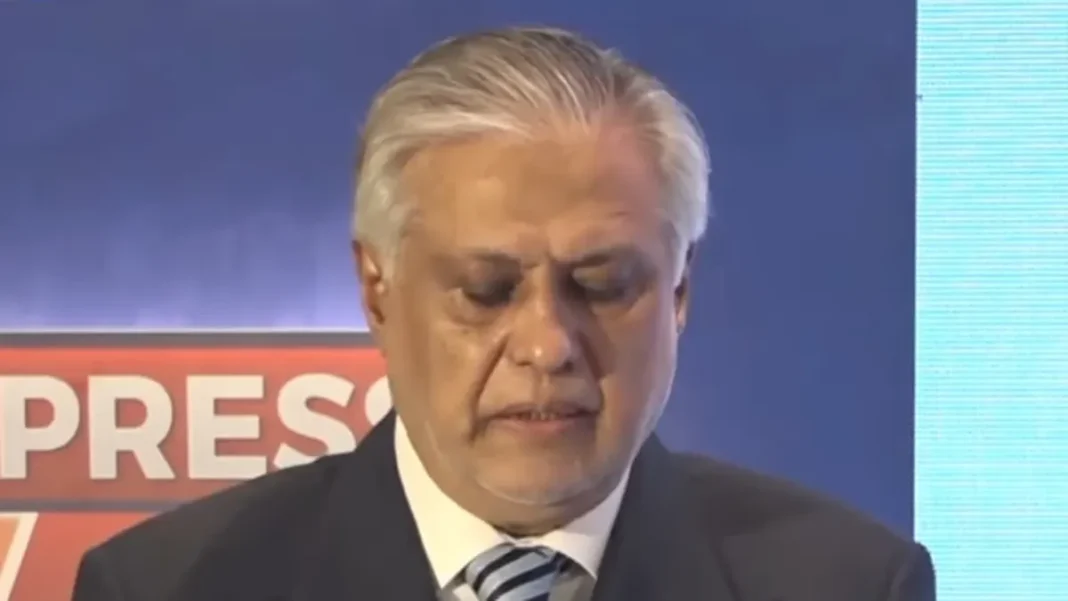
Dar Vows to Defend Pakistan’s Indus Waters Treaty Rights
Deputy Prime Minister and Foreign Minister Ishaq Dar on Tuesday reaffirmed Pakistan’s commitment to safeguard its rights under the Indus Waters Treaty, warning against any attempt to weaponise water. He was addressing the inaugural session of the Margalla Dialogue 2026 in Islamabad.
Mr Dar said rivalry among major powers had reached its peak, while international institutions such as the United Nations faced political divisions. He stressed the need for greater international cooperation, diplomacy and dialogue to meet emerging global challenges, and said Pakistan remained committed to the peaceful resolution of disputes.
Indus Waters Treaty rights at centre of Dar’s address
The foreign minister said tensions in the Gulf and the Red Sea showed how regional conflicts could disrupt the international system. He said emerging technologies, including biotechnology, were changing how states respond to crises, and policymakers needed to recognise that a crisis in one domain could spread to other sectors.
Mr Dar said the theme of this year’s Margalla Dialogue reflected the challenges facing Pakistan. He said protecting Pakistan’s national interests required effective diplomacy abroad and strength at home, and that Pakistan’s regional diplomacy rested on the establishment of peace.
He also referred to a resolution presented by Pakistan on diplomacy and dialogue during conflicts, which he said the United Nations Security Council adopted on November 5. He stressed that maritime routes and territorial waters should remain open for uninterrupted and secure trade.
Kashmir, Afghanistan and the Makkah pact
Discussing regional security, Mr Dar said lasting peace in South Asia required a resolution of the Jammu and Kashmir dispute in accordance with United Nations Security Council resolutions. He repeated that resolving the dispute was essential for durable stability in the region.
Referring to Afghanistan, Mr Dar said Pakistan wanted to ensure that Afghan territory was not used against any other country, particularly Pakistan. He said Pakistan would continue to protect its citizens and its borders.
Speaking about regional partnerships, he described the Makkah Joint Defence Agreement as a defensive arrangement that reflected Pakistan’s partnership with Saudi Arabia and Turkiye. He made clear that the pact was not directed against any country.
The foreign minister said Pakistan’s strategic partnership with China remained an important pillar of its foreign policy. He added that Pakistan was also engaging with European partners through the R4 framework, and that economic diplomacy formed part of his responsibilities as foreign minister. He stressed that the emerging global order must take into account the development needs of the Global South.
Why the water warning matters
The Indus Waters Treaty, signed in 1960 with the World Bank as broker, has governed the sharing of the Indus river system between Pakistan and India for more than six decades. It survived wars and long periods of tension, which is why Pakistan treats any move against it as a serious matter.
India placed the treaty in abeyance in April 2026, and Pakistan has protested the move ever since. For Pakistan, the rivers covered by the treaty water its farms, fill its reservoirs and power its agriculture, so the stakes reach far beyond diplomacy into daily life.
Mr Dar’s warning fits a wider pattern in Pakistan’s foreign policy. Islamabad has paired firm words on water with calls for dialogue, and the Margalla Dialogue speech kept both tracks open at once. Pakistan has also condemned attacks on Saudi infrastructure and urged restraint in the region, while diplomatic efforts continue to keep the Iran conflict from spreading.
The speech also came as world powers debated the Iran and Ukraine conflicts in Paris, where the Group of Seven pressed the United States on both crises. In that setting, Mr Dar’s emphasis on dialogue and on keeping sea lanes open spoke directly to Pakistan’s own interests as a trading nation.
What happens next
The Margalla Dialogue continues in Islamabad with sessions on security, the economy and the changing world order. Pakistan’s message from the platform is now on record: it will defend its water rights, seek dialogue over confrontation, and judge the new global order by whether it serves the development needs of the Global South. The Express Tribune reported the foreign minister’s address.
Frequently asked questions
What did Ishaq Dar say about the Indus Waters Treaty?
He reaffirmed Pakistan’s commitment to safeguard its rights under the treaty and warned against any attempt to weaponise water.
Where did he make the remarks?
He spoke at the inaugural session of the Margalla Dialogue 2026 in Islamabad on Tuesday, November 10, 2026.
What is the theme of Margalla Dialogue 2026?
The dialogue focuses on the changing global order and how states handle strategic uncertainty.
What did he say about the Makkah defence pact?
He described the Makkah Joint Defence Agreement as a defensive arrangement reflecting Pakistan’s partnership with Saudi Arabia and Turkiye, and said it was not directed against any country.
What did he say about Kashmir and Afghanistan?
He said lasting peace in South Asia required a resolution of the Kashmir dispute under UN Security Council resolutions, and that Afghan territory must not be used against any country, particularly Pakistan.

