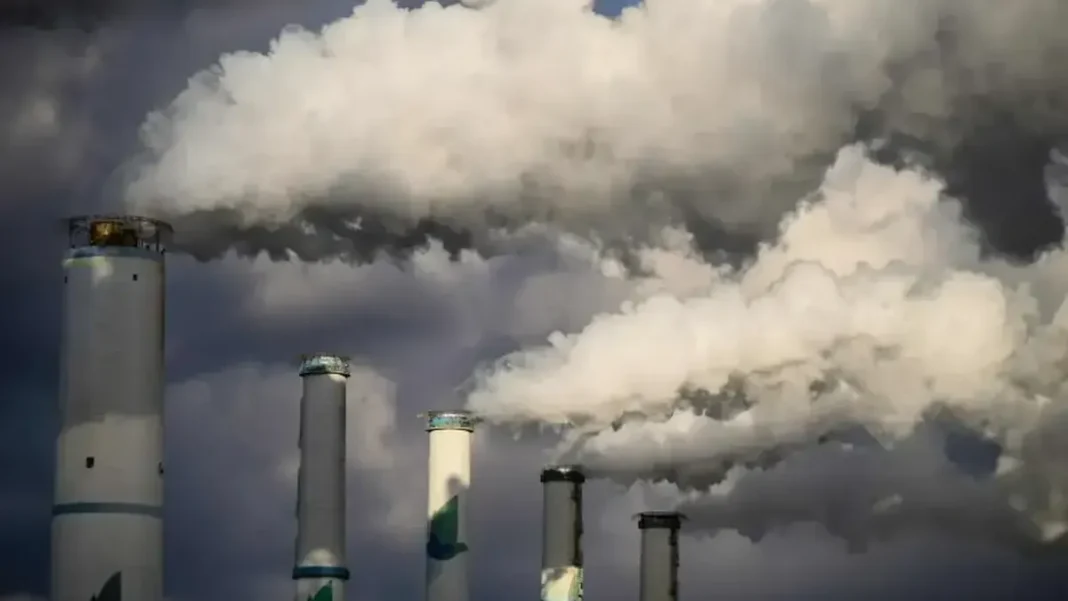
Fossil Fuel Emissions to Fall in 2026, First Drop Since 2020
Global fossil fuel emissions are projected to fall slightly in 2026, due to the expansion of renewable energy and the oil price shock sparked by the Iran war. Researchers released the findings on Tuesday, as nations meet at the COP31 climate summit in Antalya, Turkiye.
Emissions from the burning of oil, gas and coal, the main drivers of climate change, rose by 0.9 per cent a year on average in the past decade and hit a record high in 2025, according to the Global Carbon Budget report. They are now expected to drop by 0.4 per cent in 2026. It would be the first annual fall since 2020, when the Covid pandemic paralysed the global economy, trade and transport.
Fossil fuel emissions fall as oil use drops
The US-led war in Iran and the closure of the Strait of Hormuz played a role in driving emissions down, as the conflict caused a drop in oil consumption amid soaring crude prices. The deployment of solar panels, wind farms and electric vehicles also contributed to the fall. Two-thirds of the increase in global energy demand is now being met by solar and wind power and electric vehicles, the report found.
Oil-related emissions are projected to drop by 1.9 per cent, though researchers said that was likely a short-term response to the energy shock triggered by the Iran conflict. Gas emissions are set to fall by 0.3 per cent, while emissions from coal use will rise by 0.6 per cent. Overall, fossil carbon dioxide emissions are expected to reach 38.2 billion tonnes in 2026.
“A decline in fossil CO2 emissions is encouraging, but a reduction driven partly by geopolitical shocks is not a sustainable climate solution,” said Pierre Friedlingstein, director of the Global Carbon Budget Office at the University of Exeter, who led the study published in the journal Earth System Science Data. “The long-term answer remains the rapid deployment of clean energy technologies,” he added.
A rebound remains likely
Corinne Le Quere, a climate change science professor at the University of East Anglia, noted that emissions rebounded when economies recovered after shocks such as Covid or the global financial crisis. A rebound is likely “when the oil tensions go away”, she said at a media briefing.
The report also found that clean energy growth is not yet fast enough for a durable decline in global fossil CO2 emissions. China’s emissions in 2026 are projected to fall by 0.9 per cent, after two years of low growth, as electricity generation from renewables continues to grow strongly.
The report put the world’s remaining carbon budget, the amount of CO2 that can be emitted before global warming passes 1.5 degrees Celsius above pre-industrial levels, at 150 billion tonnes. At current rates, that budget will run out within a few years unless the decline becomes permanent.
What the fall means for COP31
The findings landed as COP31 opened in Antalya on Monday, with finance at the centre of the dispute. Developing nations want climate finance on the official agenda, while some developed countries have resisted new funding pledges. The Global Carbon Budget gives both sides a fresh number to argue over: emissions can fall, but only sustained clean energy growth will keep them down.
For Pakistan, the stakes are direct. 2026 is set to be the second-hottest year on record, and Punjab’s heatwaves have already threatened farming and food security. China’s clean technology drive, worth $132 billion, shows how fast the shift can move when investment follows. Pakistan’s case at COP31 is that countries which did least to cause the crisis need help to survive it, and its air pollution crisis underlines the same point at home.
Prime Minister Shehbaz Sharif addresses the COP31 Leaders’ Summit on November 11, where he will press for climate finance that is predictable, adequate and accessible for developing countries.
What happens next
Researchers will watch whether the 2026 dip holds or reverses once oil tensions ease. The Global Carbon Budget team, which includes more than 140 scientists from over 90 institutions, will publish its full peer-reviewed paper later. For now, the message is mixed: the world can cut emissions, but a fall caused by war and high prices is not the same as a planned transition. The University of Exeter published the full findings.
Frequently asked questions
By how much will fossil fuel emissions fall in 2026?
They are projected to fall by 0.4 per cent, the first annual drop since 2020, according to the Global Carbon Budget report.
What caused the fall?
The expansion of solar and wind power and electric vehicles, plus the oil price shock and supply disruption caused by the Iran war and the closure of the Strait of Hormuz.
Which fuels are falling and which are rising?
Oil emissions are projected to fall 1.9 per cent and gas emissions 0.3 per cent, while coal emissions are set to rise 0.6 per cent.
How much CO2 will fossil fuels still emit in 2026?
About 38.2 billion tonnes, after a record high in 2025.
Will the fall last?
Researchers warn it may not. Emissions rebounded after past shocks, and clean energy growth is not yet fast enough for a durable decline.