Quick Facts
- Location: Bahrain area, Swat Kohistan, Swat Valley, Khyber Pakhtunkhwa
- Altitude: 3,505 metres (11,500 feet) above sea level
- Famous For: Alpine glacial lake shaped like an amoeba, ancient lakeside mosque, summer pastures and nomad camps
- Nearest City: Bahrain town, about 60 km north of Mingora
- Accessibility: Trekking only — 3–4 hours from Bahrain, or 4–5 hours from Gabina Jabba hilltop; summer only
- Known Landmarks: The old mosque by the lake, Spinsar mountain foothills, Daral Khwar stream
- Best For: Trekkers, adventure travellers, photographers and serious nature lovers
At 3,505 metres in the high pastures of Swat Kohistan, Daral Lake waits for the kind of traveller who earns their views on foot. There is no road to the shore, no hotel with a lake view, no boat queue — just a sprawling amoeba-shaped sheet of glacial water ringed by jagged peaks, an ancient little mosque at its edge, and the feeling of having arrived somewhere genuinely wild. If you are choosing your next Swat adventure, this daral lake travel guide explains why this lake deserves the trek.
Why Visit Daral Lake
Let us be honest: Daral Lake is not for everyone, and that is exactly its charm. Unlike Mahodand or Saif-ul-Malook, you cannot drive up, take a selfie and drive back. The lake demands a long, hard climb — three to five hours of trekking over bare mountain — and in exchange it gives you something the roadside lakes cannot: solitude. On many summer days the only company you will have is shepherds, their grazing animals, and frogs leaping in the shallows. For trekkers who have grown tired of crowded viewpoints, Daral is a gift.
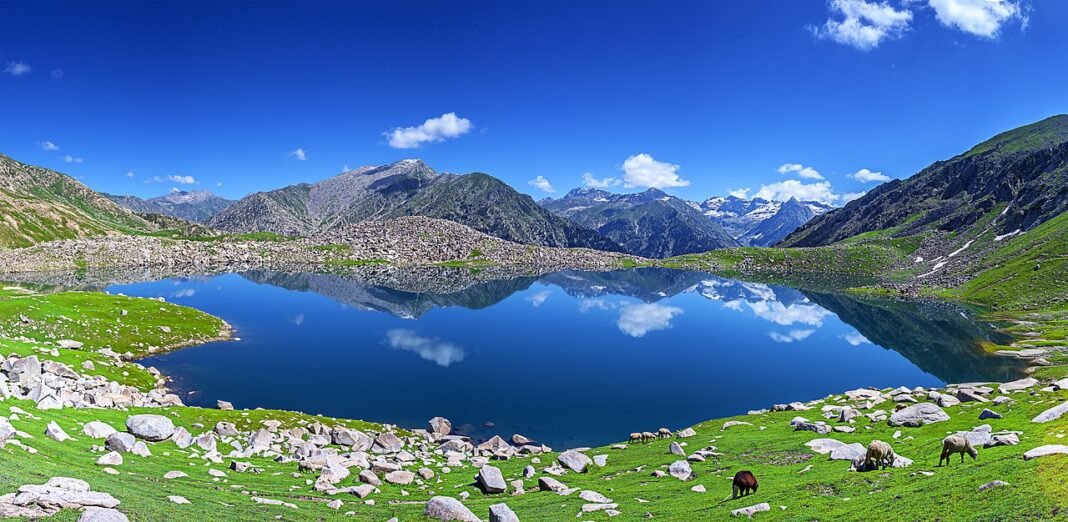
The lake itself is extraordinary. Shaped like a giant amoeba sprawled across the high plateau, its blue, gently rippling water sits in startling contrast to the rugged cliffs and cone-like peaks behind it. Large boulders of every shape ring the shore, carpets of green grass and wildflowers edge the water, and the whole scene is framed by the foothills of Spinsar mountain. Photographers call it one of the most dramatic lake compositions in the Hindu Kush–Karakoram–Himalaya region, and the light at dawn and dusk over the water is unforgettable.
Then there is the human touch that makes Daral unique: the ancient mosque standing near the shore, where shepherds and visitors have prayed and sheltered for generations. It is a small, humble building, but it anchors the lake in living tradition — this is not a postcard wilderness but a working summer pasture where nomad families bring their herds each year, and you are a guest in their season.
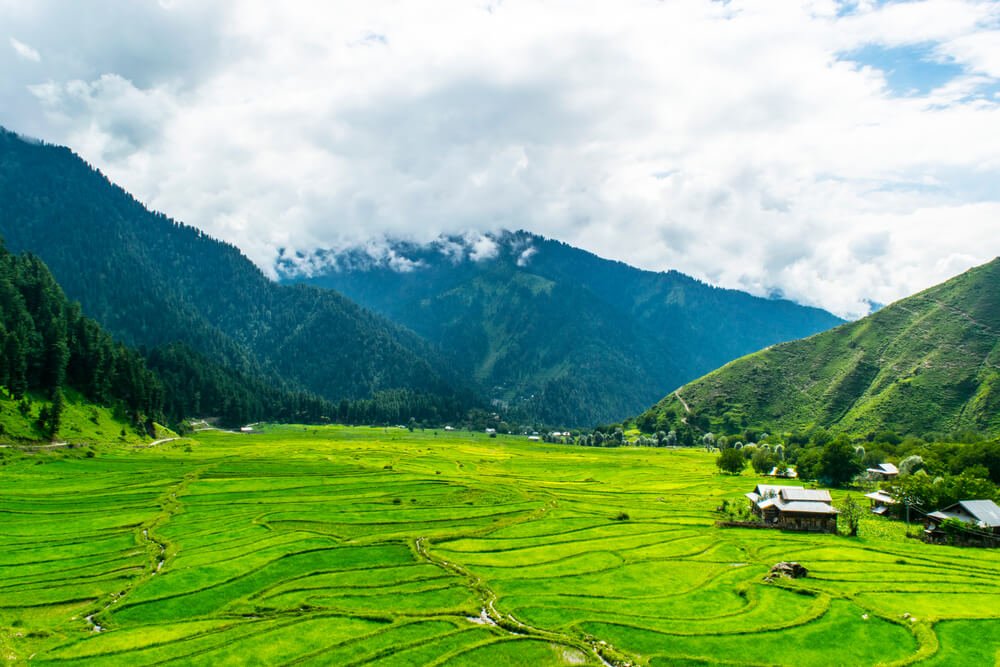
Perfect for? Trekkers with reasonable fitness, camping groups, landscape photographers and anyone who wants to see Swat beyond the jeep tracks. If you want an easy day out, go to Mahodand; if you want the Swat that adventurers dream about, go to Daral. The preferred approach from Gabina Jabba — meadows, forests, glaciers and flower-filled streams along the way — is often described as one of the most beautiful treks in the valley.
History of Daral Lake
Daral Lake has no recorded human history in the conventional sense — no fort, no battle, no ruler’s inscription. Its story is written in ice. The name itself is older than any modern map: “Daral” is a Dardic word meaning stream or spring water, a reminder that this high valley was home to Dardic-speaking peoples long before the Pashtun and Gujjar migrations reshaped the region’s demographics.
The lake is glacial in origin, fed by the melting glaciers of the surrounding peaks, and it gives rise to the Daral Khwar, the main left tributary of the Swat River. For centuries it has been a summer grazing ground for nomad and shepherd communities, who built the small mosque by the shore as a place of prayer and an overnight resting place — a tradition that continues today. Local legends and myths cling to the lake, as they do to most remote high lakes in the region.
Daral entered the wider travel imagination relatively recently, as Swat’s tourism revived in the 2010s and trekkers began mapping routes beyond Kalam. Travel features — including a well-known Dawn travelogue — introduced the lake to national audiences as a jewel of the Bahrain highlands. Today it is known as one of Swat’s great alpine treks, still uncommercialised, still reachable only by boot and willpower.
Top Things to Do in Daral Lake
Trek the Classic Route from Bahrain
The traditional approach climbs from Bahrain for three to four hours over bare mountains before descending east to the lake. It is a stiff, honest mountain walk with huge views. Start early, carry water, and consider a local guide — the trail is unmarked in places.
Take the Gabina Jabba Trail
The most favoured route today: drive the unmetalled jeep road to Gabina Jabba hilltop, then trek four to five hours through meadows, dense forest, flower-filled pastures and glacier-fed streams to the lake. Many trekkers call this the most beautiful approach in Swat. An overnight halt on the way is common — one trekking party famously spent the night midway before reaching the lake.
Visit the Ancient Lakeside Mosque
The small old mosque near the shore is a place of quiet significance. Shepherds pray here and travellers rest here for the night. Sit a while, respect the space, and imagine the generations of herders who have sheltered under its roof.
Camp by the Water
There are no hotels and no facilities at the lake — camping is the only way to stay. Pitch tents on the grassy edges, keep a respectful distance from the water, and carry everything out. Summer nights are cold even in July; bring a proper sleeping bag.
Photograph the Amoeba Lake
From the higher ground around the shore you can capture the lake’s famous amoeba shape. Dawn is the best light: the cone-like peaks behind the lake catch the first sun while the water lies still. Frogs leaping in the shallows make for a lively foreground.
Meet the Nomad Camps
In summer the surrounding pastures host nomad families with their herds. A polite greeting, shared tea or a purchased meal is often the highlight of the trip — these are the people who know Daral best.
Famous Places In and Around Daral Lake
- Saidgai Lake: Another alpine lake to the southwest — a rigorous two-hour trek from Daral.
- Gabina Jabba: The flower-filled hilltop trailhead with meadows, forests and streams.
- Bahrain Town: The riverside bazaar town at the base of the trek, famous for handicrafts and trout.
- Kalam Valley: The upper-Swat hub 99 km north of Mingora, gateway to Mahodand and Utror.
- Mahodand Lake: Swat’s famous jeep-accessible alpine lake in Usho Valley.
- Lalku Valley: An alternative six-hour trek approach to Daral.
- Malam Jabba: Swat’s ski resort and summer hiking base — see our Malam Jabba travel guide to combine both trips.
Daral pairs naturally with the rest of the Explore Pakistan high-mountain series — plan a week and take in the whole of upper Swat.
How to Reach Daral Lake
Reaching Daral Lake is a two-part journey: drive to the trailhead, then walk. From Islamabad, take the Swat Expressway to Mingora (roughly 4–5 hours, about 240–280 km), then continue up the Swat valley road to Bahrain (about 60 km, 2 hours). Bahrain is the base: stock up here on food, water and any gear, and hire a local guide — strongly recommended, as the high trails are unmarked and weather changes fast.
From Lahore, add the motorway leg to Islamabad (about 4 hours) before the Swat drive, making this a two-day journey most travellers split with a night in Mingora or Bahrain. From Karachi, fly to Islamabad (or to Saidu Sharif if flights are available) and drive from there; the road journey from Karachi is well over 1,500 km.
The nearest airport is Islamabad International Airport. The trekking season runs roughly June to September — in winter the trails are closed under heavy snow. From Bahrain the trek takes 3–4 hours; from Gabina Jabba hilltop (reached by jeep road) it takes 4–5 hours. Alternative approaches run from Saidgai Lake (about 2 hours of rigorous trekking) and Lalku valley (about 6 hours). There is no jeep or vehicle access to the lake itself — the last stretch is always on foot, over bare mountain and boulder fields.
Route Details
- Islamabad → Mingora via Swat Expressway (about 4–5 hours).
- Mingora → Bahrain via the Swat valley road (about 60 km, 2 hours).
- Bahrain → trailhead: either start trekking directly from Bahrain (3–4 hours to the lake), or take a jeep to Gabina Jabba hilltop.
- Gabina Jabba → Daral Lake: 4–5 hours of continuous trekking through meadows, forests and glacier streams. Many parties halt overnight midway.
- Descend east to the lake shore; camp on the grassy edges, well back from the water.
Where to Stay in Daral Lake
Let us be clear: there are no hotels at Daral Lake, and there should not be. Your stay is a tent on the pasture, and that is the whole point. Bahrain, Kalam and Mingora offer the full range of Swat accommodation — from budget guesthouses to comfortable mid-range hotels — and this is where you sleep before and after the trek.
On the mountain itself, camping is the only option. Bring a sturdy tent, a warm sleeping bag (nights at 3,505 metres are cold even in August), a sleeping mat, and all food and cooking gear. The ancient mosque by the lake serves as an emergency shelter and resting place, as it has for shepherds for generations — but plan to be self-sufficient. Camp away from the water’s edge to protect the fragile shoreline, pack out all waste, and never cut the sparse high-altitude vegetation for firewood.
Where to Eat: Local Foods of Daral Lake
On the trail, you eat what you carry — pack high-energy food from Bahrain: dried fruit, nuts, bread, and plenty of water. But the Swat valley base towns are a food destination in their own right. The undisputed star is fresh trout — rainbow and brown trout from the Swat River, fried or grilled riverside in Bahrain and Kalam and served with spicy sauces and traditional qehwa. Chapli kebab sizzles at every bazaar stall, and Kalam’s food street adds lamb karahi, kabuli pulao and the local green-leaf dish warjalay.
Breakfast in the mountains means fresh paratha and doodh patti (milky chai); evenings end with qehwa. A riverside trout meal is moderately priced and worth every rupee — budget for it as the reward waiting at the end of your trek. On the trail itself, the nomad camps sometimes share tea and simple food with respectful visitors — accept graciously and offer payment.
Weather in Daral Lake
At 3,505 metres, Daral Lake has an extreme alpine climate. The lake is accessible only in summer; for the rest of the year the trails are buried in snow. Even in July and August, nights are cold and storms can arrive with little warning — pack for winter conditions on a summer trek.
| Season | Temperature Range | Conditions |
|---|---|---|
| Winter (Nov–Mar) | -15 to -2 °C | Deep snow; trails closed and the lake frozen. No access. |
| Spring (Apr–May) | -2 to 10 °C | Snow melting, trails still blocked or dangerous. Not recommended. |
| Summer (Jun–Aug) | 5 to 18 °C | Trekking season. Meadows in bloom, streams full, long daylight. Cold nights. |
| Autumn (Sep–Oct) | 0 to 12 °C | Early September still possible; snow returns by late October. Short window. |
Language and Culture of Daral Lake
The Bahrain and upper Swat region is home to Pashtun communities alongside the indigenous Gawri (Kalami) people of Swat Kohistan, with Gujjar nomad families moving through the high pastures in summer. Pashto and Gawri are the everyday languages; Urdu works with guides, hotel staff and most younger locals.
Culture here is mountain-Pashtun: deeply hospitable, conservative and honour-bound. Guests are protected and fed generously. Dress modestly, ask before photographing people (especially women), and treat the nomad camps with respect — you are walking through their seasonal home. The lakeside mosque is a place of worship first and a shelter second; behave accordingly. Leave no trace: this fragile alpine environment recovers slowly from litter and damage.
Shopping in Daral Lake
There is nothing to buy at the lake — and that is the beauty of it. Do your shopping in Bahrain and Kalam bazaars on the way: Swati embroidered shawls and woollen cloth, hand-carved wooden items, local honey, dried apricots and walnuts, and the famous Swat trout (packed fresh for the journey home). Kalam Bazaar is the main handicraft stop, with jewellery, carpets and ethnic apparel. Prices are negotiable; buy from local shops rather than middlemen where you can. No malls, no brands — just mountain craft.
Travel Tips for Daral Lake
Packing Essentials
This is a serious mountain trek: broken-in hiking boots, warm layers plus a down jacket, waterproof shell, tent, sleeping bag rated for below freezing, stove and food, water purification, first-aid kit, headlamp, sun protection, and a power bank. Even in August, pack as if for late autumn.
Safety Tips
Hire a local guide — the trails are unmarked and weather shifts fast at 3,500 metres. Start treks early, turn back if storms build, and never trek alone. Altitude affects everyone differently; ascend gradually and hydrate. Tell your hotel in Bahrain your route and expected return.
Money & Connectivity
Carry all cash from Mingora or Bahrain — no ATMs on the trail, no card payments anywhere near. Mobile signals fade quickly above the valley floor; expect no coverage at the lake. Download offline maps before you leave Bahrain.
Best Time to Visit Daral Lake
Summer (June to August) — The Only Real Season
The trails are open, the meadows bloom with wildflowers, the nomad camps are in residence and the lake is at its most beautiful. July is the sweet spot. This is when to go — the rest of the year the mountain is closed.
Early September — The Quiet Window
The crowds thin, the light turns golden and the lake stays accessible for the first weeks — but watch the weather; the first heavy snow can arrive with little warning.
October to May — Closed
Heavy snow buries the trails and the lake freezes. Plan for next summer instead, and use the winter to get fit for the climb.
Final Thoughts
Daral Lake is Swat’s answer to the question every trekker eventually asks: where can I go that still feels undiscovered? The answer is a 3,505-metre sheet of glacial water shaped like an amoeba, ringed by boulders and wildflowers, watched over by an ancient mosque and the summer camps of shepherds. It asks for effort — real, leg-burning, lung-filling effort — and repays it with one of the great lake views in Pakistan.
If you are fit, prepared and respectful of the mountain, Daral will give you a story you will tell for years. Go in July, go with a guide, camp under the stars, and come back down with the particular quiet that only a hard-earned view can give. This daral lake travel guide has given you the route; the mountain will do the rest.
FAQs
Where is Daral Lake located?
Daral Lake is an alpine glacial lake in the Bahrain area of Swat Kohistan, Swat Valley, Khyber Pakhtunkhwa, at an elevation of 3,505 metres (11,500 feet), in the foothills of Spinsar mountain.
What is the best time to visit Daral Lake?
June to August is the trekking season; July is ideal. The lake is inaccessible in winter when trails are buried in snow.
How do I reach Daral Lake?
Drive to Bahrain via Mingora, then trek 3–4 hours from Bahrain or 4–5 hours from Gabina Jabba hilltop. There is no vehicle access to the lake — the final stretch is always on foot.
Is Daral Lake safe for tourists?
For fit, prepared trekkers with a local guide, yes. The trail is unmarked and remote — go with a guide, start early, carry full mountain gear, and inform your hotel of your plans.
Is Daral Lake suitable for families?
Only for families with older, fit children and trekking experience. The climb is strenuous and there are no facilities at the lake. Young children and elderly travellers should choose Mahodand or Kalam instead.
Where can I stay near Daral Lake?
Camping at the lake is the only option on the mountain. Before and after the trek, stay in the hotels and guesthouses of Bahrain, Kalam or Mingora.
What food is available?
Carry all trail food from Bahrain. In the valley towns, don’t miss fresh Swat trout, chapli kebab and qehwa — the classic Swat food experience.
What is special about Daral Lake?
Its amoeba-like shape, extreme altitude, the ancient mosque on its shore used by shepherds for generations, and the fact that it can only be reached by a serious trek — keeping it wild and uncrowded.