FBISE Question Paper Printing Starts at Exam Centres
FBISE question paper printing has begun at examination centres, with the Federal Board of Intermediate and Secondary Education introducing on-the-spot printing to stop paper leaks and cut costs.
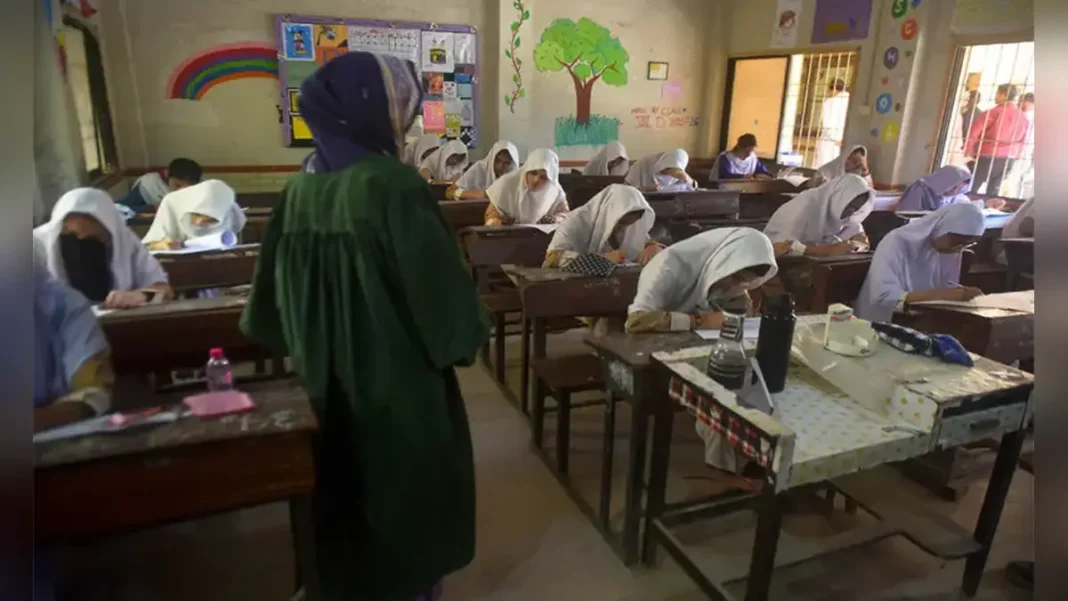
The facility is live at 35 centres during the ongoing second annual examinations. Papers are shared online just 15 minutes before the exam starts, and only the superintendent and head of the school can access them, through separate passwords. They then print the required number of copies on their own printers.
“We are receiving very good feedback from 35 centres where we share question papers online just 15 minutes before the start of the examination,” FBISE Chairman Dr Ikram Ali Malik told Dawn. He said the board would pay schools for the number of papers printed.
The board plans to phase out the manual, bank-based distribution of question papers at all 1,000 centres within a year.
FBISE question paper printing: how it works
Under the old system, printed papers travelled to banks for storage and then to centres, a chain that created chances for leaks and added transport costs. The new system keeps the paper digital until minutes before the exam, and only two people at each centre hold the passwords to open it.
The online system is not new for the board. It has run at FBISE’s foreign examination centres since 2018, and it was tried at local centres a few years ago before being discontinued. The board has now decided to bring it back gradually.
“Our target is to implement it at all 1,000 centres within a year,” Dr Malik said. Schools and colleges are being consulted about internet facilities at their examination centres, so that no centre is left behind.
The change matters for students and parents because leaked papers have repeatedly forced re-examinations and thrown study plans into chaos. A paper that only exists 15 minutes before the exam is far harder to leak, and the board says the system also saves money on transport and bank storage.
FBISE is also planning a bigger change for the years ahead. The board has already announced bilingual question papers for matric students from 2027, a step that will give students the paper in both Urdu and English.
Computer-based tests from 2027
The board is also planning computer-based testing for the multiple-choice questions (MCQ) portion of examinations. Talks are under way with schools and colleges to arrange alternative energy sources, so that computer laboratories keep running without interruption.
Under the proposed system, examinations would comprise 50 per cent descriptive questions and 50 per cent MCQs. The board wants to introduce computer-based testing in the annual examinations of Class 9 and first-year students in 2027, starting with five subjects: Physics, Chemistry, Biology, Mathematics and Computer Science.
“Through this system, human involvement in checking MCQs will be eliminated, and students will receive their results on the same day through the system,” Dr Malik said.
He added that one major computer laboratory shared by a cluster of four to five schools would be sufficient to conduct the tests. Talks with schools and colleges on the plan were under way.
Law Admission Test draws 42,547 candidates
The Higher Education Commission (HEC), through its Education Testing Council, has conducted the 35th Law Admission Test (LAT) to ensure standardised, transparent and merit-based admission testing across the country.
As many as 42,547 candidates registered for the examination, while more than 35,523 appeared at 103 examination centres in 28 cities across the country, according to the commission.
The test is one of several national examinations that rely on secure paper handling. Boards across the country are tightening their examination systems, from Punjab’s mid-term examinations to the national Law Admission Test. HEC is also offering 61 Chinese government scholarships for students planning their next step after these examinations.
Frequently asked questions
How does FBISE on-the-spot printing work?
Question papers are shared online 15 minutes before the exam. Only the superintendent and the head of the school can access them, through separate passwords, and they print the required copies at the centre.
How many centres use the system?
The facility is live at 35 centres during the second annual examinations. FBISE aims to extend it to all 1,000 centres within a year.
When will computer-based testing start?
FBISE wants to introduce computer-based testing for MCQs in the Class 9 and first-year annual examinations in 2027, starting with Physics, Chemistry, Biology, Mathematics and Computer Science.
What is the Law Admission Test?
It is the HEC’s standardised test for admission to law programmes. The 35th test drew 42,547 registered candidates, with more than 35,523 appearing at 103 centres in 28 cities.
Why is FBISE changing the system?
The board introduced on-the-spot printing to stop question paper leaks and to cut the cost of transporting and storing printed papers in banks.