Some journeys are about comfort. Others are about the feeling of standing somewhere almost no one else has stood, with the desert wind in your ears and a hundred-year-old wall holding back the mountains. If you are the second kind of traveler, the Fort wall of Jhalawar belongs on your list. Tucked into a mountain pass some 80 kilometers south-west of Kharan town in Balochistan, this is one of Pakistan’s most off-the-beaten-path heritage sites — a federal government-protected monument that most Pakistanis have never even heard of.
This fort wall of Jhalawar travel guide gives you everything you need to plan the trip: the real, documented history of the wall, how to reach it, the best time to go, what to carry, and what it honestly feels like to travel through one of the remotest corners of the country.
Quick Facts
- Location: Jhalawar Pass, Kharan District, Balochistan, Pakistan (around 28.20°N, 64.92°E)
- Altitude: Desert lowland pass in the Kharan region — not a high-altitude site
- Famous For: An 83-meter fortification wall of burnt bricks closing a mountain pass, with three rounded bastions and vaulted chambers
- Nearest City: Kharan town, about 80 km to the north-east
- Accessibility: Road only — a kachha (unpaved) track of poor condition leads up to the pass; high-clearance or 4×4 vehicle strongly advised
- Known Landmarks: Nauroze Fort and Kharan Fort in the same district, built by the same ruling family
- Best For: Heritage adventurers, photographers, desert explorers, and travelers collecting Pakistan’s least-visited monuments
Why Visit Fort wall of Jhalawar
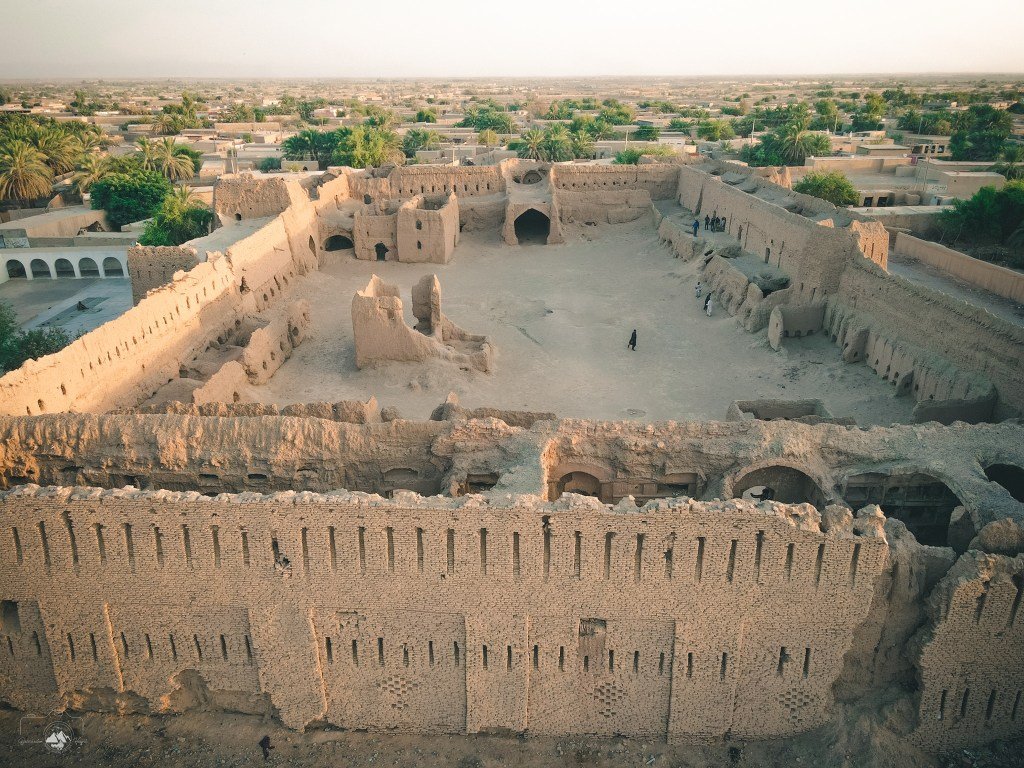
Let us be honest with you first: the Fort wall of Jhalawar is not a polished tourist attraction. There is no ticket booth, no cafe, no paved path, and no souvenir shop. What there is — and it is worth the drive — is one of the most atmospheric ruins in Balochistan. Picture it: a wall of burnt bricks, about 83 meters long, running north to south across the mouth of a mountain pass, both of its ends disappearing into the mountain foot as if the hills themselves were holding it upright. Behind it, open space stretches between the cliff and the wall. Inside the thickness of the wall are chambers with vaulted roofs, now mostly ruined, and along its length rise three rounded bastions — one over the entrance, one near the center, and one in the northern portion.
This is the kind of place where history feels physical. The wall was raised about a century ago by Sardar Amir Azad Khan of the Nosherwani family — the same family that ruled the Kharan chiefship and built the great Nauroze Fort. It was not a palace or a royal residence; it was a working military barrier, built to hold a mountain pass. Standing in front of those bastions, with the desert all around and no sound but the wind, you understand exactly why. Whoever controlled the pass controlled movement through these hills, and this wall was the lock on the door.
For photographers, the Fort wall of Jhalawar is a dream. The burnt-brick masonry glows in the morning and evening light, the bastions throw long shadows across the pass, and the vaulted chambers inside the wall are the kind of ruin you usually have to travel to some famous world heritage site to see. For heritage travelers, there is the added pull of rarity. This monument is protected under Pakistan’s Antiquities Act of 1975 and is federal government property — a genuinely documented piece of the country’s heritage — yet it sees only a trickle of visitors a year. You will very likely have it entirely to yourself.
One important clarification before you plan anything: do not confuse this place with Jhalawar in Rajasthan, India, which has its own famous forts. The Fort wall of Jhalawar in this guide sits in Kharan District, Balochistan, Pakistan. If you search online and see results about Gagron Fort or Garh Palace, you are looking at the Indian Jhalawar — the wrong country entirely. This guide is about Pakistan’s Jhalawar Pass, and it is a very different, much wilder adventure.
History of Fort wall of Jhalawar
The documented history of the Fort wall of Jhalawar comes from the Federal Department of Archaeology and Museums, which lists the site as a protected monument of the historic period (19th century CE). According to the department’s official record, the remains at Jhalawar Pass sit about 80 kilometers south-west of Kharan town, and Jhalawar itself is a mountain pass. A kachha track of poor condition leads up to it — a detail that has barely changed in the decades since the record was written.
The wall was built about a century ago by Sardar Amir Azad Khan, a chief of the Nosherwani family. The Nosherwanis ruled the Kharan chiefship, and the same family raised the far better-known Nauroze Fort. In other words, this wall is a genuine product of the princely-era Balochistan of the late 19th and early 20th centuries — a period when local chiefs fortified passes, towns, and wells across a harsh desert landscape to protect their territory and the caravans that moved through it.
What was built is precise and telling. It is not a full fort but a fortification wall, about 83 meters long, running north-south across the mouth of the pass. Both ends join with the mountain foot, so the pass is sealed except through the guarded entrance. West of the wall lies a considerable open space between the mountain cliff and the fortification — likely the staging area for the guards and anyone who had to stop and be checked at the pass. Inside the wall’s thickness, chambers with vaulted roofs were built; they are now almost entirely ruinous. And along the wall stand three rounded bastions: one directly over the entrance, one almost in the center, and the third in the northern portion. It is a small, smart, efficient piece of military engineering — built of burnt bricks, designed to do one job, and still doing the job of marking the pass a century later.
The monument’s legal status today reflects its importance. It is owned by the federal government and is protected under the Antiquities Act of 1975 (as amended in 1992), listed in the federal gazetteer “Archaeological Sites and Historical Monuments Protected Under the Antiquities Act, 1975.” That protection means the wall cannot legally be altered or damaged — though its remoteness means it relies mostly on its own isolation for preservation. The vaulted chambers continue to decay, and there is no active conservation program visible at the site.
Top Things to Do in Fort wall of Jhalawar
Walk the 83-Meter Wall
The single essential thing to do here is to walk the full length of the fortification, slowly. Start at the southern end where the wall meets the mountain foot and work your way north. You will pass the central bastion and finish at the northern one, getting a feel for how the wall seals the pass. Look closely at the brickwork — these are burnt bricks laid about a century ago, and the craftsmanship in the rounded bastions is still impressive. Because both ends of the wall run into the mountains, the walk gives you a complete sense of the site’s purpose: from inside the pass, you are inside the guarded zone; step past the entrance bastion, and you are on the other side.
Explore the Vaulted Chambers
Inside the thickness of the wall are chambers with vaulted roofs — the most architecturally interesting feature of the site. They are now in a ruinous condition, so explore carefully and do not climb on unstable masonry. But standing inside a vaulted chamber that guards built into a desert pass wall a hundred years ago is a remarkable experience, and the light filtering through the ruined roofs makes for extraordinary photographs.
Photograph the Three Bastions
The three rounded bastions — over the entrance, at the center, and in the northern portion — are the visual heart of the Fort wall of Jhalawar. Early morning and late afternoon are the best times: the low desert sun rakes across the brickwork and the bastions cast dramatic shadows. Bring a wide-angle lens if you have one, because the wall, the pass, and the open space between the cliff and the wall all make a single composition.
Survey the Pass and the Open Ground
Climb a little way up the hillside east of the wall for a view down over the whole fortification. From above, the 83-meter line of the wall, the three bastions, and the open ground west of the wall between the cliff and the fortification read like a diagram of frontier defense. It is the best way to understand what you are looking at — and the panorama of the desert pass stretching away in both directions is magnificent.
Famous Places In and Around Fort wall of Jhalawar
- Kharan Fort — the district’s main historic fort, in Kharan town, built by the same Nosherwani family.
- Nauroze Fort — the great fortress of the Kharan chiefs, also raised by the Nosherwanis; the most famous fort of the district.
- Kharan town bazaar — your base for supplies before heading to the pass; the last stop for fuel, water, and food.
- The Kharan desert landscape — the vast, stark desert around Kharan is itself an attraction for travelers who love empty, dramatic country.
How to Reach Fort wall of Jhalawar
Reaching the Fort wall of Jhalawar is an expedition, not a day trip from anywhere comfortable. The site lies about 80 km south-west of Kharan town, at the end of a kachha track of poor condition. Your journey has two legs: getting to Kharan, and then getting from Kharan to the pass.
From Quetta: Kharan is the district headquarters of one of Balochistan’s largest districts, and Quetta is the natural gateway. The drive from Quetta to Kharan is long — around 600 km by road via the N-25 and connecting routes — and takes the best part of a full day. Plan to overnight in Kharan town before attempting the pass.
From Karachi: This is a very long drive. The route runs up the N-25 (RCD Highway) through Khuzdar and Surab toward the Kharan region. Realistically, this is a two-day journey with an overnight stop. Only attempt it with a well-maintained vehicle, extra fuel, and someone in the party who knows the route.
From Islamabad or Lahore: The sensible route is to reach Quetta first (by air to Quetta, then by road), and then drive on to Kharan. Flying into Quetta saves two days of driving across the plains and lets you tackle the desert leg with fresh energy. The nearest airport with regular commercial flights is Quetta International Airport.
Transport options: Public transport to Kharan town exists in the form of buses and coaches from Quetta, but from Kharan to Jhalawar Pass there is no public transport at all. You need a private 4×4 or a high-clearance vehicle with a local driver who knows the track. Arrange this in Kharan town — ask at your hotel or the bazaar. Do not attempt the kachha track in a low-clearance car, especially after rain.
Route Details
- Step 1: Reach Kharan town (district headquarters). Stock up on fuel, drinking water, and food — there are no facilities at the pass.
- Step 2: From Kharan town, take the road/tracks heading south-west toward Jhalawar Pass (around 80 km). The track is kachha and in poor condition — expect slow going.
- Step 3: Arrive at the mouth of Jhalawar Pass, where the fortification wall crosses the pass entrance. Park clear of the wall and explore on foot.
- Step 4: Return to Kharan town the same day — do not plan to camp at the site unless you are fully equipped and traveling with experienced locals.
Where to Stay in Fort wall of Jhalawar
There is no accommodation at Jhalawar Pass itself, and no hotels anywhere near the wall. Your base is Kharan town. Kharan has basic guesthouses and small hotels catering to travelers, traders, and government visitors — simple rooms with beds and attached baths, nothing fancy, but serviceable and budget-friendly. Do not expect online booking; rooms are usually arranged on arrival or through a local contact. Because this is a remote district, it is wise to call ahead through your driver or a Kharan contact to confirm a room before you arrive, especially if you are traveling with family. For the pass itself, treat it strictly as a day visit: go in the morning, explore, and return to Kharan before dark. Camping at the site is possible for fully self-sufficient expedition groups, but it is not recommended for casual travelers — there is no water, no shade, and no mobile signal guarantee.
Where to Eat: Local Foods of Fort wall of Jhalawar
Eat in Kharan town before and after your visit, because there is nothing to eat at the pass. The food of this part of Balochistan is classic Baloch cuisine, built around meat, fire, and simplicity. The dish you must try is sajji — whole lamb or chicken roasted on skewers over an open fire, seasoned with just salt — a signature of Balochistan that tastes best in the land where it was born. You will also find khaddi kebab (meat slow-roasted in a pit), hearty mutton karahi, fresh tandoori roti, and lassi made from local milk. Dates from the region’s groves are excellent. Food in Kharan’s small hotels and dhabas is simple and budget-friendly — a full meal typically costs very little by city standards. Carry your own drinking water and snacks for the pass itself; the 80-km track each way means you will be out for most of the day.
Weather in Fort wall of Jhalawar
The Jhalawar Pass sits in the Kharan desert, and the climate is extreme desert: blazing summers, surprisingly cold winter nights, and very little rain. The heat of midday in summer is genuinely dangerous for anyone walking around an exposed ruin, while winter mornings can be crisp and beautiful. Spring and autumn are the comfortable windows.
| Season | Temperature Range | Conditions |
|---|---|---|
| Winter (Dec–Feb) | Around 5–20°C days, near freezing at night | Clear, dry, cold nights; best light for photography |
| Spring (Mar–Apr) | Around 20–35°C | Pleasant and dry; ideal for visiting |
| Summer (May–Sep) | Around 35–45°C, hotter at midday | Extreme heat; avoid midday exploration; carry extra water |
| Autumn (Oct–Nov) | Around 20–32°C | Warm, dry, comfortable; second-best window |
Language and Culture of Fort wall of Jhalawar
The language of the Kharan region is Balochi, and the people are Baloch, organized in tribal structures — the Nosherwanis being the historically dominant family of this district. Urdu is widely understood in Kharan town, especially among shopkeepers, hotel staff, and drivers. English is rare outside official circles. Culturally, this is a conservative, traditional area. Dress modestly (long trousers and covered shoulders for men; women should dress conservatively and consider a headscarf in town), ask before photographing people, and greet elders with respect — a little courtesy goes a very long way here. If you hire a local driver or guide, which you should, you will find Baloch hospitality genuine and generous: guests are honored, and a traveler who shows respect for local customs will be looked after.
Shopping in Fort wall of Jhalawar
There is no shopping at the pass — do your shopping in Kharan town’s bazaar. What is worth buying here is authentic and local: hand-embroidered Balochi garments and shawls with the district’s distinctive needlework, locally grown dates, and simple desert handicrafts. Prices are local prices, not tourist prices, and a little polite bargaining is normal. There are no shopping malls anywhere near Jhalawar Pass, and you should not expect any — this is frontier country, and its bazaar is the real thing.
Travel Tips for Fort wall of Jhalawar
Packing Essentials
Sun protection is non-negotiable: hat, sunglasses, sunscreen, and light, full-coverage clothing. Carry far more drinking water than you think you need — at least 3–4 liters per person for the day — plus snacks, a basic first-aid kit, and a power bank. A wide-angle camera lens, sturdy walking shoes with ankle support, and a headlamp (in case the return runs late) complete the kit. If you travel in winter, bring a warm layer for the cold desert night.
Safety Tips
This is a remote area of Balochistan. Travel in daylight only, never drive the track at night, and go with a local driver who knows the route. Inform your hotel in Kharan of your plans and expected return time. Check the current security and travel situation for Kharan district before you go, and consider traveling with a group rather than alone. Respect the monument: do not climb on the bastions or dig around the chambers — it is a protected antiquities site, and damaging it is a legal offense.
Money & Connectivity
Carry all the cash you need in Pakistani rupees — there are ATMs in Kharan town but none anywhere near the pass, and you cannot rely on them working. Mobile signals are patchy to nonexistent on the track to Jhalawar Pass; download offline maps before leaving Kharan, and let someone know your route. Do not count on being able to call for help from the site.
Best Time to Visit Fort wall of Jhalawar
Winter (December–February)
The best season for most travelers. Days are clear and mild, the desert light is superb for photography, and walking the wall is comfortable. Nights are cold — bring warm clothing if you stay over in Kharan.
Spring (March–April)
Equally good. Temperatures are pleasant, the air is clear, and the track is usually in its best condition after winter. This is the sweet spot for a comfortable expedition.
Summer (May–September)
Only for the very determined. Midday temperatures can reach the mid-40s, the sun is brutal on the exposed site, and the track can be punishing. If you must go in summer, start at dawn and be back in Kharan by early afternoon.
Autumn (October–November)
A fine second choice. The heat eases, the skies stay clear, and the desert takes on beautiful golden tones. A great time for photography.
Final Thoughts
The Fort wall of Jhalawar will never be a mass-tourism destination, and that is exactly its magic. It is a real, documented, federally protected monument standing in one of the emptiest, most dramatic landscapes in Pakistan — an 83-meter wall of burnt bricks holding a mountain pass, built by a Baloch chief a century ago, with three bastions and ruined vaulted chambers that most of the world has never seen. Getting there takes effort, planning, and a tolerance for rough tracks and long drives.
But if you are a traveler who measures a trip in stories rather than selfies, this is one of the great untold stories of Pakistani heritage. Go in winter or spring, go with a local driver, carry water and respect, and stand at the entrance bastion as the sun drops behind the pass. You will understand, in a way no book can teach, why someone built a wall across this exact spot. For more journeys into Pakistan’s hidden heritage, explore our Explore Pakistan collection.
FAQs
Where is the Fort wall of Jhalawar?
It is at Jhalawar Pass in Kharan District, Balochistan, Pakistan, about 80 km south-west of Kharan town. It is not the Jhalawar of Rajasthan, India — that is a different place in a different country.
What is the best time to visit the Fort wall of Jhalawar?
Winter (December–February) and spring (March–April) are best, with clear skies and comfortable temperatures. Avoid the extreme summer heat of May–September.
How do I reach the Fort wall of Jhalawar?
Fly or drive to Quetta, drive on to Kharan town (around 600 km, a full day), then hire a 4×4 with a local driver for the 80-km kachha track south-west to Jhalawar Pass. There is no public transport to the site.
Is the Fort wall of Jhalawar safe to visit?
It is a remote area — travel in daylight with a local driver, inform your hotel of your plans, check current conditions for Kharan district before going, and travel in a group rather than alone.
Is the Fort wall of Jhalawar suitable for families?
It is best suited to adventurous adults and older children. The long rough track, lack of facilities, and extreme summer heat make it challenging for small children or elderly travelers.
Where can I stay near the Fort wall of Jhalawar?
In Kharan town, which has basic guesthouses and small hotels. There is no accommodation at the pass — visit as a day trip and return to Kharan before dark.
What food is available near the Fort wall of Jhalawar?
Eat in Kharan town: Baloch sajji, khaddi kebab, mutton karahi, tandoori roti, and local dates. Carry your own water and snacks for the pass — there is nothing to eat or drink at the site.
Why was the wall built across the pass?
It was a military fortification built about a century ago by Sardar Amir Azad Khan of the Nosherwani family to control movement through Jhalawar Pass — whoever held the pass controlled the route, and the 83-meter wall with its three bastions was the lock on the door.