Quick Facts
- Location: Ghizer District, Gilgit-Baltistan, on the Gilgit River northwest of Gilgit city
- Altitude: around 1,899 metres (6,230 feet)
- Famous For: District capital of Ghizer, the old stone fort and defense tower, and its position as the gateway to Phandar, Gupis, Yasin, and Ishkoman
- Nearest City: Gilgit, about 72 kilometres to the southeast (2 to 3 hours by road)
- Accessibility: Paved road from Gilgit along the Gilgit River; Gilgit itself is reached by the Karakoram Highway or by air from Islamabad
- Known Landmarks: Gahkuch Fort and the old defense tower, the Ghizer River, Sumal Valley views
- Best For: Slow travelers, culture seekers, anglers, and anyone using it as a base for the Ghizer valleys
Why Visit Gahkuch
Here is a truth about northern Pakistan: everyone rushes to Hunza, and almost nobody stops in Ghizer. Gahkuch — the quiet district capital tucked into a mountain bowl 72 kilometres northwest of Gilgit — is where you go when you have seen the famous valleys and want the real one. It is not a resort town. It is a working mountain town of bazaars, orchards, and river bends, and that is precisely its power.
Gahkuch’s greatest asset is position. Sit in its small bazaar with a cup of chai and you are at the crossroads of four of Gilgit-Baltistan’s finest valleys: Phandar with its great lake to the west, Gupis with Khalti Lake and its old fort, Yasin with its broad green floor and glaciers, and Ishkoman stretching toward the Afghan border. Travelers who base themselves in Gahkuch can day-trip or overnight into all of them, returning each evening to a town that is calm, affordable, and genuinely welcoming to outsiders.
The town has history under its feet, too. Above the settlement rises the old stone fort and defense tower of Gahkuch — a reminder that this was once a frontier stronghold guarding the routes between Gilgit, Chitral, and the high passes. The Ghizer River runs cold and fast below, and the surrounding peaks close in on every side, so that even the main street feels like it is inside a mountain amphitheatre.
Choose Gahkuch if you travel for authenticity rather than amenities. It is perfect for the second-time northern areas visitor, the angler chasing trout in uncrowded rivers, the photographer tired of the same Hunza frames, and the family that wants mountain air without mountain prices. Come with patience, leave with stories.
History of Gahkuch
Gahkuch’s history is the history of the frontier valleys between Gilgit, Chitral, and Kashmir — a long game of small principalities, shifting allegiances, and great-power rivalry played out in stone towers and mountain passes.
For centuries, the Ghizer region was a patchwork of tiny mountain states and chiefdoms sitting between the larger powers of the region. The old defense tower and fort at Gahkuch belong to this era: local rulers built stone strongholds on commanding heights to watch the river routes and defend against raids from neighboring valleys. The exact age of the Gahkuch fortifications is not documented in any source a traveler can verify — local accounts describe them as centuries old — but their dry-stone architecture and commanding position speak the unmistakable language of the region’s defensive tradition.
The 19th century redrew the map. After the Treaty of Amritsar in 1846, the whole region fell under the Dogra rulers of Jammu and Kashmir, and later the British established the Gilgit Agency to watch the northern frontier. The valleys of Ghizer — Punial, Yasin, Ishkoman, Gupis — were administered as part of this frontier system, their local rajas kept in place under British and Dogra oversight. Forts like those at Gahkuch and nearby Gupis (built in its present form in the early 1800s) served as administrative and military posts of this order.
Everything changed in the autumn of 1947. On 1 November 1947, the Gilgit Scouts — the local paramilitary force — rose against Dogra rule, and Gilgit-Baltistan acceded to Pakistan. Gahkuch, as the natural centre of the Ghizer valleys, became the district headquarters of the new Ghizer District. The 1998 census recorded the town’s population at 10,142; it has grown steadily since as roads improved and the valleys opened to domestic tourism. Today Gahkuch is an administrative town first and a tourist base second — which is exactly why it still feels real.
Top Things to Do in Gahkuch
Explore Gahkuch Fort and the Old Defense Tower
Climb to the old stone fortifications above the town — the fort and its defense tower are Gahkuch’s signature historical site. The structure is weathered and partly ruined, which only adds to its atmosphere: from the tower’s height you get a commanding view over the town, the river, and the ring of peaks. There is no ticket office and no guided tour; ask a local shopkeeper for the path. Go in the late afternoon for the best light on the stonework, and treat the old walls with respect — this is heritage, not a playground.
Walk the Ghizer River
The Ghizer River — which becomes the Gilgit River further east — runs right past Gahkuch, and its banks are the town’s natural promenade. An evening walk along the river, with the water roaring over the boulders and the peaks turning pink, is the simplest and one of the best things to do here. Anglers should note the river holds trout; check local permit rules before casting a line.
Day Trip to Phandar Valley
Phandar, west of Gahkuch toward the Shandur side, is home to one of Pakistan’s great alpine lakes — a vast, still sheet of water at high altitude, famous for trout fishing and its mirror reflections. It is the classic Gahkuch day trip: drive out in the morning, spend the middle of the day at the lake, and return by evening. The road is an adventure in itself, winding through some of the most dramatic scenery in Gilgit-Baltistan.
Visit Gupis and Khalti Lake
About 40 kilometres west of Gahkuch lies Gupis, a valley of maize fields and apple orchards with its own historic fort and, a short drive beyond, the beautiful Khalti Lake — a small, deep lake known for its trout and for freezing solid in winter, when villagers walk and play on the ice. Gupis makes an easy half-day trip from Gahkuch and pairs naturally with the fort-and-lake theme of the area.
Drive the Road to Yasin and Ishkoman
From Gahkuch the roads fan out to Yasin Valley — broad, green, and ringed by glaciers — and to Ishkoman, the long valley running toward the northwest. These are full-day or overnight excursions into some of the least-visited country in the north. The driving is slow and the scenery is relentless: terraced fields, walnut trees, glaciers hanging over the valley walls. Hire a local driver who knows the river crossings and the seasonal road conditions.
Experience the Bazaar and Local Life
Gahkuch’s bazaar is small, honest, and refreshingly free of tourist tat. Spend a morning here: drink chai at a roadside hotel, watch the town go about its business, buy apricots and walnuts from the local shops. For travelers interested in the culture of Gilgit-Baltistan rather than just its scenery, an hour in this bazaar teaches more than a day in a resort lobby.
Famous Places In and Around Gahkuch
- Gahkuch Fort and Defense Tower — the town’s old stone stronghold with panoramic views
- Phandar Lake — the great alpine lake of the Ghizer valleys, west of Gahkuch
- Khalti Lake — the small trout lake near Gupis, frozen in winter
- Gupis Fort — the historic fort of the neighboring valley, in poor but evocative condition
- Yasin Valley — broad green valley with glaciers, a full-day excursion
- Ishkoman Valley — the long northwestern valley toward the border country
- Shandur Pass — the high pass connecting Ghizer with Chitral, home of the famous polo ground
How to Reach Gahkuch
All roads to Gahkuch run through Gilgit. From Islamabad, the classic route is the Karakoram Highway (N-35): Islamabad to Gilgit is roughly 600 kilometres and 12 to 14 hours of spectacular, demanding driving — most travelers break the journey overnight in Besham or Chilas. The faster option is the 45-minute flight from Islamabad to Gilgit, which operates when the weather allows (mornings are most reliable); build a buffer day into your plans, because cancellations are common.
From Gilgit city, Gahkuch is about 72 kilometres northwest along the Gilgit River road — a 2 to 3-hour drive through gorge scenery that is a destination in its own right. The road is paved and passable year-round in normal winters, though heavy snow can cause temporary closures. From Lahore, fly or drive to Islamabad first and continue as above; from Karachi, fly to Islamabad and then to Gilgit, or fly to Islamabad and take the highway — either way, allow two full travel days.
Public transport exists in the form of vans and coasters running the Gilgit–Gahkuch route from Gilgit’s main van stands, but for valley excursions beyond the town (Phandar, Yasin, Ishkoman), a hired 4×4 with a local driver is strongly recommended — the side roads are rough, river crossings vary by season, and local knowledge is invaluable. Tour operators in Gilgit can arrange the whole Ghizer circuit with transport, stays, and guiding.
Route Details
- Step 1: Islamabad → Karakoram Highway (N-35) → Besham → Chilas → Gilgit (approx. 600 km, 12–14 hours; overnight stop recommended), OR fly Islamabad → Gilgit (approx. 45 minutes, weather-dependent)
- Step 2: Gilgit → northwest on the Gilgit River road → Gahkuch (approx. 72 km, 2–3 hours)
- Step 3: Gahkuch → west to Gupis and Khalti Lake (approx. 40 km), or onward to Phandar; north to Yasin and Ishkoman valleys (full-day excursions by 4×4)
Where to Stay in Gahkuch
As a district headquarters rather than a resort town, Gahkuch offers practical, affordable accommodation rather than luxury. The town has a spread of small hotels and guesthouses aimed at officials, traders, and the growing number of travelers — clean rooms, attached baths in the better ones, and genuinely budget-friendly rates. Do not arrive expecting a five-star property; do arrive expecting value and warmth.
For more comfort, many travelers sleep in Gilgit — which has the north’s widest range of hotels, from mid-range to genuinely upscale — and visit Gahkuch and the Ghizer valleys as day trips or short overnights. The Phandar side has seasonal tourist lodges and tent setups near the lake in summer. Wherever you stay, book ahead in July and August, when domestic tourism peaks and even small-town hotels fill up. In winter, confirm heating before you commit — nights at 1,900 metres are seriously cold.
Where to Eat: Local Foods of Gahkuch
The food of Ghizer is mountain food: simple, hearty, and built around what the valleys produce. Trout from the Ghizer River and Phandar Lake is the prized dish — grilled or fried, served with local bread. The valleys are famous for their apricots (fresh in summer, dried year-round), walnuts, and mulberries; apricot oil and dried apricots are both local staples and good souvenirs.
In Gahkuch’s bazaar hotels you will find the northern standards: daal, sabzi, chicken and mutton curries, fresh tandoori roti, and excellent chai. Dishes from the wider Gilgit-Baltistan tradition — hearty wheat and meat preparations — appear on local menus, and every traveler should try the local bread with apricot jam at breakfast. Meals here are budget-friendly by any measure; a full dinner at a bazaar hotel costs a fraction of what you would pay in Hunza’s tourist restaurants.
Weather in Gahkuch
At around 1,900 metres, Gahkuch has a true mountain climate: warm, pleasant summers, a crisp autumn, and a cold, snowy winter. The town sits lower than the high valleys around it, so it is milder than Phandar or Shandur — but winter still bites, and summer nights still need a light jacket. Rain is modest; most precipitation falls as winter snow.
| Season | Temperature Range | Conditions |
|---|---|---|
| Winter (Dec–Feb) | -8°C to 8°C | Cold with snowfall; nearby high valleys and passes close; Khalti Lake freezes |
| Spring (Mar–Apr) | 5°C to 20°C | Blossom season in the orchards; rivers swell with snowmelt |
| Summer (May–Sep) | 15°C to 30°C | Warm days, cool nights; best season for all valley excursions |
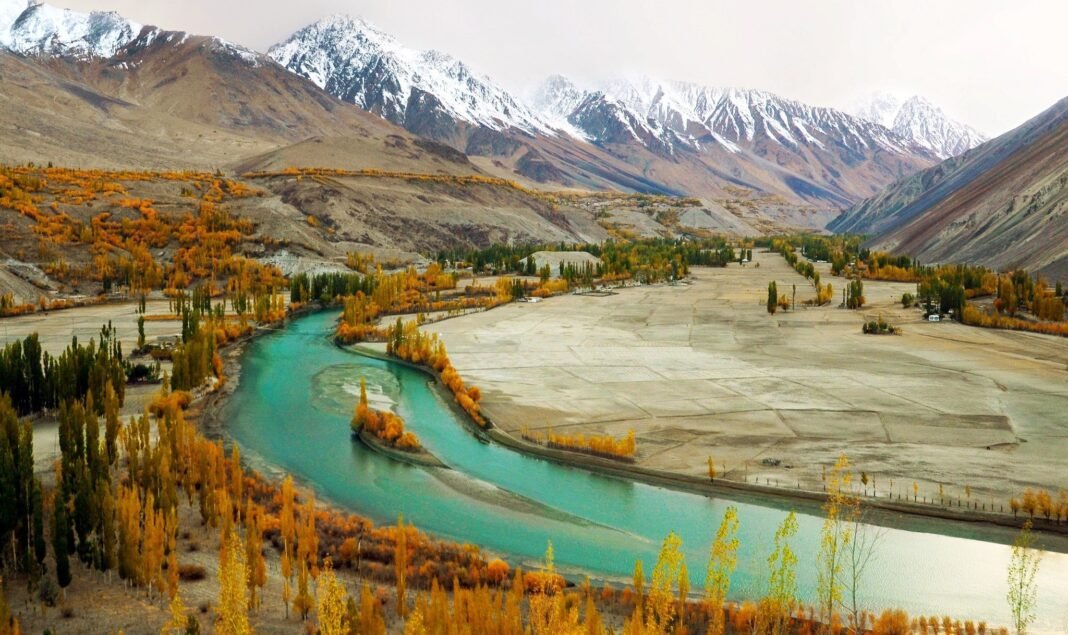
| Autumn (Oct–Nov) | 2°C to 18°C | Golden poplars and orchards; clear skies; first snows on the high passes |
Language and Culture of Gahkuch
Ghizer is one of Pakistan’s most linguistically diverse districts, and Gahkuch reflects that. Shina and Khowar are the main languages of the town and surrounding valleys, Burushaski is spoken in parts of the district, and you may hear Wakhi from families with roots in Ishkoman. Urdu is widely understood and works fine for visitors; English is limited outside official circles.
The culture is mountain Balti-Gilgit tradition with its own Ghizer character: conservative, deeply hospitable, and community-minded. Dress modestly — covered shoulders and long trousers for everyone — and ask before photographing people. Guests are honored here; if a shopkeeper or driver invites you for chai or a meal, accept graciously. The pace of life is slower than the cities, and the town rewards travelers who slow down to match it. Friday prayers shape the weekly rhythm; plan excursions accordingly.
Shopping in Gahkuch
Gahkuch’s bazaar is a working town market, not a tourist strip — and that makes its offerings more authentic. Stock up on dried apricots, apricot kernels, walnuts, and local honey, all produced in the surrounding valleys and sold at honest local prices. Woolen caps, shawls, and traditional embroidered items appear in the bazaar shops. There are no shopping malls in Gahkuch or anywhere in the Ghizer valleys — for serious retail therapy, Gilgit’s larger bazaars are two to three hours away. Buy your trekking and angling supplies in Gilgit or Islamabad before heading into the valleys.
Local Events and Festivals
Gahkuch does not host a major festival of its own that can be verified, but it sits within easy reach of one of the most famous events in the mountains: the Shandur Polo Festival, held every July at the Shandur Pass on the Ghizer–Chitral border. Polo at 3,700 metres — played in its wild, traditional freestyle form between teams from Chitral and Gilgit-Baltistan — draws thousands of spectators for three days of matches, music, and mountain celebration. From Gahkuch, Shandur is a long but spectacular drive via Phandar, usually done as an overnight trip during the festival. Book transport and accommodation far in advance; the pass is crowded and facilities are basic.
Travel Tips for Gahkuch
Packing Essentials
Layered clothing for big day-night temperature swings, a warm jacket even in summer for the high valleys, sturdy walking shoes, sun protection (mountain sun is intense), a reusable water bottle, basic medicines, and a power bank — electricity is generally available in town but can be intermittent in the side valleys. If you plan to fish, bring your gear; local tackle shops are limited.
Safety Tips
Ghizer is peaceful and welcoming to tourists, with very low crime against visitors. The real risks are on the roads: mountain driving here demands experienced local drivers, seatbelts, and no night driving on the valley roads. Check weather before heading to high valleys, carry a charged phone, and share your itinerary with your hotel. Altitude here is moderate, but take it easy on your first day if you have flown in.
Money & Connectivity
Carry cash in Pakistani rupees — ATMs exist in Gahkuch town but can run dry, and the side valleys have none. Cards are not accepted outside a few Gilgit hotels. Mobile coverage from the major networks reaches Gahkuch and the main valley roads, but data is slow and disappears in the side valleys; download offline maps in Gilgit. Fuel up in Gilgit or Gahkuch town before valley excursions.
Best Time to Visit Gahkuch
Summer (May to September) — the prime season
Everything is open: the roads to Phandar, Yasin, and Ishkoman, the lake at its bluest, the orchards heavy with fruit. Days are warm, nights are cool, and the long evenings are made for riverside walks. July brings the Shandur Polo Festival within reach. This is when to come for the full Ghizer experience — and when to book ahead.
Autumn (October to November) — the golden season
The poplars and orchards turn gold, the air turns crystal clear, and the crowds vanish. For photographers and slow travelers, this is arguably the finest time in the valleys. Nights are cold and the high passes may close with early snow, so keep valley excursions flexible.
Winter (December to February) — the quiet season
Gahkuch town itself remains accessible and atmospheric under snow, and Khalti Lake’s frozen surface is a local winter attraction. But the high valleys largely shut down, and travel beyond the town needs careful planning. Come in winter for the stark mountain beauty and the empty roads — not for the lake circuit.
Spring (March to April) — the blossom season
Apricot and apple blossoms sweep through the valleys in April, and the rivers run milky with snowmelt. It is a beautiful, underrated time — just know that the highest roads and passes are usually still blocked, so treat it as a town-and-lower-valleys trip.
Final Thoughts
Gahkuch will never be Hunza, and that is the whole point. It is a real mountain town in a district of extraordinary valleys — a place to base yourself, slow down, and explore Phandar, Gupis, Yasin, and Ishkoman at your own pace, with trout for dinner and the river for company. The fort on the hill and the bazaar below tell you everything about the frontier history that shaped it.
Go between May and October for the full circuit, time a July visit for Shandur polo if you can, and travel with a local driver. Pair it with our Hunza Valley guide for the famous side of Gilgit-Baltistan, and find more northern ideas in our Explore Pakistan collection.
FAQs
Where is Gahkuch located?
Gahkuch is the capital of Ghizer District in Gilgit-Baltistan, about 72 kilometres northwest of Gilgit city on the Gilgit (Ghizer) River, at an altitude of around 1,899 metres. It lies on the route toward Ishkoman and the western valleys.
What is the best time to visit Gahkuch?
May to September is the prime season, with all valley roads open and the best weather. October to November offers golden autumn scenery with fewer visitors. Winter is cold and limits travel to the high valleys.
How do I reach Gahkuch?
Travel to Gilgit first — by the Karakoram Highway from Islamabad (12–14 hours) or by air (45 minutes, weather-dependent) — then drive 72 kilometres northwest to Gahkuch (2–3 hours). From Lahore or Karachi, route via Islamabad.
Is Gahkuch safe for tourists?
Yes. Ghizer District is peaceful and locals are famously hospitable to visitors. Take normal mountain precautions: use experienced local drivers, avoid night driving on valley roads, and check weather before high-valley excursions.
Is Gahkuch suitable for families?
Yes. The town is calm and affordable, the river walks and bazaar suit all ages, and day trips to Gupis, Khalti Lake, and Phandar work well for families with older children. The rougher 4×4 excursions suit teenagers and adults.
Where can I stay in Gahkuch?
The town has budget-friendly small hotels and guesthouses; Gilgit (2–3 hours away) offers a wider range including more comfortable options. Seasonal lodges operate near Phandar Lake in summer. Book ahead in July–August.
What food is Gahkuch known for?
River trout, dried apricots and apricot products, walnuts, local breads, and hearty northern curries with fresh tandoori roti. Bazaar hotels serve filling meals at very reasonable prices.
What is the old fort in Gahkuch?
Above the town stand old stone fortifications including a defense tower, built in the era of the region’s small mountain principalities to guard the river routes. Their exact age is not documented, but they are a genuine piece of the frontier’s defensive heritage with fine views over the valley.