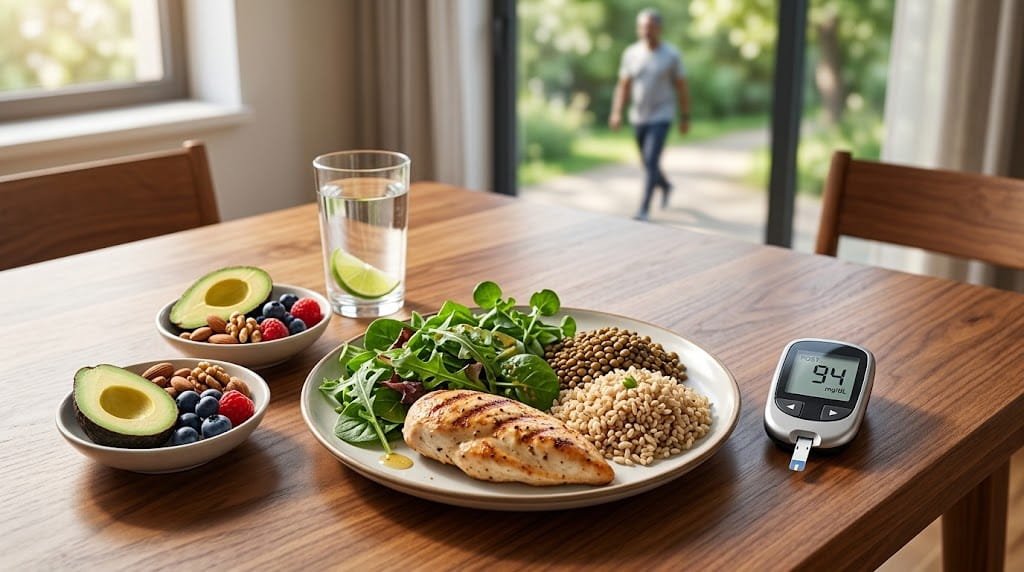
Insulin resistance often develops quietly. You may feel completely normal while your body starts needing more insulin to keep blood sugar under control.
Over time, this can raise the risk of prediabetes and type 2 diabetes. The good news is that lifestyle changes can improve insulin sensitivity and help your body manage blood sugar more efficiently.
The most effective steps are not extreme diets or expensive supplements. Dietitians usually focus on sustainable habits such as balanced meals, movement, better sleep, weight management, and reducing highly refined foods.
According to the CDC, physical activity, balanced eating, healthy weight loss when needed, stress management, and adequate sleep can all help improve insulin sensitivity.
Here are six practical ways to reduce insulin resistance and support better blood sugar.
What Is Insulin Resistance?
Your pancreas produces insulin, a hormone that helps glucose move from the bloodstream into your cells.
Your cells then use that glucose for energy.
When insulin resistance develops, your muscle, fat, and liver cells stop responding to insulin as effectively as they should.
Your pancreas reacts by producing more insulin.
For some time, this extra insulin may keep blood sugar within a normal range. However, the pancreas may eventually struggle to keep up.
Blood sugar can then rise into the prediabetes or diabetes range.
The CDC explains that people with insulin resistance can improve their cells’ response to insulin through lifestyle changes, especially increased physical activity and healthy eating.
Insulin resistance does not affect only people who have obesity.
Family history, inactivity, excess abdominal fat, certain metabolic conditions, high triglycerides, and other factors can also increase risk.
Because insulin resistance can exist without obvious symptoms, blood tests and medical evaluation remain important if you have risk factors.
1. Build Your Meals Around Fiber-Rich Foods
One of the easiest ways to support better blood sugar is to add more fiber to your meals.
Fiber slows digestion and can reduce how quickly carbohydrates enter the bloodstream.
This can help prevent sharp rises in blood sugar after meals.
Dietitians commonly recommend vegetables, beans, lentils, whole grains, nuts, seeds, and whole fruits because these foods provide fiber along with important vitamins and minerals.
For example, instead of eating white bread with a sugary drink, you could choose whole-grain bread, eggs, cucumber, tomatoes, and unsweetened tea.
Likewise, replace fruit juice with whole fruit.
A whole orange contains fiber. Orange juice removes much of the fiber and makes it easier to consume a large amount of sugar quickly.
NIDDK recommends a healthy eating pattern that includes vegetables, whole fruits, whole grains, beans, lentils, nuts, seeds, and other nutrient-rich foods.
You do not need to remove carbohydrates completely.
Instead, focus on carbohydrate quality.
Brown rice, whole-wheat roti, oats, barley, chickpeas, lentils, beans, and vegetables usually offer more nutritional value than refined flour products and sugary snacks.
A useful meal-building approach is simple.
Fill around half your plate with non-starchy vegetables.
Use one-quarter for protein.
Use the remaining quarter for a high-fiber carbohydrate source.
This method can make meals more balanced without requiring complicated calorie counting.
2. Pair Carbohydrates With Protein and Healthy Fats
Carbohydrates affect blood sugar more directly than protein or fat.
However, this does not mean you should fear carbohydrates.
Instead, try to avoid eating large portions of refined carbohydrates on their own.
Pair carbohydrates with protein, fiber, or healthy fat.
For example, eating an apple alone may work well for many people. However, pairing it with a small handful of nuts can make the snack more filling.
Similarly, instead of eating plain white rice in a large portion, combine a smaller portion with grilled chicken, lentils, salad, and vegetables.
Protein can also help you feel satisfied for longer.
Useful protein choices include eggs, fish, chicken, yogurt, cottage cheese, beans, chickpeas, and lentils.
Healthy fats can come from nuts, seeds, olive oil, avocado, and certain fish.
Balanced meals can make blood sugar easier to manage because they usually digest more slowly than meals dominated by refined carbohydrates.
The CDC recommends balanced eating that includes non-starchy vegetables, fruits, whole grains, and lean protein for people trying to improve insulin sensitivity and blood sugar control.
However, portion size still matters.
Healthy food can still provide a lot of calories when consumed in very large amounts.
For this reason, balance and portion awareness work better than simply labeling foods as “good” or “bad.”
3. Walk After Meals and Exercise Regularly
Physical activity remains one of the most powerful ways to reduce insulin resistance.
When muscles work, they use glucose for energy.
Exercise also makes muscle cells respond more effectively to insulin.
This effect can help lower blood glucose and improve insulin sensitivity.
You do not need to become an athlete.
Even brisk walking can make a meaningful difference.
The CDC recommends at least 150 minutes of moderate physical activity per week for people working to prevent type 2 diabetes.
That equals around 30 minutes on five days each week.
You can divide this into shorter sessions.
For example, you could walk for 10 to 15 minutes after lunch and dinner.
Post-meal walking can be especially useful because glucose usually rises after eating.
Adding resistance training can provide another benefit.
Exercises such as squats, resistance bands, light weights, push-ups, or gym-based strength training help build and maintain muscle.
Muscle tissue uses glucose efficiently.
Therefore, maintaining muscle can support long-term metabolic health.
Try to avoid sitting continuously for many hours.
Stand up, walk around the room, climb a few stairs, or stretch between long periods of desk work.
Small amounts of movement throughout the day can add up.
If you currently do little exercise, start slowly.
Even a 10-minute daily walk is a useful beginning.
Then increase your activity gradually.
4. Lose a Small Amount of Weight If You Have Excess Weight
Weight loss does not apply to everyone with insulin resistance.
However, for people who have overweight or obesity, even modest weight loss can improve insulin sensitivity.
You do not need to lose a massive amount of weight before seeing metabolic benefits.
The CDC notes that losing around 5% to 7% of body weight can significantly lower the risk of developing type 2 diabetes in people with prediabetes.
For someone who weighs 90 kilograms, 5% represents about 4.5 kilograms.
That is a much more realistic goal than immediately trying to lose 20 or 30 kilograms.
Excess fat around the abdomen has a particularly strong association with metabolic problems.
This type of fat can affect hormones and inflammatory signals that influence insulin sensitivity.
However, crash diets rarely provide the best long-term solution.
They can feel restrictive and often become difficult to maintain.
A better approach involves creating a small, sustainable calorie deficit while still eating nutritious foods.
Reduce sugary drinks, excessive fried foods, large portions, frequent desserts, and highly processed snacks.
At the same time, increase vegetables, protein, fiber, and daily movement.
The NIDDK explains that healthy weight loss can improve blood glucose and may improve other cardiovascular risk factors as well.
The key word is sustainable.
A slower plan that you can follow for a year usually provides more value than an aggressive diet that lasts two weeks.
5. Reduce Sugary Drinks and Highly Refined Carbohydrates
Liquid sugar can raise blood glucose quickly because it requires little digestion.
Soft drinks, sweetened juices, energy drinks, sweet tea, flavored coffees, and other sugary beverages can provide large amounts of sugar without making you feel full.
Replacing them with water is one of the simplest changes you can make.
You can also choose unsweetened tea, black coffee, or water flavored with lemon or mint.
Refined carbohydrates deserve attention as well.
White bread, bakery items, sugary cereals, biscuits, cakes, pastries, sweets, and many packaged snacks contain rapidly digested carbohydrates.
These foods can produce sharper blood sugar rises, especially when eaten in large portions.
You do not need to permanently ban every dessert.
Instead, make highly processed foods occasional choices rather than daily staples.
For example, eat mithai as a small treat rather than as part of your everyday routine.
Choose whole fruits more often when you want something sweet.
At breakfast, replace sugary cereal with oats, eggs, yogurt, or whole-grain options.
During snack time, choose nuts, roasted chickpeas, plain yogurt, fruit, or vegetables instead of biscuits and chips.
These small swaps can lower the amount of rapidly absorbed carbohydrates entering your diet.
They can also make weight management easier.
6. Improve Sleep and Manage Stress
People often focus only on food when discussing insulin resistance.
However, sleep and stress also matter.
Poor sleep can affect hormones related to appetite, stress, and glucose regulation.
It can also make you crave high-calorie and sugary foods the next day.
Try to maintain a regular sleep schedule.
Most adults benefit from roughly seven to nine hours of sleep each night, although individual needs vary.
Create a simple bedtime routine.
Reduce bright screens before sleep, keep the room comfortable, and avoid excessive caffeine late in the day.
Stress management also deserves attention.
Chronic stress can raise hormones such as cortisol.
These hormonal changes can make blood glucose management more difficult for some people.
The CDC includes adequate sleep and stress management among lifestyle habits that can support better metabolic health.
Stress reduction does not need to involve complicated techniques.
Walking, prayer, meditation, breathing exercises, journaling, social connection, hobbies, and spending time outdoors can all help.
Choose something that feels realistic enough to continue regularly.
What Should You Eat If You Have Insulin Resistance?
There is no single perfect insulin resistance diet.
Different people respond differently to eating patterns.
The CDC notes that people can lose weight and improve health through different dietary approaches, so a sustainable eating plan matters more than chasing one fashionable diet.
A simple daily pattern could include:
- Breakfast: Eggs with whole-grain roti and vegetables, or oats with plain yogurt and nuts.
- Lunch: Chicken, fish, daal, or chickpeas with salad, vegetables, and a moderate portion of whole-grain roti or rice.
- Snack: Whole fruit with nuts, plain yogurt, roasted chickpeas, or vegetables.
- Dinner: Lean protein with cooked vegetables, salad, and a moderate amount of carbohydrate.
- Drinks: Water, unsweetened tea, or coffee without large amounts of sugar.
You can adapt these foods to Pakistani cooking easily.
Daal, chana, lobia, vegetables, grilled chicken, fish, yogurt, whole-wheat roti, and salads can all fit well.
The biggest problems often come from portion size, frequent fried foods, sugary drinks, refined flour, and desserts rather than traditional foods themselves.
Do You Need to Stop Eating Rice and Roti?
No.
Insulin resistance does not automatically mean you must completely remove rice or roti.
The amount, type, and combination matter.
A large plate of white rice with little protein or vegetables can raise blood sugar more quickly.
A smaller portion eaten with chicken, daal, vegetables, and salad usually creates a more balanced meal.
The same principle applies to roti.
Whole-wheat roti can fit into a healthy eating plan.
However, eating several large rotis with high-fat curry can provide much more energy than your body needs.
Use portion control rather than extreme restriction.
That approach usually makes healthy eating easier to maintain.
Should You Follow a Low-Carb Diet?
Some people experience improved blood sugar with lower-carbohydrate eating.
However, low-carb diets vary widely.
A sensible lower-carb diet can include vegetables, protein, healthy fats, nuts, seeds, dairy, and controlled portions of high-quality carbohydrates.
An extreme version may eliminate many nutritious foods unnecessarily.
The best diet depends on your health, preferences, medications, and ability to follow the plan consistently.
People who take diabetes medication should take particular care when sharply reducing carbohydrates.
Medication doses may need adjustment to avoid low blood sugar.
Discuss major dietary changes with your doctor or registered dietitian.
Can Intermittent Fasting Reduce Insulin Resistance?
Intermittent fasting may help some people lose weight and improve blood sugar control.
However, much of the benefit can come from consuming fewer calories overall.
It is not automatically better than other healthy eating approaches.
Some people also find fasting difficult to maintain.
Others may overeat when their fasting period ends.
People taking insulin or certain glucose-lowering medications should not start prolonged fasting without medical guidance.
The goal should always remain safe and sustainable blood sugar management.
What About Cinnamon, Apple Cider Vinegar, or Supplements?
You may see hundreds of online claims about supplements that supposedly reverse insulin resistance.
Treat these claims carefully.
No supplement can replace healthy eating, exercise, sleep, weight management, or prescribed medication.
Some supplements may interact with medications.
Others may contain inconsistent ingredients or doses.
Cinnamon and vinegar may have small effects on blood sugar in some research, but they do not provide a reliable treatment for insulin resistance.
Focus on proven lifestyle habits first.
Talk with your healthcare professional before adding supplements, especially if you already take diabetes medication.
How Long Does It Take to Improve Insulin Resistance?
There is no fixed timeline.
Some metabolic changes can begin soon after you increase physical activity or improve your diet.
Larger improvements in weight, fasting glucose, HbA1c, triglycerides, and waist circumference usually take longer.
Consistency matters more than perfection.
Walking every day, improving breakfast, reducing sugary drinks, and controlling portions for several months can produce more benefit than following an extreme plan for one week.
Blood tests provide the best way to track changes.
Your doctor may monitor fasting glucose, HbA1c, cholesterol, triglycerides, and other markers depending on your health.
Can Insulin Resistance Be Reversed?
Insulin resistance can improve significantly in many people.
The CDC specifically notes that lifestyle changes can make cells more sensitive to insulin.
People with prediabetes can sometimes return their blood glucose to a healthier range.
However, the word “reversed” does not mean risk disappears forever.
If unhealthy habits return, insulin resistance can return as well.
Think of insulin sensitivity as something you continue to support through long-term habits.
When Should You Talk to a Doctor?
You should consider medical advice if you have a strong family history of diabetes, unexplained high blood sugar, significant abdominal weight gain, high triglycerides, or previous gestational diabetes.
You should also speak with a doctor if blood tests show prediabetes or diabetes.
Seek medical help sooner if you develop symptoms such as excessive thirst, frequent urination, unexplained weight loss, blurred vision, or persistent fatigue.
Lifestyle changes can help enormously, but they do not always replace medication.
Some people need medicines such as metformin or other glucose-lowering treatments alongside lifestyle changes.
The NIDDK advises people at risk for type 2 diabetes to discuss prevention strategies, including medication when appropriate, with their healthcare team.
FAQs
1. What is the fastest way to reduce insulin resistance?
Regular physical activity, improved diet quality, and modest weight loss when needed can improve insulin sensitivity. There is no safe overnight cure.
2. Which foods are best for insulin resistance?
Vegetables, whole fruits, beans, lentils, whole grains, lean protein, nuts, seeds, and unsweetened dairy are useful choices.
3. Does walking help insulin resistance?
Yes. Walking helps muscles use glucose and can improve insulin sensitivity. Even short walks after meals can be useful.
4. Can losing weight improve insulin resistance?
Yes, particularly for people with overweight or obesity. Even modest weight loss can improve metabolic health.
5. Can insulin resistance turn into diabetes?
Yes. If insulin resistance worsens and the pancreas can no longer produce enough insulin to compensate, blood glucose may rise into the type 2 diabetes range.
6. Is insulin resistance permanent?
Not necessarily. Many people can significantly improve insulin sensitivity through diet, exercise, weight management, sleep, stress control, and medical treatment when required.