Gadi Eisenkot to Form Government as Knesset Sworn In
Israel’s new parliament will be sworn in on Tuesday, a week after an election in which former military chief Gadi Eisenkot’s bloc fell short of a majority, leaving him to build a coalition from a fragmented Knesset.
The 120 incoming lawmakers of the 26th Knesset will take the oath of office in a largely ceremonial session, followed by the election of a new parliament speaker. President Isaac Herzog will deliver a speech at 4pm, 7pm in Pakistan, for the swearing-in.
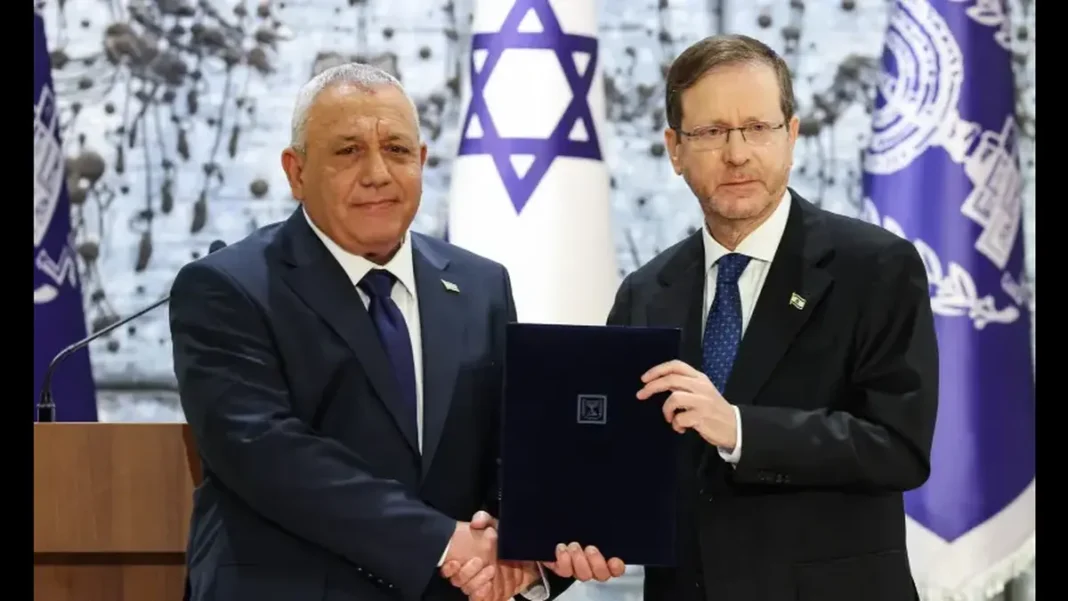
Eisenkot, 66, was asked by President Herzog on Sunday to form a government after winning the backing of 67 lawmakers in consultations, against 46 for Prime Minister Benjamin Netanyahu. He now has up to 28 days to build a coalition, with a possible extension of 14 days.
Gadi Eisenkot and the arithmetic of a coalition
The task facing Eisenkot is clear from the election numbers. His Yashar party won 21 seats in the October 27 election, behind Likud’s 27. His bloc, which includes B’Yachad and the Democrats, won 48 seats in total, five fewer than Netanyahu’s right-wing bloc on 53.
A government needs the support of at least 61 seats in the 120-seat parliament. Eisenkot’s bloc is therefore 13 seats short of a majority on its own. The remaining seats went to the two Arab-led parties, which won a record 19 between them, and the ultra-Orthodox parties, which hold 13.
Eisenkot could reach the threshold with support from Arab-Israeli lawmakers, who secured a record number of seats on the back of anger in the minority community over Netanyahu’s hard-right government. But that path is complicated by the position of Avigdor Lieberman, whose Yisrael Beiteinu party won seven seats. Lieberman has been clear he would not allow Eisenkot to rely on Arab-Israelis to come to power, and has instead proposed an alliance with ultra-Orthodox Jews.
The two ultra-Orthodox parties, with 13 seats, could also crown Eisenkot if they ditch their long alliance with Netanyahu. An alliance with either group would likely be fragile: Arab-Israelis are likely to object if Eisenkot carries out another major offensive in Gaza.
A newcomer who must build a majority
Eisenkot is a newcomer to politics. He became a politician only in the past year and founded the Yashar party last year. He emerged as Netanyahu’s principal challenger in an election that ended without a clear parliamentary majority, and he has vowed to form a broad government of national unity.
The election took place against the backdrop of the Gaza war, which ended with a US-brokered ceasefire in October after more than two years of fighting that left tens of thousands dead. Eisenkot has largely backed Netanyahu’s war decisions, although he has vowed to crack down on extremist settlers in the West Bank who have been attacking and stealing from Palestinians with virtual impunity.
The opposition hopes to use its newfound legislative power to move quickly on key priorities, including a commission to investigate security failures under Netanyahu that allowed the October 7, 2023 attack by Hamas, the deadliest day in Israel’s history.
His first test will be to form a coalition that can pass a budget and deal with the country’s security challenges, including the threat from Iran and its proxies. The region remains unsettled, with Israeli forces killing a 14-year-old Palestinian in the West Bank this week. Donald Trump has said the war with Iran is effectively over, in remarks that shifted the tone in Washington.
The wider diplomacy around the region continued in Paris, where G7 foreign ministers pressed the US secretary of state on Iran and Ukraine. Pakistan and the UAE have also condemned Houthi attacks on Saudi Arabia, in a joint statement with the Makkah defence alliance meeting in Islamabad.
What happens next
Ahead of the parliament opening, Eisenkot’s party announced progress in naming people to seek key positions. The opposition will put forward Matan Kahana, like Eisenkot a former senior military figure, as speaker of the parliament. Lieberman will be nominated as chair of the foreign affairs and defence committee.
The new Knesset replaces the outgoing parliament, which was dissolved last month after Netanyahu’s fragile right-wing coalition collapsed. The collapse triggered the snap election that brought Eisenkot to the front of Israeli politics.
The swearing-in is the easy part. The hard work starts now, as Eisenkot tries to turn a 48-seat bloc into a government that can hold together.
Frequently asked questions
Who is Gadi Eisenkot?
He is a former Israeli military chief who entered politics only in the past year. He founded the Yashar party last year and led his bloc to 48 seats in the October 27 election, behind Netanyahu’s bloc on 53.
How many seats did Eisenkot’s bloc win?
His bloc won 48 seats in the 120-seat Knesset, five fewer than Netanyahu’s right-wing bloc on 53. His Yashar party won 21 seats, behind Likud’s 27, while the two Arab-led parties won a record 19.
How long does Eisenkot have to form a government?
President Isaac Herzog gave him up to 28 days to form a coalition government, with a possible extension of 14 days.
What majority does a government need in the Knesset?
A government needs the support of at least 61 seats in the 120-seat parliament. Eisenkot’s bloc holds 48, so he needs backing from Arab-Israeli or ultra-Orthodox parties.
Why did the election take place?
The outgoing Knesset was dissolved last month after Netanyahu’s fragile right-wing coalition collapsed, triggering a snap election on October 27.