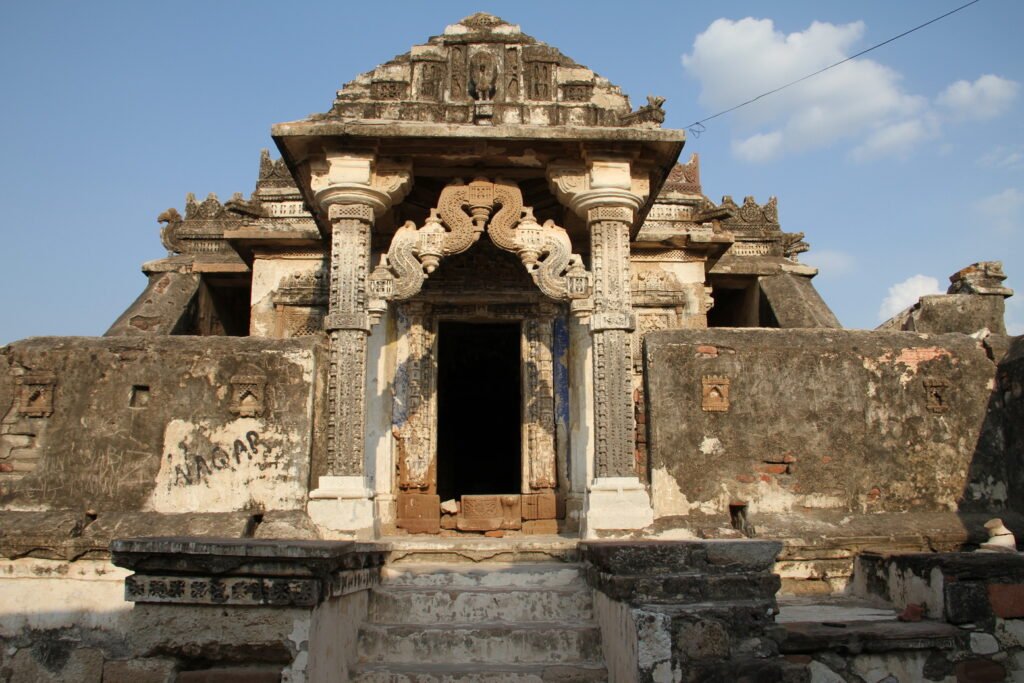
In the far south-eastern corner of Pakistan, where the Thar Desert rolls toward the Indian border and granite hills rise suddenly from the sand, stand some of the most hauntingly beautiful temples in the country. The Jain temples of Nagarparkar, carved from white marble nearly a thousand years ago, are monuments to a time when this desert was a flourishing centre of faith and trade. Among them, the Jain Temple at Verawah, a serene open pavilion of carved pillars standing alone beside the desert, is one of the most atmospheric heritage sites you will ever visit.
This is not a destination for ticking boxes. Nagarparkar is remote, the desert is demanding, and the temples ask for a journey. But that is exactly what makes the experience so powerful: you will likely have a centuries-old marble temple entirely to yourself, with only the wind and the desert for company. If you are a traveller who believes the best places are the ones you have to work for, this Jain Temple Verawah, Nagarparkar travel guide will show you why this forgotten corner of Sindh deserves your journey.
Quick Facts
- Location: Near Verawah (Viravah) village, Nagar taluka, Tharparkar District, Sindh, Pakistan, about 24 km north of Nagarparkar town
- Altitude: Desert plain at around 100-150 metres, with the granite Karoonjhar hills rising nearby
- Famous For: A Sultanate-period white marble Jain temple of carved pillars and capitals, standing in lonely desert splendour
- Nearest City: Nagarparkar town (24 km south); Mithi is the district hub; Islamkot lies about 67 km away by road
- Accessibility: Reachable by road from Nagarparkar town; a 4×4 or sturdy vehicle is advisable for desert tracks
- Known Landmarks: The Verawah temple itself, Gori Temple, Bhodesar temples and mosque, Karoonjhar hills, Kajal Jheel
- Best For: Heritage enthusiasts, photographers, spiritual travellers, and off-the-beaten-path explorers
Why Visit Jain Temple Verawah, Nagarparkar
There are temples you visit, and there are temples that visit you, settling into your memory and refusing to leave. Meanwhile, the Jain Temple at Verawah is the second kind. In fact, picture it: an open pavilion of white marble pillars with exquisitely carved capitals, standing in utter solitude on the edge of the desert, the silence broken only by the wind. No ticket queues, no crowds, no noise. Just you and a thousand years of devotion, in one of the most evocative settings in Pakistan.
What makes Verawah special is its beautiful melancholy. Also, this was once one of several marble temples in the area: the British traveller Captain S.N. In fact, Raikes found the remains of five or six white marble Jain temples here in 1856. In addition, today only one survives, a graceful skeleton of pillars open to the sky, protected under the Antiquities Act. A finely carved marble block discovered at the temple now rests in the National Museum of Pakistan in Karachi, a reminder of the craftsmanship this desert once produced. Standing among the pillars, you feel the presence of everything that was lost, and the quiet dignity of what remains.
Gateway to a Forgotten Heritage Land
Verawah is also your gateway to one of Pakistan’s great forgotten heritage landscapes. Within a day’s drive lie the magnificent Gori Temple, built in 1375-76 CE and dedicated to Parshvanath, with the oldest surviving Jain frescoes in the northern subcontinent. The Bhodesar temples of 1375 and 1449 CE in kanjur stone and redstone. And the white marble Bhodesar Mosque of 1505 CE, whose domes and pillars show how deeply Jain architecture influenced the region’s Islamic buildings. Few heritage circuits in Pakistan pack so much history into so small an area, and almost no tourists know about it.
Then there is the desert itself. Also, Nagarparkar sits at the edge of the Thar, where the stark Karoonjhar hills, ancient granite mountains sacred to local Hindus, rise from the sand in dramatic formations. In fact, the landscape is austere and unforgettable: thorn forest, migratory birds at seasonal lakes, and villages where Hindu and Muslim communities have lived side by side for centuries. A trip to Verawah is not just a temple visit. It is an immersion in one of Pakistan’s most distinctive cultural landscapes, recognised on UNESCO’s tentative list as the Nagarparkar Cultural Landscape.
Browse our Explore Pakistan collection and you will find few destinations as genuinely undiscovered as this one.
History of Jain Temple Verawah, Nagarparkar
The story of the Verawah temple begins with the desert’s golden age. As a result, Nagarparkar, whose name means “beautiful city” in the local tongue, was for centuries an important trading town on the routes linking Sindh with Rajasthan and Gujarat, near the ancient seaport of Parinagar on the edge of the Rann of Kutch. In fact, Jain merchants, followers of a faith that prizes non-violence and asceticism, grew wealthy on this trade and poured their devotion into stone, building temples of white marble in a style closely related to the great Jain temples of Mount Abu in Rajasthan.
Three Temples, One Survivor
The Verawah site once held three temples, said by tradition to have been founded as early as 456 CE by Jeso Parmara, though the surviving structure belongs to the Sultanate period, broadly the 12th to 15th centuries. One of the temples remained in use through the British era and is the well-preserved white marble pavilion visitors see today: an open structure standing on pillars with carved capitals, elegant in its simplicity. Another temple yielded a block of finely carved marble that was transferred to the Karachi Museum during the British era and is now displayed in the National Museum of Pakistan.
The third, a ruined temple, once had 26 small domes surrounding a grand central dome 18 feet across, adorned with fine stone tracery.
What Captain Raikes Found
The temples’ decline mirrors the desert’s own fortunes. As trade routes shifted and the region’s Jain community dwindled, especially after the partition of 1947, the temples were left to the elements. When Captain Raikes passed through in 1856 he found five or six marble temples; today, one survives at Verawah. During road construction near the site, workers accidentally unearthed numerous Jain statues. Locals placed some in the surviving temple, while others were taken to the museum at Umerkot. The temple is now a protected monument under the Directorate General of Antiquities, Government of Sindh, a lonely survivor of a faith that once flourished across the Thar.
The wider Nagarparkar temple landscape tells the rest of the story. The Gori Temple, about 20 km north-west of Verawah, was built in 1375-76 CE during the heyday of the Sodha Rajputs: a 125-by-60-foot marble masterpiece with 24 cells that may have housed images of the 24 Tirthankaras, and frescoes considered the oldest surviving Jain paintings in the northern subcontinent. The Bhodesar temples, 4 miles from Nagarparkar at the foot of the Karoonjhar hills, include structures dated to 1375 and 1449 CE in kanjur and redstone with fine corbelled domes, plus a 9th-century platform temple traditionally attributed to a Jain woman remembered as Poni Daharo.
In 1505 CE, Sultan Mahmud Begada of Gujarat built the Bhodesar Mosque in white marble, its central dome and pillars openly inspired by the Jain temples around it, a remarkable architectural conversation between faiths that still stands today.
Top Things to Do in Jain Temple Verawah, Nagarparkar
Stand Among the Pillars at Verawah
Give the temple itself the slow, quiet visit it deserves. Also, walk among the carved pillars, study the capitals, and notice how the white marble glows against the desert light. In fact, early morning and late afternoon are magical. Long shadows stretch across the sand and the stone takes on a honeyed tone. Because you will likely be alone, the experience is meditative: this is a place to sit, sketch, photograph and simply be. Remember it is a protected monument: do not climb the pillars, scratch the stone or remove anything.
Visit the Gori Temple
No Nagarparkar trip is complete without Gori Temple, the region’s greatest Jain monument. Also, built in 1375-76 CE and dedicated to Parshvanath, the 23rd Tirthankara, it is a marvel of marble craftsmanship: pillared porches, domed ceilings painted with scenes from Jain mythology, and frescoes of almost unimaginable delicacy. The temple measures 125 by 60 feet and stands on a high platform reached by stone steps. Its interiors, with carved pillars and mythological paintings, reflect the wealth and artistry of the Jain merchants who built it. Allow at least an hour, and bring a torch: the semi-darkness inside rewards those who look closely.
Explore Bhodesar’s Temples and Mosque
At the base of the Karoonjhar hills, Bhodesar was the region’s capital under Sodha rule. Also, its monuments span faiths and centuries. In fact, the ruined Jain temples in kanjur stone and redstone, dated 1375 and 1449 CE, display fine carvings and corbelled domes. In addition, the platform temple attributed to Poni Daharo shows the classical dry-stone technique. Steps away stands the Bhodesar Mosque (1505 CE), its white marble dome and Jain-influenced pillars making it one of the most architecturally fascinating mosques in Sindh. The ancient Bhodesar Talao water tank completes the picture.
Climb into the Karoonjhar Hills
The Karoonjhar range, ancient granite hills rising abruptly from the desert, is sacred in local Hindu tradition and spectacular in its own right. Also, weathered rock formations, hidden shrines and panoramic views over the Thar reward those who explore on foot with a local guide. The hills are also an ecological treasure, home to desert wildlife and seasonal vegetation that transforms after the rains. Go early in the day with water, a hat and sturdy shoes.
Watch Birds at Kajal Jheel and Desert Lakes
The Verawah temple stands near Kajal Jheel. Also, the desert’s seasonal lakes and tanks attract migratory birds in winter, from demoiselle cranes to flamingos in good years. Even outside peak season, the desert teems with life: peacocks, desert foxes, chinkara gazelle and a chorus of desert birds at dawn. In fact, bring binoculars and patience; the Thar rewards quiet observers.
Experience Village Life in the Thar
The villages around Nagarparkar, home to Meghwar, Bheel, Kolhi and Sodha Rajput communities among others, offer a window into desert life that has changed little in generations. Also, with a local guide, you can visit traditional round huts (chaunras) with their intricate mud-and-mirror work, watch artisans at work, and understand how communities thrive in one of Pakistan’s harshest environments. Always ask permission before photographing people, and consider buying handicrafts directly from makers.
Famous Places In and Around Jain Temple Verawah, Nagarparkar
- Gori Temple: The great 1375-76 CE marble Jain temple with the region’s oldest frescoes.
- Bhodesar Temples: 14th-15th century Jain temples in kanjur and redstone at the Karoonjhar foothills.
- Bhodesar Mosque: 1505 CE white marble mosque showing Jain architectural influence.
- Karoonjhar Hills: Sacred granite range with dramatic formations and desert views.
- Kajal Jheel: Seasonal desert lake near Verawah, good for birdwatching.
- Nagarparkar Bazaar: The old town market beneath the hills, for supplies and local colour.
- Umerkot Museum: Houses Jain statues recovered near Verawah, worth a stop en route.
How to Reach Jain Temple Verawah, Nagarparkar
Getting to Nagarparkar is a proper desert expedition, and the remoteness is part of the reward. Also, the temple lies about 24 km north of Nagarparkar town, itself in the far south-east of Sindh near the Indian border. In fact, here is how to reach Jain Temple Verawah, Nagarparkar from Pakistan’s major cities.
From Karachi: This is the natural starting point. Also, the road journey from Karachi to Nagarparkar takes roughly 8 to 10 hours, depending on route and stops. In fact, the usual route runs Karachi → Thatta → Badin → Mithi (the Tharparkar district hub) → Islamkot → Nagarparkar, much of it on decent highways with the final stretches on narrower desert roads. In addition, From Nagarparkar town, the Verawah temple is about 24 km north. From Islamkot it is about 67 km by the Islamkot road. A 4×4 or high-clearance vehicle is strongly recommended for the desert tracks around the temples.
From Lahore: Fly to Karachi (under two hours) and continue by road as above. Also, the whole journey is realistically two days. In fact, overland from Lahore is a very long drive via Hyderabad and is only for the most committed road-trippers.
The Flight-Plus-Drive Formula
From Islamabad: Fly to Karachi and follow the Karachi route. Also, there are no practical overland shortcuts: Nagarparkar is genuinely remote, and the flight-plus-drive combination is how almost everyone does it.
Road conditions by season: The highways to Mithi and Islamkot are paved and generally good. Desert tracks to Verawah, Gori and Bhodesar are unpaved and can be rough. After monsoon rains they may be temporarily impassable, so check locally. Winter (November to February) offers the best driving conditions: dry, firm tracks and pleasant temperatures.
Transport options: Public buses and vans connect Karachi with Mithi and Nagarparkar, but for temple-hopping you need your own wheels. The best approach is to hire a 4×4 with a driver in Mithi or Nagarparkar who knows the desert tracks. Local drivers double as informal guides. Organised heritage tours from Karachi occasionally include Nagarparkar and are worth joining if your dates align, as they solve the logistics in one stroke.
Route Details
Karachi → N5/M9 toward Hyderabad → Thatta/Badin road → Mithi → Islamkot → Nagarparkar town (overnight) → 24 km north to Verawah temple. Temple circuit from Nagarparkar: Verawah (north) → Gori Temple (north-west of Verawah) → Bhodesar temples and mosque (at the Karoonjhar foothills near town). From Lahore or Islamabad, fly to Karachi first, then follow the Karachi route. Carry extra water, fuel up in Mithi or Islamkot, and confirm track conditions locally before setting out.
Where to Stay in Jain Temple Verawah, Nagarparkar
Accommodation in Nagarparkar is basic but sufficient, and part of the adventure. Nagarparkar town has simple guesthouses and small hotels catering to the trickle of heritage travellers and officials. Expect clean rooms, fans or air-conditioning, and home-style food. Book ahead if you can, as options are limited, and confirm that your guesthouse has a generator: power cuts are common in the desert.
Mithi, the district headquarters a few hours away, offers a slightly wider range of hotels and is a sensible overnight stop on the way in or out. Also, staying in Nagarparkar itself gives you the magical early-morning and late-afternoon light at the temples.. Still, some travellers base themselves in Mithi and do Nagarparkar as a long day trip,
For the more adventurous, desert camping near the Karoonjhar hills is unforgettable: sleeping under Thar’s immense starry sky with the granite hills silhouetted against the dawn. Also, this requires full self-sufficiency or an organised tour with tents, food and water, plus permission and guidance from locals. In fact, there are no luxury hotels anywhere in this region. Come for the heritage, not the thread count, and you will not be disappointed.
Where to Eat: Local Foods of Jain Temple Verawah, Nagarparkar
Thari cuisine is desert food at its most resourceful: vegetarian, hearty and built around the millet, pulses and dairy that the arid land provides. Also, the signature dish is raab, a comforting porridge of pearl millet (bajra) flour cooked with buttermilk, and bajra roti served with singhri (dried desert beans) or gwar phali curry are staples you will find in every village. Kair sangri, the famous desert berry-and-bean preparation shared with Rajasthan across the border, appears in season.
Dairy is central to the desert diet: fresh buttermilk (chhach), curd and ghee accompany most meals, and sweet gur (jaggery) satisfies the sweet tooth. Also, In Nagarparkar town, small restaurants and dhabas serve daal, sabzi, roti and rice at very modest prices. A full meal typically costs only a few hundred rupees. Meat is available in town restaurants but the desert’s soul food is vegetarian, shaped by the Hindu and Jain heritage of the region.
Practical advice: eat well in town before heading to the temples, and carry plenty of water plus snacks, as there are no restaurants at Verawah or Gori. If you are staying with a local family or guide, accept the offer of a home-cooked Thari meal: it is the single best way to taste the desert.
Weather in Jain Temple Verawah, Nagarparkar
The Thar Desert has an extreme climate: blazing summers, surprisingly cool winter nights. A brief monsoon that transforms the landscape. The comfortable window for temple exploration is narrow. This is why timing your visit matters more here than almost anywhere else in Pakistan. Here is the seasonal breakdown:
| Season | Temperature Range | Conditions |
|---|---|---|
| Winter (Nov-Feb) | 5 to 30°C | The ideal season: warm sunny days, cool nights, firm desert tracks; peak birdwatching |
| Spring (Mar-Apr) | 20 to 40°C | Rapidly heating up; early mornings still pleasant for temple visits |
| Summer (May-Jun) | 30 to 46°C | Brutally hot; desert travel inadvisable except at dawn; dust storms possible |
| Monsoon/Autumn (Jul-Oct) | 27 to 40°C | Monsoon rains green the desert briefly; humid; tracks can flood after heavy rain |
Language and Culture of Jain Temple Verawah, Nagarparkar
Nagarparkar is one of Pakistan’s most culturally distinctive regions. Also, the population includes Sodha Rajputs, Meghwar, Bheel, Kolhi and other communities, with a large Hindu minority living alongside Muslim neighbours in a harmony the desert is famous for. Sindhi is widely spoken, along with Dhatki and Marwari dialects that reflect the region’s closeness to Rajasthan. In fact, Urdu works in towns and with guides.
Desert culture is shaped by scarcity and community. Also, water is precious, hospitality is sacred. The elaborate mud-and-mirror decoration of traditional chaunra huts shows an aesthetic sensibility that thrives against the odds. Women wear brilliantly coloured embroidered clothes and heavy silver jewellery. The region’s folk music and dance are celebrated across Sindh. Visitors should dress modestly, ask permission before entering villages or photographing people, and accept offered tea or food graciously. Remember that the temples, though no longer active places of worship, are sacred heritage: behave with the quiet respect you would show in any house of worship.
Shopping in Jain Temple Verawah, Nagarparkar
The Thar is famous across Pakistan for its handicrafts, and Nagarparkar’s bazaar is the place to find them. Also, look for ralli quilts, the brilliantly coloured patchwork bedspreads appliqued by Thari women. Embroidered textiles with the mirror-work the desert is known for. And silver jewellery in traditional designs. Camel-wool durries and leather goods are also local specialities.
Buy directly from artisans in villages when you can: the prices are fairer to the maker and the pieces carry a story. Bargaining is gentle here rather than aggressive. There are no shopping malls in Nagarparkar, and the bazaar experience, personal, unhurried and genuine, is far more rewarding. Dry fruits and desert honey also make good portable souvenirs.
Local Events and Festivals
Nagarparkar’s festival calendar reflects its living Hindu and Jain heritage. Also, the most significant observance connected to the temples is the annual gathering at Gori Temple in honour of Parshvanath, traditionally held around 20-25 March. Devotees and curious visitors converge on the desert temple. Local villagers also celebrate the fourteenth night of Bado (the sixth month of the Hindu calendar, falling in the monsoon season) at Gori Temple with music and festivity, a tradition maintained by the surrounding community even in the temple’s ruined state.
Beyond the temples, the Thar’s cultural calendar includes vibrant celebrations of Diwali (October/November) and Holi (March), observed with particular enthusiasm in Nagarparkar’s Hindu-majority villages. The Sufi-flavoured festivals of Sindh’s shrines. If your visit coincides with one of these, you will witness the desert at its most joyful. Dates follow the Hindu lunar calendar, so confirm exact timings locally before planning around them.
Travel Tips for Jain Temple Verawah, Nagarparkar
Packing Essentials
Desert packing is about sun, dust and temperature swings: a wide-brimmed hat, high-SPF sunscreen, sunglasses, a scarf or shemagh against dust, and sturdy closed shoes for rocky temple sites. Carry far more water than you think you need, plus oral rehydration salts. Winter nights are cold, so pack a warm jacket even if days are balmy. A torch is essential for temple interiors, and binoculars will enrich the desert wildlife experience.
Safety Tips
Nagarparkar is peaceful and its people are exceptionally welcoming, but the desert itself demands respect. Never venture onto desert tracks without a local driver who knows them, carry a charged phone and a power bank, and inform your guesthouse of your plans. Travel between sites in the cooler hours, watch for dehydration, and keep to established tracks: the desert is easy to get lost in. Check current travel advisories for the border region before your trip.
Money & Connectivity
There are ATMs in Mithi but very limited banking in Nagarparkar town itself, so withdraw all the cash you need in Mithi or earlier. Everything in the desert runs on cash, in small notes. Mobile coverage from Jazz, Telenor and Zong exists in towns but is patchy to non-existent at remote temple sites. Download offline maps and do not rely on live navigation. Most guesthouses have basic Wi-Fi at best.
Best Time to Visit Jain Temple Verawah, Nagarparkar
Winter (November to February): The Only Real Choice
Winter is when Nagarparkar shines. Also, daytime temperatures sit in the pleasant 20s, the desert tracks are firm and dry, migratory birds fill the seasonal lakes. The low golden light makes the marble temples glow. This is the season for unhurried temple exploration, Karoonjhar walks and village visits. Book guesthouses ahead, as this short season concentrates all the region’s visitors.
Spring (March to April): Hot but Possible
Early spring can still work if you start temple visits at dawn and rest through the midday heat. The Parshvanath gathering at Gori Temple in late March adds cultural interest. By April, temperatures are climbing fast and the desert begins to assert itself.
Summer (May to June): Avoid
With temperatures pushing toward 46°C, summer in the Thar is genuinely dangerous for sightseeing. Also, the temples bake, the tracks shimmer, and even locals stay indoors through the day. In fact, do not plan a heritage trip in these months.
Monsoon (July to October): The Green Desert
The monsoon transforms the Thar: the desert blooms green, seasonal streams run. The landscape is at its most beautiful, but also its most unpredictable. Also, tracks can flood, humidity is high, and temple visits become an adventure in themselves. Only experienced desert travellers with local support should attempt this season.
Final Thoughts
The Jain Temple at Verawah will not be the easiest place you ever visit. It may be the one you remember longest. In a world of over-touristed monuments, there is something profoundly moving about standing alone among thousand-year-old marble pillars while the desert wind moves through them. Also, it is a place that rewards the journey with silence, beauty and a direct connection to a civilisation most Pakistanis have never heard of, in a landscape most travellers never see.
Come in winter, come prepared, and give Nagarparkar the time it deserves: Verawah at dawn, Gori Temple in the golden afternoon, Bhodesar’s mosque at sunset. The Karoonjhar hills whenever you can steal an hour. Travel respectfully, support the local communities who guard this heritage, and carry the desert’s quiet with you when you leave. For more journeys into Pakistan’s hidden corners, explore our Explore Pakistan collection and start choosing the road less travelled.
FAQs
Where is the Jain Temple Verawah located?
Near Verawah village in Nagar taluka, Tharparkar District, Sindh, about 24 km north of Nagarparkar town and some 67 km from Islamkot by road.
What is the best time to visit?
November to February. Also, days are warm and pleasant, desert tracks are dry, and migratory birds fill the seasonal lakes. In fact, avoid the May-June heat.
How do I reach Verawah from Karachi?
Drive 8-10 hours via Thatta/Badin, Mithi and Islamkot to Nagarparkar, then 24 km north to the temple. A 4×4 with a local driver is strongly recommended.
Is it safe for tourists?
Yes. Also, the region is peaceful and locals are famously hospitable. The main precautions concern the desert itself: heat, dehydration and navigation, so travel with a local driver and carry water.
Is it suitable for families?
Older children and teenagers interested in history will love it. Also, the long drives, basic facilities and desert heat make it challenging for small kids. In fact, winter is the most family-friendly season.
Where should I stay?
Simple guesthouses in Nagarparkar town, with slightly wider options in Mithi. Also, book ahead in winter and confirm generator backup for power cuts.
What food should I try?
Thari vegetarian classics: raab (millet porridge), bajra roti with singhri or gwar phali, fresh buttermilk and jaggery sweets, all very affordable.
Are there other temples nearby?
Yes: the magnificent Gori Temple (1375-76 CE) with ancient frescoes, the Bhodesar temples (1375 and 1449 CE). Also, the Jain-influenced Bhodesar Mosque (1505 CE) are all within a day’s circuit.