Quick Facts
- Location: Above Jahaz Banda meadows, Kumrat Valley, Upper Dir District, Khyber Pakhtunkhwa
- Altitude: Around 3,500 metres (11,500 feet) above sea level
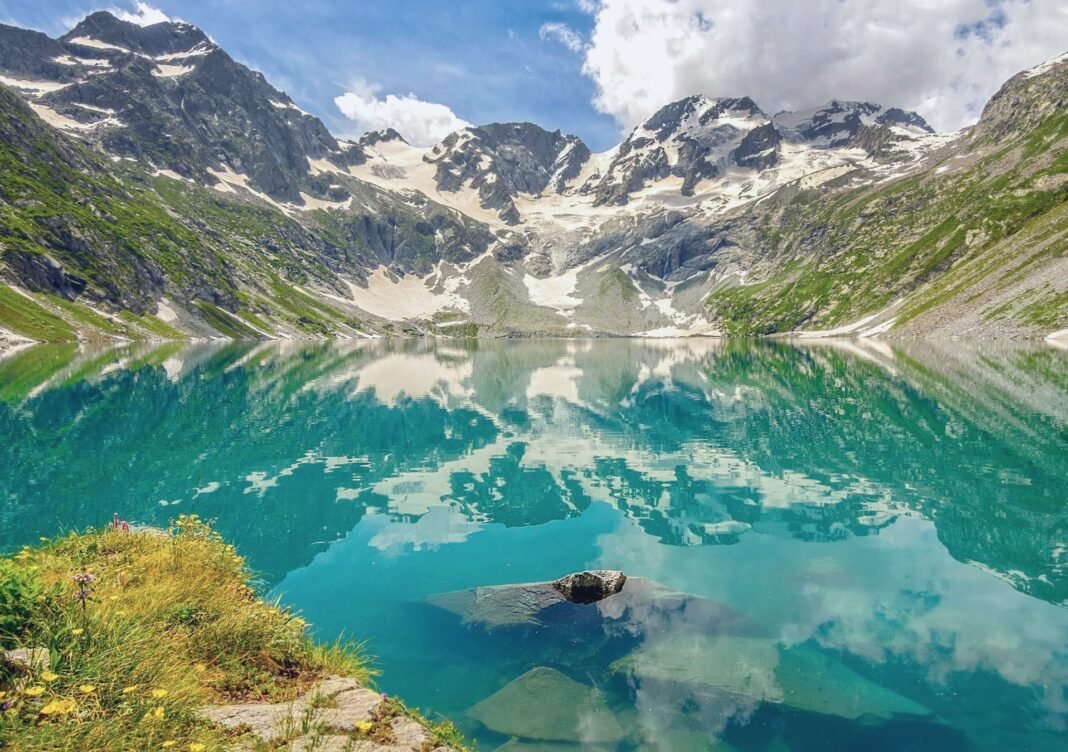
- Famous For: A bowl-shaped glacial lake of striking turquoise water, ringed by Hindu Kush peaks
- Nearest City: Dir town; the gateway village is Thal in Upper Dir
- Accessibility: 4×4 jeep to Taki Banda, then a demanding trek via Jahaz Banda meadows; 2–3 days needed
- Known Landmarks: Jahaz Banda meadows, the small Jahaz Dand lake, Kund Banda, Kumrat forest
- Best For: Trekkers, campers, adventure travelers, and photographers chasing off-the-beaten-track Pakistan
Why Visit Katora Lake
Pakistan has no shortage of beautiful lakes, but Katora Lake earns its place on a different list: the lakes you have to earn. Tucked into the Hindu Kush above the Jahaz Banda meadows in Upper Dir’s Kumrat Valley, this bowl-shaped glacial lake, katora means “bowl” in Pashto, glows a brilliant turquoise when the summer sun hits it, ringed on all sides by high, snow-streaked ridges. There is no road to it, no viewpoint parking lot, no crowd. You walk for it, and that is precisely the point.
The journey is half the reward. The trek climbs from the jeep track through Jandrai village and dense forest to the great green bowl of Jahaz Banda at 3,100 metres, where wild horses graze and wooden huts dot the meadow. Then it steepens, trading grass for rock and alpine air, until the lake reveals itself all at once, a perfect turquoise oval cupped in stone. Travelers who have seen Pakistan’s famous lakes often say Katora’s setting, utterly enclosed by mountains, is unmatched.
This katora lake travel guide is written for the trekker who wants the full picture: how to reach it, what the trail demands, where to sleep, and when the lake is at its bluest. It is not a trip for small children or for anyone unwilling to walk, but for fit, adventurous travelers it is one of the most satisfying two-to-three-day adventures in the country.
Kumrat Valley itself is still relatively undeveloped compared to Naran or Hunza, which means the experience feels genuinely wild. If your idea of a perfect trip involves a tent, a campfire, and a lake that most Pakistanis have only seen in photographs, Katora Lake deserves a place at the top of your list.
History of Katora Lake
Katora Lake has no recorded ancient history in the way a temple or fort does; it is a glacial lake, carved by ice and known for centuries only to the shepherds and graziers of the upper Kumrat Valley. In the local Kohistani-influenced vocabulary, a banda is a cattle grazing spot, and the meadows below the lake, Jahaz Banda, Kund Banda, and others, were summer pastures long before any trekker arrived. The name Jahaz Dand is sometimes given to the smaller lake you pass on the way up, and Katora to the great bowl-shaped lake beyond it.
The lake’s history as a destination is recent. Kumrat Valley remained largely cut off from tourism until the 2010s, when improved roads to Thal and a wave of domestic travel blogging put Jahaz Banda and Katora Lake on the map. Since then it has become one of the signature treks of Khyber Pakhtunkhwa’s adventure tourism, featured in countless travel vlogs and regularly included in organized group tours departing from Lahore and Islamabad.
What has not changed is the character of the place. There are no hotels at the lake, no paved viewpoints, and no commercial development beyond the basic tents and huts of Jahaz Banda. The Khyber Pakhtunkhwa tourism authorities have promoted Kumrat as an emerging destination, but Katora Lake itself remains gloriously low-key. Visiting now means seeing it the way the first trekkers did: on foot, with a tent, and with the mountains all to yourself.
Top Things to Do in Katora Lake
Trek from Jahaz Banda to the Lake
The centerpiece of the trip is the trek itself: roughly 4 to 5 km one way from Jahaz Banda, taking 3 to 5 hours depending on your fitness, with about 400 metres of elevation gain. The trail climbs from meadow to rocky alpine terrain, crossing streams on wooden bridges and passing snow patches even in summer. Pace yourself, drink water, and save energy for the final steep pull, the first sight of the turquoise bowl makes every step worth it.
Photograph the Turquoise Bowl
Katora Lake is at its most photogenic on a clear midday, when the sun turns the water an almost unreal turquoise. Walk the shoreline for different angles, and if you are camping nearby, catch the early morning when the peaks reflect in still water. A polarizing filter helps cut the glare on bright days.
Camp at Jahaz Banda Meadows
Most trekkers sleep at Jahaz Banda rather than at the lake, and the meadow is an attraction in its own right: a vast green plateau at 3,100 metres surrounded by towering Hindu Kush peaks, with grazing horses, wildflowers in season, and some of the darkest night skies in the country. A night here, whether in a rented tent or your own, is essential to the experience.
Visit Jahaz Dand, the Smaller Lake
On the trail to Katora you pass Jahaz Dand, a smaller lake that makes a natural rest stop. It is a good turnaround point if anyone in your group is struggling, and a peaceful spot for a packed lunch with the peaks all around.
Explore Kund Banda and the Upper Meadows
With an extra day, the meadows beyond Jahaz Banda, including Kund Banda, offer more grazing pastures, shepherd huts, and big-mountain views without any technical difficulty. These upper pastures are where the valley’s pastoral life continues much as it has for generations.
Stargaze at 3,500 Metres
Far from any city glow, the night sky over the lake and meadows is spectacular. On a clear night the Milky Way arches over the ridgelines. Bring warm layers: even in August, nights at this altitude are cold.
Famous Places In and Around Katora Lake
- Jahaz Banda Meadows — the great alpine meadow and base camp for the lake trek. (Jahaz Banda travel guide)
- Kumrat Valley — the pine-forested valley below, with the Panjkora River, waterfalls, and riverside camps.
- Kala Chashma — the famous cold springs of Kumrat, a popular jeep excursion from Thal.
- Thal — the gateway bazaar town where the jeep track begins, with basic hotels and restaurants.
How to Reach Katora Lake
Getting to Katora Lake is a multi-stage journey, and planning it well is part of the adventure. The gateway is Thal, a bazaar town in Upper Dir. From Thal, 4×4 jeeps run the rough 16-km track to Taki Banda (also called Takki Top), which takes about an hour to an hour and a half. From Taki Banda the real trekking begins: 3 to 5 hours on foot to Jahaz Banda meadows, where you overnight, then the onward trek to the lake the next morning.
From Islamabad: most travelers drive or take a coaster via the motorway and Swat Expressway to Chakdara, then on through Timergara to Dir and up to Thal. It is a long day’s journey, and most group tours leave Islamabad or Lahore the previous night, reaching Thal by the next afternoon.
From Lahore: organized tours typically depart Lahore around 9 PM, travel overnight, and reach Thal by early afternoon the next day, with the jeep and trek stages following.
From Karachi: fly to Islamabad and join the road journey from there; the overland trip from Karachi is far too long for a short trek.
Nearest airport: Islamabad International Airport is the practical choice. There is no commercial airport near Dir. Within the valley, only 4×4 jeeps and bikes can handle the Thal to Taki Banda track; ordinary cars should be parked at Thal. Jeep hire from Thal to Taki Banda and back costs approximately PKR 10,000–14,000 per jeep for a one-to-two-night trip, split among the passengers, though rates rise in peak season.
Route Details
- Travel to Thal, Upper Dir, by road from Dir town (via Timergara and Chakdara from the motorway).
- At Thal bazaar, hire a 4×4 jeep for the 16-km rough track to Taki Banda; park any ordinary vehicle in Thal.
- Trek from Taki Banda to Jahaz Banda meadows (3–5 hours); arrange a tent or wooden hut and overnight at the meadow.
- Start early the next morning for the 4–5 km trek to Katora Lake (3–5 hours up); return to Jahaz Banda the same day.
- Descend to Taki Banda and jeep back to Thal; many travelers add a night in Kumrat Valley on the way out.
Where to Stay in Katora Lake
There are no hotels at Katora Lake itself, and that is the whole point. Accommodation comes in three tiers along the route. At Jahaz Banda meadows, local operators offer basic tents and simple wooden rooms at reasonable, budget-friendly rates; this is where almost everyone sleeps before the lake trek. Bring your own sleeping bag for warmth even in summer.
Down in Thal and the Kumrat Valley floor, there are small hotels, guesthouses, and riverside camps with proper beds, hot meals, and bonfire setups. These suit the nights before and after the trek. For the full experience, many trekkers bring their own camping gear and camp at Jahaz Banda independently. Whatever you choose, book through a reliable local contact in peak season (July–August), when the meadows fill up on weekends.
Where to Eat: Local Foods of Katora Lake
Food on this route is simple mountain fare, and after a long trek it tastes magnificent. In Thal and at Kumrat’s camps, expect chicken karahi, daal, mixed vegetables, fresh chapati, and endless doodh patti chai. At Jahaz Banda, the tent operators cook basic but hearty meals: rice, lentils, omelettes, and parathas for breakfast.
The region’s cuisine is classic Pashtun highland food: lamb dishes, chapli kebabs in the Dir bazaars, and trout from the Panjkora River where available. Carry your own trail snacks, dry fruits, and at least two litres of water per person for the lake trek, as there is nothing to buy beyond Jahaz Banda. Prices at the meadow are higher than in the plains, which is fair given that everything is carried up on foot or horseback.
Weather in Katora Lake
At 3,500 metres in the Hindu Kush, Katora Lake has a short, intense summer and a long, brutal winter. The lake is typically frozen and buried in snow from late autumn to spring; the accessible season runs roughly from May to October, with July to September the most reliable window for clear turquoise water.
| Season | Temperature Range | Conditions |
|---|---|---|
| Winter (Nov–Apr) | Approximately −10 to −25°C | Deep snow; lake frozen; route inaccessible |
| Spring (May–Jun) | Approximately 0–15°C | Snow melting; lake partially frozen early on; trail opens up |
| Summer (Jul–Aug) | Approximately 8–20°C | Best conditions; lake fully thawed and turquoise; cold nights |
| Autumn (Sep–Oct) | Approximately 2–15°C | Crisp and clear; fewer crowds; snow returns by late October |
Language and Culture of Katora Lake
Pashto is the language of Upper Dir, and you will hear it everywhere from Thal’s bazaar to the shepherd huts of the high meadows. Urdu is widely understood by guides, drivers, and hotel staff. The local culture is shaped by Pashtunwali, the Pashtun code of hospitality, and guests are treated with genuine warmth.
The area is conservative, so dress modestly, especially women, who should carry a shawl. Ask permission before photographing people, particularly in villages. The porters and horsemen of Jandrai and Jahaz Banda are the backbone of this trek; hiring them supports the local economy directly, and a fair tip is always appreciated. Leave no litter on the trail: the valley’s beauty depends on visitors treating it as the fragile alpine environment it is.
Shopping in Katora Lake
Shopping here means the Thal bazaar and the Dir markets on your way in: dry fruits, especially walnuts and apricots, local honey, and woolen shawls and caps for the cold nights ahead. These make practical souvenirs that you will actually use on the trek.
There are no malls or branded shops anywhere on this route, and nothing to buy at Jahaz Banda or the lake. Stock up on snacks, batteries, and any personal supplies in Dir or Thal before heading up. If you need trekking gear, buy or rent it in Islamabad or Lahore before the trip.
Travel Tips for Katora Lake
Packing Essentials
This is a real mountain trek, so pack like one: broken-in hiking boots with ankle support, a warm sleeping bag, layered clothing including a fleece and a windproof shell, a rain jacket, sun protection (the high-altitude sun is fierce), a headlamp, a first-aid kit with altitude and blister care, and at least two litres of water capacity. A trekking pole helps enormously on the steep descents.
Safety Tips
The trek is moderate to demanding and not suitable for young children or anyone with serious knee or heart issues. Acclimatize with a night at Jahaz Banda before pushing to the lake. Weather changes fast in the Hindu Kush: start the lake trek early and turn back if storms build. Hiring a local guide or porter is inexpensive and strongly recommended if you have never trekked at altitude. Mobile signal disappears beyond Taki Banda, so inform someone of your plans.
Money & Connectivity
Carry all the cash you will need from Dir or Thal; there are no ATMs beyond Thal and no card payments anywhere on the trek. Budget approximately for jeep hire, meadow accommodation, meals, and porter or horse hire, and keep a reserve for weather delays. Mobile networks are patchy in Thal and absent on the trail, so download offline maps in advance.
Best Time to Visit Katora Lake
July to September: Peak Season
The lake is fully thawed, the water at its most vivid turquoise, and the meadows green with wildflowers. Days are warm enough for comfortable trekking. This is also the busiest period, so expect company on the trail and book meadow accommodation ahead.
May, June and October: The Shoulder Months
Early season brings snow patches and a partially frozen lake; late season brings crisp air and solitude. Both are beautiful for experienced trekkers but require warmer gear and flexible plans, as weather windows are shorter.
November to April: Closed by Winter
Heavy snow closes the route entirely. The lake sleeps under ice until late spring. Plan your trip for the May–October window.
Final Thoughts
Katora Lake is not the easiest lake to reach in Pakistan, and that is exactly why it stays with you. The jeep track, the forest climb, the night at Jahaz Banda under impossible stars, and then the lake itself, a bowl of turquoise held in the palm of the Hindu Kush. Few experiences in the country’s mountains feel this complete.
If you are ready to trade comfort for wonder, even for just three days, put Katora Lake on your list. Go in summer, walk slowly, camp high, and come back with a story that no roadside viewpoint could ever give you.
FAQs
Where is Katora Lake located?
Katora Lake is in the Kumrat Valley region of Upper Dir District, Khyber Pakhtunkhwa, above the Jahaz Banda meadows at around 3,500 metres.
What is the best time to visit Katora Lake?
July to September, when the lake is fully thawed and turquoise. The route is generally accessible from May to October and closed in winter.
How do I reach Katora Lake?
Drive to Thal in Upper Dir, take a 4×4 jeep to Taki Banda, trek 3–5 hours to Jahaz Banda, overnight there, then trek 4–5 km to the lake the next morning.
Is the Katora Lake trek safe?
It is safe for fit trekkers with proper gear, but it is demanding: steep sections, high altitude, and rapidly changing weather. A local guide is recommended.
Is Katora Lake suitable for families?
Not for young children or elderly travelers. The trek is long and steep; families with teenagers who hike regularly can manage it.
Where can I stay near Katora Lake?
Basic tents and wooden rooms at Jahaz Banda meadows; hotels and camps in Thal and Kumrat Valley for the nights before and after.
What food is available?
Simple highland fare: karahi, daal, rice, chapati, and chai at Thal, Kumrat camps, and Jahaz Banda. Carry your own trail snacks and water for the lake trek.
Why is it called Katora Lake?
Katora means “bowl” in Pashto, and the lake’s near-perfect bowl shape, ringed by mountains, gave it the name.
Discover more northern adventures in our Explore Pakistan series, including the classic Hunza Valley travel guide.