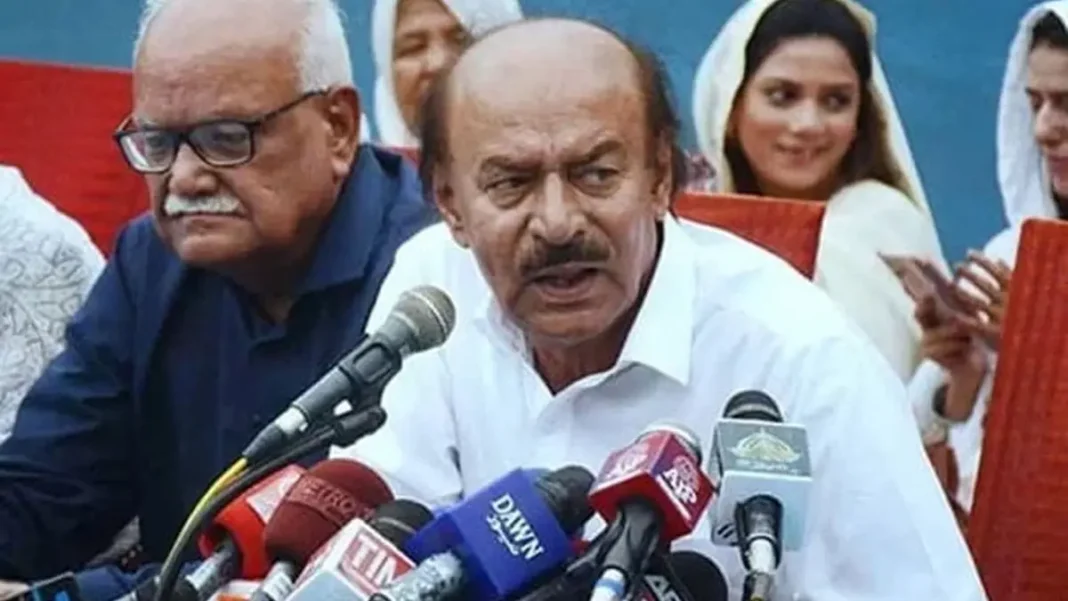
Pakistan Peoples Party Sindh president Nisar Ahmed Khuhro has ruled out the creation of a new province in Sindh, saying the Sindh Assembly has already closed that path by passing a resolution against new provinces. He said that if new provinces were to be created at all, they should be carved out of Gilgit-Baltistan and Punjab.
Khuhro was speaking to the media in his constituency, PS-15 Mirokhan in Larkana, on Sunday, after inaugurating concrete drain and paver block schemes in several villages, including Khabar Kalhoro and Bahadur Bhand. The schemes were carried out under the MPA development programme.
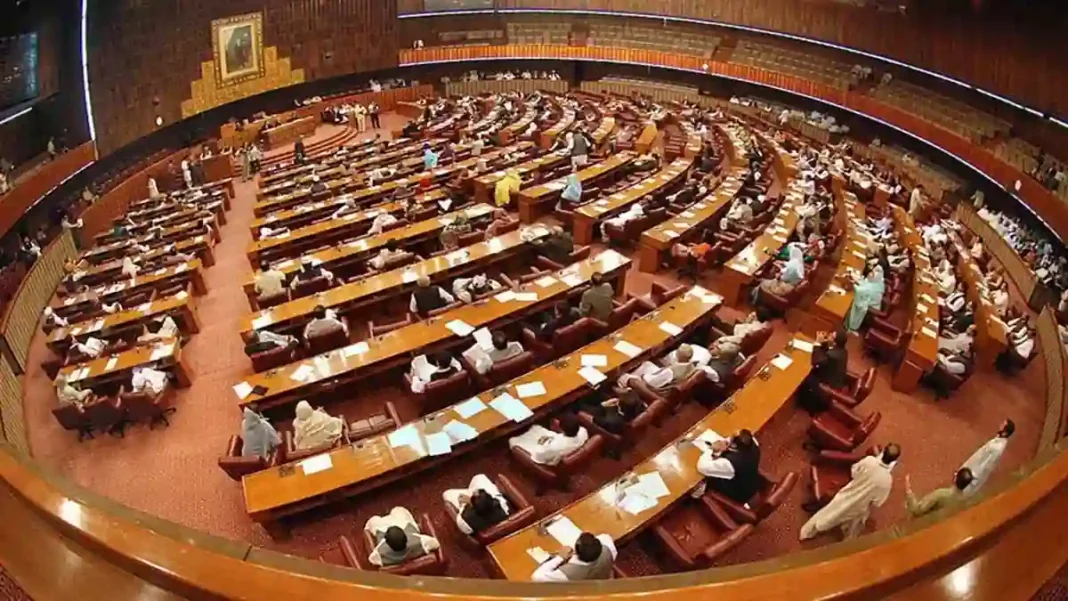
He said the power to create a new province rested not with parliament alone but with the provincial assembly concerned. A new province could be formed only if the relevant assembly passed a resolution with a two-thirds majority, he said. The Sindh Assembly, he added, had already ruled that the province did not need one, by passing a resolution against new provinces and administrative units.
Why Khuhro says the debate on a new province in Sindh is closed
Khuhro pointed to the history of the Sindh Assembly on this question. He said the same assembly had passed the resolution that led to the creation of Pakistan, and it had now passed resolutions against new provinces six times. The debate and rhetoric about new provinces and administrative units should therefore stop, he said.
He also dismissed the argument of those who spoke of administrative units under the guise of devolving powers to local bodies. Sindh already had six divisions, he said, and the question of local power should be judged on what local representatives could actually do.
On the transfer of powers to the grassroots, Khuhro said the PPP-led Sindh government had empowered local representatives to resolve public issues at the lowest level. More than Rs150 billion in Octroi Zila Tax was provided each year to all local councils in the province, he said, with each union council receiving Rs1 million a month for local development work.
He asked why nobody questioned the absence of local elections in provinces with no local government system. That remark widens his argument beyond Sindh: in his view, the provinces that lack elected local governments should face the same scrutiny as Sindh does on devolution.
How this statement fits the wider provinces debate
Khuhro’s statement lands in the middle of a running debate about provinces and administrative units that Feature Pakistan has tracked through October. Our report on the MQM-P call for new administrative units covered the party’s renewed demand for empowered units to fix urban Sindh’s problems. Khuhro’s reply, in effect, is that Sindh’s own assembly has already answered that demand, six times over, and that the answer was no.
The same week, our report on the PPP demand for Gilgit-Baltistan provincial status covered a different side of the map: the PPP’s call for provincial status for Gilgit-Baltistan without compromising the Kashmir issue. Khuhro’s remark that any new provinces should come out of Gilgit-Baltistan and Punjab sits in that same conversation, and it shows how the provinces question is being argued on several fronts at once.
Khuhro himself was in the news days earlier on a related constitutional question. Our report on his call for the 28th Amendment debate to wait covered his view that the debate was premature and that the ruling coalition lacked a two-thirds majority. His latest statement follows the same line: constitutional change of this scale needs the assembly, and the assembly has spoken.
The PPP’s recent political activity in Sindh also includes new faces joining the party. Our report on Aymen Saleem joining the PPP covered her Karachi announcement, made alongside Khuhro, in which she cited Benazir Bhutto as her inspiration. That context matters because Khuhro’s latest statement was made as PPP Sindh president, speaking for the party’s provincial leadership, not as a lone voice.
What happens next
Nothing in Khuhro’s statement creates a new legal step. No resolution was tabled in Larkana on Sunday, and no assembly session was announced to revisit the question. The statement is political, not procedural: it is a public answer to parties and commentators who keep raising new provinces and administrative units for Sindh.