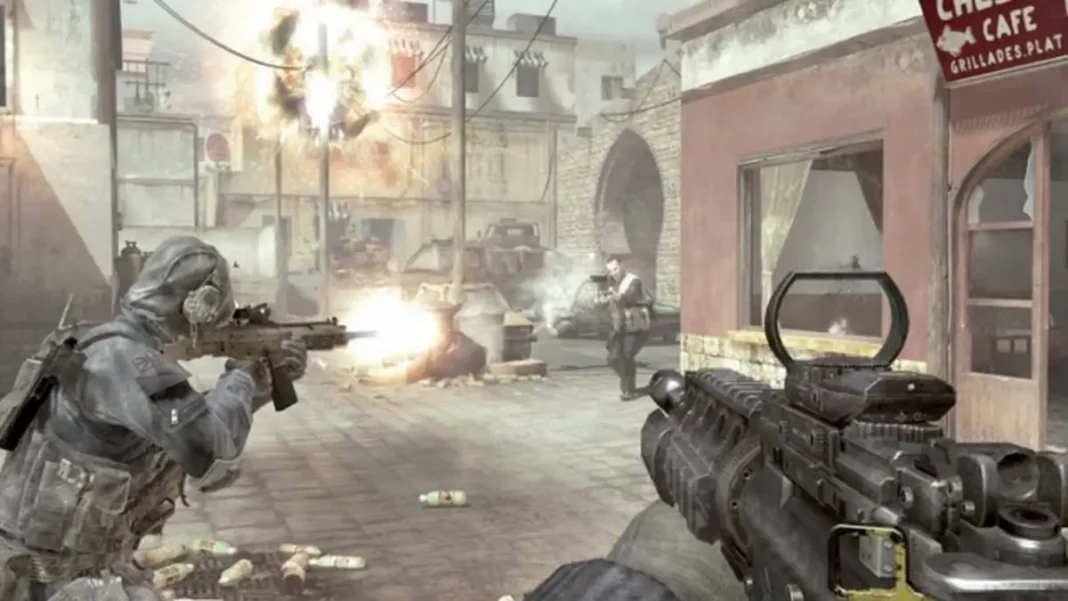
Call of Duty Modern Warfare 4 has topped sales charts in South Korea, even though its plot centres on a full-scale North Korean invasion of the country. The game leads both the global and South Korean charts on Steam, one of the world’s largest digital distribution platforms for PC games.
The latest edition of the globally popular franchise is set against a backdrop of tensions between the United States and Russia. Its Friday release came close on the heels of an explosion inside the heavily fortified Demilitarised Zone, which injured three South Korean soldiers and further strained ties on the peninsula.
The game follows several parallel storylines. One follows a squad of young American and South Korean soldiers fighting for survival. Another follows a former serviceman driven by revenge. A third follows a power struggle around a new North Korean leader, a character players can also take on.
Call of Duty Modern Warfare 4 opens with invasion
The campaign begins with a surprise invasion of South Korea by North Korean forces. The attackers deploy paratroopers and infiltrate through an underground tunnel to catch South Korean and US troops off guard.
The plot lands close to real life. The United States stations about 28,000 troops in South Korea to help deter the nuclear-armed North. Seoul and Pyongyang remain technically at war because the 1950-53 Korean War ended in an armistice rather than a peace treaty.
The game has generated considerable interest in South Korea, where able-bodied men must serve between 18 and 21 months in the military, depending on the branch. That shared experience of conscription gives the invasion story a personal edge for many players.
Reactions among South Korean gamers have been largely positive. Some posted hashtags carrying a Korean slogan meaning “exterminate communism” on social media. Others said they were considering upgrading their computers or buying new consoles to play the title.
One Threads user with the handle b_yeol_t wrote that the game made him cry, because it reminded him of his grandfather, who fought in the Korean War. Another user, posting as ireozima_zebal, described the experience as horrifying, because of what it suggests about a potential conflict on the peninsula.
That user wrote that the scenario showed the border province of Gangwon overwhelmed within an hour, with the defence line pushed back to the edge of Seoul. The comment captures why the game divides opinion: for some players it is entertainment, for others it is a rehearsal of a fear.
Criticism over turning conflict into entertainment
The title has also drawn criticism for turning the fraught history between North and South Korea into entertainment. Kim Sung-jae, chairman of the Kim Dae Jung Peace Center, wrote in the Hankyoreh newspaper last month that the game raises the question of whether it is appropriate to present the tragedy of the Korean War and the current antagonism between North and South as something to be consumed for entertainment.
On Saturday, North Korean state media said leader Kim Jong Un had urged his military to become the strongest in the world at a two-day meeting of company commanders in Pyongyang last week. The statement added a real-world echo to the fictional invasion plot.
The franchise itself is one of the biggest in gaming history. As of October 2023, Call of Duty had sold more than 500 million copies and had 100 million monthly active players across all platforms. The franchise generated 30 billion dollars in revenue by 2022. Guinness World Records verifies it as the best-selling first-person shooter series, and it ranks as the fourth best-selling video game franchise of all time. A feature film is in development at Paramount Pictures, set for release in 2028.
Gaming in Pakistan is growing too, as covered in our report on the Pakistan national esports policy. The week’s wider tech stories were covered in our roundup this week in AI news.
Why the sales chart matters
The chart position matters because it shows a game about invading South Korea selling best in the country it depicts as invaded. That paradox says something about how South Korean players relate to their own history: through memory, through military service, and through play.