Emergency Applies to All of KP, Not Just 12 Districts: Tarar
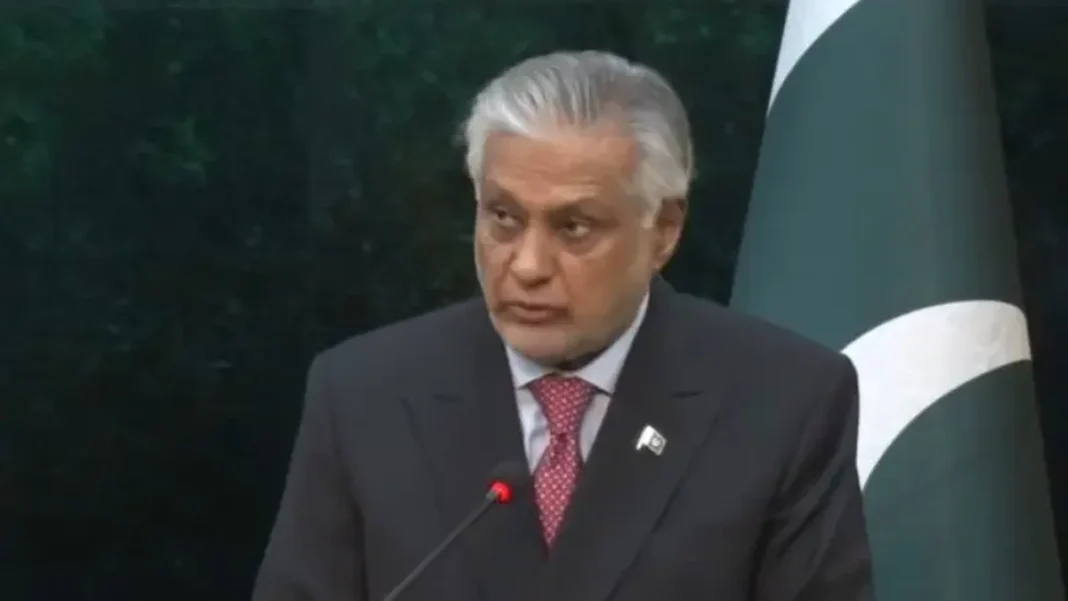
ISLAMABAD: The emergency proclamation issued under Article 232 applies to all of Khyber Pakhtunkhwa, not just the 12 terror-stricken districts of the province, Law Minister Azam Nazeer Tarar clarified on Tuesday, settling a question that had caused confusion since the October 11 move.
Addressing a press conference alongside Information Minister Attaullah Tarar, the law minister said that for those 12 districts, a special mechanism had been introduced. A dedicated secretariat has been established which will provide assistance to those districts, and additional measures have been taken under the chief executive.
Why the KP emergency scope question arose
When the presidential proclamation was issued on October 11, the government’s announcements repeatedly mentioned 12 security-sensitive districts alongside the province-wide emergency. A separate secretariat for those districts was set up under Muhammad Yahya Akhunzada, appointed additional chief secretary and administrator for the 12 districts, which led some to conclude the emergency itself was geographically limited.
The law minister’s clarification puts that to rest: the emergency and governor’s rule under Articles 232 and 234 cover the entire province. The 12-district secretariat is an additional administrative layer, not the boundary of the emergency. Both houses of parliament have since ratified the move — the National Assembly after a four-hour debate and the Senate by majority vote.
8,600 attacks in three years: the government’s numbers
Azam Nazeer Tarar said the province had witnessed a 195 per cent rise in terrorist incidents, with 8,600 attacks recorded in 2024-2026 compared to 2,900 in 2020-2024. He said the KP police and armed forces deployed in the province were under attack and innocent people had lost their lives.
The minister recalled that the government had held constant engagement with the provincial authorities, but said their response was different: “Unfortunately, their response was somewhat different. Maybe their politics were more important to them than having the national interest at heart.”
He stressed that counterterrorism efforts by federal and provincial agencies had to be harmonised, describing that approach as standard practice globally. All these arrangements, he said, were made so the country could be run in a way that people feel safe.
‘You cannot have two counterterrorism policies’
Information Minister Attaullah Tarar claimed that the people of Khyber Pakhtunkhwa had welcomed the federal government’s move to impose governor’s rule and emergency, saying the measures had given them hope. “Had the people of KP supported the pro-terrorist stance of the PTI government, you would have seen millions on the streets,” he said.
The information minister reiterated that the federal government did not have a political agenda against the PTI-led provincial government and was pursuing a unified policy on counterterrorism. “You cannot have a government in the country that sympathises with terrorists, supports terrorism or has a policy that enables terrorists to carry out their operational actions,” he said.
The ministers blamed what they called the PTI government’s non-serious attitude for its fate, saying the provincial leadership’s focus on politics over governance had left the Centre with no option.
The opposition’s counter
The opposition has rejected the government’s case entirely, demanded the immediate withdrawal of the emergency, and questioned why the measure was imposed in KP but not in Balochistan. The PTI has challenged the emergency proclamations in the Peshawar High Court, where their legality will now be tested, and Sohail Afridi’s brother has asked the same court to trace the former chief minister’s whereabouts.
What the whole-province scope means in practice
With the emergency covering all of KP, federal authority extends across the province’s administration, not just the terror-hit belt. Meanwhile, the massive reshuffle of the province’s bureaucracy is installing the federal order at every level.
What remains contested is the legality of the entire edifice. Until the Peshawar High Court rules, the emergency continues to run on parliamentary ratification and the federal government’s security narrative.
Frequently asked questions
Does the KP emergency apply to the whole province or just 12 districts?
Law Minister Azam Nazeer Tarar clarified that the Article 232 emergency applies to all of Khyber Pakhtunkhwa. The 12 terror-stricken districts have a dedicated secretariat as an additional administrative mechanism.
How has the government justified the emergency?
It cites a 195 per cent rise in terrorist incidents, with 8,600 attacks in 2024-2026 compared to 2,900 in 2020-2024, and accuses the former PTI-led provincial government of a non-serious attitude toward counterterrorism.
What is the opposition saying?
The joint opposition has demanded the emergency’s withdrawal, called October 11 a black day for democracy, questioned the KP-versus-Balochistan double standard, and challenged the proclamations in the Peshawar High Court.
What is the 12-district secretariat?
A dedicated secretariat to assist 12 security-sensitive districts, with Muhammad Yahya Akhunzada appointed additional chief secretary and administrator for those districts.
Tags: KP emergency, Article 232, Azam Nazeer Tarar, Attaullah Tarar, 12 districts, governor’s rule, Khyber Pakhtunkhwa